



Ac-FLTD-CMK
Based on 13 publication(s) in Google Scholar
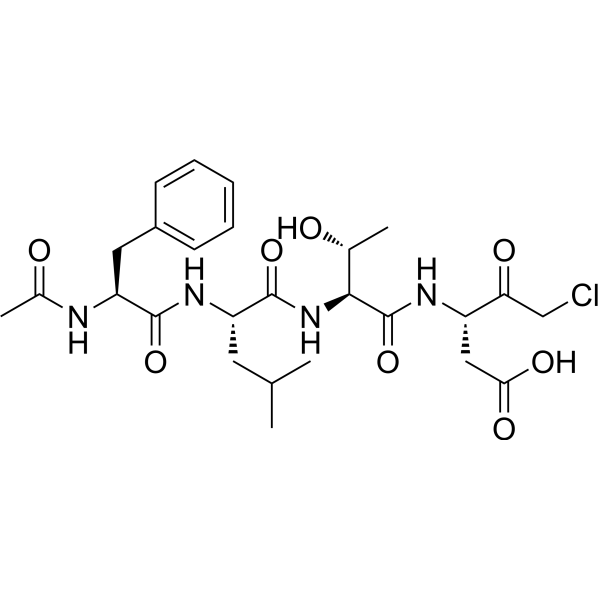
Ac-FLTD-CMK, a gasdermin D (GSDMD)-derived inhibitor, is a specific inflammatory caspases inhibitor. Ac-FLTD-CMK is effective against caspases-1 (IC50 of 46.7 nM), caspases-4 (IC50 of 1.49 μM), caspases-5 (IC50 of 329 nM), and caspases-11 , but not the apoptotic caspases such as caspase-3.
For research use only. We do not sell to patients.
- Purity : 99.18%
- CAS No.: 2376255-48-8
- Formula: C26H37ClN4O8
- Molecular Weight:569.05
-
Storage:
-20°C, protect from light, stored under nitrogen
* In solvent : -80°C, 6 months; -20°C, 1 month (protect from light, stored under nitrogen)

To place orders, for customer services and technical support, please contact: MedChemExpress USA
Tel: 609-228-6898 E-mail: [email protected] [email protected]


-
 Biological Activity
-
Chemical Information
-
Solvent & Solubility
- Protocols
- Purity & Documentation
- References
-
 Help & FAQs


-
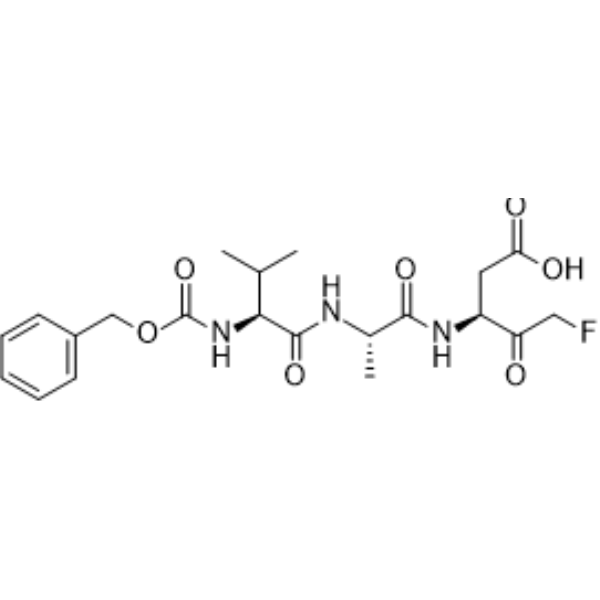
HY-16658B
Z-VAD-FMKPan-Caspase Inhibitor -
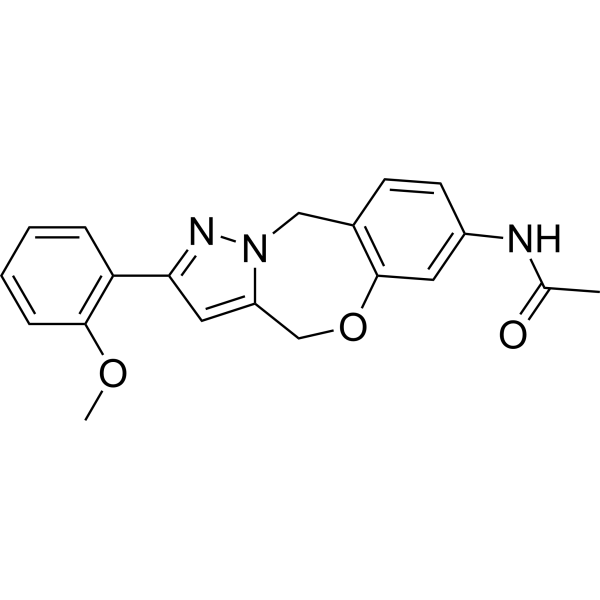
HY-111674
LDC7559GSDMD Inhibitor -
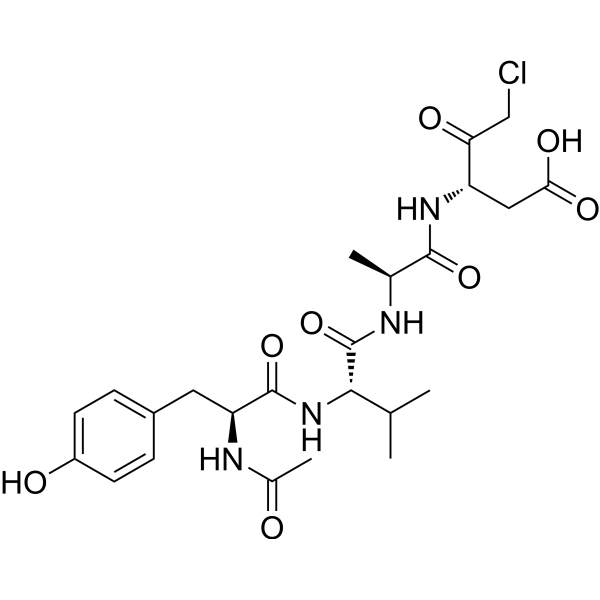
HY-16990
Ac-YVAD-cmkCaspase-1 Inhibitor -
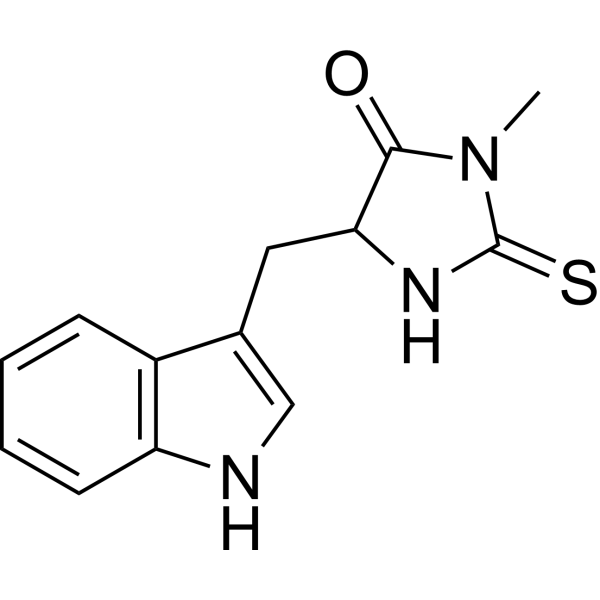
HY-15760
Necrostatin-1RIPK1 Inhibitor -
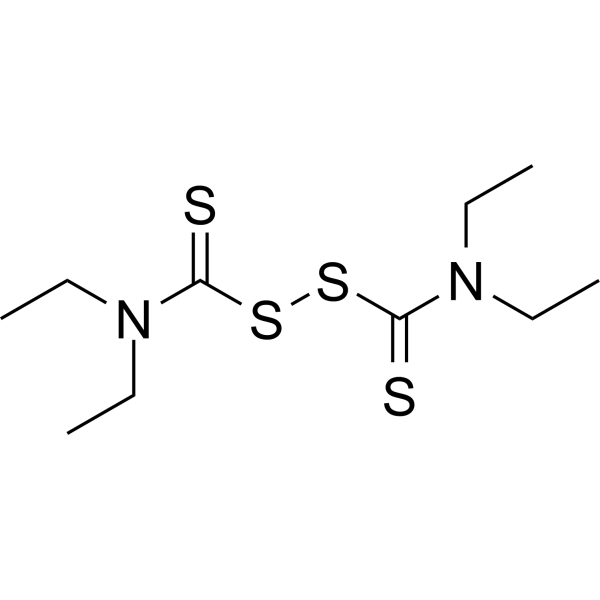
HY-B0240
DisulfiramALDH1 Inhibitor -
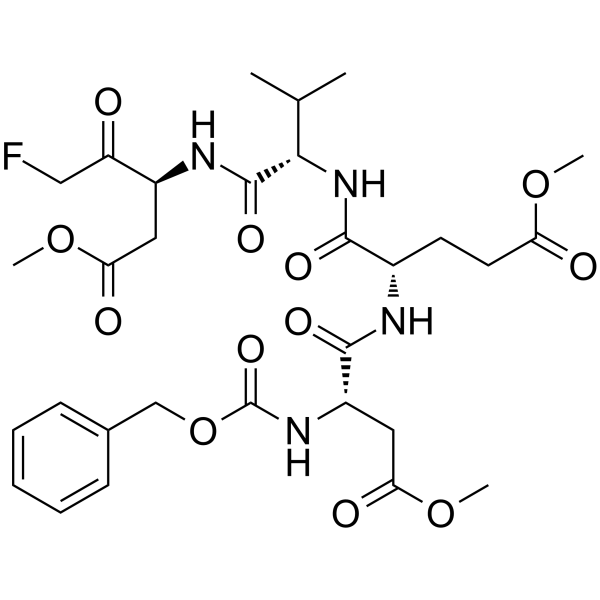
HY-12466
Z-DEVD-FMKCaspase-3 Inhibitor -
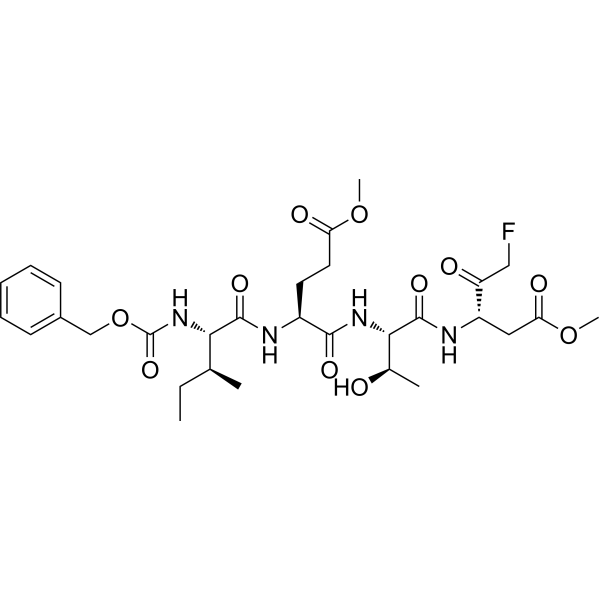
HY-101297
Z-IETD-FMKCaspase-8 Inhibitor -
HY-100579
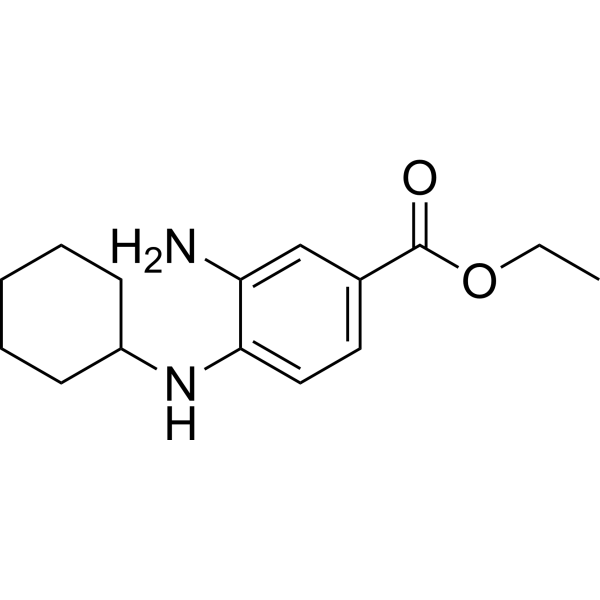
Ferrostatin-1Ferroptosis Inhibitor -
HY-16658
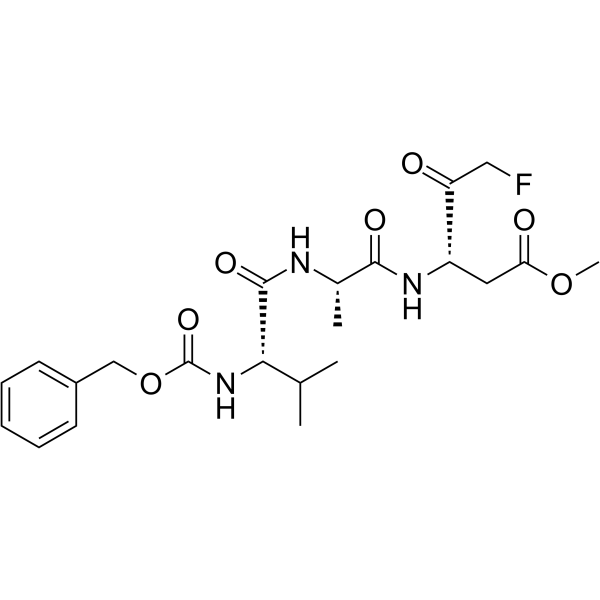
Z-VAD(OMe)-FMKPan-caspase Inhibitor -
HY-P1009
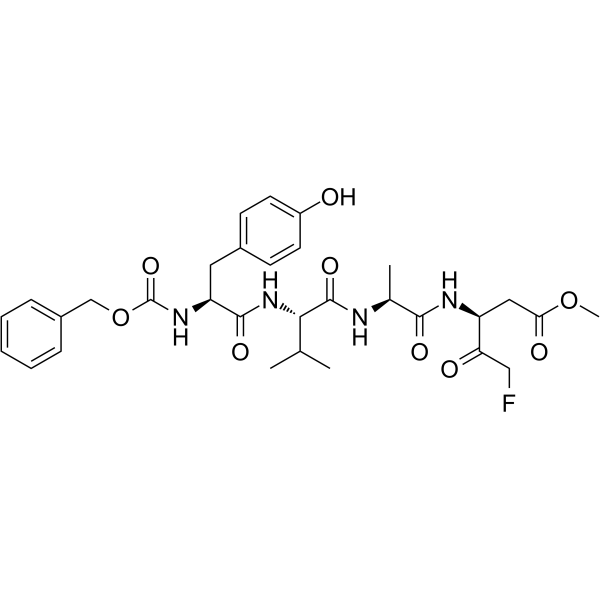
Z-YVAD-FMKCaspase 1/4 Inhibitor -
HY-P1001
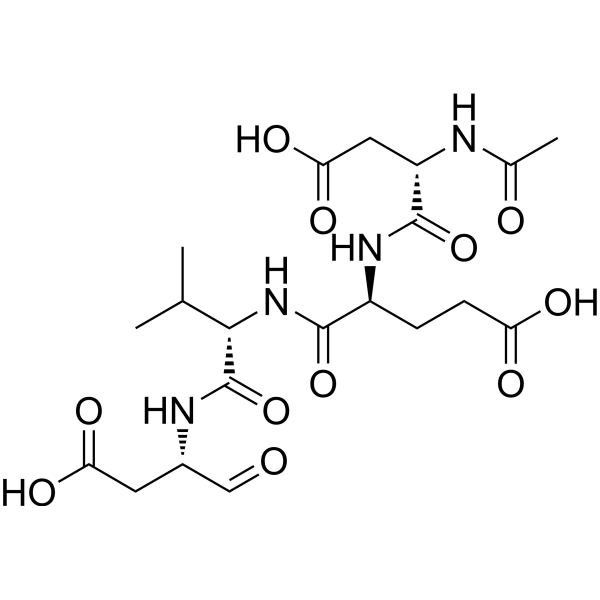
Ac-DEVD-CHOCaspase-3 Inhibitor -
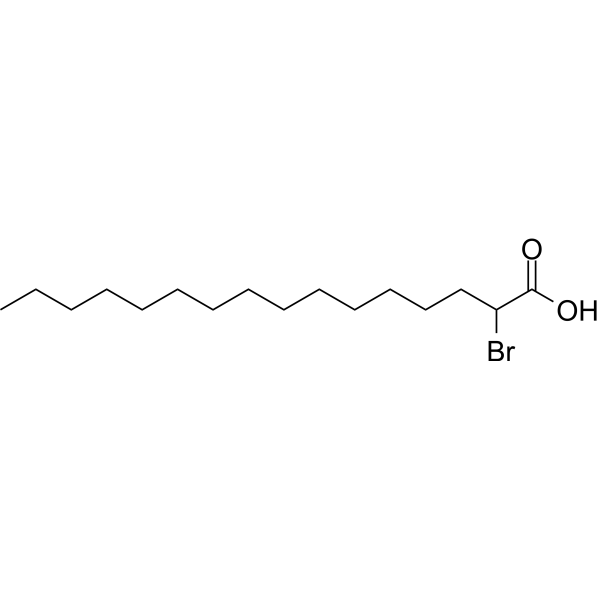
HY-111770
2-Bromohexadecanoic acidPyroptosis Inhibitor
Publications Citing Use of MedChemExpress (MCE) Ac-FLTD-CMK
More- Cell. 2024 Oct 31;187(22):6165-6181.e22. [Abstract]
- Cell Rep Med. 2026 Feb 18:102630. [Abstract]
- Cell Death Differ. 2026 Apr 4. [Abstract]
- Cell Death Dis. 2022 Mar 29;13(3):281. [Abstract]
- Part Fibre Toxicol. 2024 Mar 7;21(1):13. [Abstract]
- Int J Biol Macromol. 2026 May 29;370:152795.
- Cell Regen. 2024 Aug 2;13(1):14. [Abstract]
- Chem Biol Interact. 2025 Oct 22:420:111693. [Abstract]
- Neurochem Res. 2025 Dec 29;51(1):24. [Abstract]
- Mol Divers. 2023 Feb;27(1):249-261. [Abstract]
- Toxicol Appl Pharmacol. 2025 Aug 21:117531. [Abstract]
- Cancer Med. 2026 Sep;15(9):e72220.
- Biomed Pharmacother. 2023 Sep:165:115162. [Abstract]
All Caspase Isoforms
More

Biological Activity
Description
IC50 & Target
[1]|
Caspase-1 46.7 nM (IC50) |
Caspase-4 1.49 μM (IC50) |
Caspase-5 329 nM (IC50) |
Caspase-11 |
In Vitro
Ac-FLTD-CMK, inhibits GSDMD cleavage by caspases-1, -4, -5, and -11 in vitro, suppresses pyroptosis downstream of both canonical and noncanonical inflammasomes, as well as reduces IL-1β release following activation of the NLRP3 inflammasome in macrophages. By contrast, Ac-FLTD-CMK does not target caspase-3 or apoptotic cell death. Crystal structure of caspase-1 in complex with Ac-FLTD-CMK reveals extensive enzyme-inhibitor interactions involving both hydrogen bonds and hydrophobic contacts[1].
MedChemExpress (MCE) has not independently confirmed the accuracy of these methods. They are for reference only.


Chemical Information
-
CAS No. 2376255-48-8
-
Appearance Solid
-
Molecular Weight 569.05
-
Formula C26H37ClN4O8
-
Color White to off-white
-
SMILES
ClCC([C@H](CC(O)=O)NC([C@H]([C@H](O)C)NC([C@H](CC(C)C)NC([C@@H](NC(C)=O)CC1=CC=CC=C1)=O)=O)=O)=O
-
Shipping
Room temperature in continental US; may vary elsewhere.
-
Storage
-20°C, protect from light, stored under nitrogen
* In solvent : -80°C, 6 months; -20°C, 1 month (protect from light, stored under nitrogen)


Publications (13)
-
Journal Impact Factor
-
Most Recent
-
Cell
2024 Oct 31;187(22):6165-6181.e22. PMID: 39243763 -
Cell Rep Med
HIF-activated priming of TRAIL-induced cell death determines epigenetic vulnerability in kidney cancer. [Abstract]2026 Feb 18:102630. PMID: 41713410 -
Cell Death Differ
RIPK3 sequentially recruits MLKL and RIPK1 to induce PANoptosis and chemokine production. [Abstract]2026 Apr 4. PMID: 41935203 -
Cell Death Dis
Complement induces podocyte pyroptosis in membranous nephropathy by mediating mitochondrial dysfunction. [Abstract]2022 Mar 29;13(3):281. PMID: 35351877 -
Part Fibre Toxicol
Exposure to high dose of polystyrene nanoplastics causes trophoblast cell apoptosis and induces miscarriage. [Abstract]2024 Mar 7;21(1):13. PMID: 38454452 -
-
Cell Regen
METTL3 restricts RIPK1-dependent cell death via the ATF3-cFLIP axis in the intestinal epithelium. [Abstract]2024 Aug 2;13(1):14. PMID: 39093347 -
Chem Biol Interact
A novel non-nad-based PARP1 inhibitor, Japoflavone B, triggered Caspase-3/GSDME-mediated pyroptosis through ROS/p38/p53 pathway in NSCLC. [Abstract]2025 Oct 22:420:111693. PMID: 40754060 -
Neurochem Res
2025 Dec 29;51(1):24. PMID: 41460540 -
Mol Divers
Proteochemometrics modeling for prediction of the interactions between caspase isoforms and their inhibitors. [Abstract]2023 Feb;27(1):249-261. PMID: 35438428 -
Toxicol Appl Pharmacol
Chrysin enhances sunitinib sensitivity in renal cell carcinoma by inducing ferroptosis via targeting PI3K/Akt/GPX4 pathway. [Abstract]2025 Aug 21:117531. PMID: 40848919 -
-
Biomed Pharmacother
The pyroptosis mechanism of ototoxicity caused by unconjugated bilirubin in neonatal hyperbilirubinemia. [Abstract]2023 Sep:165:115162. PMID: 37467648


Solvent & Solubility
In Vitro:
DMSO : 100 mg/mL (175.73 mM; Need ultrasonic; Hygroscopic DMSO has a significant impact on the solubility of product, please use newly opened DMSO)
Please refer to the solubility information to select the appropriate solvent. Once prepared, please aliquot and store the solution to prevent product inactivation from repeated freeze-thaw cycles.
Storage method and period of stock solution: -80°C, 6 months; -20°C, 1 month (protect from light, stored under nitrogen). When stored at -80°C, please use it within 6 months. When stored at -20°C, please use it within 1 month.
Please refer to the solubility information to select the appropriate solvent. Once prepared, please aliquot and store the solution to prevent product inactivation from repeated freeze-thaw cycles.
Storage method and period of stock solution: -80°C, 6 months; -20°C, 1 month (protect from light, stored under nitrogen). When stored at -80°C, please use it within 6 months. When stored at -20°C, please use it within 1 month.
Concentration (start) × Volume (start) = Concentration (final) × Volume (final)
In Vivo:
Select the appropriate dissolution method based on your experimental animal and administration route.
- For the following dissolution methods, please ensure to first prepare a clear stock solution using an In Vitro approach and then sequentially add co-solvents:
- To ensure reliable experimental results, the clarified stock solution can be appropriately stored based on storage conditions. As for the working solution for In Vivo experiments, it is recommended to prepare freshly and use it on the same day.
- The percentages shown for the solvents indicate their volumetric ratio in the final prepared solution. If precipitation or phase separation occurs during preparation, heat and/or sonication can be used to aid dissolution.
Add each solvent one by one: 10% DMSO 40% PEG300 5% Tween-80 45% Saline
Solubility: ≥ 2.5 mg/mL (4.39 mM); Clear solution
This protocol yields a clear solution of ≥ 2.5 mg/mL (saturation unknown).
Taking 1 mL working solution as an example, add 100 μL DMSO stock solution (25.0 mg/mL) to 400 μL PEG300, and mix evenly; then add 50 μL Tween-80 and mix evenly; then add 450 μL Saline to adjust the volume to 1 mL.
Preparation of Saline: Dissolve 0.9 g sodium chloride in ddH₂O and dilute to 100 mL to obtain a clear Saline solution.
Add each solvent one by one: 10% DMSO 90% (20% SBE-β-CD in Saline)
Solubility: ≥ 2.5 mg/mL (4.39 mM); Clear solution
This protocol yields a clear solution of ≥ 2.5 mg/mL (saturation unknown).
Taking 1 mL working solution as an example, add 100 μL DMSO stock solution (25.0 mg/mL) to 900 μL 20% SBE-β-CD in Saline, and mix evenly.
Preparation of 20% SBE-β-CD in Saline (4°C, storage for one week): 2 g SBE-β-CD powder is dissolved in 10 mL Saline, completely dissolve until clear.
In Vivo Dissolution Calculator
Please enter the basic information of animal experiments:
-
-
-
-
Recommended: Prepare an additional quantity of animals to account for potential losses during experiments.
Please enter your animal formula composition:
-
%DMSO +
Recommended: Keep the proportion of DMSO in working solution below 2% if your animal is weak.
-
%+
-
+%Tween-80 + +
-
%Saline +
The co-solvents required include: DMSO, . All of co-solvents are available by MedChemExpress (MCE). , Tween 80. All of co-solvents are available by MedChemExpress (MCE).
Working solution concentration: 0.22 mg/mL
Method for preparing stock solution: mg drug dissolved in μL DMSO. Stock solution concentration: mg/mL. * In solvent : -80°C, 6 months; -20°C, 1 month (protect from light, stored under nitrogen)
1. Take μL DMSO stock solution;
2. Add μL .
μL , mix evenly;
3. Then add μL Tween 80, mix evenly;
4. Then add μL
Please ensure that the stock solution in the first step is dissolved to a clear state, and add co-solvents in sequence. You can use ultrasonic heating (ultrasonic cleaner, recommended frequency 20-40 kHz), vortexing, etc. to assist dissolution.


Purity & Documentation
-
Data Sheet (275 KB)
-
SDS (252 KB)
- English - EN (252 KB)
- Français - FR (252 KB)
- Deutsch - DE (252 KB)
- Norwegian - NO (252 KB)
- Español - ES (252 KB)
- Swedish - SV (252 KB)
- Italian - IT (252 KB)
- Korean - KR (252 KB)
- Portuguese - PT (252 KB)
-
Handling Instructions (2659 KB)
References


Complete Stock Solution Preparation Table
Please refer to the solubility information to select the appropriate solvent. Once prepared, please aliquot and store the solution to prevent product inactivation from repeated freeze-thaw cycles.
Storage method and period of stock solution: -80°C, 6 months; -20°C, 1 month (protect from light, stored under nitrogen). When stored at -80°C, please use it within 6 months. When stored at -20°C, please use it within 1 month.
| Optional Solvent | Concentration Solvent Mass | 1 mg | 5 mg | 10 mg | 25 mg |
|---|---|---|---|---|---|
| DMSO | 1 mM | 1.7573 mL | 8.7866 mL | 17.5731 mL | 43.9329 mL |
| 5 mM | 0.3515 mL | 1.7573 mL | 3.5146 mL | 8.7866 mL | |
| 10 mM | 0.1757 mL | 0.8787 mL | 1.7573 mL | 4.3933 mL | |
| 15 mM | 0.1172 mL | 0.5858 mL | 1.1715 mL | 2.9289 mL | |
| 20 mM | 0.0879 mL | 0.4393 mL | 0.8787 mL | 2.1966 mL | |
| 25 mM | 0.0703 mL | 0.3515 mL | 0.7029 mL | 1.7573 mL | |
| 30 mM | 0.0586 mL | 0.2929 mL | 0.5858 mL | 1.4644 mL | |
| 40 mM | 0.0439 mL | 0.2197 mL | 0.4393 mL | 1.0983 mL | |
| 50 mM | 0.0351 mL | 0.1757 mL | 0.3515 mL | 0.8787 mL | |
| 60 mM | 0.0293 mL | 0.1464 mL | 0.2929 mL | 0.7322 mL | |
| 80 mM | 0.0220 mL | 0.1098 mL | 0.2197 mL | 0.5492 mL | |
| 100 mM | 0.0176 mL | 0.0879 mL | 0.1757 mL | 0.4393 mL |


Ac-FLTD-CMK Related Classifications
HY-111675 Related Classifications
 Powered by Bioz