



Caspase 10
Caspase-10 (CASP10) functions as an initiator caspase in death receptor signaling and can initiate Fas- and TRAIL-receptor-mediated apoptosis independently of caspase-8[1]. Mechanistically, caspase-10 is recruited to native TRAIL and CD95/Fas death-inducing signaling complexes (DISC) in a FADD-dependent manner, but it cannot functionally substitute caspase-8 in caspase-8-deficient cells[2]. Compared with caspase-8, caspase-10 acts as a regulatory isoform that reduces caspase-8 DISC association and activation, thereby switching CD95L signaling toward NF-κB activation and cell survival[3]. Caspase-8 and caspase-10 also activate NF-κB through RIP, NIK, and IKKα kinases, linking apoptotic machinery to inflammatory gene regulation[4]. In primary biliary cholangitis models, caspase-10 knockout macrophages showed stronger regulation of inflammatory cell death than caspase-8 knockout macrophages, including necroptosis and pyroptosis[5]. CASP10 mutations were reported in autoimmune lymphoproliferative syndrome type II with defective lymphocyte and dendritic cell apoptosis, but later human variant analyses found CASP10 dispensable for Fas-mediated apoptosis and unlikely to drive ALPS pathogenesis[6][7]. Substrate studies show overlapping caspase-8/caspase-10 cleavage preferences for RIP and PAK2, but distinct Bid cleavage patterns[8]. For experimental applications, the caspase-10 inhibitor z-AEVD-Fmk reduced terminal erythroid differentiation in CD36+ cultures, supporting pathway-specific functional testing[9].
References:
- [1]. Wang J, et al. Caspase-10 is an initiator caspase in death receptor signaling. Proc Natl Acad Sci U S A. 2001 Nov 20;98(24):13884-8. [Content Brief]
- [2]. Sprick MR, et al. Caspase-10 is recruited to and activated at the native TRAIL and CD95 death-inducing signalling complexes in a FADD-dependent manner but can not functionally substitute caspase-8. EMBO J. 2002 Sep 2;21(17):4520-30. [Content Brief]
- [3]. Horn S, et al. Caspase-10 Negatively Regulates Caspase-8-Mediated Cell Death, Switching the Response to CD95L in Favor of NF-κB Activation and Cell Survival. Cell Rep. 2017 Apr 25;19(4):785-797. [Content Brief]
- [4]. Shikama Y, et al. Caspase-8 and caspase-10 activate NF-kappaB through RIP, NIK and IKKalpha kinases. Eur J Immunol. 2003 Jul;33(7):1998-2006. [Content Brief]
- [5]. Cho M, et al. Caspase-10 affects the pathogenesis of primary biliary cholangitis by regulating inflammatory cell death. J Autoimmun. 2022 Dec;133:102940. [Content Brief]
- [6]. Wang J, et al. Inherited human Caspase 10 mutations underlie defective lymphocyte and dendritic cell apoptosis in autoimmune lymphoproliferative syndrome type II. Cell. 1999 Jul 9;98(1):47-58. [Content Brief]
- [7]. Consonni F, et al. Study of the potential role of CASPASE-10 mutations in the development of autoimmune lymphoproliferative syndrome. Cell Death Dis. 2024 May 4;15(5):315. [Content Brief]
- [8]. Fischer U, et al. Unique and overlapping substrate specificities of caspase-8 and caspase-10. Oncogene. 2006 Jan 5;25(1):152-9. [Content Brief]
- [9]. Lamarque M, et al. Role of Caspase-10-P13tBID axis in erythropoiesis regulation. Cell Death Differ. 2023 Jan;30(1):208-220. [Content Brief]
-
Caspase 10 Related Products (6)
Related Products (6)

-
Recombinant Proteins (1)
-
Antibodies (1)
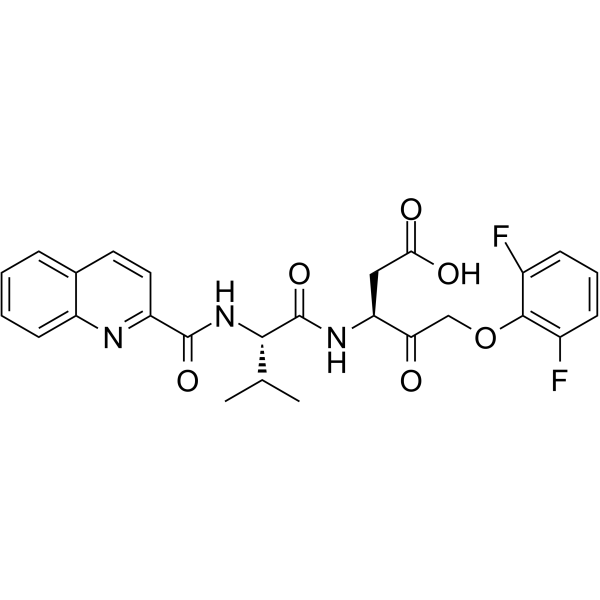
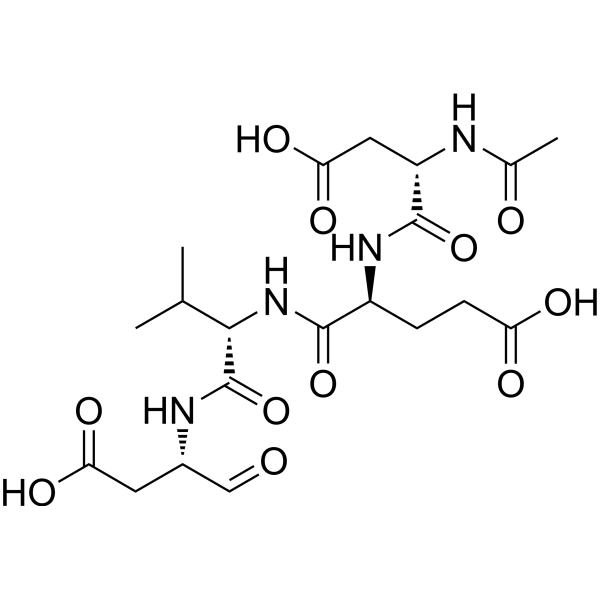
-
2-HBA
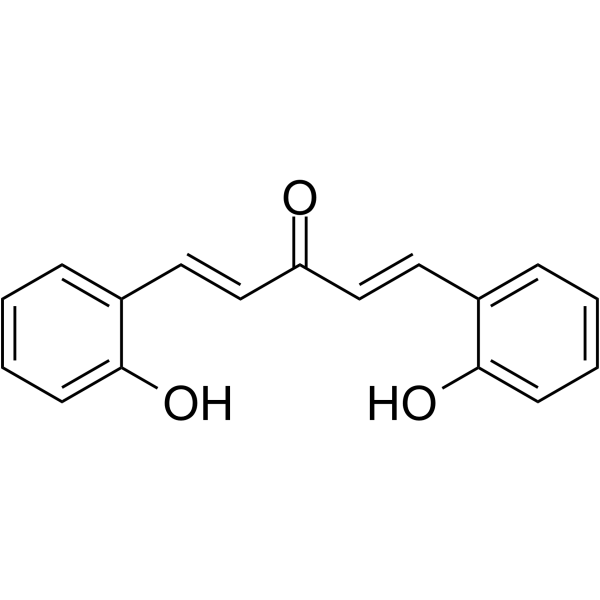 0 Images2-HBA is a potent inducer of NAD(P)H:quinone acceptor oxidoreductase 1 (NQO1) which can also activate caspase-3 and caspase-10.
-
Z-AEVD-FMK
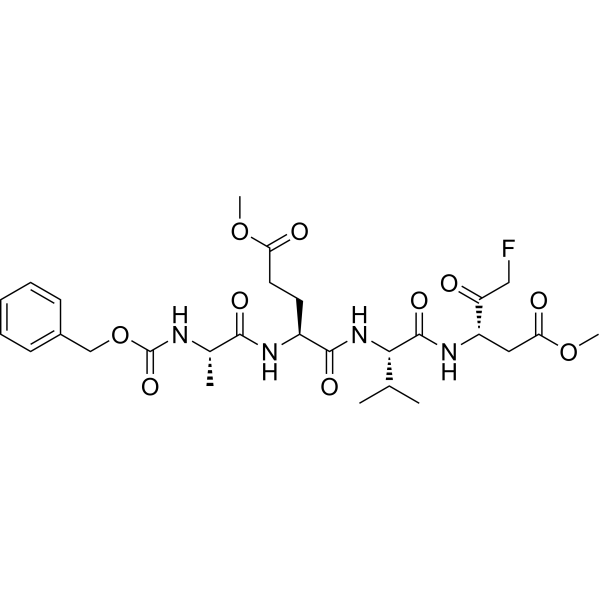 0 ImagesCat. No.: HY-125305CAS No.: 1135688-47-9Z-AEVD-FMK is a caspase-10 inhibitor. Z-AEVD-FMK can inhibit the activation of Bid and the release of apoptosis-inducing factor (AIF) in mitochondria in cells, resulting in a significant decrease in the number of apoptotic cells.
-
MS1129
 0 ImagesCat. No.: HY-181955MS1129 is a DNMT degrader that induces proteasomal degradation of DNMT1, DNMT3A and DNMT3B proteins. MS1129 upregulates TRAIL, DR4 and DR5 proteins, downregulates the decoy receptor DcR2, and activates TRAIL-dependent apoptosis via the HIF-1/2 and Caspase-10 pathways. MS1129 is applicable to the research of VHL-deficient clear cell renal cell carcinoma.




