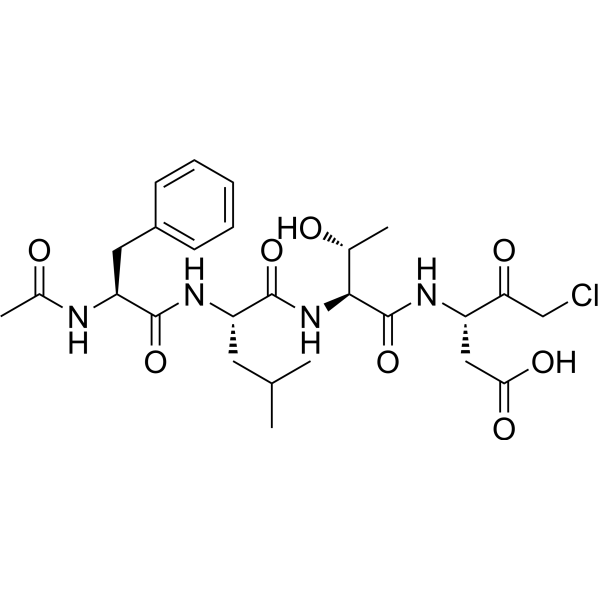
Caspase 11
Caspase-11 is a murine inflammatory caspase that drives the noncanonical inflammasome response to cytosolic lipopolysaccharide (LPS) from Gram-negative bacteria[1][2]. Mechanistically, activated caspase-11 cleaves gasdermin D (GSDMD), producing an N-terminal fragment that promotes pyroptosis, IL-1β maturation, and lethal LPS responses[1]. In intestinal epithelial defense, caspase-11 deficiency increases Salmonella Typhimurium epithelial colonization, while human caspase-4 depletion similarly increases bacterial colonization in polarized epithelial monolayers[3]. In kidney injury models, caspase-11/GSDMD signaling promotes tubular epithelial pyroptosis, urinary IL-18 excretion, renal functional deterioration, and podocyte injury under diabetic or acute injury conditions[4][5]. Compared with canonical inflammasomes that activate caspase-1 through NLR or PYHIN sensors, caspase-11 and human caspase-4/5 act as noncanonical intracellular LPS sensors[2][6]. For experimental applications, cardiolipin selectively blocks caspase-4/11-dependent cell death by preventing LPS binding, while maclurin suppresses caspase-11 and GSDMD activation in macrophages and improves acute lethal sepsis outcomes in mice[7][8].
References:
- [1]. Kayagaki N, et al. Caspase-11 cleaves gasdermin D for non-canonical inflammasome signalling. Nature. 2015 Oct 29;526(7575):666-71. [Content Brief]
- [2]. Yi YS. Caspase-11 non-canonical inflammasome: a critical sensor of intracellular lipopolysaccharide in macrophage-mediated inflammatory responses. Immunology. 2017 Oct;152(2):207-217. doi: 10.1111/imm.12787. Epub 2017 Jul 31. PMID: 28695629; PMCID: PMC5588777. et al. Caspase-11 non-canonical inflammasome: a critical sensor of intracellular lipopolysaccharide in macrophage-mediated inflammatory responses. Immunology. 2017 Oct;152(2):207-217. [Content Brief]
- [3]. Knodler LA, et al. Noncanonical inflammasome activation of caspase-4/caspase-11 mediates epithelial defenses against enteric bacterial pathogens. Cell Host Microbe. 2014 Aug 13;16(2):249-256. [Content Brief]
- [4]. Miao N, et al. The cleavage of gasdermin D by caspase-11 promotes tubular epithelial cell pyroptosis and urinary IL-18 excretion in acute kidney injury. Kidney Int. 2019 Nov;96(5):1105-1120. [Content Brief]
- [5]. Cheng Q, et al. Caspase-11/4 and gasdermin D-mediated pyroptosis contributes to podocyte injury in mouse diabetic nephropathy. Acta Pharmacol Sin. 2021 Jun;42(6):954-963. [Content Brief]
- [6]. Wu J, et al. Pyroptosis by caspase-11 inflammasome-Gasdermin D pathway in autoimmune diseases. Pharmacol Res. 2021 Mar;165:105408. [Content Brief]
- [7]. Pizzuto M, et al. Cardiolipin inhibits the non-canonical inflammasome by preventing LPS binding to caspase-4/11. EMBO J. 2025 Aug;44(16):4419-4442. [Content Brief]
- [8]. Joon Lee D, et al. Maclurin inhibits caspase-11 non-canonical inflammasome in macrophages and ameliorates acute lethal sepsis in mice. Int Immunopharmacol. 2024 Mar 10;129:111615. [Content Brief]
All Product Categories
-
Caspase 11 Related Products (2)
Related Products (2)

-
Wedelolactone
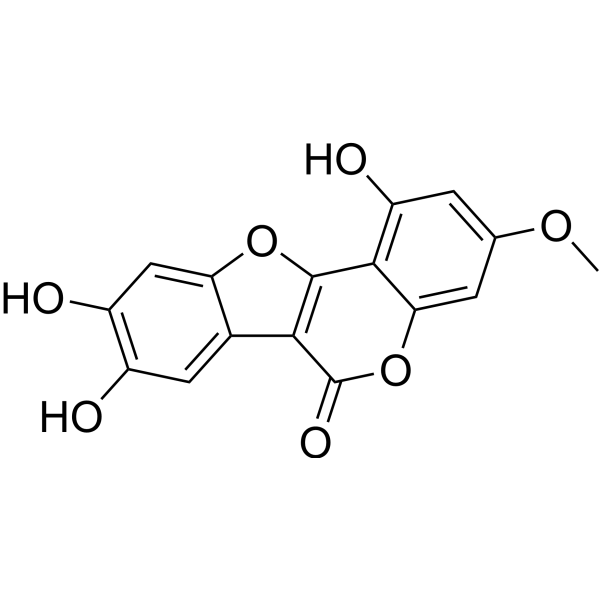 0 ImagesWedelolactone suppresses LPS-induced caspase-11 expression by directly inhibits the IKK Complex. Wedelolactone also inhibits 5-lipoxygenase (5-Lox) with an IC50 of 2.5 μM. Wedelolactone induces caspase-dependent apoptosis in prostate cancer cells via downregulation of PKCε without inhibiting Akt. Wedelolactone can extract from Eclipta alba, and it can be used for the research of cancer.