



Hydroxyprogesterone caproate
Based on 6 publication(s) in Google Scholar
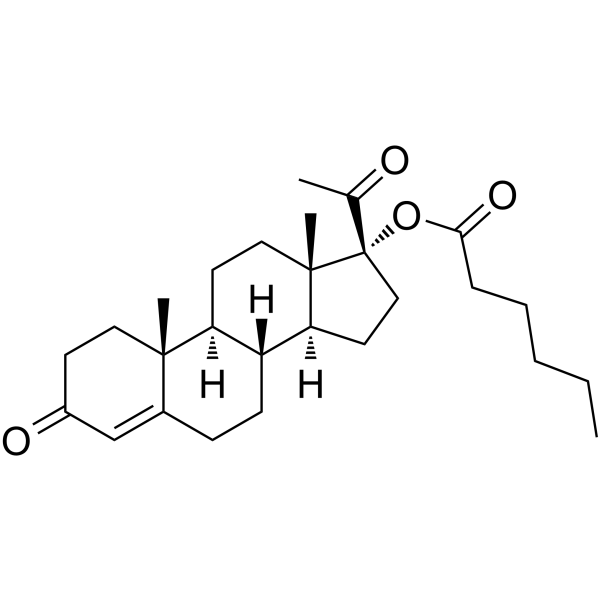
Hydroxyprogesterone caproate (17α-Hydroxyprogesterone hexanoate; 17α-Hydroxyprogesterone caproate) is a progesterone receptor (progesterone receptor) ligand and steroid hormone transcription inhibitor. Hydroxyprogesterone caproate downregulates estrogen receptors in target tissues and activates their metabolic pathways, and exhibits equivalent affinity for progesterone receptor A and progesterone receptor B. Hydroxyprogesterone caproate shows no consistent teratogenicity or developmental toxicity in rat, mouse and monkey models, but induces resorption or abortion in rhesus monkeys at human-equivalent doses. Hydroxyprogesterone caproate promotes the production of TNF-α in lipopolysaccharide-stimulated whole blood from non-pregnant women. Hydroxyprogesterone caproate can be used in scientific research related to preterm birth.
For research use only. We do not sell to patients.
- Purity : 99.29%
- CAS No.: 630-56-8
- Formula: C27H40O4
- Molecular Weight:428.60
-
Storage:Powder -20°C, 3 years , 4°C, 2 years ; In solvent -80°C, 2 years , -20°C, 1 year

To place orders, for customer services and technical support, please contact: MedChemExpress USA
Tel: 609-228-6898 E-mail: [email protected] [email protected]


-
 Biological Activity
-
Chemical Information
-
Solvent & Solubility
- Protocols
- Purity & Documentation
- References
-
 Help & FAQs


-
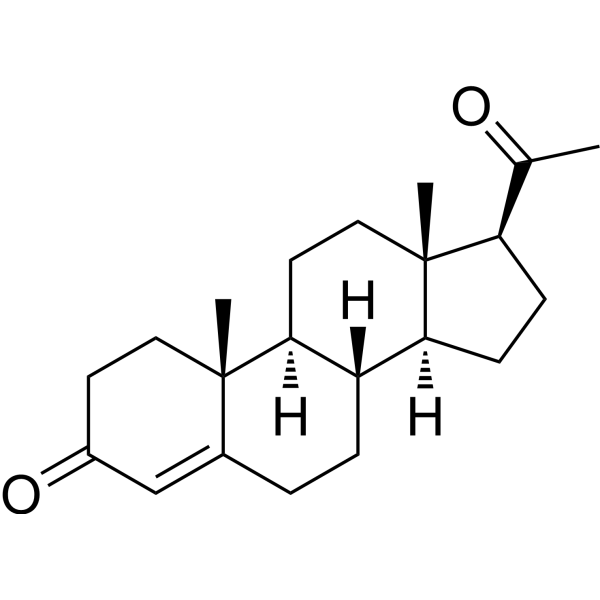
HY-N0437
ProgesteroneEndogenous Metabolite -
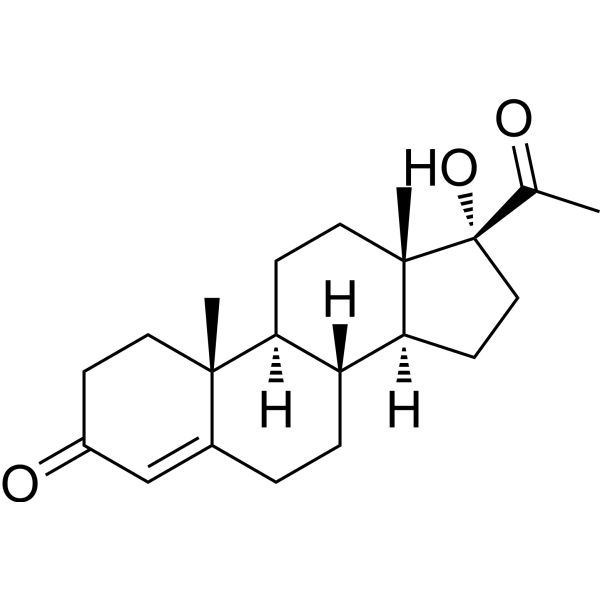
HY-B0891
17α-HydroxyprogesteroneSteroid Hormone -
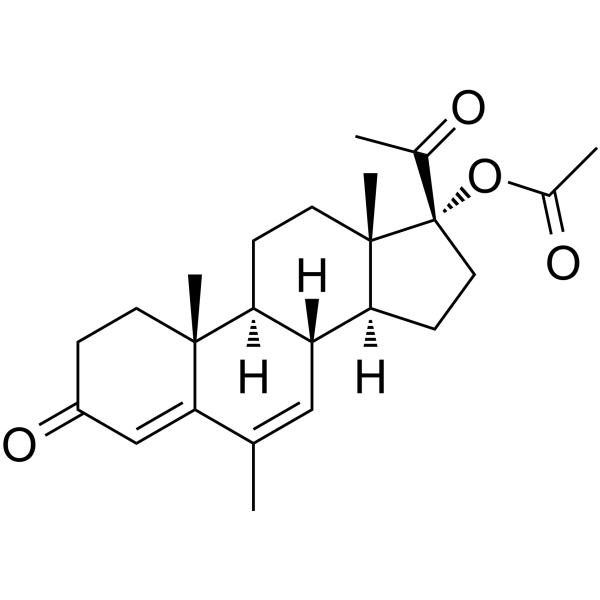
HY-13676
Megestrol acetateProgesteronal Agent -
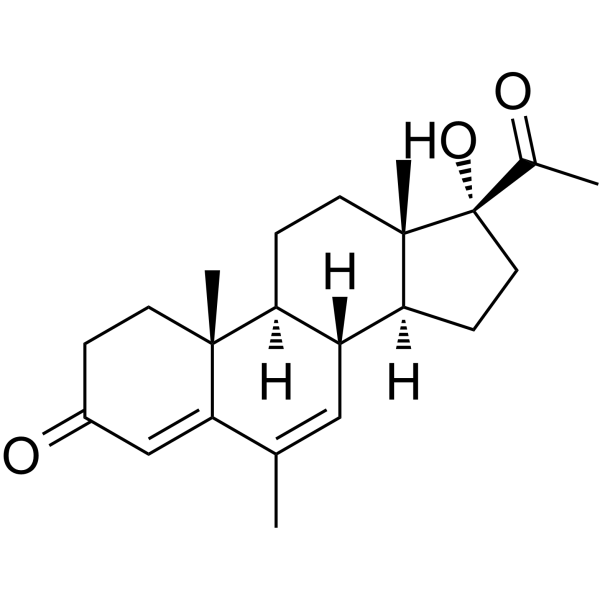
HY-B1834
MegestrolGlucocorticoid/Progesterone Receptor Agoinst -
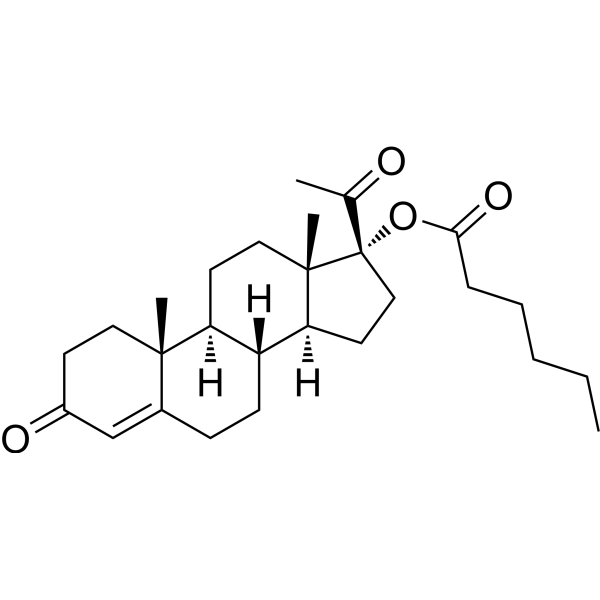
HY-B0742R
Hydroxyprogesterone caproate (Standard) -
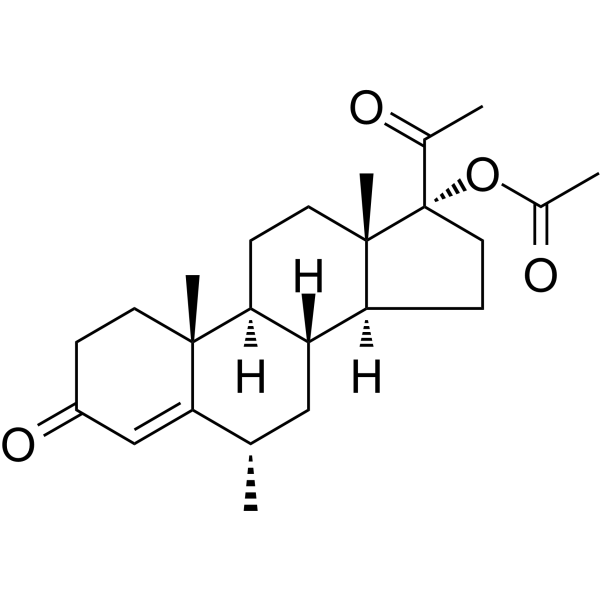
HY-B0469
Medroxyprogesterone acetateProgesterone Receptor Agonist -
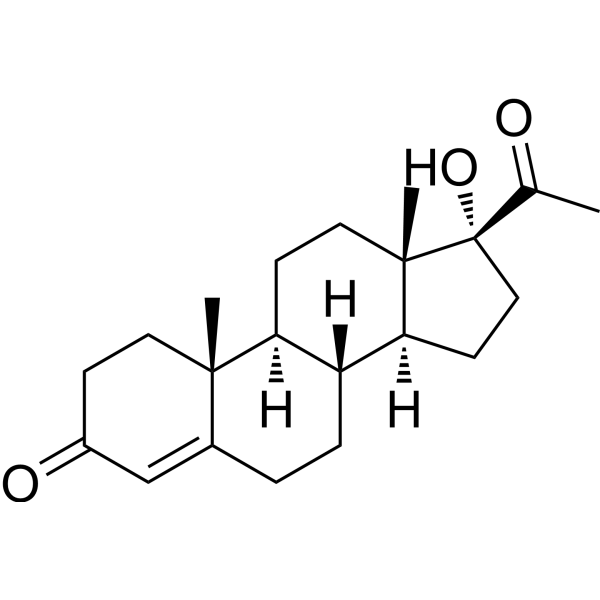
HY-B0891R
17α-Hydroxyprogesterone (Standard) -

HY-B1740
Pregnenolone acetateNeurosteroid -
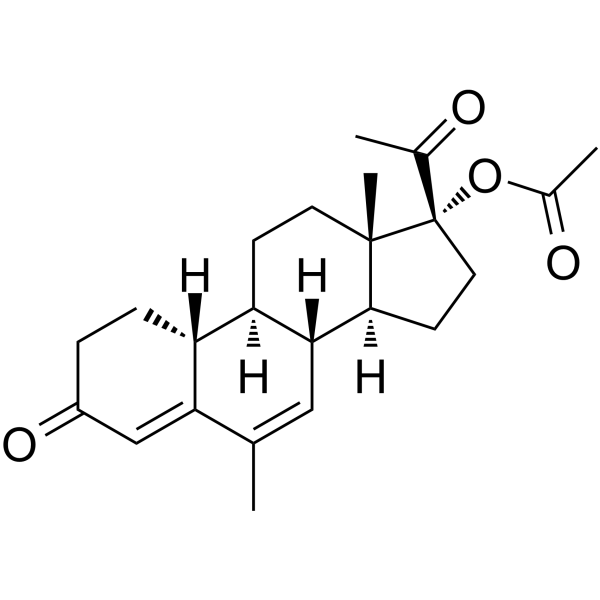
HY-105634A
Nomegestrol acetateProgesterone Receptor Agonist -
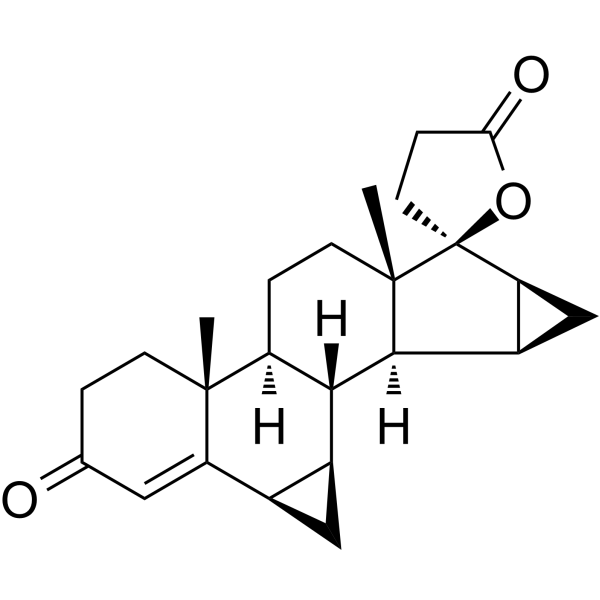
HY-B0111
DrospirenoneProgesterone Receptor Agonist -
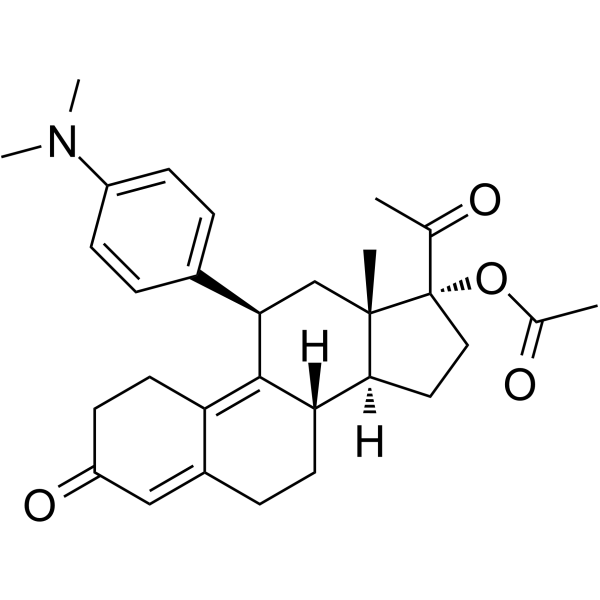
HY-16508
Ulipristal acetateSelective Progesterone Receptor Modulator -
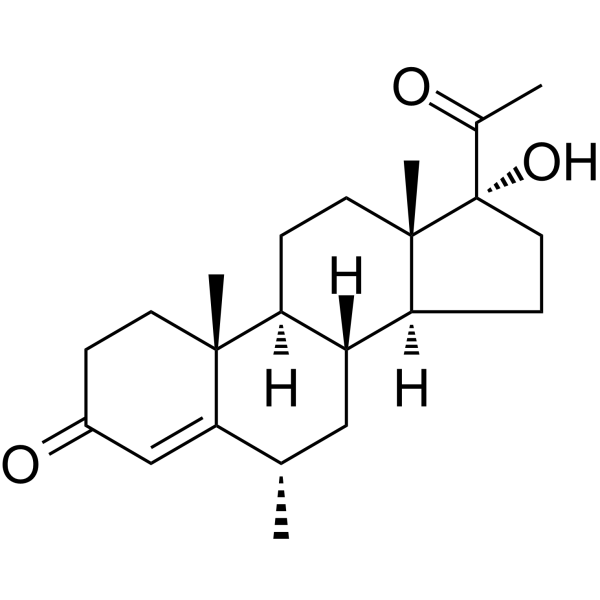
HY-B0648
MedroxyprogesteroneProgesterone Receptor Agonist
Publications Citing Use of MedChemExpress (MCE) Hydroxyprogesterone caproate
More

Biological Activity
Description
Cellular Effect
|
Cell Line

|
Type | Value | Description | References |
|---|---|---|---|---|
| Vero | CC50 |
>50 μM
Compound: Hydroxyprogesterone caproate
|
Cell viability measured by CellTiter-Glo assay in Vero cells at MOI 0.05 after 72hr
Cell viability measured by CellTiter-Glo assay in Vero cells at MOI 0.05 after 72hr
|
10.1101/2020.03.20.999730 |
| Vero | IC50 |
6.3 μM
Compound: Hydroxyprogesterone caproate
|
Antiviral activity against SARS-CoV-2 (viral titer) measured by plaque assay in Vero cells at MOI 0.0125 after 24 hr
Antiviral activity against SARS-CoV-2 (viral titer) measured by plaque assay in Vero cells at MOI 0.0125 after 24 hr
|
10.1101/2020.03.20.999730 |
In Vitro
Hydroxyprogesterone caproate (125-1250 ng/mL; 24 h simultaneous with LPS or 24 h total with 30 min pre-incubation) in whole blood from follicular-phase non-pregnant women, simultaneous treatment with 125 or 1250 ng/mL and LPS for 24 h significantly increases median TNF-α production to 2357 pg/mL and 2639 pg/mL, respectively, while 30 min pre-treatment with the same concentrations before LPS addition does not significantly alter TNF-α production relative to LPS alone[1].
MedChemExpress (MCE) has not independently confirmed the accuracy of these methods. They are for reference only. Further protocols information, click here.
In Vivo
Hydroxyprogesterone caproate (5-150 mg/kg; i.m.; once on GD 17) administered at doses up to 150 mg/kg post-testicular differentiation in Rattus norvegicus produces no consistent reproductive or developmental toxicity across F0, F1, and F2 generations, with a no-observable-effect-level (NOEL) established at 150 mg/kg[2].
MedChemExpress (MCE) has not independently confirmed the accuracy of these methods. They are for reference only.
-
Animal Model:Sprague Dawley (CD [CRL:CD (SD)]) (time-mated females 8-10 weeks old at arrival; naïve males and females of same strain)[2]
-
Dosage:5 mg/kg; 25 mg/kg; 150 mg/kg
-
Administration:i.m.; once on GD 17
-
Result:Reported all F0 dams survived to scheduled necropsy with no test-article-related clinical observations, body weight changes, or macroscopic necropsy findings; all dams delivered live offspring with no effects on gestational length, litter size, stillborn indices, or pup survival to weaning.
Found no test-article-related effects on F1 offspring's reflex, sensory, or developmental indices; an isolated statistically significant decrease in days to pinna detachment (25 mg/kg) was not considered toxicologically meaningful.
Observed no consistent adverse effects on F1 offspring's motor activity and learning/memory parameters, reproductive/fertility indices, or reproductive organ weights; isolated changes in seminal vesicle weight did not follow a dose-response pattern.
Detected no test-article-related effects on F2 generation's litter size, pup survival, sex ratios, or body weights; a statistically significant decrease in gestational length (150 mg/kg) was within the expected range for the strain and not considered biologically meaningful.
Clinical Trial
| NCT Number | Sponsor | Condition | Start Date |
Phase
|
|---|---|---|---|---|
| NCT01329991 | Plexxikon| | 2011-05 | PHASE1 |


Chemical Information
-
CAS No. 630-56-8
-
Appearance Solid
-
Molecular Weight 428.60
-
Formula C27H40O4
-
Color White to off-white
-
SMILES
CC([C@@]1(OC(CCCCC)=O)CC[C@@]2([H])[C@]3([H])CCC4=CC(CC[C@]4(C)[C@@]3([H])CC[C@]12C)=O)=O
-
Synonyms
17α-Hydroxyprogesterone hexanoate; 17α-Hydroxyprogesterone caproate
-
Shipping
Room temperature in continental US; may vary elsewhere.
-
Storage
Powder -20°C 3 years 4°C 2 years In solvent -80°C 2 years -20°C 1 year


Publications (6)
-
Journal Impact Factor
-
Most Recent
-
Nat Commun
Coronavirus envelope protein activates TMED10-mediated unconventional secretion of inflammatory factors. [Abstract]2024 Oct 8;15(1):8708. PMID: 39379362 -
Phytomedicine
Paeonol ameliorates endometrial hyperplasia in mice via inhibiting PI3K/AKT pathway-related ferroptosis. [Abstract]2023 Jan:109:154593. PMID: 36610113 -
Int Immunopharmacol
2025 Oct 30:164:115392. PMID: 40834530 -
J Pharmacol Sci
Gallic acid ameliorates endometrial hyperplasia through the inhibition of the PI3K/AKT pathway and the down-regulation of cyclin D1 expression. [Abstract]2024 May;155(1):1-13. PMID: 38553133 -
-
Res Sq
Sex differences in viral entry protein expression, host responses to SARS-CoV-2, and in vitro responses to sex steroid hormone treatment in COVID-19. [Abstract]2020 Dec 31:rs.3.rs-100914. PMID: 33173861


Solvent & Solubility
In Vitro:
DMSO : 25 mg/mL (58.33 mM; Need ultrasonic; Hygroscopic DMSO has a significant impact on the solubility of product, please use newly opened DMSO)
H2O : < 0.1 mg/mL (insoluble)
Please refer to the solubility information to select the appropriate solvent. Once prepared, please aliquot and store the solution to prevent product inactivation from repeated freeze-thaw cycles.
Storage method and period of stock solution: -80°C, 2 years; -20°C, 1 year. When stored at -80°C, please use it within 2 years. When stored at -20°C, please use it within 1 year.
Please refer to the solubility information to select the appropriate solvent. Once prepared, please aliquot and store the solution to prevent product inactivation from repeated freeze-thaw cycles.
Storage method and period of stock solution: -80°C, 2 years; -20°C, 1 year. When stored at -80°C, please use it within 2 years. When stored at -20°C, please use it within 1 year.
Concentration (start) × Volume (start) = Concentration (final) × Volume (final)
In Vivo:
Select the appropriate dissolution method based on your experimental animal and administration route.
- For the following dissolution methods, please ensure to first prepare a clear stock solution using an In Vitro approach and then sequentially add co-solvents:
- To ensure reliable experimental results, the clarified stock solution can be appropriately stored based on storage conditions. As for the working solution for In Vivo experiments, it is recommended to prepare freshly and use it on the same day.
- The percentages shown for the solvents indicate their volumetric ratio in the final prepared solution. If precipitation or phase separation occurs during preparation, heat and/or sonication can be used to aid dissolution.
Add each solvent one by one: 10% DMSO 40% PEG300 5% Tween-80 45% Saline
Solubility: ≥ 2.5 mg/mL (5.83 mM); Clear solution
This protocol yields a clear solution of ≥ 2.5 mg/mL (saturation unknown).
Taking 1 mL working solution as an example, add 100 μL DMSO stock solution (25.0 mg/mL) to 400 μL PEG300, and mix evenly; then add 50 μL Tween-80 and mix evenly; then add 450 μL Saline to adjust the volume to 1 mL.
Preparation of Saline: Dissolve 0.9 g sodium chloride in ddH₂O and dilute to 100 mL to obtain a clear Saline solution.
In Vivo Dissolution Calculator
Please enter the basic information of animal experiments:
-
-
-
-
Recommended: Prepare an additional quantity of animals to account for potential losses during experiments.
Please enter your animal formula composition:
-
%DMSO +
Recommended: Keep the proportion of DMSO in working solution below 2% if your animal is weak.
-
%+
-
+%Tween-80 + +
-
%Saline +
The co-solvents required include: DMSO, . All of co-solvents are available by MedChemExpress (MCE). , Tween 80. All of co-solvents are available by MedChemExpress (MCE).
Working solution concentration: 0.22 mg/mL
Method for preparing stock solution: mg drug dissolved in μL DMSO. Stock solution concentration: mg/mL.
1. Take μL DMSO stock solution;
2. Add μL .
μL , mix evenly;
3. Then add μL Tween 80, mix evenly;
4. Then add μL
Please ensure that the stock solution in the first step is dissolved to a clear state, and add co-solvents in sequence. You can use ultrasonic heating (ultrasonic cleaner, recommended frequency 20-40 kHz), vortexing, etc. to assist dissolution.

Protocols
-
Reproductive and Developmental Toxicity Study
Reproductive and developmental toxicity studies detect adverse effects of prenatal or peri/postnatal exposure on maternal condition, pregnancy maintenance, embryo-fetal survival, fetal growth, structural development, and offspring reproductive or developmental endpoints; classic rat protocols generate readouts by comparing treated groups with vehicle, pair-fed, or untreated controls for implantation, resorption, fetal weight, crown-rump length, external morphology, visceral morphology, skeletal ossification, anogenital distance, nipple/areola retention, and postnatal cohort outcomes.
-
Research Protocol for Endocrine Diseases
Endocrine diseases often arise from disrupted hormone production, hormone signaling, or target-tissue responsiveness; for diabetes-focused endocrine disease models, insulin signaling regulates glucose uptake, hepatic glucose output, lipid metabolism, and β-cell compensation. Type 2 diabetes develops through interacting defects in insulin resistance, β-cell dysfunction, adipose inflammation, hepatic glucose overproduction, altered incretin signaling, and ectopic lipid metabolism. A major unresolved question is whether endocrine dysfunction is driven primarily by target-tissue insulin resistance, intrinsic β-cell failure, immune/inflammatory stress, or combined multi-organ failure that differs by disease stage.


Purity & Documentation
-
Data Sheet (280 KB)
-
SDS (419 KB)
- English - EN (419 KB)
- Français - FR (419 KB)
- Deutsch - DE (419 KB)
- Norwegian - NO (419 KB)
- Español - ES (419 KB)
- Swedish - SV (419 KB)
- Italian - IT (419 KB)
- Korean - KR (419 KB)
- Portuguese - PT (419 KB)
-
Handling Instructions (2659 KB)
References
[1]. Amory J, et al. Hydroxyprogesterone caproate and progesterone increase tumor necrosis factor-alpha production in lipopolysaccharide stimulated whole blood from non-pregnant women. J Perinat Med. 2005;33(6):506-509. [Content Brief]
[2]. Schardein JL, et al. Multigeneration reproductive study of hydroxyprogesterone caproate (HPC) in the rat: laboratory results and clinical significance. Birth Defects Res B Dev Reprod Toxicol. 2012;95(2):160-174. [Content Brief]


Complete Stock Solution Preparation Table
Please refer to the solubility information to select the appropriate solvent. Once prepared, please aliquot and store the solution to prevent product inactivation from repeated freeze-thaw cycles.
Storage method and period of stock solution: -80°C, 2 years; -20°C, 1 year. When stored at -80°C, please use it within 2 years. When stored at -20°C, please use it within 1 year.
| Optional Solvent | Concentration Solvent Mass | 1 mg | 5 mg | 10 mg | 25 mg |
|---|---|---|---|---|---|
| DMSO | 1 mM | 2.3332 mL | 11.6659 mL | 23.3318 mL | 58.3294 mL |
| 5 mM | 0.4666 mL | 2.3332 mL | 4.6664 mL | 11.6659 mL | |
| 10 mM | 0.2333 mL | 1.1666 mL | 2.3332 mL | 5.8329 mL | |
| 15 mM | 0.1555 mL | 0.7777 mL | 1.5555 mL | 3.8886 mL | |
| 20 mM | 0.1167 mL | 0.5833 mL | 1.1666 mL | 2.9165 mL | |
| 25 mM | 0.0933 mL | 0.4666 mL | 0.9333 mL | 2.3332 mL | |
| 30 mM | 0.0778 mL | 0.3889 mL | 0.7777 mL | 1.9443 mL | |
| 40 mM | 0.0583 mL | 0.2916 mL | 0.5833 mL | 1.4582 mL | |
| 50 mM | 0.0467 mL | 0.2333 mL | 0.4666 mL | 1.1666 mL |


Hydroxyprogesterone caproate Related Classifications
HY-B0742 Related Classifications
 Powered by Bioz
Keywords