



VDAC1
VDAC1 (Voltage-Dependent Anion Channel 1) is the major pore-forming protein of the mitochondrial outer membrane and mediates the exchange of metabolites and ions between mitochondria and the cytosol, thereby linking mitochondrial activity to cellular energy homeostasis and survival programs[1]. Mechanistically, VDAC1 regulates metabolic flux, ATP transport, calcium signaling, and mitochondrial function, placing it at the intersection of bioenergetic control and apoptosis-related pathways[1][2]. In disease-associated contexts, VDAC1 has been extensively studied in cancer, neurodegeneration, and other disorders characterized by mitochondrial dysfunction, where altered channel activity, protein interactions, or expression levels influence cell fate decisions and stress responses[2][3]. VDAC1 also participates in apoptosis-related mechanisms through interactions with Bcl-2 family proteins and through structural transitions associated with oligomerization, processes that can affect mitochondrial membrane permeabilization and downstream death signaling[2][4]. Compared with related isoforms, VDAC1 shares substantial structural homology with VDAC2 and VDAC3 but is generally recognized as the predominant isoform involved in mitochondrial metabolite transport and apoptosis-associated signaling, making it the most frequently investigated family member in mechanistic studies[3]. For experimental applications, VDAC1 is widely used as a mitochondrial biology and cell-death research target, and modulation of VDAC1 channel activity or oligomerization has been explored as a strategy to investigate mitochondrial dysfunction, apoptosis, and disease-relevant signaling networks[2][4].
Verweise:
- [1]. VDAC1 gene information from NCBI.
- [2]. Shoshan-Barmatz V, et al. The mitochondrial voltage-dependent anion channel 1 in tumor cells. Biochim Biophys Acta. 2015 Oct;1848(10 Pt B):2547-75. [Content Brief]
- [3]. De Pinto V, et al. Characterization of human VDAC isoforms: a peculiar function for VDAC3? Biochim Biophys Acta. 2010 Jun-Jul;1797(6-7):1268-75. [Content Brief]
- [4]. Daniilidis M, et al. Structural basis of apoptosis induction by the mitochondrial voltage-dependent anion channel. Nat Commun. 2025 Oct 27;16(1):9481. [Content Brief]
-
VDAC1 Verwandte Produkte (9)
Verwandte Produkte (9)

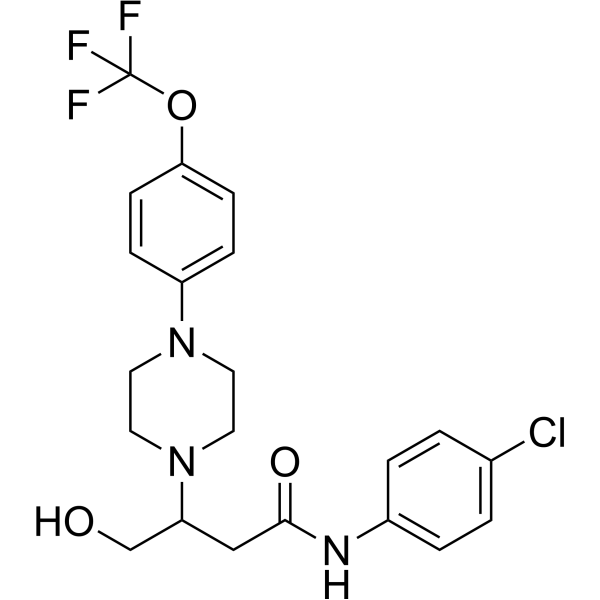
-
DIDS sodium salt
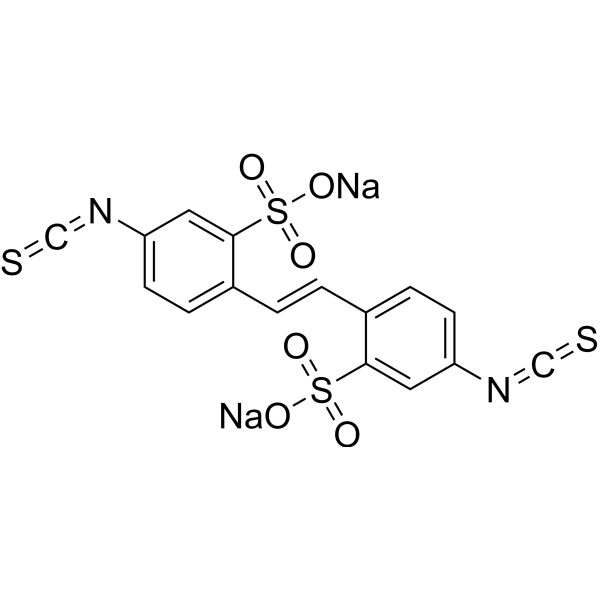 0 ImagesSynonyms: MDL101114ZADIDS sodium salt (MDL101114ZA) is a dual inhibitor of ABCA1 and VDAC1. DIDS also inhibits RAD51, inhibiting RAD51-mediated homologous pairing and strand exchange reactions. DIDS inhibits anion exchange and binding to red blood cell membranes, inhibits the activation of caspase-3 and -9, and can be used in cancer research.

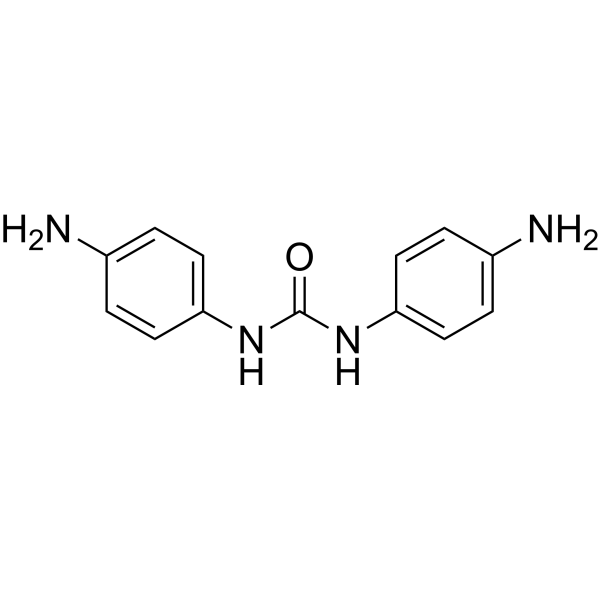
-
Cyanidin-3-O-arabinoside
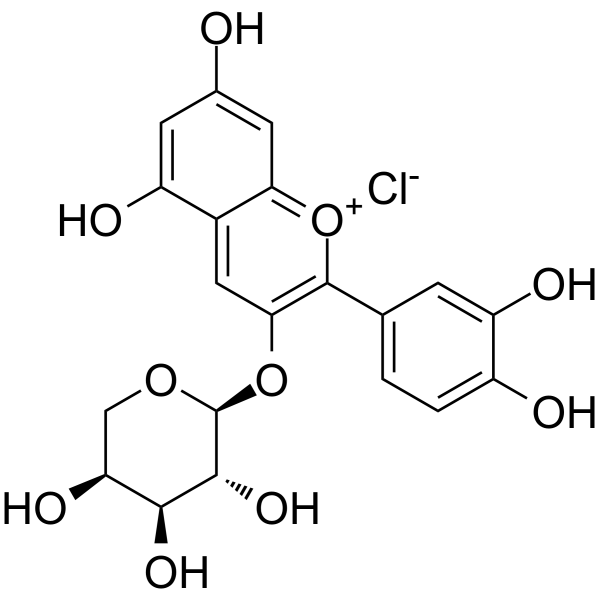 0 ImagesArt. -Nr.: HY-129139CAS. Nr.: 111613-04-8Cyanidin-3-O-arabinoside is a p38 MAPK phosphorylation inhibitor. Cyanidin-3-O-arabinoside reduces the expression of VDAC1, inhibits mtROS accumulation, reverses cellular senescence, blocks excessive mitochondrial calcium influx, reduces the formation of mitochondria-associated endoplasmic reticulum membranes, and suppresses the VDAC1-IP3R1 interaction. Cyanidin-3-O-arabinoside activates hair follicle stem cell proliferation and improves the condition of slowed hair growth. Cyanidin-3-O-arabinoside is applicable to research related to colon cancer and androgenetic alopecia.
-
SW016789
 0 ImagesSW016789 is a hypersecretion-inducer targeting VDAC1. SW016789 can induce insulin hypersecretion and Ca2+ influx in β-cells directly. SW016789 induces a transient endoplasmic reticulum stress response (ER stress), but does not cause beta cell death. SW016789 has reversible and non-apoptotic characteristics. SW016789 can be used for the study of Diabetes mellitus type 2 (T2DM) β-cell dysfunction.
-
NCATS-SM0225
 0 ImagesArt. -Nr.: HY-181529CAS. Nr.: 1212623-02-3NCATS-SM0225 is an endoplasmic reticulum-associated degradation (ERAD) inhibitor and a direct binder of VDAC1, VDAC2 and VDAC3. NCATS-SM0225 exhibits an IC50of 1.02 μM for ERAD and a Kd of 3.13 μM for human VDAC1 binding. NCATS-SM0225 disrupts cellular calcium homeostasis, enhances VDAC1-IP3R coupling and activating PERK. NCATS-SM0225 selectively kills cancer cells, exhibits tumor growth inhibitory effects in melanoma xenograft models. NCATS-SM0225 can be used for research on multiple cancers including melanoma, as well as the molecular mechanisms of ERAD and calcium homeostasis regulation.
-
HK2-IN-4
 0 ImagesHK2-IN-4 is a selective hexokinase 2 (HK2) inhibitor with an IC50 value of 0.79 μM and a Kd value of 0.41 μM. HK2-IN-4 blocks the interaction between HK2 and voltage-dependent anion channel 1 (VDAC1). HK2-IN-4 reduces lactate and ATP levels in cancer cells. HK2-IN-4 induces the production of apoptosis (apoptosis) markers in cancer cells, including increased p-AMPK/AMPK ratio and Bax levels, as well as decreased Bcl2 levels. HK2-IN-4 inhibits the proliferation of cancer cells with high HK2 expression. HK2-IN-4 can be used in research related to colorectal cancer and non-small cell lung cancer.
-
DIDS
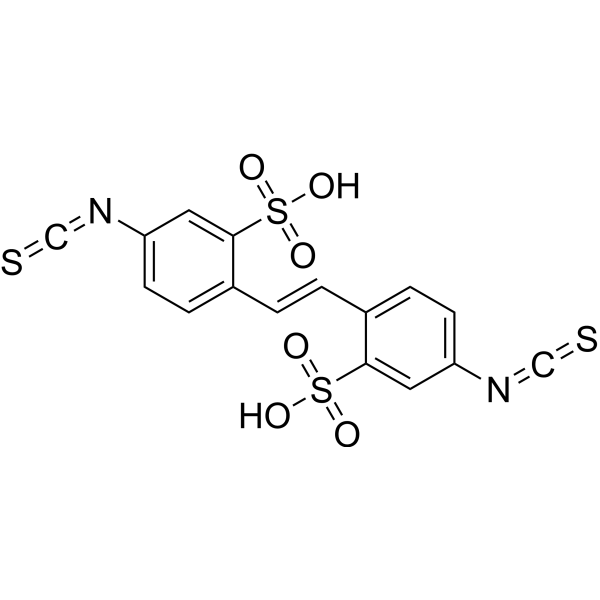 0 ImagesArt. -Nr.: HY-121693CAS. Nr.: 53005-05-3Synonyms: MDL101114ZA free base



