



4-Vinylcyclohexene dioxide

Based on 1 Customer Validation
4-Vinylcyclohexene dioxide (4-Vinylcyclohexene diepoxide) is an orally active metabolite of 4-vinylcyclohexene. 4-Vinylcyclohexene dioxide induces Apoptosis, increases intracellular ROS, and activates the PI3K/Akt/mTOR pathway. 4-Vinylcyclohexene dioxide selectively damages small ovarian follicles, inhibits granulosa cell function, and disrupts the male reproductive system. 4-Vinylcyclohexene dioxide can be used in the study of premature ovarian insufficiency, reproductive toxicity, and related fertility disorders.
For research use only. We do not sell to patients.
- Purity : 98.57%
- CAS No.: 106-87-6
- Formula: C8H12O2
- Molecular Weight:140.18
-
Storage:Pure form -20°C, 3 years , 4°C, 2 years ; In solvent -80°C, 6 months , -20°C, 1 month


To place orders, for customer services and technical support, please contact: MedChemExpress USA
Tel: 609-228-6898 E-mail: [email protected] [email protected]


-
 Biological Activity
-
Chemical Information
-
Solvent & Solubility
- Protocols
- Purity & Documentation
- References
-
 Help & FAQs


-

HY-154629
Sesame OilNatural Product -
HY-Y0873
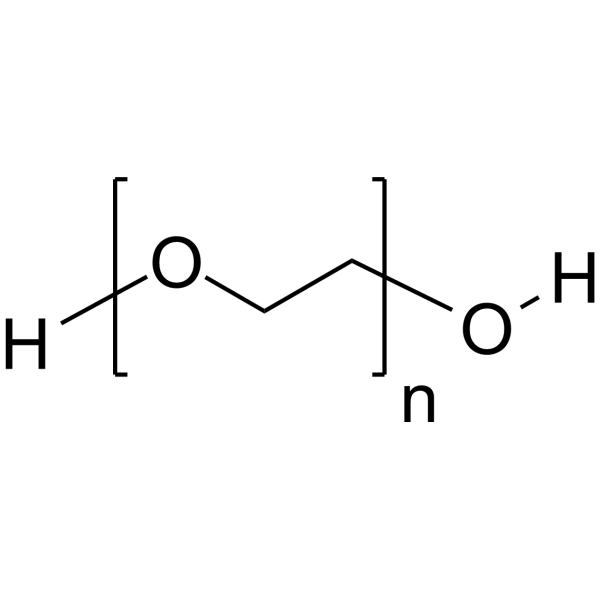
PEG300Neutral Polymer -
HY-17420
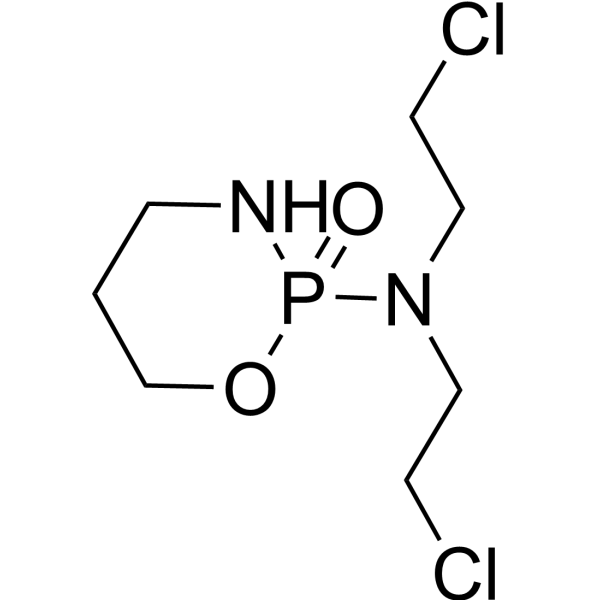
CyclophosphamideAlkylating Agent -
HY-15312
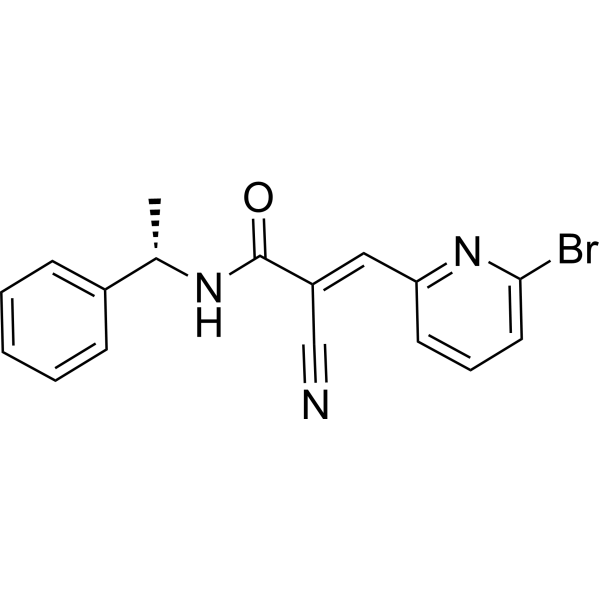
WP1066JAK2/STAT3 Inhibitor -

HY-106591AR
4-Vinylcyclohexene dioxide (Standard)Reference Standard -
HY-N0047
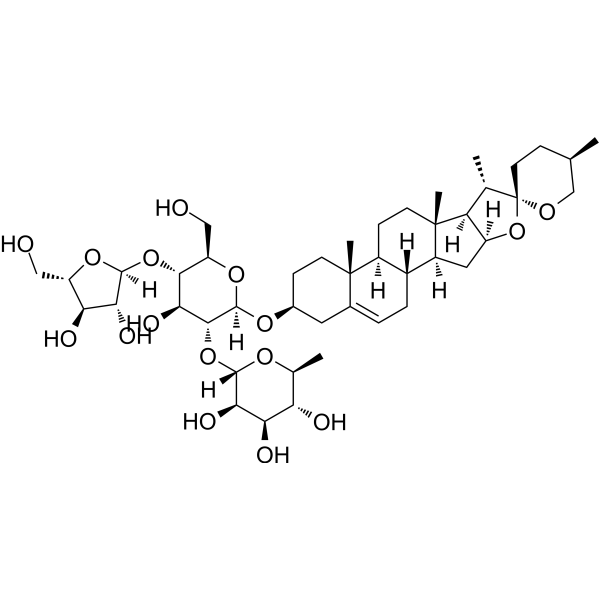
Polyphyllin IAutophagy Inducer -
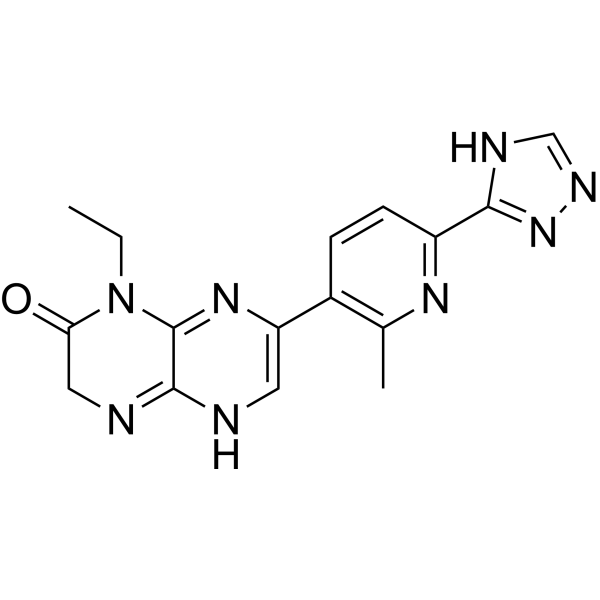
HY-16962
CC-115DNA-PK/mTOR Inhibitor -
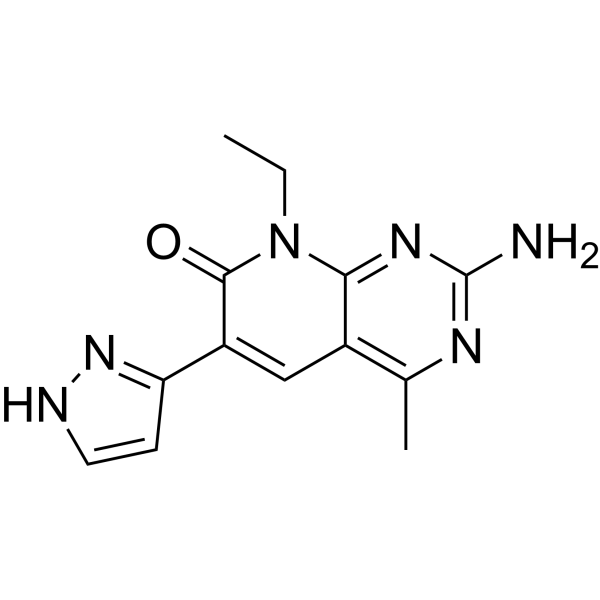
HY-15900
VoxtalisibPI3K Inhibitor -
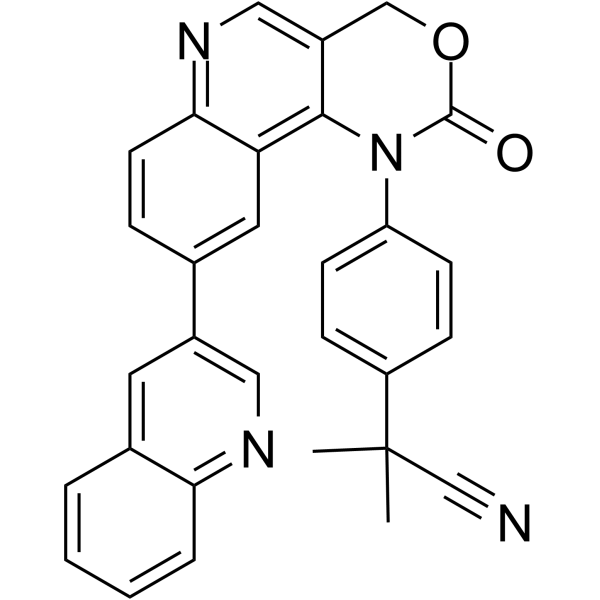
HY-15521
ETP-46464mTOR/ATR Inhibitor -
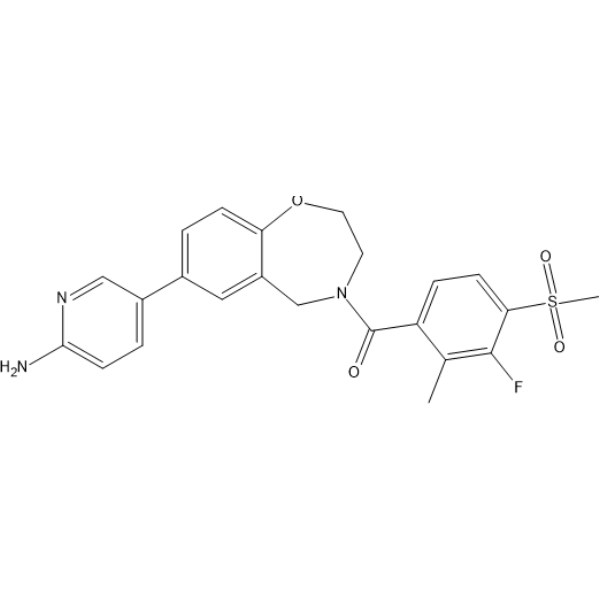
HY-13806
XL388mTOR Inhibitor -
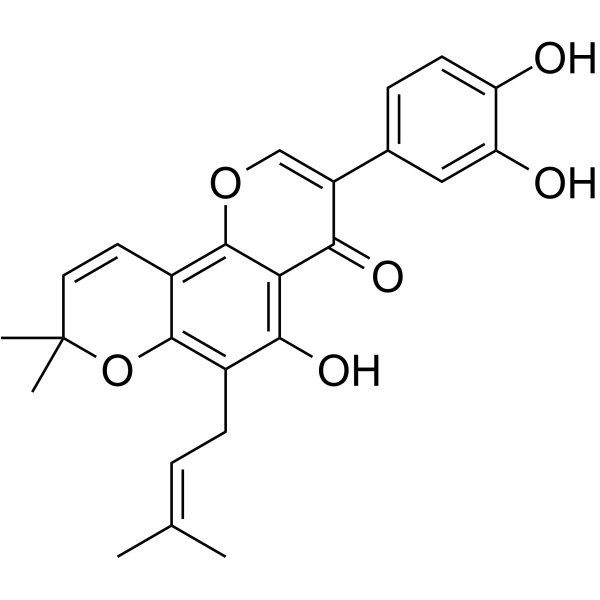
HY-N4315
PomiferinHDAC/mTOR Inhibitor -
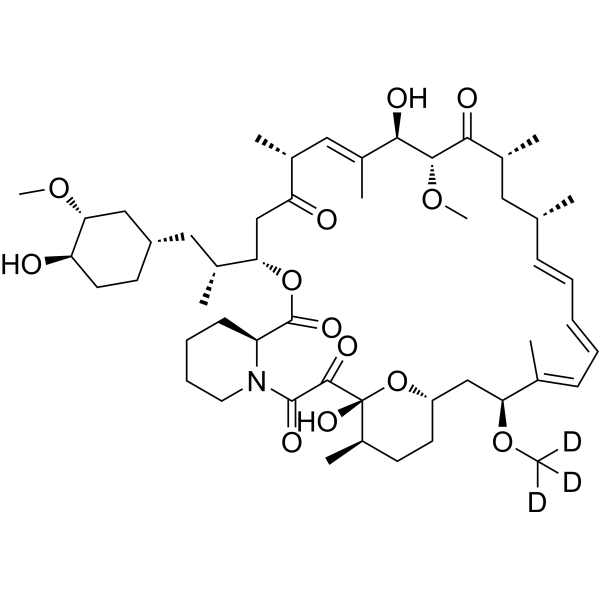
HY-10219S
Rapamycin-d3Stable Isotope


Biological Activity
Description
In Vitro
4-Vinylcyclohexene dioxide (90 μM-3 mM; 24 h) induces apoptosis, increases intracellular reactive oxygen species, and inhibits proliferation in human ovarian granulosa cell line (SVOG)[2].
4-Vinylcyclohexene dioxide (10 nM-10 mM; 6-24 h) promotes the activation of primordial follicles by transiently activating the PI3K/Akt/mTOR pathway[3].
MedChemExpress (MCE) has not independently confirmed the accuracy of these methods. They are for reference only.
-
Cell Line:Human ovarian granulosa cell line (SVOG)
-
Concentration:0.5 mM, 1 mM
-
Incubation Time:24 h
-
Result:Increased apoptosis with higher Annexin V-positive cells.
Induced a significant increase in Hoechst 33342 and PI positive cells in a dose-dependent manner.
In Vivo
4-Vinylcyclohexene dioxide (80 mg/kg; i.p.; 5-10 days) promotes superovulation, increases serum E2 and FSH levels, and enhances follicular development in middle-aged C57BL/6J mice [3].
4-Vinylcyclohexene dioxide (100-500 mg/kg; p.o.; daily for 28 days) disrupts sperm characteristics, reduces reproductive hormones, and induces oxidative stress and apoptosis in testes and epididymis of male Wistar rats[6] .
MedChemExpress (MCE) has not independently confirmed the accuracy of these methods. They are for reference only.
-
Animal Model:Female F344 rats (28-day-old) [1]
-
Dosage:80 mg/kg
-
Administration:i.p., 1 day or 15 days
-
Result:Increased cytosolic caspase-3 activity in small follicles (Day 1: 2.86; Day 15: 3.25, VCD/control).
Increased procaspase-3 protein by 212% (Day 15).
Increased caspase-8 activity (Day 15).
Increased caspase-9 activity (Day 1).


Chemical Information
-
CAS No. 106-87-6
-
Appearance Liquid (Density: 1.0986 g/cm3)
-
Molecular Weight 140.18
-
Formula C8H12O2
-
Color Colorless to light yellow
-
SMILES
C1(C2CCC3OC3C2)CO1
-
Synonyms
Vinylcyclohexene diepoxide
-
Shipping
Room temperature in continental US; may vary elsewhere.
-
Storage
Pure form -20°C 3 years 4°C 2 years In solvent -80°C 6 months -20°C 1 month


Solvent & Solubility
In Vitro:
DMSO : 50 mg/mL (356.68 mM; Need ultrasonic; Hygroscopic DMSO has a significant impact on the solubility of product, please use newly opened DMSO)
Please refer to the solubility information to select the appropriate solvent. Once prepared, please aliquot and store the solution to prevent product inactivation from repeated freeze-thaw cycles.
Storage method and period of stock solution: -80°C, 6 months; -20°C, 1 month. When stored at -80°C, please use it within 6 months. When stored at -20°C, please use it within 1 month.
Please refer to the solubility information to select the appropriate solvent. Once prepared, please aliquot and store the solution to prevent product inactivation from repeated freeze-thaw cycles.
Storage method and period of stock solution: -80°C, 6 months; -20°C, 1 month. When stored at -80°C, please use it within 6 months. When stored at -20°C, please use it within 1 month.
Concentration (start) × Volume (start) = Concentration (final) × Volume (final)
In Vivo:
Select the appropriate dissolution method based on your experimental animal and administration route.
- For the following dissolution methods, please ensure to first prepare a clear stock solution using an In Vitro approach and then sequentially add co-solvents:
- To ensure reliable experimental results, the clarified stock solution can be appropriately stored based on storage conditions. As for the working solution for In Vivo experiments, it is recommended to prepare freshly and use it on the same day.
- The percentages shown for the solvents indicate their volumetric ratio in the final prepared solution. If precipitation or phase separation occurs during preparation, heat and/or sonication can be used to aid dissolution.
Add each solvent one by one: 10% DMSO 40% PEG300 5% Tween-80 45% Saline
Solubility: ≥ 5 mg/mL (35.67 mM); Clear solution
This protocol yields a clear solution of ≥ 5 mg/mL (saturation unknown).
Taking 1 mL working solution as an example, add 100 μL DMSO stock solution (50.0 mg/mL) to 400 μL PEG300, and mix evenly; then add 50 μL Tween-80 and mix evenly; then add 450 μL Saline to adjust the volume to 1 mL.
Preparation of Saline: Dissolve 0.9 g sodium chloride in ddH₂O and dilute to 100 mL to obtain a clear Saline solution.
Add each solvent one by one: 10% DMSO 90% (20% SBE-β-CD in Saline)
Solubility: ≥ 5 mg/mL (35.67 mM); Clear solution
This protocol yields a clear solution of ≥ 5 mg/mL (saturation unknown).
Taking 1 mL working solution as an example, add 100 μL DMSO stock solution (50.0 mg/mL) to 900 μL 20% SBE-β-CD in Saline, and mix evenly.
Preparation of 20% SBE-β-CD in Saline (4°C, storage for one week): 2 g SBE-β-CD powder is dissolved in 10 mL Saline, completely dissolve until clear.
For the following dissolution methods, please prepare the working solution directly:
It is recommended to prepare fresh solutions and use them promptly within a short period of time.
The percentages shown for the solvents indicate their volumetric ratio in the final prepared solution. If precipitation or phase separation occurs during preparation, heat and/or sonication can be used to aid dissolution.
Add each solvent one by one: Corn Oil
Solubility: 25 mg/mL (178.34 mM); Clear solution; Need ultrasonic
Add each solvent one by one: 15% Cremophor EL 85% Saline
Solubility: 25 mg/mL (178.34 mM); Suspended solution; Need ultrasonic
In Vivo Dissolution Calculator
Please enter the basic information of animal experiments:
-
-
-
-
Recommended: Prepare an additional quantity of animals to account for potential losses during experiments.
Please enter your animal formula composition:
-
%DMSO +
Recommended: Keep the proportion of DMSO in working solution below 2% if your animal is weak.
-
%+
-
+%Tween-80 + +
-
%Saline +
The co-solvents required include: DMSO, . All of co-solvents are available by MedChemExpress (MCE). , Tween 80. All of co-solvents are available by MedChemExpress (MCE).
Working solution concentration: 0.22 mg/mL
Method for preparing stock solution: mg drug dissolved in μL DMSO. Stock solution concentration: mg/mL.
1. Take μL DMSO stock solution;
2. Add μL .
μL , mix evenly;
3. Then add μL Tween 80, mix evenly;
4. Then add μL
Please ensure that the stock solution in the first step is dissolved to a clear state, and add co-solvents in sequence. You can use ultrasonic heating (ultrasonic cleaner, recommended frequency 20-40 kHz), vortexing, etc. to assist dissolution.


Purity & Documentation
-
Data Sheet (277 KB)
-
SDS (645 KB)
- English - EN (645 KB)
- Français - FR (645 KB)
- Deutsch - DE (645 KB)
- Norwegian - NO (645 KB)
- Español - ES (645 KB)
- Swedish - SV (645 KB)
- Italian - IT (645 KB)
- Korean - KR (645 KB)
- Portuguese - PT (645 KB)
-
Handling Instructions (2659 KB)
References
[1]. Hu X, et al. Apoptosis induced in rats by 4-vinylcyclohexene diepoxide is associated with activation of the caspase cascades. Biol Reprod. 2001 Jul;65(1):87-93. [Content Brief]
[2]. Song W, et al. 4-vinylcyclohexene diepoxide induces apoptosis by excessive reactive oxygen species and DNA damage in human ovarian granulosa cells. Toxicol In Vitro. 2023 Sep;91:105613. [Content Brief]
[3]. Cao LB, et al. Hormone-Like Effects of 4-Vinylcyclohexene Diepoxide on Follicular Development. Front Cell Dev Biol. 2020 Jul 31;8:587. [Content Brief]
[4]. Miao Y, et al. Effects of 4-vinylcyclohexene diepoxide on the cell cycle, apoptosis, and steroid hormone secretion of goat ovarian granulosa cells. In Vitro Cell Dev Biol Anim. 2022 Mar;58(3):220-231. [Content Brief]
[5]. Kao SW, et al. Early effects of ovotoxicity induced by 4-vinylcyclohexene diepoxide in rats and mice. Reprod Toxicol. 1999 Jan-Feb;13(1):67-75. [Content Brief]
[6]. Adedara IA, et al. 4-Vinylcyclohexene diepoxide disrupts sperm characteristics, endocrine balance and redox status in testes and epididymis of rats. Redox Rep. 2017 Nov;22(6):388-398. [Content Brief]


Complete Stock Solution Preparation Table
Please refer to the solubility information to select the appropriate solvent. Once prepared, please aliquot and store the solution to prevent product inactivation from repeated freeze-thaw cycles.
Storage method and period of stock solution: -80°C, 6 months; -20°C, 1 month. When stored at -80°C, please use it within 6 months. When stored at -20°C, please use it within 1 month.
| Optional Solvent | Concentration Solvent Mass | 1 mg | 5 mg | 10 mg | 25 mg |
|---|---|---|---|---|---|
| DMSO | 1 mM | 7.1337 mL | 35.6684 mL | 71.3369 mL | 178.3421 mL |
| 5 mM | 1.4267 mL | 7.1337 mL | 14.2674 mL | 35.6684 mL | |
| 10 mM | 0.7134 mL | 3.5668 mL | 7.1337 mL | 17.8342 mL | |
| 15 mM | 0.4756 mL | 2.3779 mL | 4.7558 mL | 11.8895 mL | |
| 20 mM | 0.3567 mL | 1.7834 mL | 3.5668 mL | 8.9171 mL | |
| 25 mM | 0.2853 mL | 1.4267 mL | 2.8535 mL | 7.1337 mL | |
| 30 mM | 0.2378 mL | 1.1889 mL | 2.3779 mL | 5.9447 mL | |
| 40 mM | 0.1783 mL | 0.8917 mL | 1.7834 mL | 4.4586 mL | |
| 50 mM | 0.1427 mL | 0.7134 mL | 1.4267 mL | 3.5668 mL | |
| 60 mM | 0.1189 mL | 0.5945 mL | 1.1889 mL | 2.9724 mL | |
| 80 mM | 0.0892 mL | 0.4459 mL | 0.8917 mL | 2.2293 mL | |
| 100 mM | 0.0713 mL | 0.3567 mL | 0.7134 mL | 1.7834 mL |


4-Vinylcyclohexene dioxide Related Classifications
HY-106591A Related Classifications
 Powered by Bioz