



PI3KC2β
PI3KC2β is a class II phosphoinositide 3-kinase that regulates lipid signaling, vesicular trafficking, cytoskeletal organization, cell migration, and cell survival[1]. Mechanistically, PI3KC2β links phosphoinositide metabolism to endosomal trafficking because PI3KC2β loss in human cerebral microvascular endothelial cells increases Rab11-dependent VE-cadherin recycling and stabilizes endothelial cell-cell junctions[2]. In disease models, inactive PI3KC2β protects mice against vascular permeability, edema, cerebral infarction, and inflammatory response after ischemic stroke[2]. PI3KC2β also limits endothelial mTORC1 signaling during angiogenic growth, and kinase-inactive PI3KC2β causes enlarged blood vessels through increased endothelial cell size rather than increased proliferation or migration[3]. In MTM1-related myotubular myopathy models, PI3KC2β inhibition improves muscle function and survival, while selective kinase inactivation prevents muscle atrophy, weakness, histopathology, sarcomere defects, and triad disorganization in Mtm1-knockout mice[4][5]. Compared with related isoforms, PI3KC2β differs from PI3KC2α because PI3KC2α deficiency increases vascular permeability, whereas PI3KC2β inactivation preserves vascular integrity after injury[2]. For experimental applications, kinase-dead PI3KC2β models support target validation, but no specific PI3KC2β kinase inhibitor has been developed and published[5].
References:
- [1]. Katso RM, et al. Phosphoinositide 3-Kinase C2beta regulates cytoskeletal organization and cell migration via Rac-dependent mechanisms. Mol Biol Cell. 2006 Sep;17(9):3729-44. [Content Brief]
- [2]. Anquetil T, et al. PI3KC2β inactivation stabilizes VE-cadherin junctions and preserves vascular integrity. EMBO Rep. 2021 Jun 4;22(6):e51299. [Content Brief]
- [3]. Kobialka P, et al. PI3K-C2β limits mTORC1 signaling and angiogenic growth. Sci Signal. 2023 Nov 28;16(813):eadg1913. [Content Brief]
- [4]. Sabha N, et al. PIK3C2B inhibition improves function and prolongs survival in myotubular myopathy animal models. J Clin Invest. 2016 Sep 1;126(9):3613-25. [Content Brief]
- [5]. Massana-Muñoz X, et al. Inactivating the lipid kinase activity of PI3KC2β is sufficient to rescue myotubular myopathy in mice. JCI Insight. 2023 May 8;8(9):e151933. [Content Brief]
All Product Categories
-
PI3KC2β Related Products (12)
Related Products (12)

- 1
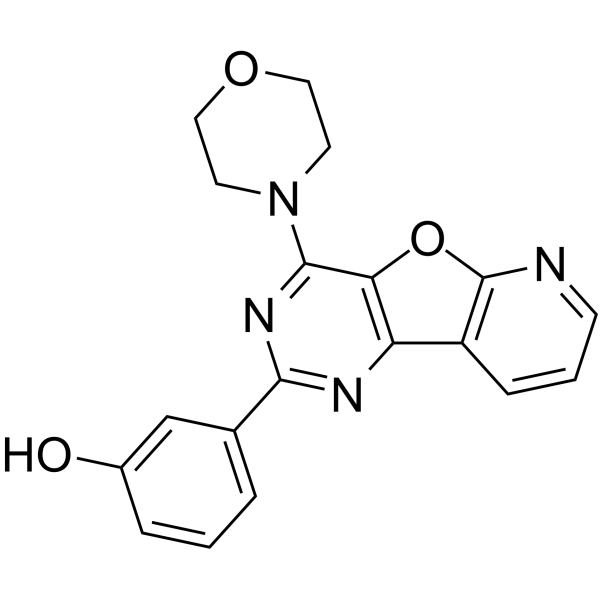
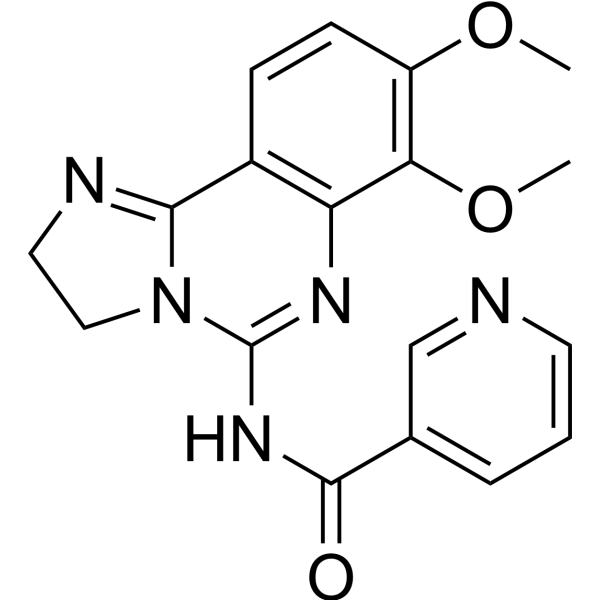
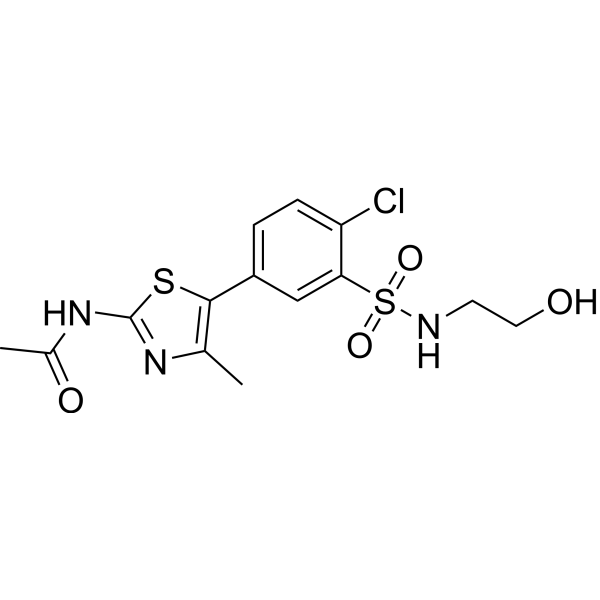
-
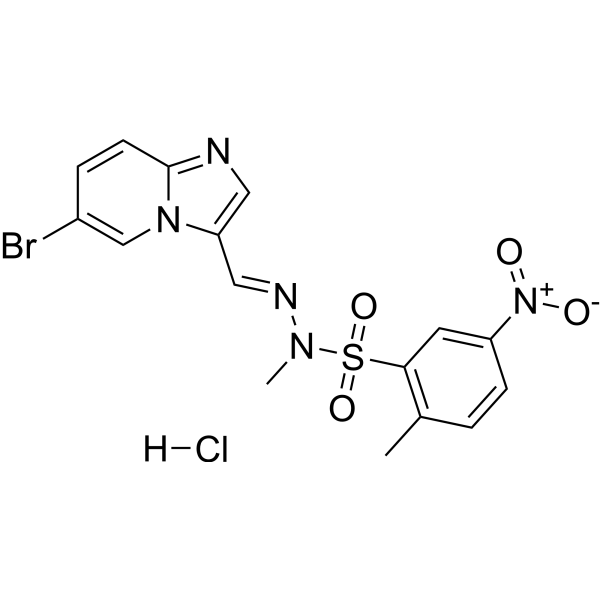
AZD 6482
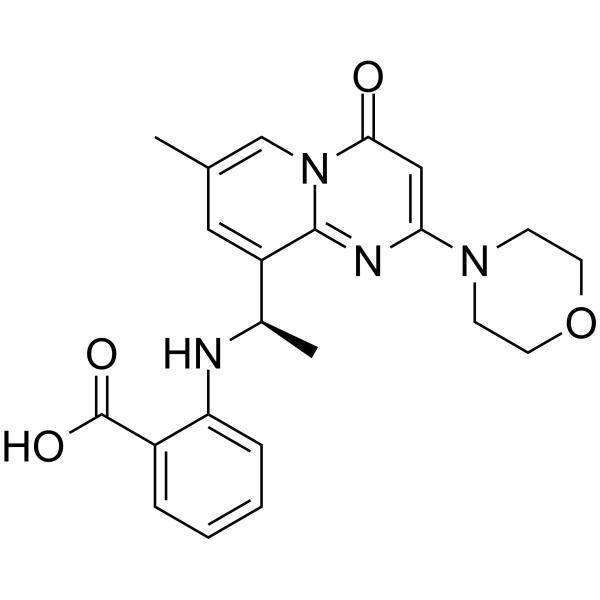 0 ImagesSynonyms: KIN-193AZD 6482 (KIN-193) is a potent and selective p110β inhibitor with an IC50 of 0.69 nM.
-
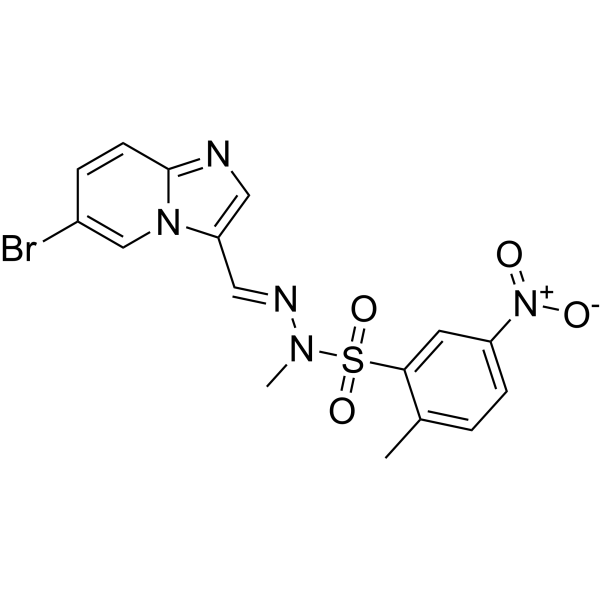
PIK-124
 0 ImagesCat. No.: HY-118903CAS No.: 711025-68-2
-
MIPS-21335
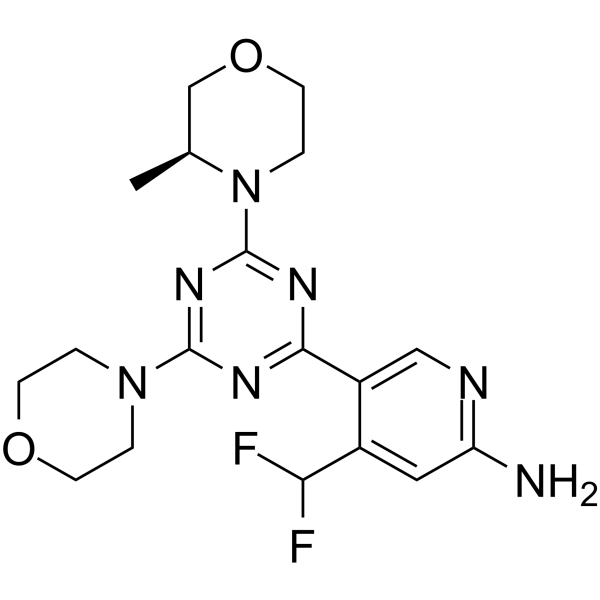
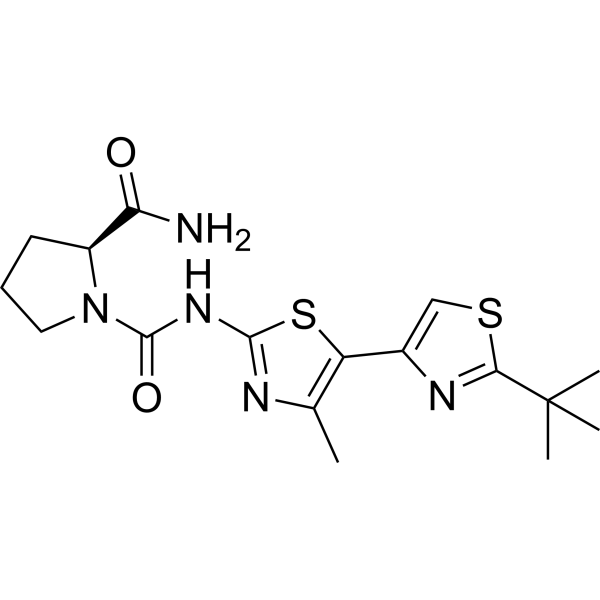
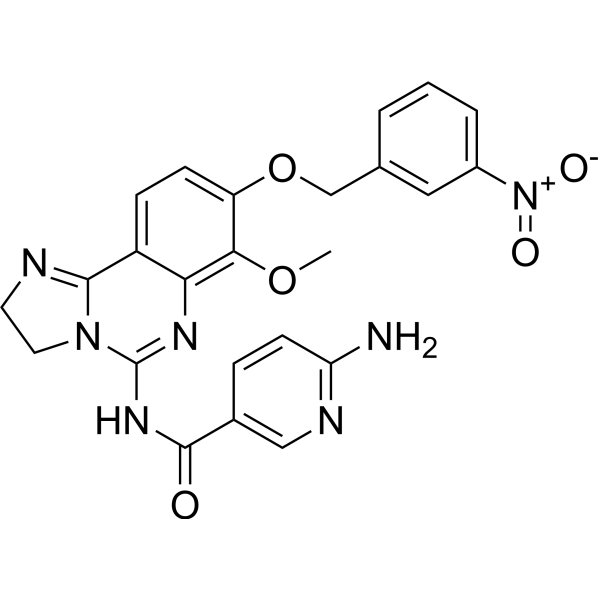 0 ImagesMIPS-21335 is a PI3KC2α inhibitor with an IC50 of 7 nM. MIPS-21335 also inhibits PI3KC2β, p110α, p110β and p110δ, with IC50 values of 43, 140, 386 and 742 nM, respectively. MIPS-21335 has antithrombotic effect. MIPS-21335 can be used for the researches of cardiovascular disease and metabolic disease, such as thrombosis and hyperlipidemia.
-
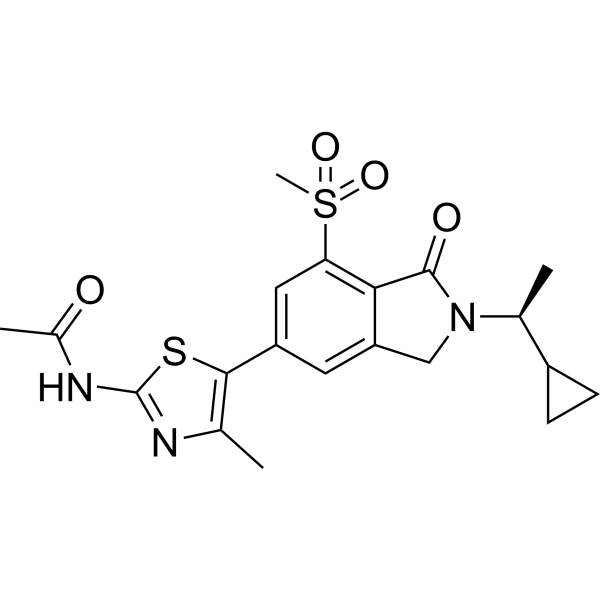
CHMFL-PI3KD-317
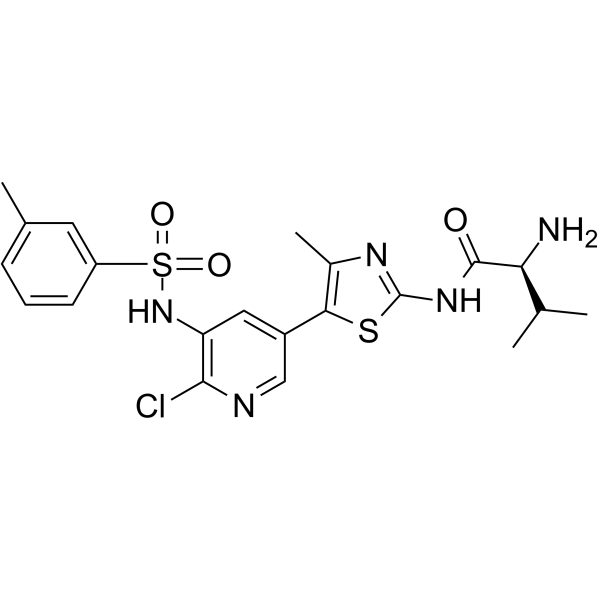 0 ImagesCHMFL-PI3KD-317 is a highly potent, selective and orally active PI3Kδ inhibitor, with an IC50 of 6 nM, and exhibits over 10-1500 fold selectivity over other class I, II and III PIKK family isoforms, such as PI3Kα (IC50, 62.6 nM), PI3Kβ (IC50, 284 nM), PI3Kγ (IC50, 202.7 nM), PIK3C2A (IC50, >10000 nM), PIK3C2B (IC50, 882.3 nM), VPS34 (IC50, 1801.7 nM), PI4KIIIA (IC50, 574.1 nM) and PI4KIIIB (IC50, 300.2 nM). CHMFL-PI3KD-317 inhibits PI3Kδ-mediated Akt T308 phosphorylation in Raji cells, with an EC50 of 4.3 nM. CHMFL-PI3KD-317 has antiproliferative effects on cancer cells.
- 1



