



PIK-90
Based on 6 publication(s) in Google Scholar
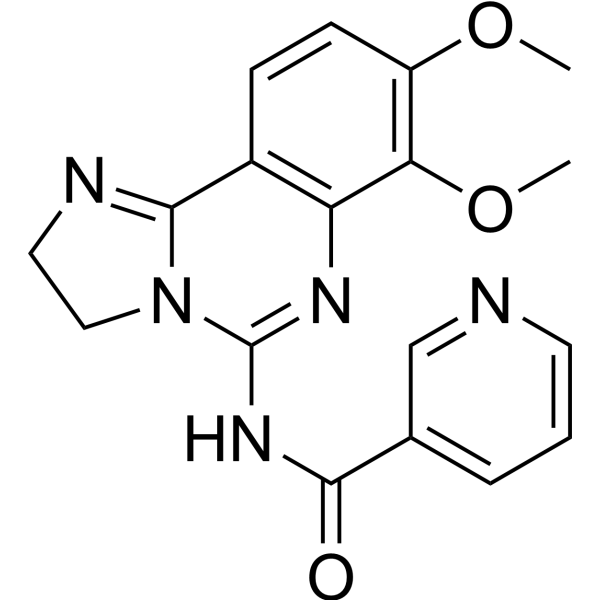
PIK-90 is a DNA-PK and PI3K inhibitor, which inhibits p110α, p110γ and DNA-PK with IC50s of 11, 18 and 13 nM, respectively.
For research use only. We do not sell to patients.
- Purity : 99.31%
- CAS No.: 677338-12-4
- Formula: C18H17N5O3
- Molecular Weight:351.36
-
Storage:Powder -20°C, 3 years , 4°C, 2 years ; In solvent -80°C, 2 years , -20°C, 1 year

To place orders, for customer services and technical support, please contact: MedChemExpress USA
Tel: 609-228-6898 E-mail: [email protected] [email protected]


-
 Biological Activity
-
Chemical Information
-
Solvent & Solubility
- Purity & Documentation
- References
-
 Help & FAQs


-
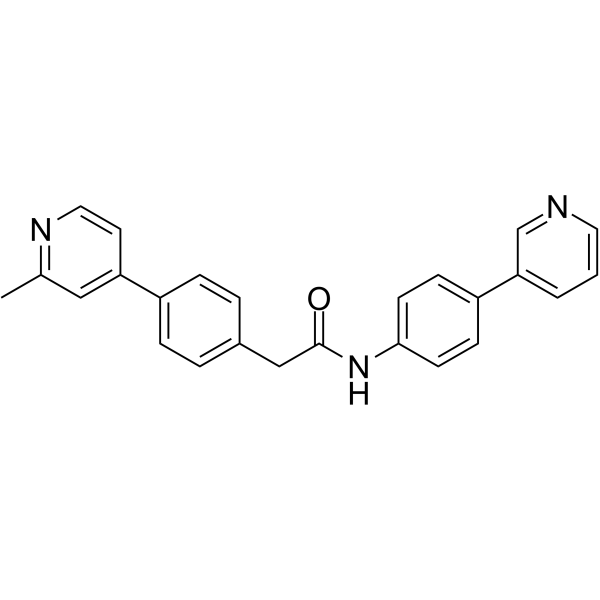
HY-15659
Wnt-C59PORCN Inhibitor -
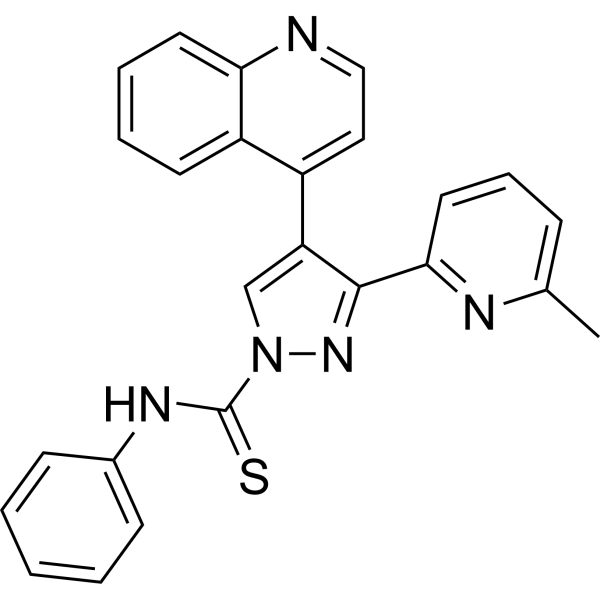
HY-10432
A 83-01ALK4/5/7 Inhibitor -
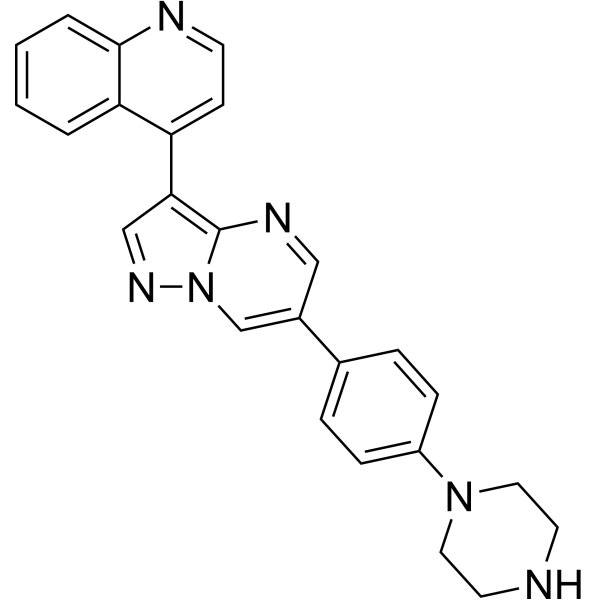
HY-12071
LDN193189ALK2/3 Inhibitor -
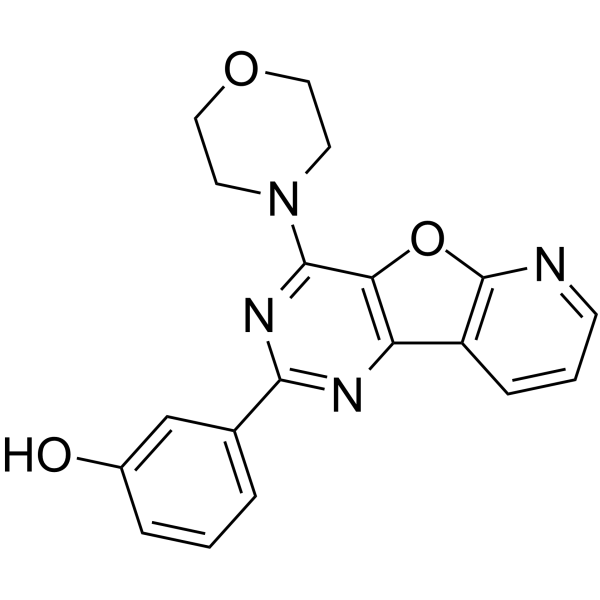
HY-10115
PI-103PI3K/mTOR Inhibitor -
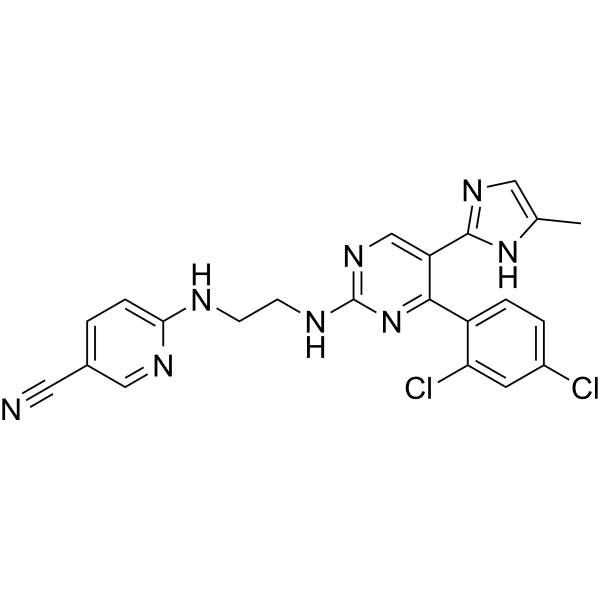
HY-10182
LaduviglusibGSK-3 Inhibitor -
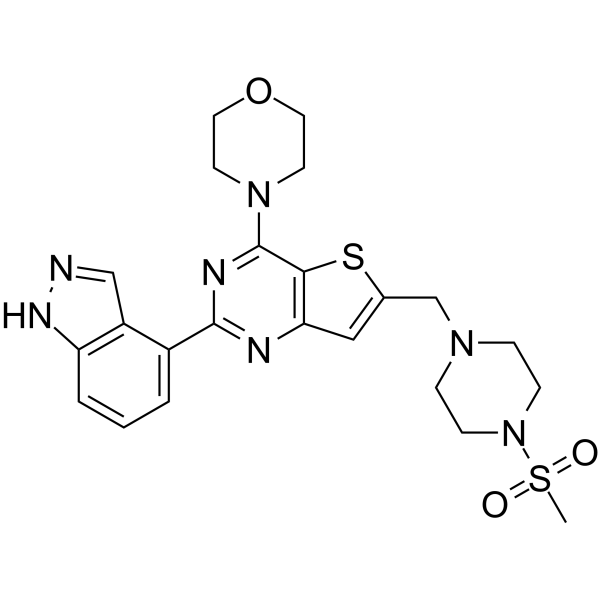
HY-50094
PictilisibPI3Kα/δ Inhibitor -
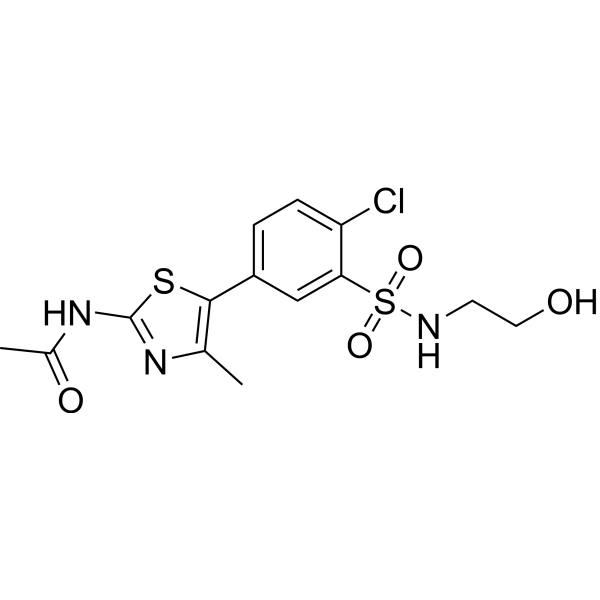
HY-12046
PIK-93Virus Protease Inhibitor -

HY-P70311
Activin A Protein, Human/Mouse/Rat (HEK293) -
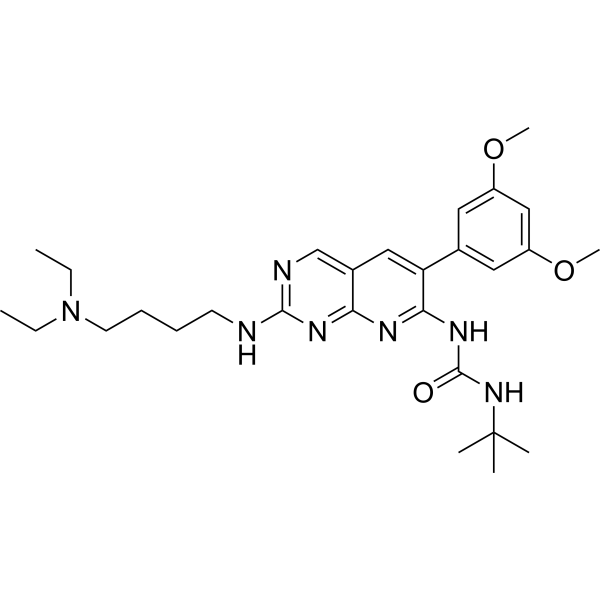
HY-10321
PD173074FGFR1 Inhibitor -
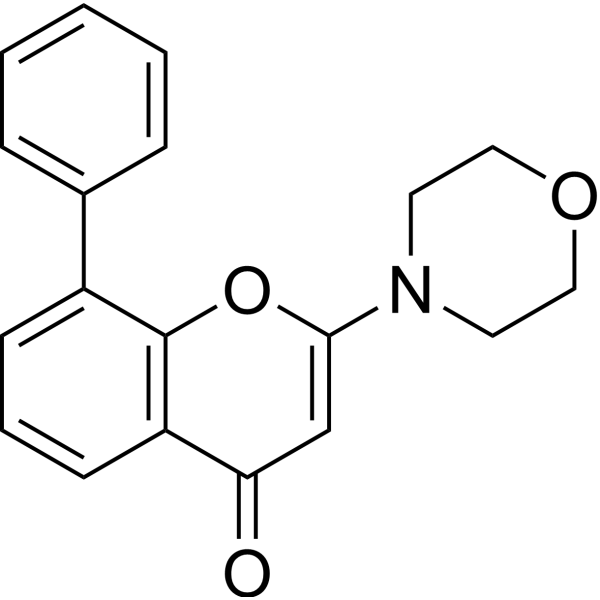
HY-10108
LY294002PI3K Inhibitor -
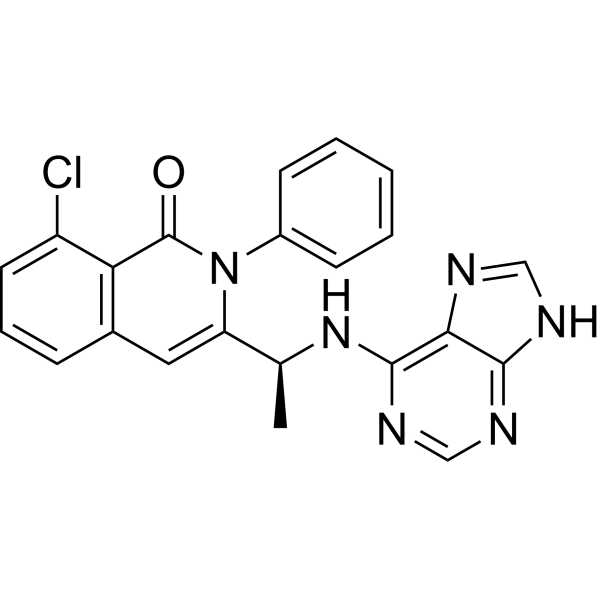
HY-17044
DuvelisibPI3Kδ Inhibitor -
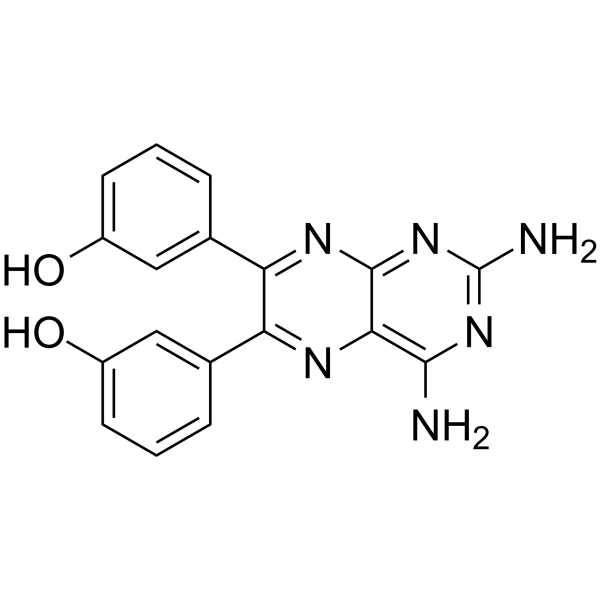
HY-10111
TG100-115PI3Kγ/PI3Kδ Inhibitor
Publications Citing Use of MedChemExpress (MCE) PIK-90
More Customer Validation & Images

-
In Vivo Efficacy Study
-
In Vivo Imaging

-
Histological Imaging/Staining

-
WB


Biological Activity
Description
IC50 & Target
[1]|
p110α 11 nM (IC50) |
p110γ 18 nM (IC50) |
p110δ 58 nM (IC50) |
p110β 350 nM (IC50) |
hsVPS34 830 nM (IC50) |
PI3KC2β 64 nM (IC50) |
PI3KC2α 47 nM (IC50) |
DNA-PK 13 nM (IC50) |
ATM 610 nM (IC50) |
PI4KIIIα 830 nM (IC50) |
PI4KIIIβ 3.1 μM (IC50) |
mTORC1 1.05 μM (IC50) |
ATR 15 μM (IC50) |
Cellular Effect
|
Cell Line

|
Type | Value | Description | References |
|---|---|---|---|---|
| HEK293 | IC50 |
0.047 μM
Compound: 15; PIK90
|
Inhibition of PI3KC2alpha (unknown origin) expressed in HEK293 cells using phosphatidylinositol and gamma-32P-ATP incubated for 20 mins by TLC assay or high-throughput membrane capture assay
Inhibition of PI3KC2alpha (unknown origin) expressed in HEK293 cells using phosphatidylinositol and gamma-32P-ATP incubated for 20 mins by TLC assay or high-throughput membrane capture assay
|
[PMID: 27644332] |
| HEK293 | IC50 |
0.064 μM
Compound: 15; PIK90
|
Inhibition of PI3KC2beta (unknown origin) expressed in HEK293 cells using phosphatidylinositol and gamma-32P-ATP incubated for 20 mins by TLC assay or high-throughput membrane capture assay
Inhibition of PI3KC2beta (unknown origin) expressed in HEK293 cells using phosphatidylinositol and gamma-32P-ATP incubated for 20 mins by TLC assay or high-throughput membrane capture assay
|
[PMID: 27644332] |
| TT | IC50 |
800 nM
Compound: PIK-90
|
Antiproliferative activity against human TT cells after 13 days by fluorescence assay
Antiproliferative activity against human TT cells after 13 days by fluorescence assay
|
[PMID: 18849971] |
In Vitro
PIK-90 also inhibits p110β, p110δ, PI3KC2α, PI3KC2β, hsVPS34, PI4KIIIα, PI4KIIIβ, ATR, ATM and mTORC1 with IC50s of 350 nM, 58 nM, 47 nM, 64 nM, 830 nM, 830 nM, 3.1 μM, 15 μM, 610 nM and 1.05 μM, respectively[1]. To determine the effects of PIK-90 on chronic lymphocytic leukemia (CLL) cell viability, CLL cells from different patients are incubated with various concentrations of PIK-90 (1 μM and 10 μM) for 24, 48, and 72 hours. PIK-90 reveals the strong apoptosis-inducing effects at both concentrations and at all different time points. Using a concentration of 10 μM, PIK-90 reduces the viability of CLL cells to 51.1% plus or minus 6.6% at 24 hours, whereas 1 μM PIK-90 reduces the viability to 77.8% plus or minus 6.4%[2].
MedChemExpress (MCE) has not independently confirmed the accuracy of these methods. They are for reference only.
In Vivo
MedChemExpress (MCE) has not independently confirmed the accuracy of these methods. They are for reference only.


Chemical Information
-
CAS No. 677338-12-4
-
Appearance Solid
-
Molecular Weight 351.36
-
Formula C18H17N5O3
-
Color Off-white to yellow
-
SMILES
O=C(NC1=NC2=C(C3=NCCN13)C=CC(OC)=C2OC)C4=CC=CN=C4
-
Shipping
Room temperature in continental US; may vary elsewhere.
-
Storage
Powder -20°C 3 years 4°C 2 years In solvent -80°C 2 years -20°C 1 year


Publications (6)
-
Journal Impact Factor
-
Most Recent
-
Sci Adv
2025 Apr 11;11(15):eadq5484. PMID: 40203091 -
cell rep methods
2022 Jan 24;2(2):100155. PMID: 35474962 -
Molecules
In Vitro and in Vivo Activity of mTOR Kinase and PI3K Inhibitors Against Leishmania donovani and Trypanosoma brucei. [Abstract]2020 Apr 23;25(8):1980. PMID: 32340370 -
J Cell Mol Med
GABARAPL1 Exerts Regulatory Effects on Hypoxia-Induced Pyroptosis in the Pathogenesis of Myocardial Infarction. [Abstract]2025 Mar;29(6):e70469. PMID: 40095893
PIK-90 purchased from MedChemExpress. Usage Cited in: J Cell Mol Med. 2025 Mar;29(6):e70469. [Abstract]
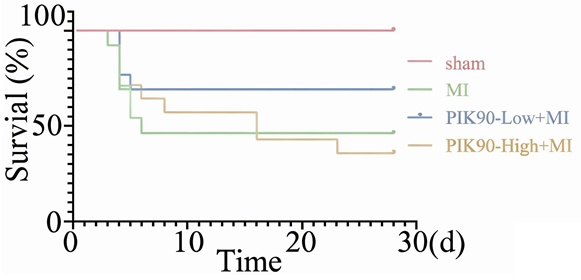
Survival analysis demonstrated a significant enhancement in survival rates in the PIK-90‐Low (20 mg/kg; i.p.; once daily for 28 days)+ Myocardial infarction (MI) group compared with the MI group, whereas no substantial changes were observed in the PIK-90‐High (40 mg/kg; i.p.; once daily for 28 days) + MI group.
PIK-90 purchased from MedChemExpress. Usage Cited in: J Cell Mol Med. 2025 Mar;29(6):e70469. [Abstract]
Echocardiographic evaluation showed that daily treatment with 20 mg/kg PIK-90 (i.p.; 28 days) significantly improved cardiac function in C57BL/6J mice with myocardial infarction (MI), while no such improvement was observed in the high-dose group.
PIK-90 purchased from MedChemExpress. Usage Cited in: J Cell Mol Med. 2025 Mar;29(6):e70469. [Abstract]
The Hematoxylin and Eosin (H&E) staining, Masson staining, and Wheat Germ Agglutinin (WGA) staining of adult mouse hearts at 28 days post Myocardial infarction (MI), scale bar = 1 mm or 20 μm. The results indicated that, compared to the MI group, the infarct size, myocardial fibrosis, and cross‐sectional area of cardiomyocytes in the infarct margin zone were reduced in the PIK-90‐Low (20 mg/kg; i.p.; once daily for 28 days) + MI group, while no differences were observed in the PIK-90‐High (40 mg/kg; i.p.; once daily for 28 days) + MI group.
PIK-90 purchased from MedChemExpress. Usage Cited in: J Cell Mol Med. 2025 Mar;29(6):e70469. [Abstract]
Western blotting analysis showing that the expression of NLRP3 under the treatment of PIK-90 (10 μM; 1 h prior to hypoxic exposure). The results demonstrated a significant increase in the expression levels of NLRP3 in the MI group compared with the Sham group, while treatment with PIK-90 markedly attenuated Myocardial infarction (MI)‐induced pyroptosis.
-
-


Solvent & Solubility
In Vitro:
1 M HCl : 100 mg/mL (284.61 mM; Need ultrasonic)
DMSO : 6.67 mg/mL (18.98 mM; ultrasonic and adjust pH to 2 with HCl; Hygroscopic DMSO has a significant impact on the solubility of product, please use newly opened DMSO)
Please refer to the solubility information to select the appropriate solvent. Once prepared, please aliquot and store the solution to prevent product inactivation from repeated freeze-thaw cycles.
Storage method and period of stock solution: -80°C, 2 years; -20°C, 1 year. When stored at -80°C, please use it within 2 years. When stored at -20°C, please use it within 1 year.
Please refer to the solubility information to select the appropriate solvent. Once prepared, please aliquot and store the solution to prevent product inactivation from repeated freeze-thaw cycles.
Storage method and period of stock solution: -80°C, 2 years; -20°C, 1 year. When stored at -80°C, please use it within 2 years. When stored at -20°C, please use it within 1 year.
Concentration (start) × Volume (start) = Concentration (final) × Volume (final)
In Vivo:
Select the appropriate dissolution method based on your experimental animal and administration route.
- For the following dissolution methods, please ensure to first prepare a clear stock solution using an In Vitro approach and then sequentially add co-solvents:
- To ensure reliable experimental results, the clarified stock solution can be appropriately stored based on storage conditions. As for the working solution for In Vivo experiments, it is recommended to prepare freshly and use it on the same day.
- The percentages shown for the solvents indicate their volumetric ratio in the final prepared solution. If precipitation or phase separation occurs during preparation, heat and/or sonication can be used to aid dissolution.
Add each solvent one by one: 10% DMSO 40% PEG300 5% Tween-80 45% Saline
Solubility: ≥ 0.67 mg/mL (1.91 mM); Clear solution
This protocol yields a clear solution of ≥ 0.67 mg/mL (saturation unknown).
Taking 1 mL working solution as an example, add 100 μL DMSO stock solution (6.7 mg/mL) to 400 μL PEG300, and mix evenly; then add 50 μL Tween-80 and mix evenly; then add 450 μL Saline to adjust the volume to 1 mL.
Preparation of Saline: Dissolve 0.9 g sodium chloride in ddH₂O and dilute to 100 mL to obtain a clear Saline solution.
Add each solvent one by one: 10% DMSO 90% (20% SBE-β-CD in Saline)
Solubility: ≥ 0.67 mg/mL (1.91 mM); Clear solution
This protocol yields a clear solution of ≥ 0.67 mg/mL (saturation unknown).
Taking 1 mL working solution as an example, add 100 μL DMSO stock solution (6.7 mg/mL) to 900 μL 20% SBE-β-CD in Saline, and mix evenly.
Preparation of 20% SBE-β-CD in Saline (4°C, storage for one week): 2 g SBE-β-CD powder is dissolved in 10 mL Saline, completely dissolve until clear.
For the following dissolution methods, please prepare the working solution directly:
It is recommended to prepare fresh solutions and use them promptly within a short period of time.
The percentages shown for the solvents indicate their volumetric ratio in the final prepared solution. If precipitation or phase separation occurs during preparation, heat and/or sonication can be used to aid dissolution.
In Vivo Dissolution Calculator
Please enter the basic information of animal experiments:
-
-
-
-
Recommended: Prepare an additional quantity of animals to account for potential losses during experiments.
Please enter your animal formula composition:
-
%DMSO +
Recommended: Keep the proportion of DMSO in working solution below 2% if your animal is weak.
-
%+
-
+%Tween-80 + +
-
%Saline +
The co-solvents required include: DMSO, . All of co-solvents are available by MedChemExpress (MCE). , Tween 80. All of co-solvents are available by MedChemExpress (MCE).
Working solution concentration: 0.22 mg/mL
Method for preparing stock solution: mg drug dissolved in μL DMSO. Stock solution concentration: mg/mL.
1. Take μL DMSO stock solution;
2. Add μL .
μL , mix evenly;
3. Then add μL Tween 80, mix evenly;
4. Then add μL
Please ensure that the stock solution in the first step is dissolved to a clear state, and add co-solvents in sequence. You can use ultrasonic heating (ultrasonic cleaner, recommended frequency 20-40 kHz), vortexing, etc. to assist dissolution.


Purity & Documentation
-
Data Sheet (299 KB)
-
SDS (393 KB)
- English - EN (393 KB)
- Français - FR (393 KB)
- Deutsch - DE (393 KB)
- Norwegian - NO (393 KB)
- Español - ES (393 KB)
- Swedish - SV (393 KB)
- Italian - IT (393 KB)
- Korean - KR (393 KB)
- Portuguese - PT (393 KB)
-
Handling Instructions (2659 KB)
References
[1]. Knight ZA, et al. A pharmacological map of the PI3-K family defines a role for p110alpha in insulin signaling. Cell. 2006 May 19;125(4):733-47. [Content Brief]
[2]. Niedermeier M, et al. Isoform-selective phosphoinositide 3'-kinase inhibitors inhibit CXCR4 signaling and overcome stromal cell-mediated drug resistance in chronic lymphocytic leukemia: a novel therapeutic approach. Blood. 2009 May 28;113(22):5549-57. [Content Brief]
[3]. Cheng CK, et al. Dual blockade of lipid and cyclin-dependent kinases induces synthetic lethality in malignant glioma. Proc Natl Acad Sci U S A. 2012 Jul 31;109(31):12722-7. [Content Brief]


Complete Stock Solution Preparation Table
Please refer to the solubility information to select the appropriate solvent. Once prepared, please aliquot and store the solution to prevent product inactivation from repeated freeze-thaw cycles.
Storage method and period of stock solution: -80°C, 2 years; -20°C, 1 year. When stored at -80°C, please use it within 2 years. When stored at -20°C, please use it within 1 year.
| Optional Solvent | Concentration Solvent Mass | 1 mg | 5 mg | 10 mg | 25 mg |
|---|---|---|---|---|---|
| DMSO / 1 M HCl | 1 mM | 2.8461 mL | 14.2304 mL | 28.4608 mL | 71.1521 mL |
| 5 mM | 0.5692 mL | 2.8461 mL | 5.6922 mL | 14.2304 mL | |
| 10 mM | 0.2846 mL | 1.4230 mL | 2.8461 mL | 7.1152 mL | |
| 15 mM | 0.1897 mL | 0.9487 mL | 1.8974 mL | 4.7435 mL | |
| 1 M HCl | 20 mM | 0.1423 mL | 0.7115 mL | 1.4230 mL | 3.5576 mL |
| 25 mM | 0.1138 mL | 0.5692 mL | 1.1384 mL | 2.8461 mL | |
| 30 mM | 0.0949 mL | 0.4743 mL | 0.9487 mL | 2.3717 mL | |
| 40 mM | 0.0712 mL | 0.3558 mL | 0.7115 mL | 1.7788 mL | |
| 50 mM | 0.0569 mL | 0.2846 mL | 0.5692 mL | 1.4230 mL | |
| 60 mM | 0.0474 mL | 0.2372 mL | 0.4743 mL | 1.1859 mL | |
| 80 mM | 0.0356 mL | 0.1779 mL | 0.3558 mL | 0.8894 mL | |
| 100 mM | 0.0285 mL | 0.1423 mL | 0.2846 mL | 0.7115 mL |


PIK-90 Related Classifications
HY-12030 Related Classifications
 Powered by Bioz