



PI4KIIIβ
PI4KIIIβ (phosphatidylinositol 4-kinase IIIβ, PI4KB) is a type III phosphatidylinositol 4-kinase that generates phosphatidylinositol 4-phosphate (PI4P), a central lipid intermediate that supports phosphoinositide signaling, membrane dynamics, and intracellular trafficking pathways[1][2]. Mechanistically, PI4KIIIβ is enriched at the Golgi apparatus and trans-Golgi network, where it regulates lipid transport, Golgi-derived vesicular trafficking, cytokinesis, lysosomal homeostasis, and Rab GTPase-dependent membrane transport processes[2]. Through its production of PI4P, PI4KIIIβ contributes to the biosynthetic pathway leading to phosphatidylinositol 4,5-bisphosphate and other signaling phosphoinositides that coordinate cellular organization and trafficking networks[2]. In disease-related contexts, PI4KIIIβ has been implicated in multiple pathogenic processes and functions as a critical host factor supporting the replication of several positive-strand RNA viruses, making the kinase a widely used experimental target in antiviral research[1][2]. Altered phosphatidylinositol 4-kinase signaling has also been associated with human diseases, including cancer, and elevated PI4KIIIβ expression has been reported in subsets of breast tumors[1][3]. Compared with related phosphatidylinositol 4-kinase isoforms, PI4KIIIβ possesses isoform-specific structural features and protein-interaction networks that confer distinct functions in membrane trafficking and Golgi-associated signaling events[1]. For experimental applications, selective PI4KIIIβ inhibitors have been developed through structure-guided design, providing highly specific chemical probes that define PI4KIIIβ-dependent biology and demonstrate antiviral activity in cellular models while minimizing off-target inhibition of class I and class III PI3Ks[2].
References:
- [1]. Clayton EL, et al. Mammalian phosphatidylinositol 4-kinases as modulators of membrane trafficking and lipid signaling networks. Prog Lipid Res. 2013 Jul;52(3):294-304. [Content Brief]
- [2]. Rutaganira FU, et al. Design and Structural Characterization of Potent and Selective Inhibitors of Phosphatidylinositol 4 Kinase IIIβ. J Med Chem. 2016 Mar 10;59(5):1830-9. [Content Brief]
- [3]. Morrow AA, et al. The lipid kinase PI4KIIIβ is highly expressed in breast tumors and activates Akt in cooperation with Rab11a. Mol Cancer Res. 2014 Oct;12(10):1492-508. [Content Brief]
All Product Categories
-
PI4KIIIβ Related Products (17)
Related Products (17)

- 1
-
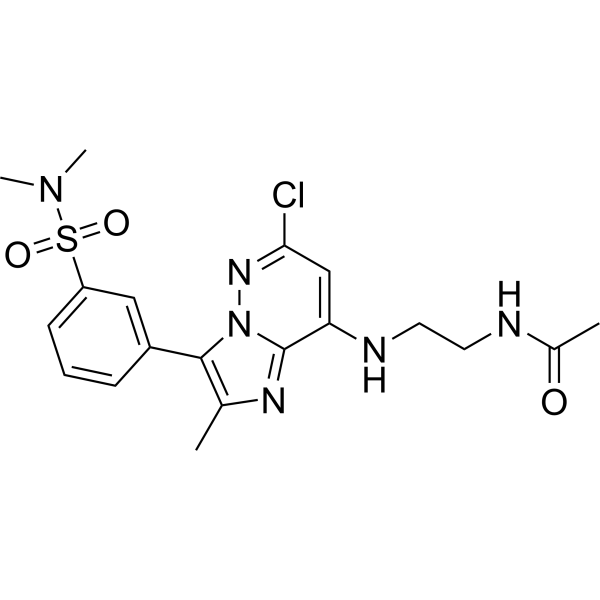
GSK-A1
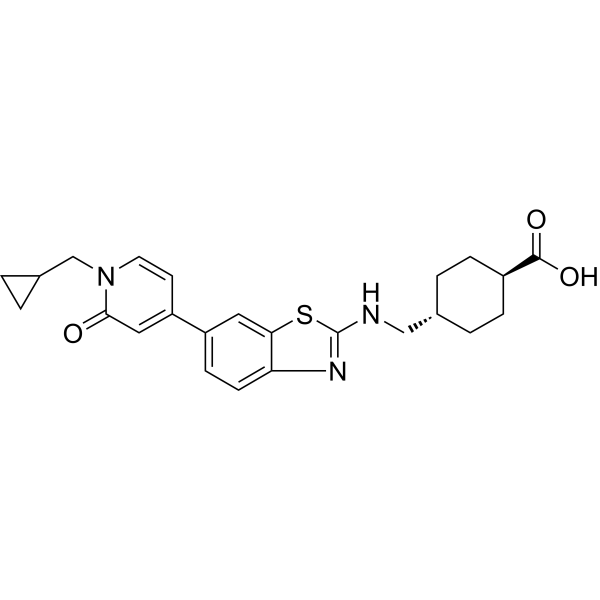
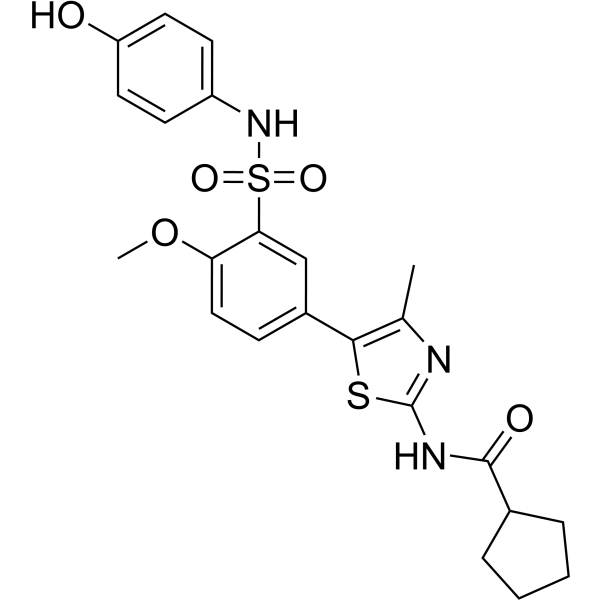
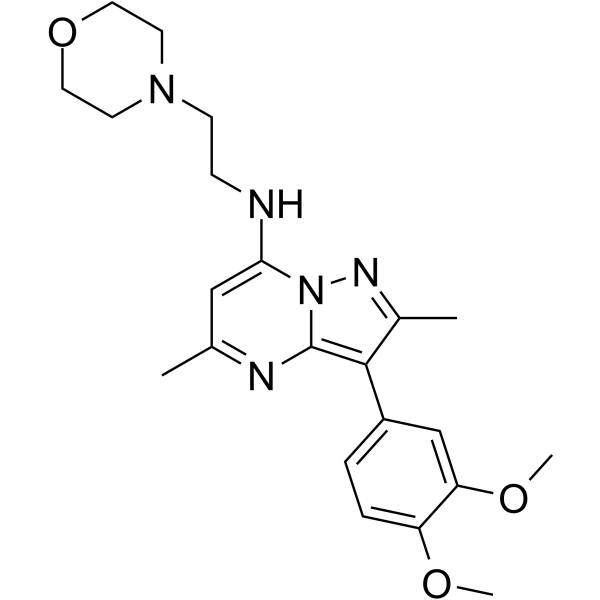
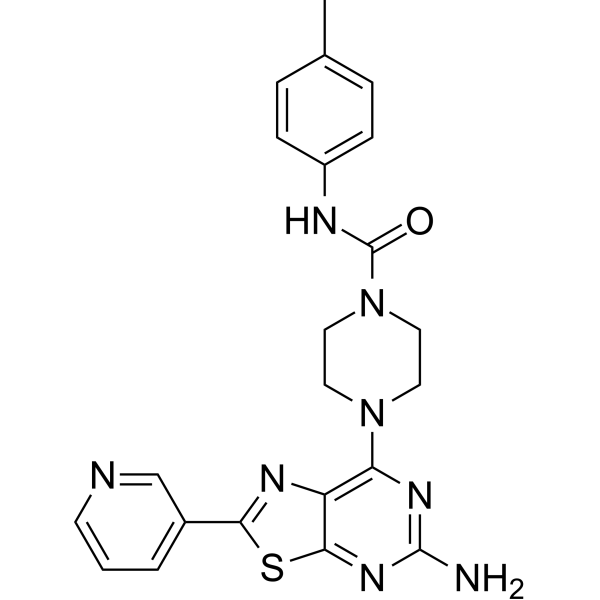
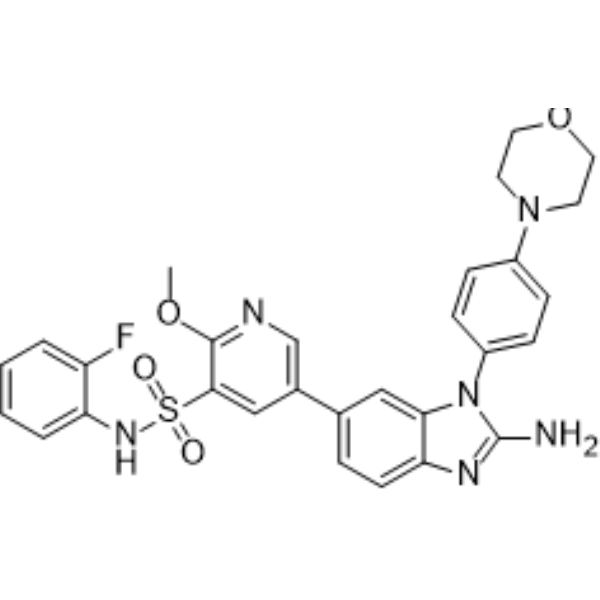 0 ImagesGSK-A1 is a selective type III phosphatidylinositol 4-kinase PI4KA (PI4KIIIα) inhibitor with a pIC50 of 8.5-9.8. GSK-A1 inhibits PtdIns(4,5)P2 resynthesis with an IC50 of about 3 nM. GSK-A1 potently decreases the levels of PtdIns(4)P with a negligible effect on PtdIns(4,5)P2. GSK-A1 has the potential for anti-hepatitis C virus (HCV) research.
-
BQR-695
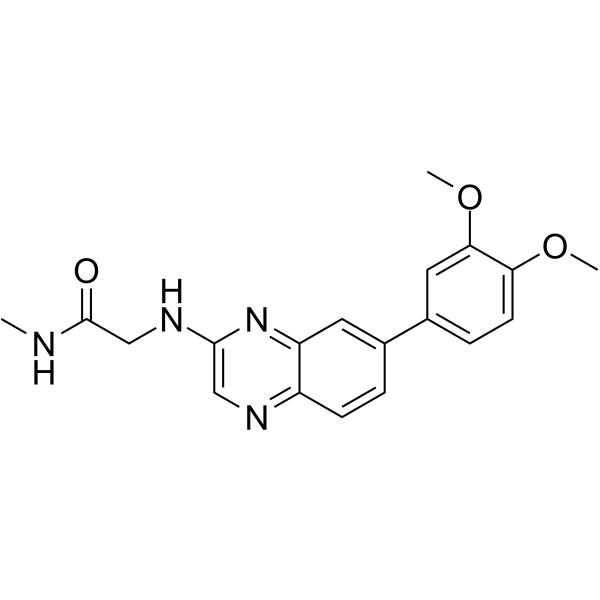 0 ImagesSynonyms: NVP-BQR695BQR-695 is a PI4KIIIβ inhibitor with IC50s of 80 and 3.5 nM for human PI4KIIIβ and Plasmodium variant of PI4KIIIβ, respectively.
-
(S)-GSK-F1
 0 Images(S)-GSK-F1 (Compound 28) is an inhibitor for type III phosphatidylinositol 4-kinase α (PI4KIIIα). (S)-GSK-F1 inhibits PI4Kα, PI4Kβ, PI4Kγ, PI3Kα, PI3Kβ and PI3Kδ with pIC50 of 8.3, 6.0, 5.6, 5.6, 5.1 and 5.6, respectively. (S)-GSK-F1 exhibits anti-hepatitis C virus (HCV) activity through inhibition of HCV replication. (S)-GSK-F1 exhibits moderate pharmacokinetic characters in rat model.
-
PI4KIIIbeta-IN-11
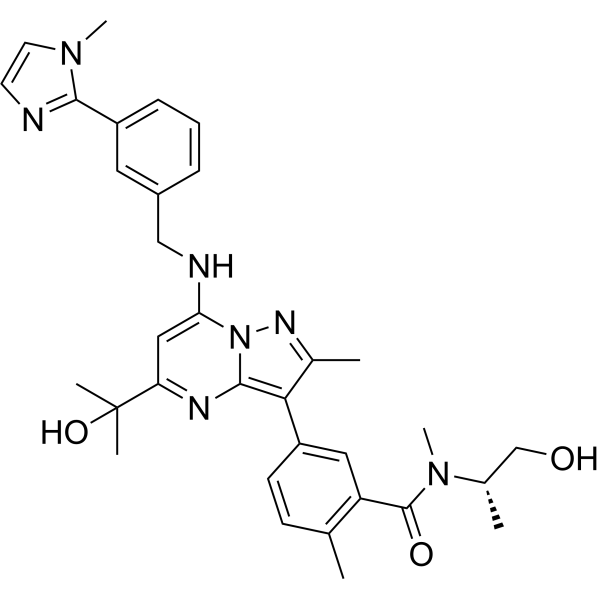 0 ImagesCat. No.: HY-148075CAS No.: 2365241-79-6PI4KIIIbeta-IN-11 is an inhibitor of PI4KIIIβ, with a mean pIC50 value of at least 9.1. PI4KIIIβ plays a key role in diseases research of RNA viruses and Plasmodium falciparum.
-
KR-27452
 0 ImagesCat. No.: HY-179469KR-27452 is a selective and orally active PI4KIIIβ inhibitor with an IC50 of 0.026 μM, while showing no activity against PI4KIIIα (IC50 >10 μM) . KR-27452 specifically binds to and inhibits PI4KIIIβ, leading to reduced viral replication in cells. KR-27452 exhibits strong antiviral activity against human rhinovirus (RVs) and Coxsackievirus (COXs). KR-27452 can be used for the research of infection.
-
PI4KIII beta inhibitor 4
 0 ImagesCat. No.: HY-172255CAS No.: 3029505-94-7PI4KIII beta inhibitor 4 (Compound 16) is a selective PI4KIIIβ inhibitor with an IC50 of 0.005 μM. PI4KIIIβ inhibitor 4 induces tumor cell apoptosis, cell cycle arrest, and autophagy by inhibiting the PI3K/AKT pathway. PI4KIIIβ inhibitor 4 can be used in the study of cancer.
-
PI4K-IN-2
 0 ImagesCat. No.: HY-175557CAS No.: 2411491-16-0PI4K-IN-2 (Compound 30) is a highly selective type III phosphatidylinositol 4-kinase β (PI4KB) inhibitor (IC50=0.015 μM). PI4K-IN-2 is promising for research of human rhinovirus (HRV).
-
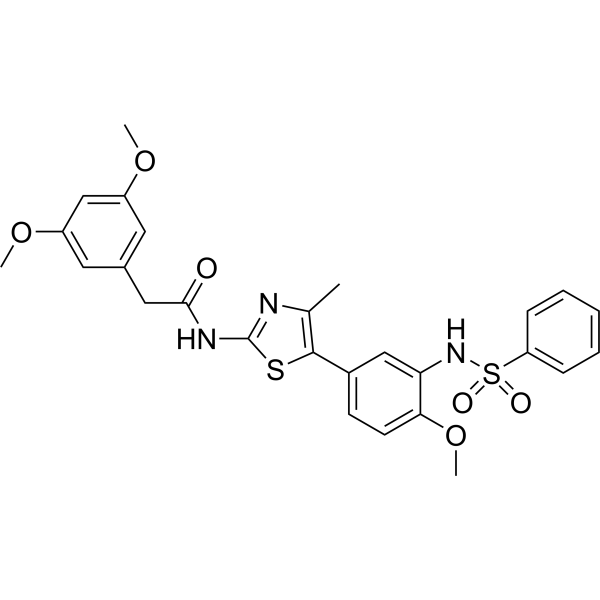
PI4Kβ-IN-1
 0 ImagesCat. No.: HY-175732PI4Kβ-IN-1 is an orally active and selective PI4Kβ inhibitor, with an IC50 of 0.9 nM. PI4Kβ-IN-1 exhibits inhibitory activity against all stages of the P. falciparum life cycle, including blood, liver, and transmission stages. PI4Kβ-IN-1 demonstrates potent antimalarial efficacy in the mouse model infected with Plasmodium falciparum. PI4Kβ-IN-1 can be used for the study of malaria caused by Plasmodium falciparum.
- 1



