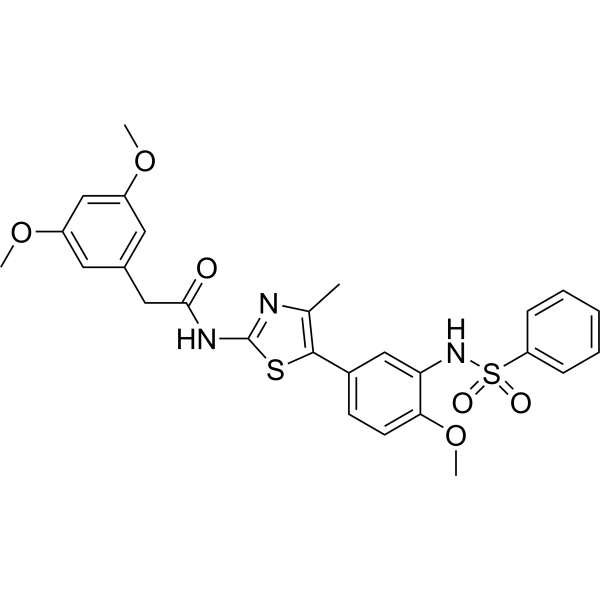
PI4KIIIα
PI4KIIIα (PI4KA) generates plasma-membrane PI4P, supporting membrane identity and downstream PtdIns(4,5)P2 homeostasis[1][2]. Mechanistically, EFR3 and TTC7 recruit PI4KIIIα to the plasma membrane, where PI4KIIIα loss strongly reduces plasma-membrane PI4P[1]. In HCV models, NS5A recruits and activates PI4KIIIα, elevating PI4P and preserving the membranous replication compartment[3]. PI4KIIIα also regulates NS5A phosphorylation and viral RNA replication, linking lipid kinase activity to replication-site morphology[4]. Compared with related isoforms, PI4KIIIα mainly defines a plasma-membrane PI4P pool, whereas PI4KIIIβ and PI4KIIα localize to Golgi PI4P populations[5][6]. In liver cancer models, high PI4KIIIα activity promotes cytoskeletal rearrangement through PIK3C2γ/Akt2/paxillin-cofilin, increasing migration and invasion[7]. For experimental applications, PI4KIIIα inhibitors reduce PI4P-dependent signaling, inhibit HCV replication in vitro, and help dissect PI4Kα-specific pathways[2][8][9].
References:
- [1]. Nakatsu F, et al. PtdIns4P synthesis by PI4KIIIα at the plasma membrane and its impact on plasma membrane identity. J Cell Biol. 2012 Dec 10;199(6):1003-16. [Content Brief]
- [2]. Bojjireddy N, et al. Pharmacological and genetic targeting of the PI4KA enzyme reveals its important role in maintaining plasma membrane phosphatidylinositol 4-phosphate and phosphatidylinositol 4,5-bisphosphate levels. J Biol Chem. 2014 Feb 28;289(9):6120-32. [Content Brief]
- [3]. Reiss S, et al. Recruitment and activation of a lipid kinase by hepatitis C virus NS5A is essential for integrity of the membranous replication compartment. Cell Host Microbe. 2011 Jan 20;9(1):32-45. [Content Brief]
- [4]. Reiss S, et al. The lipid kinase phosphatidylinositol-4 kinase III alpha regulates the phosphorylation status of hepatitis C virus NS5A. PLoS Pathog. 2013 May;9(5):e1003359. [Content Brief]
- [5]. Balla A, et al. A plasma membrane pool of phosphatidylinositol 4-phosphate is generated by phosphatidylinositol 4-kinase type-III alpha: studies with the PH domains of the oxysterol binding protein and FAPP1. Mol Biol Cell. 2005 Mar;16(3):1282-95. [Content Brief]
- [6]. Weixel KM, et al. Distinct Golgi populations of phosphatidylinositol 4-phosphate regulated by phosphatidylinositol 4-kinases. J Biol Chem. 2005 Mar 18;280(11):10501-8. [Content Brief]
- [7]. Tran CS, et al. Phosphatidylinositol 4-Kinase III Alpha Governs Cytoskeletal Organization for Invasiveness of Liver Cancer Cells. Gastroenterology. 2024 Aug;167(3):522-537. [Content Brief]
- [8]. Leivers AL, et al. Discovery of selective small molecule type III phosphatidylinositol 4-kinase alpha (PI4KIIIα) inhibitors as anti hepatitis C (HCV) agents. J Med Chem. 2014 Mar 13;57(5):2091-106. [Content Brief]
- [9]. Raubo P, et al. Discovery of potent, selective small molecule inhibitors of α-subtype of type III phosphatidylinositol-4-kinase (PI4KIIIα). Bioorg Med Chem Lett. 2015 Aug 15;25(16):3189-93. [Content Brief]
All Product Categories
-
PI4KIIIα Related Products (10)
Related Products (10)

-
GSK-A1
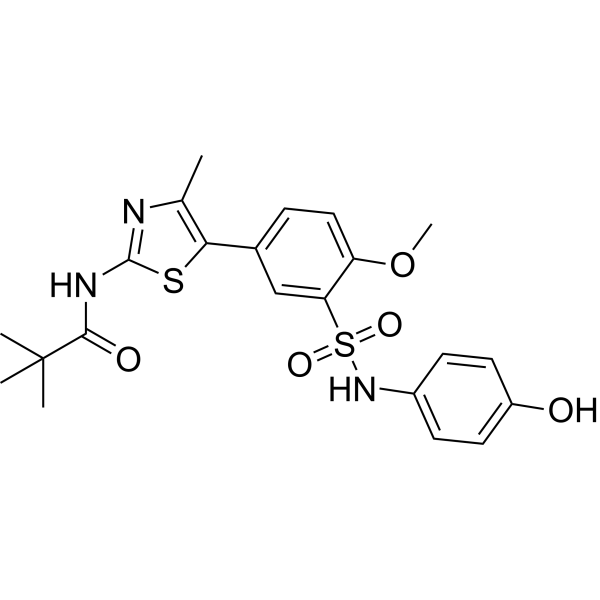
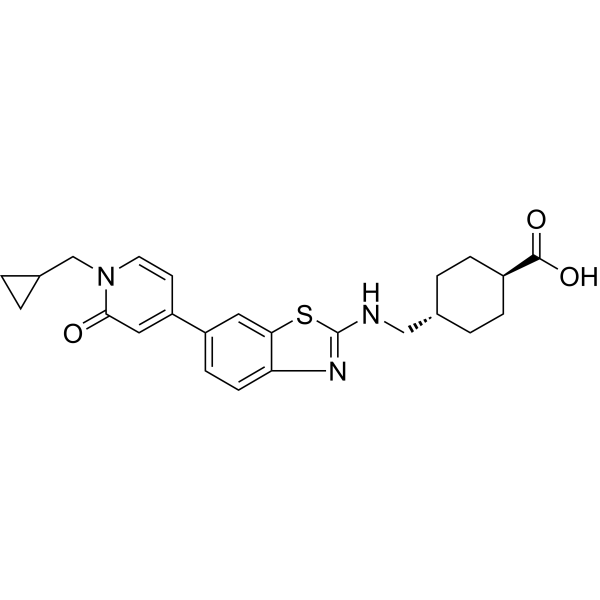
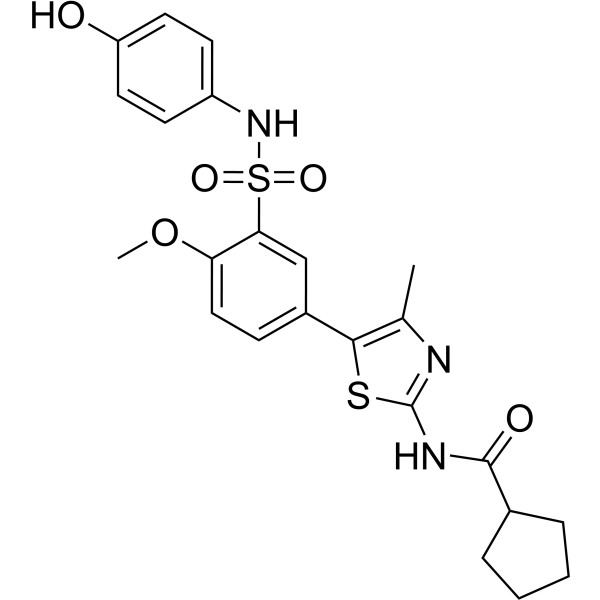
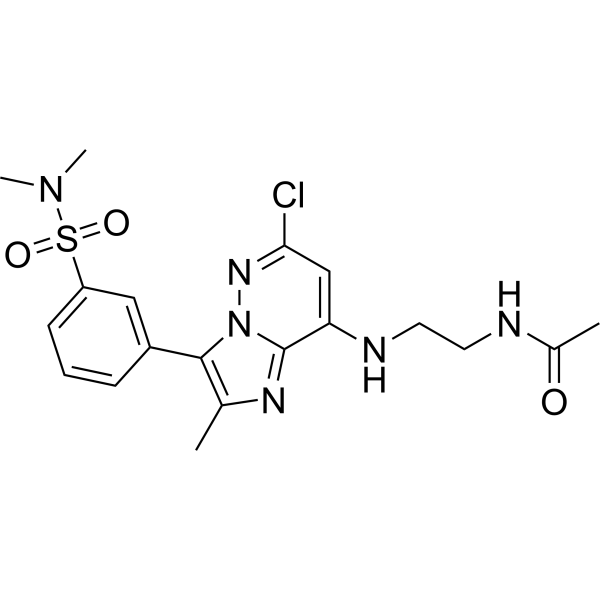
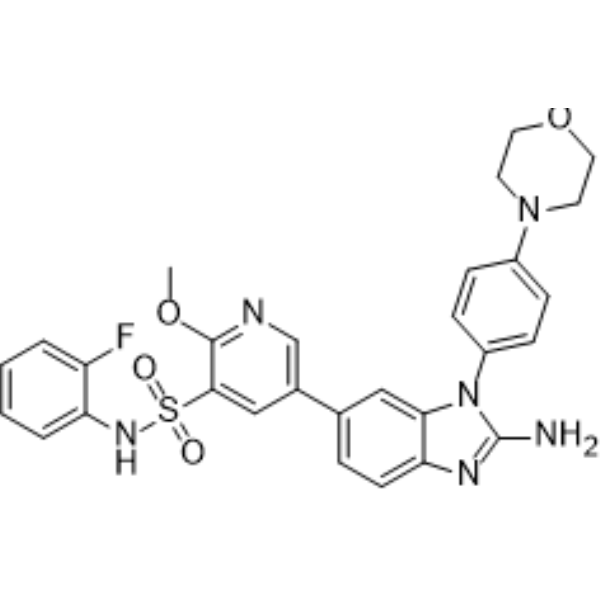 0 ImagesGSK-A1 is a selective type III phosphatidylinositol 4-kinase PI4KA (PI4KIIIα) inhibitor with a pIC50 of 8.5-9.8. GSK-A1 inhibits PtdIns(4,5)P2 resynthesis with an IC50 of about 3 nM. GSK-A1 potently decreases the levels of PtdIns(4)P with a negligible effect on PtdIns(4,5)P2. GSK-A1 has the potential for anti-hepatitis C virus (HCV) research.
-
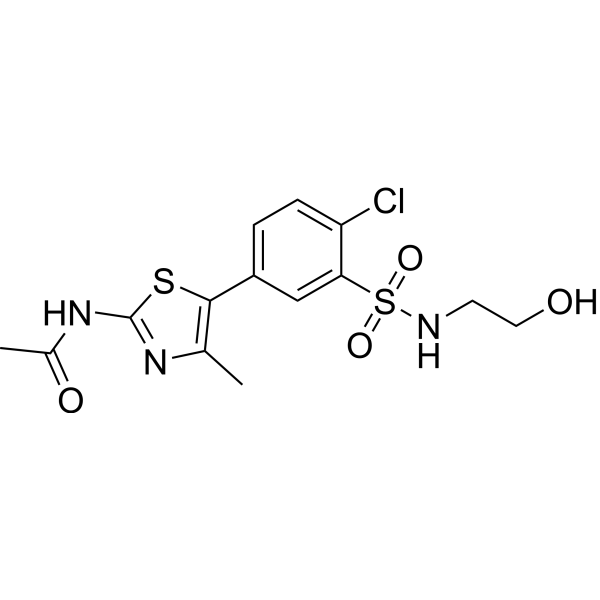
(S)-GSK-F1
 0 Images(S)-GSK-F1 (Compound 28) is an inhibitor for type III phosphatidylinositol 4-kinase α (PI4KIIIα). (S)-GSK-F1 inhibits PI4Kα, PI4Kβ, PI4Kγ, PI3Kα, PI3Kβ and PI3Kδ with pIC50 of 8.3, 6.0, 5.6, 5.6, 5.1 and 5.6, respectively. (S)-GSK-F1 exhibits anti-hepatitis C virus (HCV) activity through inhibition of HCV replication. (S)-GSK-F1 exhibits moderate pharmacokinetic characters in rat model.
-
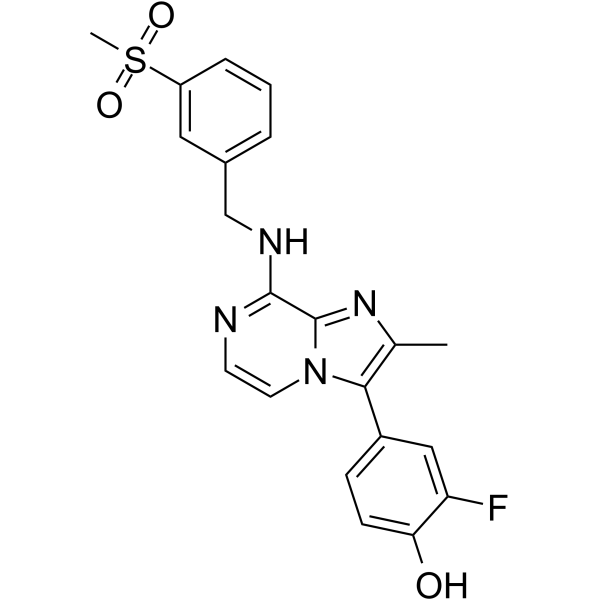
AZD2836
 0 ImagesCat. No.: HY-123536CAS No.: 944278-62-0Synonyms: A-831AZD2836 (A-831) is a 4-aminopyrazolone compound with anti-HCV activity. AZD2836 inhibits the activity of the host cell kinase PI4KIIIα, causing metabolic disorder of the cell membrane component PI4P that is necessary for viral replication. In the HCV subgenomic replicon cell model, the EC50 values of AZD2836 for genotype 1b (Con1 strain) and genotype 1a (Lemon strain) are 270 nM and 550 nM, respectively.