PI3KC2α
PI3KC2α (phosphoinositide 3-kinase class II alpha) is a class II phosphoinositide 3-kinase that generates phosphatidylinositol 3-phosphate (PI(3)P) and phosphatidylinositol 3,4-bisphosphate (PI(3,4)P₂), thereby regulating intracellular membrane trafficking and phosphoinositide-dependent signaling processes[1][2]. PI3KC2α functions prominently at clathrin-coated membrane compartments, where it supports clathrin-mediated endocytosis, endosomal membrane dynamics, and vesicular trafficking through localized phosphoinositide production[2][3][4]. Mechanistically, PI3KC2α-derived phosphoinositides contribute to endocytic membrane remodeling, endosomal organization, and Rab11-dependent pathways required for primary cilium function[2][3]. Through these activities, PI3KC2α participates in cellular processes linked to angiogenesis, cell division, endothelial signaling, and platelet membrane morphology[2]. In disease-relevant models, loss of PI3KC2α activity disrupts endocytic trafficking and ciliary function, while pathogenic PIK3C2A mutations have been associated with syndromic developmental abnormalities characterized by skeletal, ocular, and growth defects linked to ciliary dysfunction[3][5]. Compared with related class II isoforms, PI3KC2α has a prominent role in clathrin-dependent endocytosis and membrane remodeling, whereas other class II PI3Ks display distinct cellular functions and tissue distributions[4]. For experimental applications, the PITCOIN series represents potent and highly selective PI3KC2α inhibitors that acutely suppress PI3KC2α-dependent phosphoinositide synthesis and provide pharmacological tools for investigating endocytic dynamics, platelet biology, and PI3KC2α-regulated signaling pathways[2].
References:
- [1]. Lo WT, et al. Development of selective inhibitors of phosphatidylinositol 3-kinase C2α. Nat Chem Biol. 2023 Jan;19(1):18-27. [Content Brief]
- [2]. Franco I, et al. PI3K class II alpha controls spatially restricted endosomal PtdIns3P and Rab11 activation to promote primary cilium function. Dev Cell. 2014;28(6):647-658.
- [3]. Domin J, et al. The class II phosphoinositide 3-kinase PI3K-C2alpha is concentrated in the trans-Golgi network and present in clathrin-coated vesicles. J Biol Chem. 2000;275(16):11943-50. [Content Brief]
- [4]. Nazarpour A, et al. Source, spatial distribution and pollution assessment of Pb, Zn, Cu, and Pb isotopes in urban soils of Ahvaz City, a semi-arid metropolis in southwest Iran. Sci Rep. 2019;9:5349. [Content Brief]
All Product Categories
-
PI3KC2α Related Products (8)
Related Products (8)





-
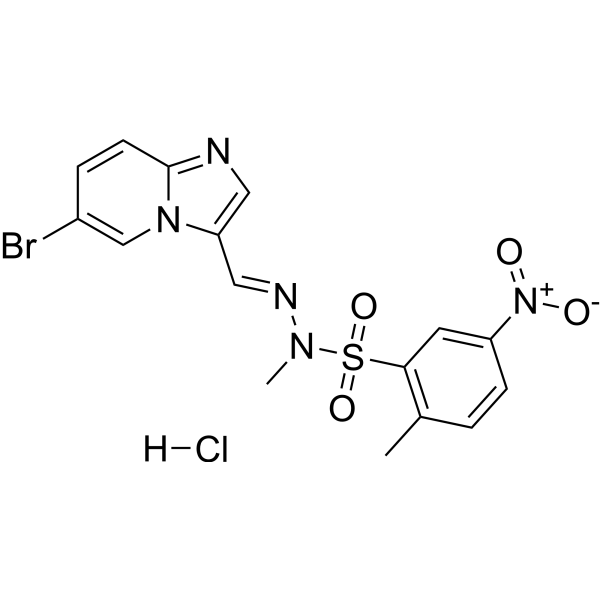
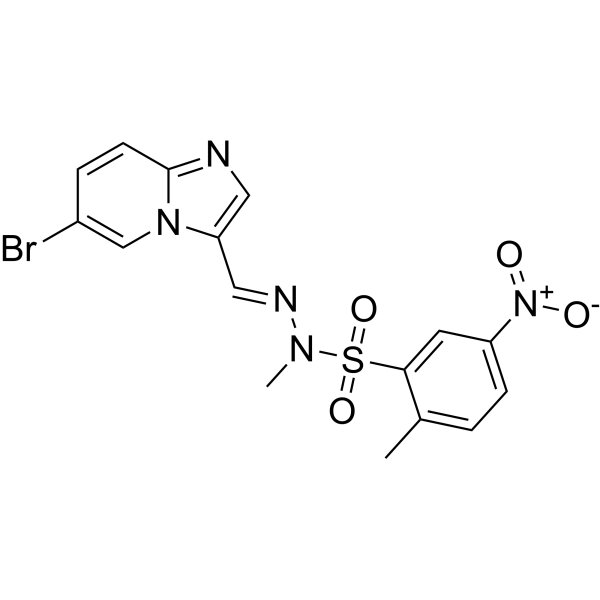
MIPS-21335
 0 ImagesMIPS-21335 is a PI3KC2α inhibitor with an IC50 of 7 nM. MIPS-21335 also inhibits PI3KC2β, p110α, p110β and p110δ, with IC50 values of 43, 140, 386 and 742 nM, respectively. MIPS-21335 has antithrombotic effect. MIPS-21335 can be used for the researches of cardiovascular disease and metabolic disease, such as thrombosis and hyperlipidemia.