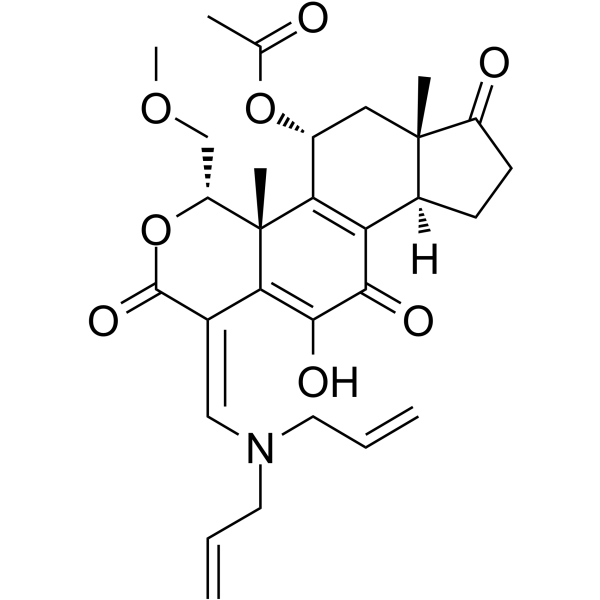
p120γ
p120γ is an alternatively spliced isoform of p120-catenin (CTNND1), a member of the armadillo-repeat protein family that functions in cadherin-mediated cell adhesion and intracellular signal transduction[1][2][3]. As part of the p120-catenin isoform repertoire generated through alternative splicing and multiple translation initiation sites, p120γ contributes to the molecular diversity of CTNND1-dependent adhesion complexes[1][4]. Mechanistically, p120-catenin proteins associate with classical cadherins, including E-cadherin, and regulate cadherin stability and adhesive properties at the cell membrane, thereby influencing epithelial tissue organization and cell-cell junction integrity[2][3]. These functions place p120γ within biological processes centered on adherens junction regulation, cadherin turnover, and adhesion-dependent signaling pathways[2][3]. In experimental and disease-related contexts, altered localization or expression of p120-catenin family members has been associated with carcinoma progression, highlighting the importance of CTNND1-dependent adhesion control in epithelial biology and cancer research[5]. Compared with other p120-catenin isoforms, p120γ is distinguished by its generation through alternative CTNND1 splicing, reflecting isoform-specific structural variation within the broader p120-catenin family rather than a distinct gene product[1][4]. For research applications, characterization of p120γ is commonly performed in studies examining CTNND1 isoform expression patterns, cadherin-associated complexes, and isoform-specific protein interactions, including interactions reported between p120-catenin isoforms and BP180/type XVII collagen[4].
Referencias:
- [1]. Keirsebilck A, et al. Molecular cloning of the human p120ctn catenin gene (CTNND1): expression of multiple alternatively spliced isoforms. Genomics. 1998 Jun 1;50(2):129-46. [Content Brief]
- [2]. Uniprotkb.
- [3]. p120γ gene information from NCBI.
- [4]. Aho S, et al. Human p120ctn catenin: tissue-specific expression of isoforms and molecular interactions with BP180/type XVII collagen. J Cell Biochem. 1999 Jun 1;73(3):390-9. [Content Brief]
- [5]. Wikipedia.
All Product Categories
-
Productos relacionados con p120γ (1)
Productos relacionados con (1)