



PI3KC2γ
PI3KC2γ is a liver-enriched class II PI3K isoform that generates endosomal PI(3,4)P2 during insulin signaling[1]. Mechanistically, insulin triggers PI3KC2γ association with Rab5-GTP and recruitment to Rab5-positive early endosomes, where this lipid pool supports delayed and sustained Akt2 activation[1]. Loss of PI3KC2γ selectively reduces Akt2 activation without affecting Akt1, S6K, or FoxO1-3 phosphorylation, thereby impairing glycogen synthase activity and hepatic glycogen accumulation[1]. In mouse models, PI3KC2γ deficiency promotes hyperlipidemia, adiposity, insulin resistance, and high-fat-diet-associated fatty liver[1]. Human genetic evidence also links PIK3C2G polymorphisms with type 2 diabetes in a Japanese population[2]. Compared with ubiquitous PI3K-C2α and PI3K-C2β, PI3KC2γ shows a more restricted liver-parenchyma pattern, making isoform distinction essential in pathway design[1]. For experimental applications, early lead compounds and newer selective PI3KC2γ inhibitors provide tools to interrogate glycogen metabolism and class II PI3K isoform biology[3][4].
Verweise:
- [1]. Braccini L, et al. PI3K-C2γ is a Rab5 effector selectively controlling endosomal Akt2 activation downstream of insulin signalling. Nat Commun. 2015 Jun 23;6:7400. [Content Brief]
- [2]. Daimon M, et al. Association of the PIK3C2G gene polymorphisms with type 2 DM in a Japanese population. Biochem Biophys Res Commun. 2008 Jan 18;365(3):466-71. [Content Brief]
- [3]. Mazloumi Gavgani F, et al. Class I Phosphoinositide 3-Kinase PIK3CA/p110α and PIK3CB/p110β Isoforms in Endometrial Cancer. Int J Mol Sci. 2018 Dec 7;19(12):3931. [Content Brief]
- [4]. Zhong Y, et al. Discovery of novel PI3KC2γ inhibitors with high potency, selectivity, and favorable pharmacokinetics for glycogen metabolism regulation. Eur J Med Chem. 2025 Jul 5;291:117621. [Content Brief]
All Product Categories
-
PI3KC2γ Verwandte Produkte (4)
Verwandte Produkte (4)

-
PI3KC2γ-IN-1
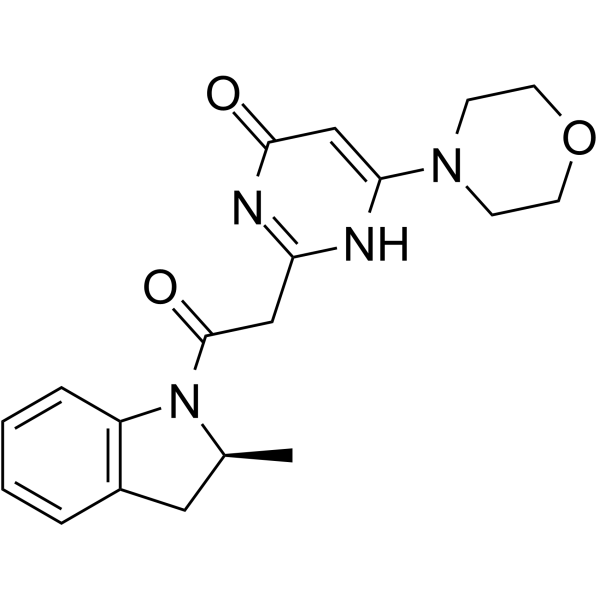
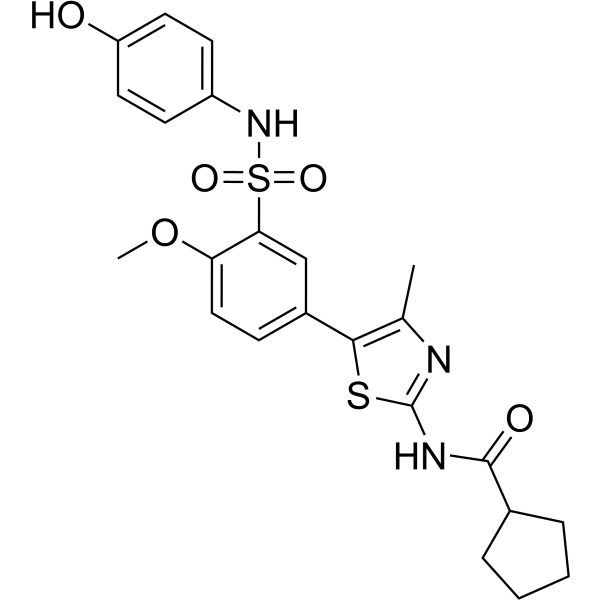
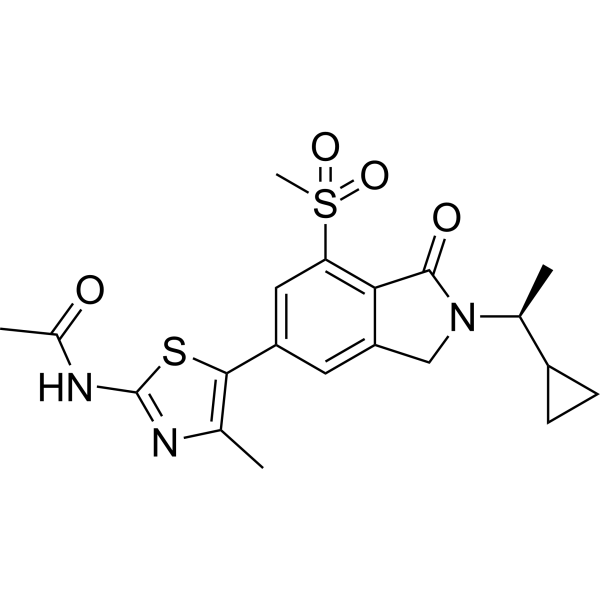
 0 ImagesArt. -Nr.: HY-178371PI3KC2γ-IN-1 (Compound 23) is an orally active and selective PI3KC2γ inhibitor (IC50 = 4 nM). PI3KC2γ-IN-1 downregulats the Akt2-glycogen synthase (GS) signaling pathway, ultimately inhibiting the conversion of glucose to glycogen and reduces excessive glycogen accumulation in the liver. PI3KC2γ-IN-1 can significantly inhibit insulin-induced PI(3,4)P2 accumulation in both primary hepatocytes and HepG2 liver cancer cells. PI3KC2γ-IN-1 can be used for the study of glycogen storage diseases (GSDs).



