



BODIPY 581/591 C11 (solution)
Based on 1 publication(s) in Google Scholar
BODIPY 581/591 C11 (solution) is a BODIPY borofluoroprene derivative with good light stability and low fluorescence artifacts. BODIPY 581/591 C11 can be used for study lipid peroxidation and antioxidant properties in living cells, or detect ferroptosis by reaction with hydroxyl radicals. BODIPY 581/591 C11 is emitted at 591 nm (reduced prototype) , or redshifted to 510 nm (oxidized type). The excitation wavelengths were 581 nm (reduced prototype) and 500 nm (oxidized type) .
Solvent and concentration: DMSO: 2 mM
For research use only. We do not sell to patients.
- CAS No.: 217075-36-0
- Formula: C30H35BF2N2O2
- Molecular Weight:504.43
-
Storage:
Please store the product under the recommended conditions in the Certificate of Analysis.


To place orders, for customer services and technical support, please contact: MedChemExpress USA
Tel: 609-228-6898 E-mail: [email protected] [email protected]


-
 Biological Activity
-
Chemical Information
- Protocols
- Purity & Documentation
- References
-
 Help & FAQs


-
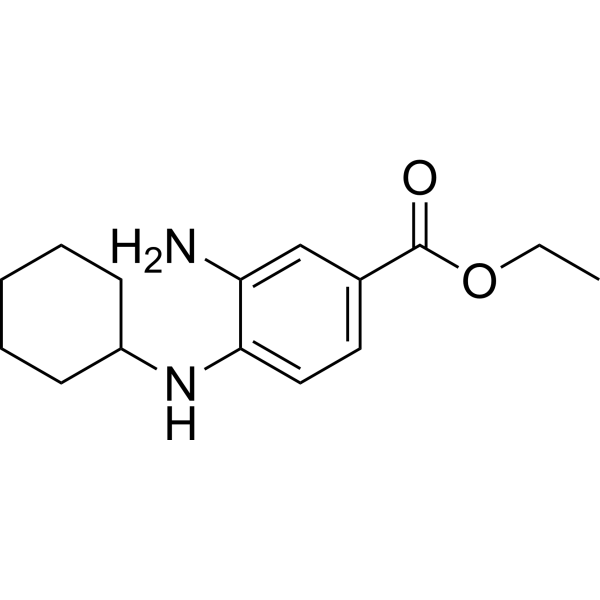
HY-100579
Ferrostatin-1Ferroptosis Inhibitor -
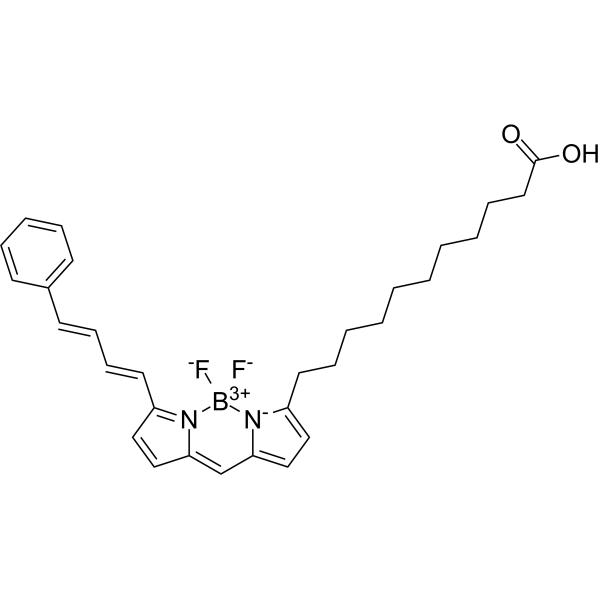
HY-D1301
BODIPY 581/591 C11Fluorescent Dye -
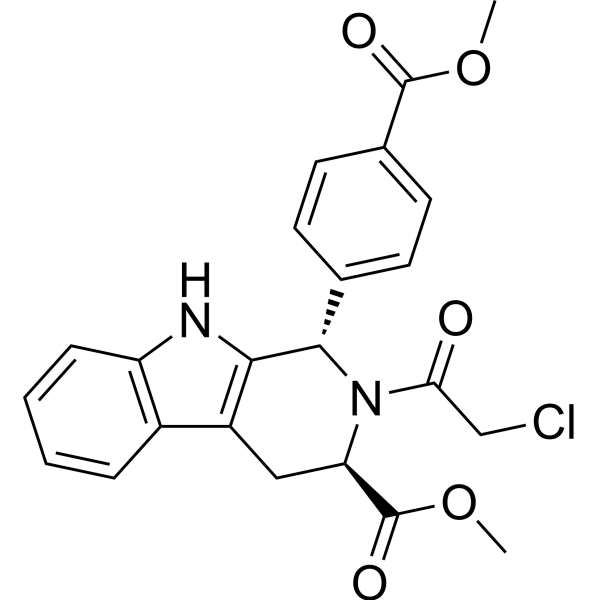
HY-100218A
RSL3GPX4 Inhibitor -
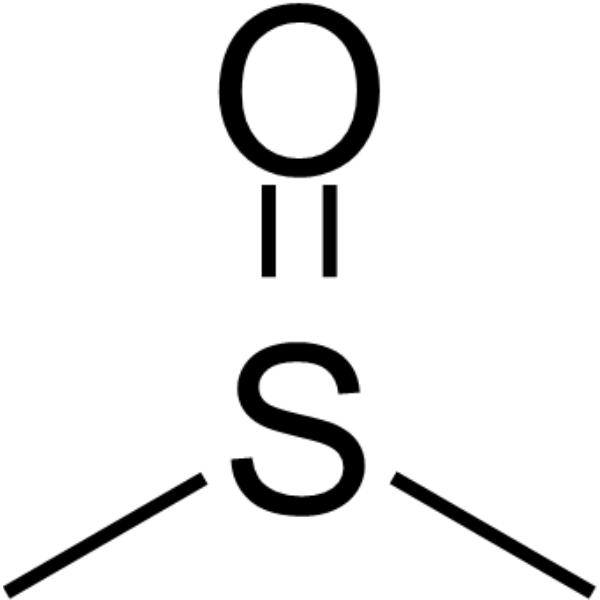
HY-Y0320
Dimethyl sulfoxide, meets analytical specification of Ch.P.Aprotic Solvent -

HY-DY1004
BODIPY 493/503 (solution)Neutral Lipid Dye -
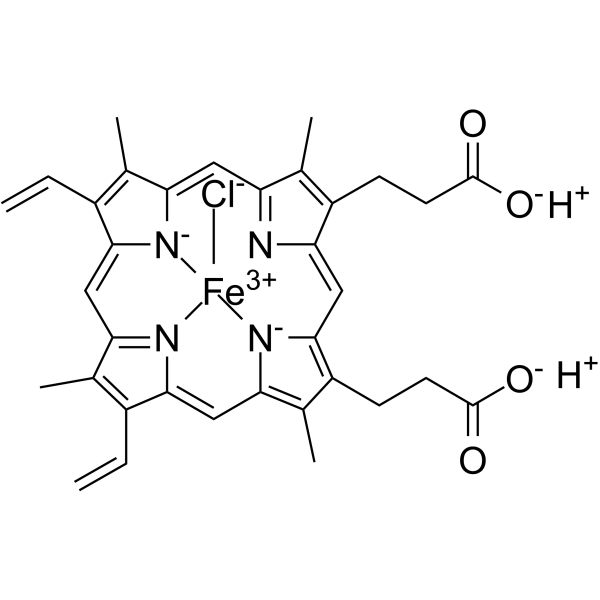
HY-19424
HeminHeme Oxygenase-1 Inducer -
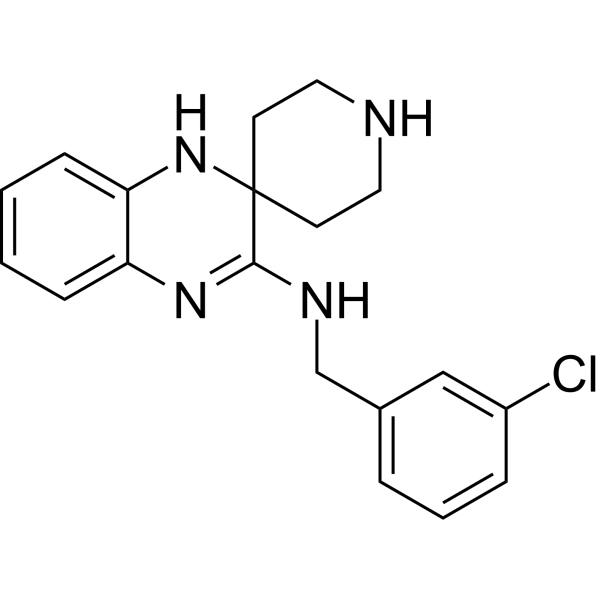
HY-12726
Liproxstatin-1Ferroptosis Inhibitor -
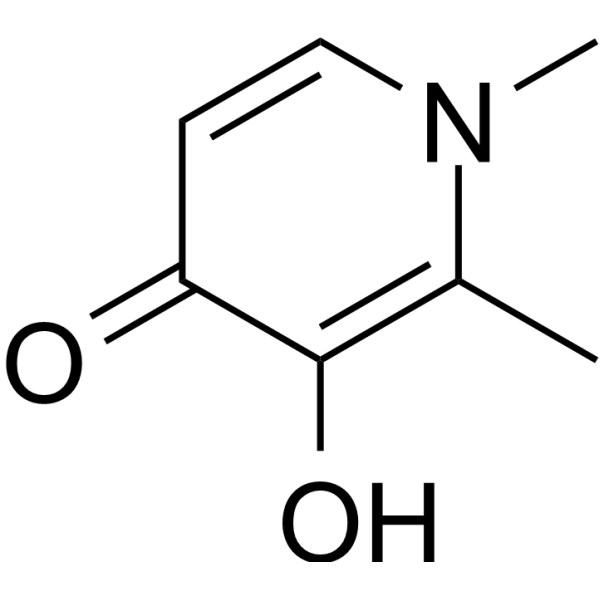
HY-B0568
DeferiproneFree iron chelating agent -
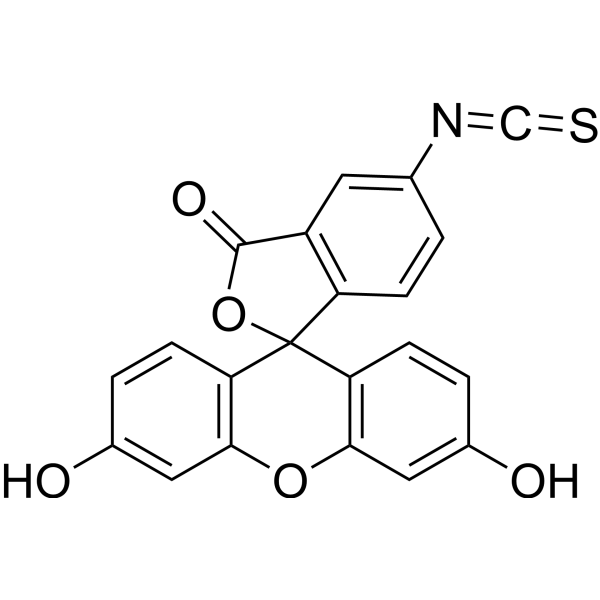
HY-66019
FITCFluorochrome -
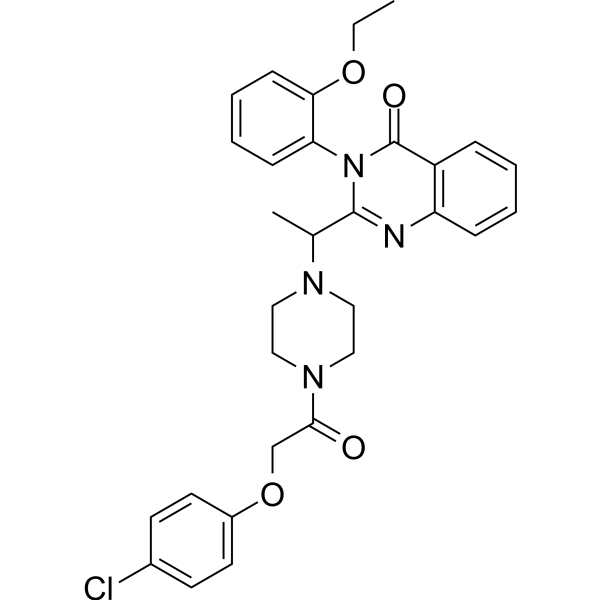
HY-15763
ErastinFerroptosis Inducer -
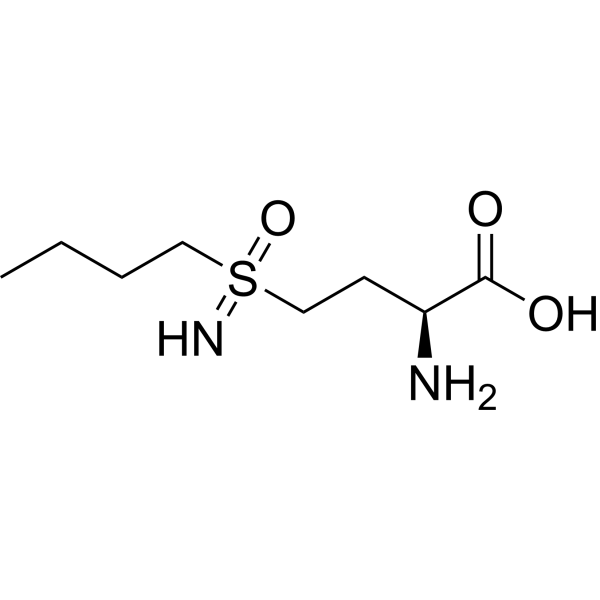
HY-106376A
L-Buthionine-(S,R)-sulfoximineG-glutamylcysteine Synthetase Inhibitor -
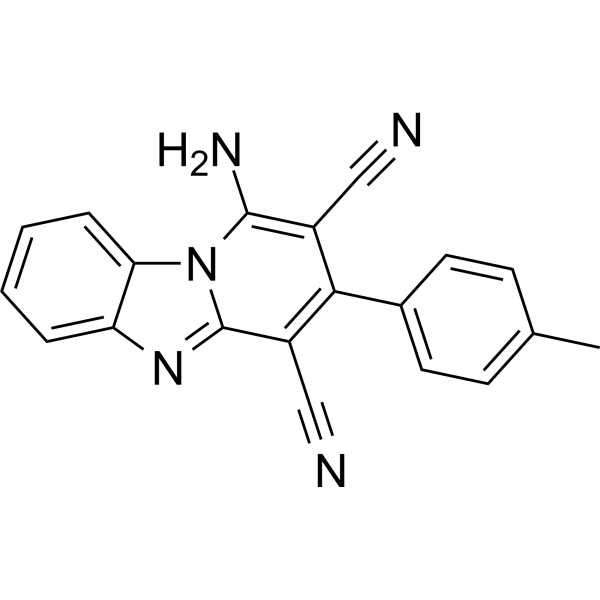
HY-136057
iFSP1FSP1 Inhibitor
Publications Citing Use of MedChemExpress (MCE) BODIPY 581/591 C11 (solution)
More

Biological Activity
Description
Solvent and concentration: DMSO: 2 mM
In Vitro
Guidelines (Following is our recommended protocol. This protocol only provides a guideline, and should be modified according to your specific needs).
1. Preparation of BODIPY 581/591 C11 working solution
Dilute the stock solution in serum-free cell culture medium or PBS to obtain 2-10 μM of BODIPY 581/591 C11 working solution.
Note: Please adjust the concentration of BODIPY 581/591 C11 working solution according to the actual situation.
2. Cell staining
2.1 Cell preparation:
For suspension cells: Centrifuge at 1000 g at 4°C for 3-5 minutes and then discard the supernatant. Wash twice with PBS, 5 minutes each time.
For adherent cells: Discard the cell culture medium, and add trypsin to dissociate cells to make a single-cell suspension. Centrifuge at 1000 g at 4°C for 3-5 minutes and then discard the supernatant. Wash twice with PBS, 5 minutes each time.
2.2 Add 1 mL of BODIPY 581/591 C11 working solution, and then incubate at room temperature for 30 minutes.
2.3 Centrifuge at 400 g at 4°C for 3-4 minutes and then discard the supernatant.
2.4 Wash twice with PBS, 5 minutes each time.
2.5 Resuspend cells with serum-free cell culture medium or PBS, and then detect by fluorescence microscope or flow cytometer.
MedChemExpress (MCE) has not independently confirmed the accuracy of these methods. They are for reference only. Further protocols information, click here.


Chemical Information
-
CAS No. 217075-36-0
-
Appearance Liquid
-
Molecular Weight 504.43
-
Formula C30H35BF2N2O2
-
Color Pink to red
-
SMILES
O=C(CCCCCCCCCCC1=CC=C2C=C3C=CC(/C=C/C=C/C4=CC=CC=C4)=[N]3[B+3]([F-])([N-]21)[F-])O
-
Shipping
Room temperature in continental US; may vary elsewhere.
-
Storage
Please store the product under the recommended conditions in the Certificate of Analysis.


Publications (1)
-
Journal Impact Factor
-
Most Recent

Protocols
-
Ferroptosis Solutions
Ferroptosis is an iron-dependent, non-apoptotic form of regulated cell death characterized by lethal lipid peroxidation and sensitivity to suppression by iron chelators or lipophilic radical-trapping antioxidants. The core pathway links cystine uptake through system Xc−, glutathione availability, GPX4-dependent detoxification of phospholipid hydroperoxides, iron-dependent oxidative reactions, and polyunsaturated-phospholipid metabolism into a cell-death program that is biochemically and morphologically distinct from apoptosis, necrosis, and autophagy. The ferroptosis pathway is experimentally linked to phenotype through chemical and genetic perturbation. Erastin induces ferroptosis by inhibiting cystine uptake through system Xc− and weakening antioxidant defenses, while GPX4 inhibition or depletion causes lipid peroxide accumulation and ferroptotic cancer-cell death. ACSL4 and oxidizable arachidonoyl- or adrenoyl-containing phosphatidylethanolamines shape ferroptosis sensitivity by con


Purity & Documentation
-
Data Sheet (271 KB)
-
SDS (251 KB)
- English - EN (251 KB)
- Français - FR (251 KB)
- Deutsch - DE (251 KB)
- Norwegian - NO (251 KB)
- Español - ES (251 KB)
- Swedish - SV (251 KB)
- Italian - IT (251 KB)
- Korean - KR (251 KB)
- Portuguese - PT (251 KB)
-
Handling Instructions (2659 KB)
References

Calculators
Concentration (start) × Volume (start) = Concentration (final) × Volume (final)


BODIPY 581/591 C11 (solution) Related Classifications
HY-DY1022 Related Classifications
 Powered by Bioz