



Indocyanine green (solution)

Based on 1 Customer Validation
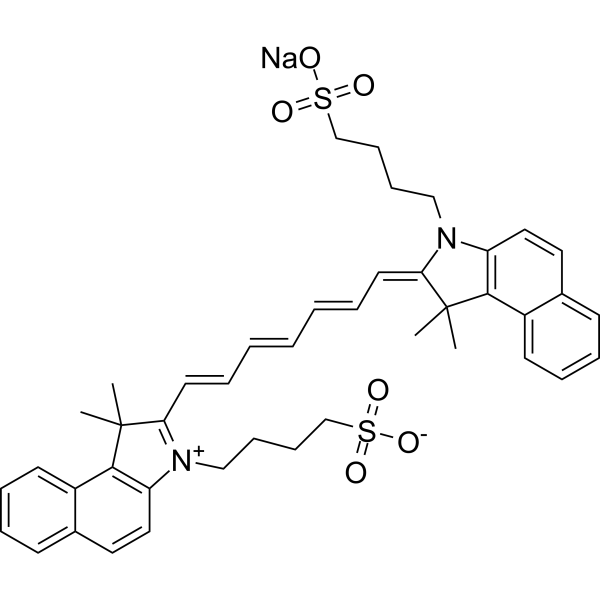
Indocyanine green (Foxgreen) (solution) is a low toxicic fluorescent agent that has been widely used in medical diagnostics, such as determining cardiac output, hepatic function, and liver blood flow, and for ophthalmic angiography (Ex/Em = 785/813 nm) .
Solvent and concentration: DMSO: 10 mM
Nur für Forschungszwecke. Wir verkaufen nicht an Patienten.
- CAS. Nr.: 3599-32-4
- Formel: C43H47N2NaO6S2
- Molecular Weight:774.97
-
Speicherung:
Please store the product under the recommended conditions in the Certificate of Analysis.


To place orders, for customer services and technical support, please contact: MedChemExpress USA
Tel: 609-228-6898 E-mail: [email protected] [email protected]


-
 Biologische Aktivität
-
Chemical Information
- Reinheit & Dokumentation
- Verweise
-
 Help & FAQs


-
HY-D0711
Indocyanine greenFluorescent Agent -

HY-D0711R
Indocyanine green (Standard)Fluorescent Agent -
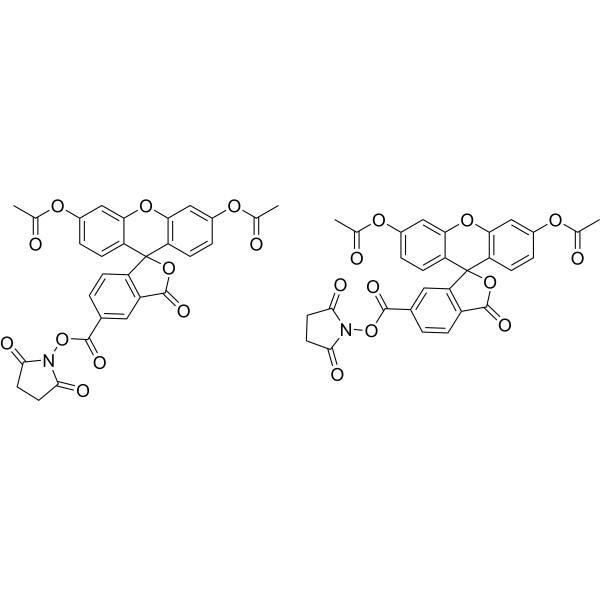
HY-D0938
CFDA-SECell Proliferation Fluorescent Probe -
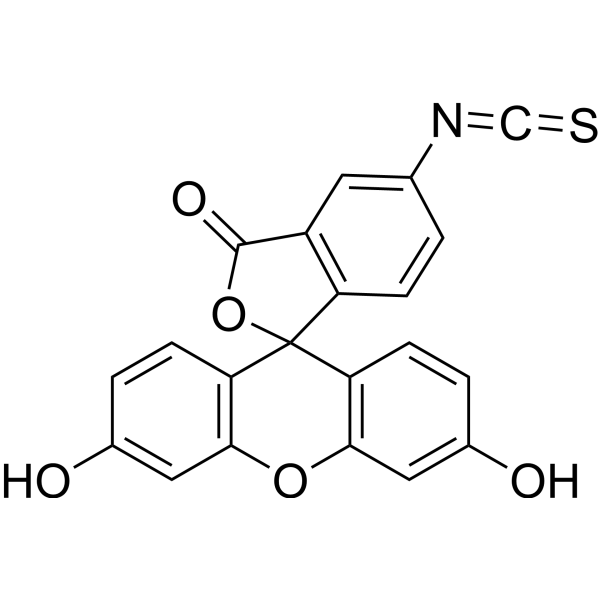
HY-66019
FITCFluorochrome -
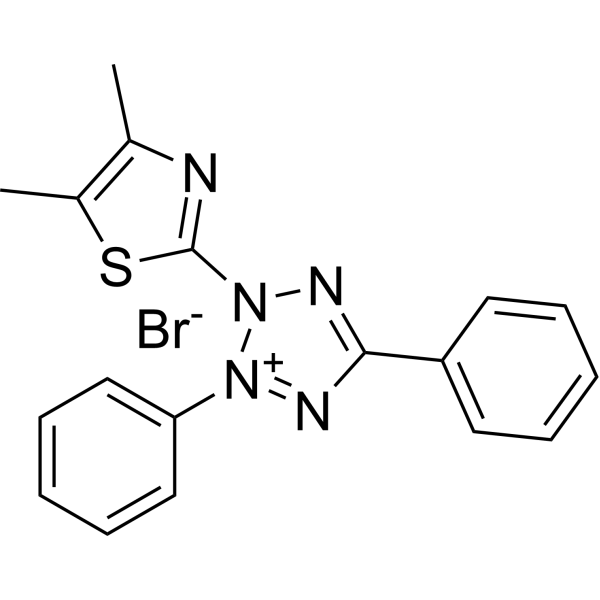
HY-15924
Thiazolyl BlueCytotoxicity Detection Reagent -
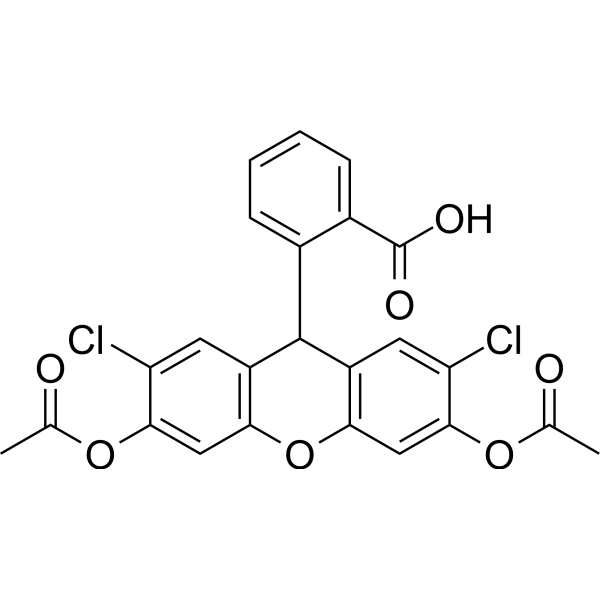
HY-D0940
H2DCFDAROS-Sensitive Probe -
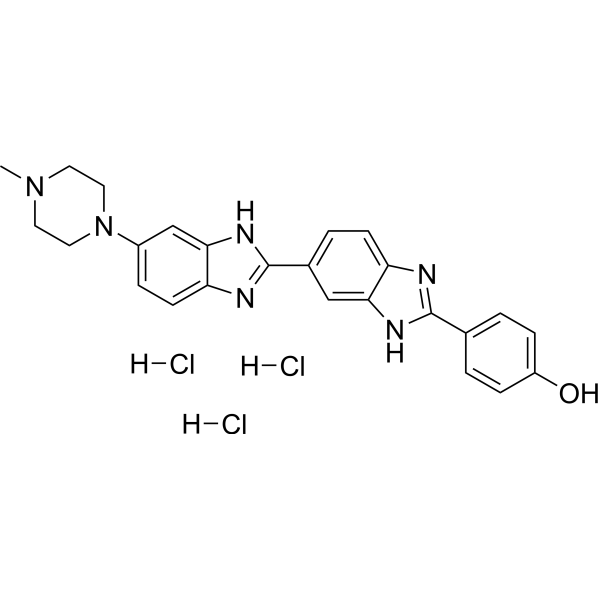
HY-15558A
Hoechst 33258 trihydrochlorideDNA Staining -
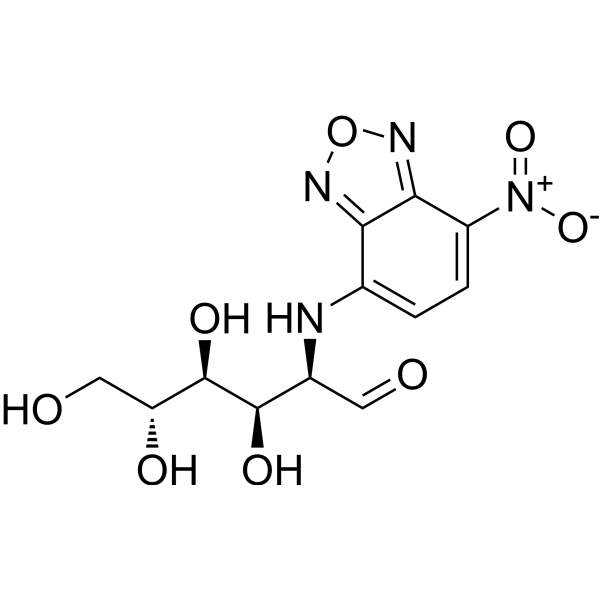
HY-116215
2-NBDGFluorescent Indicator -
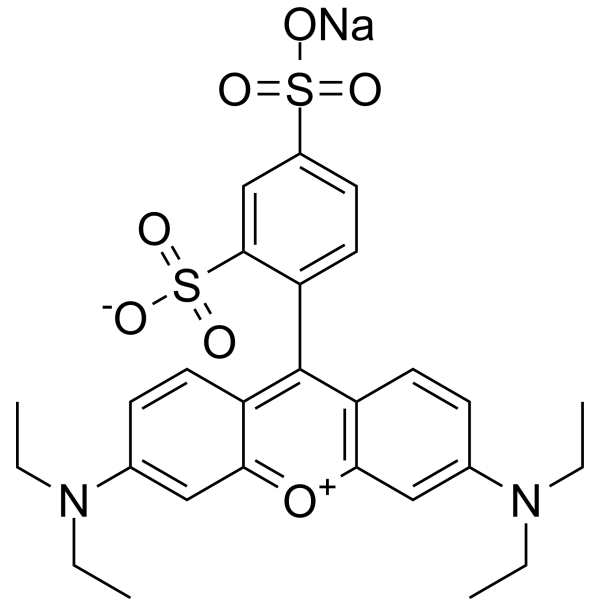
HY-D0974
Sulforhodamine B sodium saltFluorescent Dye -
HY-15534
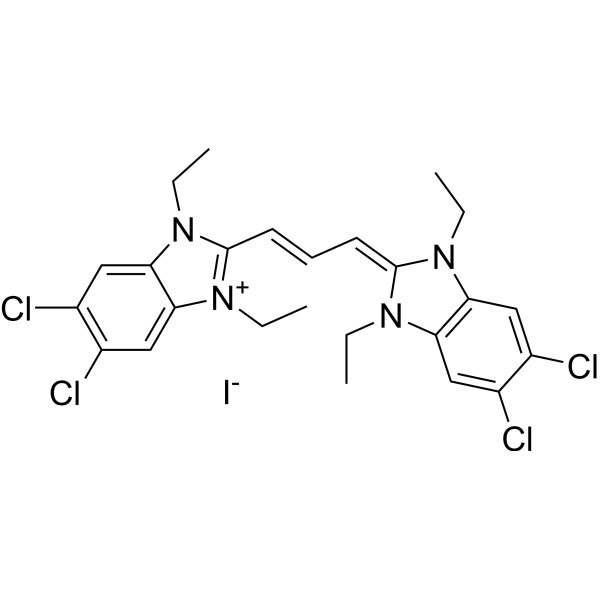
JC-1Mitochondrial Membrane Potential Probe -
HY-D0969
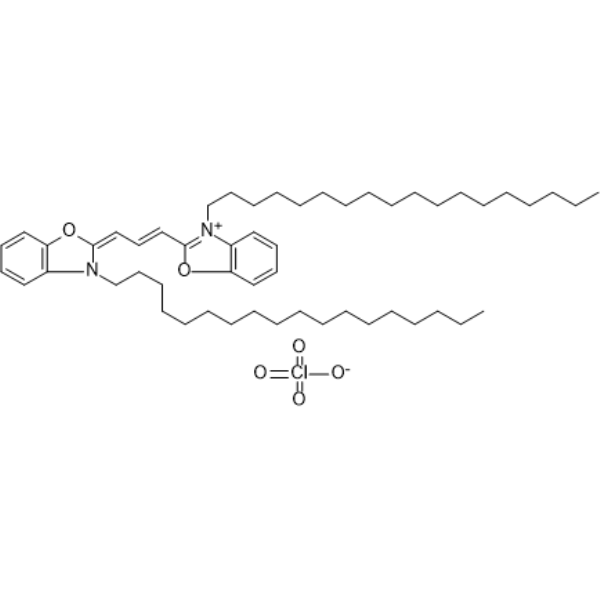
DiOFluorescent Probe -
HY-D0819
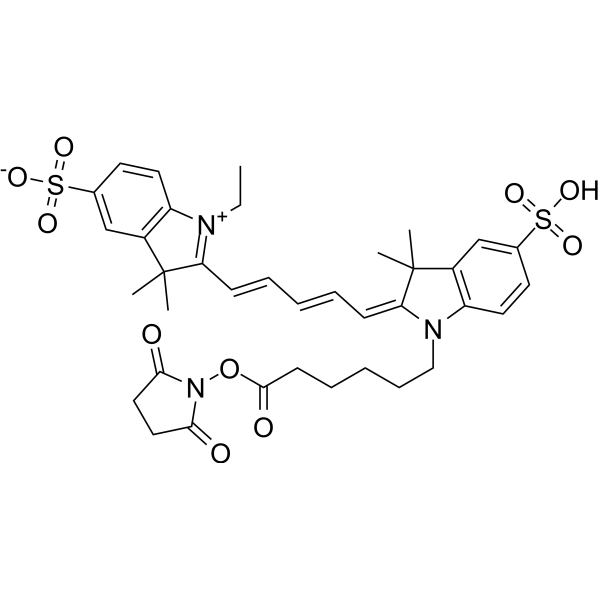
CY5-SEReactive Dye


Biologische Aktivität
Beschreibung
Solvent and concentration: DMSO: 10 mM
In Vitro
At a concentration of 1000 μg/mL, Indocyanine green (Foxgreen) - photodynamic therapy (ICG-PDT) significantly induced the expression of BAX in HGF cells; however, laser irradiation and ICG had no significant effect on the expression of the BCL-2 gene [1].
Guide (The following is the experimental plan we recommend. This plan serves only as a reference guide. The specific operations should be adjusted according to your actual needs.)
1. Preparation of Working Solution[3]
Dilute to 0.03 - 10 μM using Tris buffer or other buffers (optimized according to the experiment).
Note: The working solution should be prepared and used immediately, and stored in a dark place.
2. Organizing the Staining
2.1 The experiment utilized New Zealand white rabbits with Langendorff perfusion for the heart.
2.2 Add Blebbistatin (20 μM) (HY-13813) and Biacetyl monoxime (5 mM) (HY-Y0413) to the perfusion solution to inhibit cardiac contraction while maintaining the electrical activity.
2.3 Gradually increase the concentration of Indocyanine green dye (from 0.03 μM to 10 μM) and add it to the perfusion solution to stain the heart.
2.4 The duration of the light signal recorded by the spectrometer is 3 seconds.
MedChemExpress (MCE) has not independently confirmed the accuracy of these methods. They are for reference only.
In Vivo
Indocyanine green (ICG) can absorb the near IR laser energy and release heat in the dyed tissue. Pulsed laser treatment combined with Indocyanine green causes targeted tumor cell death in neuroblastoma tumor without capsule.
Indocyanine green injections and application of laser.
After tumor volume reached 1000 mm3, mice are anesthetized underwent laparotomy to expose the orthotopic neuroblastoma tumor, liver, and kidney; skin over the proximal leg is removed to expose the quadriceps.
Exposed tumor and organs are treated at multiple locations with a pulse or continuous wave laser (805 nm), or laser application after an injection of 10 μL of 0.857 mg/mL Indocyanine green (ICG).
Laser exposure is limited to a 3 mm diameter area for 20-120 seconds. Total energy delivered per treatment area is recorded.
MedChemExpress (MCE) has not independently confirmed the accuracy of these methods. They are for reference only.


Chemical Information
-
CAS. Nr. 3599-32-4
-
Appearance Liquid
-
Molecular Weight 774.97
-
Formel C43H47N2NaO6S2
-
Color Green to dark green
-
SMILES
O=S(CCCC[N+]1=C(/C=C/C=C/C=C/C=C2N(CCCCS(=O)(O[Na])=O)C3=C(C4=CC=CC=C4C=C3)C/2(C)C)C(C)(C)C5=C1C=CC6=CC=CC=C56)([O-])=O
-
Versand
Room temperature in continental US; may vary elsewhere.
-
Speicherung
Please store the product under the recommended conditions in the Certificate of Analysis.


Reinheit & Dokumentation
-
Data Sheet (278 KB)
-
SDS (394 KB)
- English - EN (394 KB)
- Français - FR (394 KB)
- Deutsch - DE (394 KB)
- Norwegian - NO (394 KB)
- Español - ES (394 KB)
- Swedish - SV (394 KB)
- Italian - IT (394 KB)
- Korean - KR (394 KB)
- Portuguese - PT (394 KB)
-
Handling Instructions (2659 KB)
Verweise
[1]. Gharesi S, et al. Effect of photodynamic therapy based on indocyanine green on expression of apoptosis-related genes in human gingival fibroblast cells. Photodiagnosis Photodyn Ther. 2017 Apr 21. [Content Brief]
[2]. Taylor JS, et al. Combined application of Indocyanine green (ICG) and laser lead to targeted tumor cell destruction. J Pediatr Surg. 2018;53(12):2475-2479. [Content Brief]
[3]. Mačianskienė R, et al. Spectral characteristics of voltage-sensitive indocyanine green fluorescence in the heart. Sci Rep. 2017;7(1):7983. Published 2017 Aug 11. [Content Brief]

Calculators
Konzentration (Stammlösung) × Volumen (Stammlösung) = Konzentration (Ziellösung) × Volumen (Ziellösung)


Indocyanine green (solution) Related Classifications
HY-DY1027 Related Classifications
 Powered by Bioz