



Biacetyl monoxime

Based on 1 Customer Validation
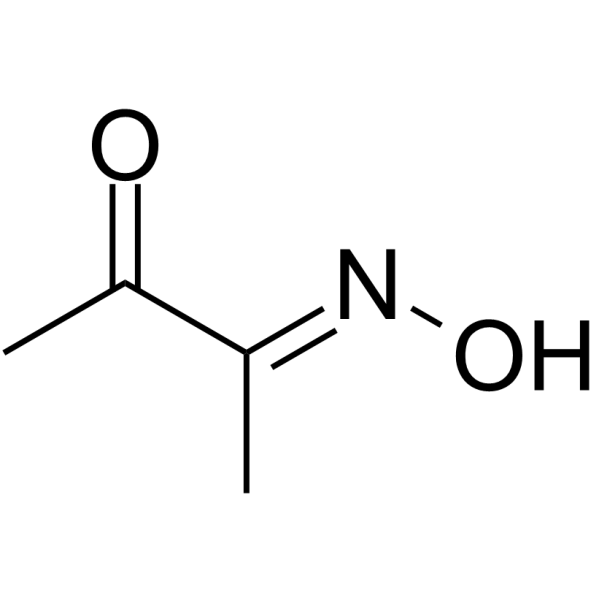
Biacetyl monoxime (Diacetyl monoxime), a myosin ATPase inhibitor, is a skeletal and cardiac muscle contraction inhibitor. Biacetyl monoxime is also a well-characterized non-competitive inhibitor of chemical and motile activity of skeletal muscle myosin-II. Biacetyl monoxime induces sarcoplasmic reticulum Ca2+ release.
For research use only. We do not sell to patients.
- Purity : 98.0%
- CAS No.: 57-71-6
- Formula: C4H7NO2
- Molecular Weight:101.10
-
Storage:
4°C, sealed storage, away from moisture
* In solvent : -80°C, 6 months; -20°C, 1 month (sealed storage, away from moisture)

To place orders, for customer services and technical support, please contact: MedChemExpress USA
Tel: 609-228-6898 E-mail: [email protected] [email protected]


-
 Biological Activity
-
Chemical Information
-
Solvent & Solubility
- Protocols
- Purity & Documentation
- References
-
 Help & FAQs


-
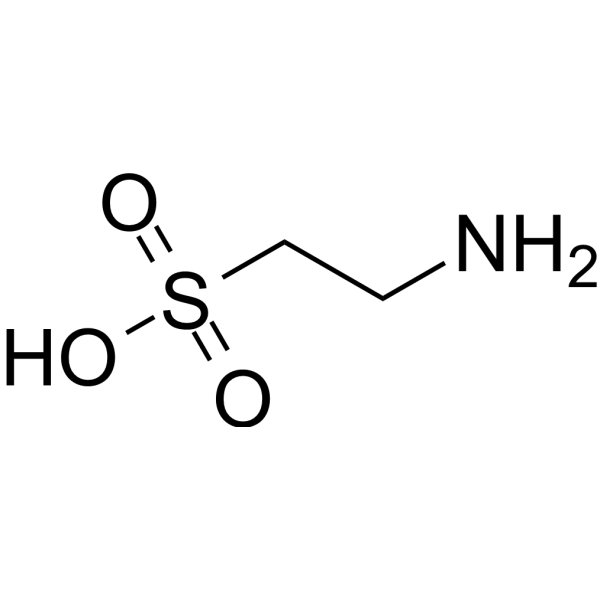
HY-B0351
TaurineAutophagy Inducer -
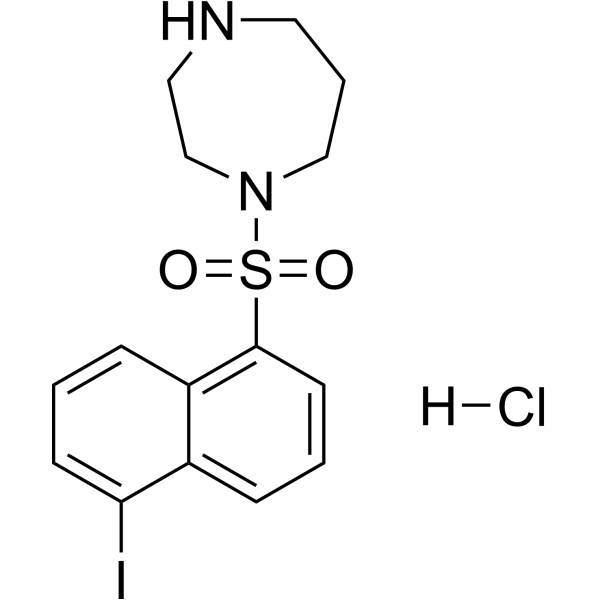
HY-15417
ML-7 hydrochlorideMLCK Inhibitor -
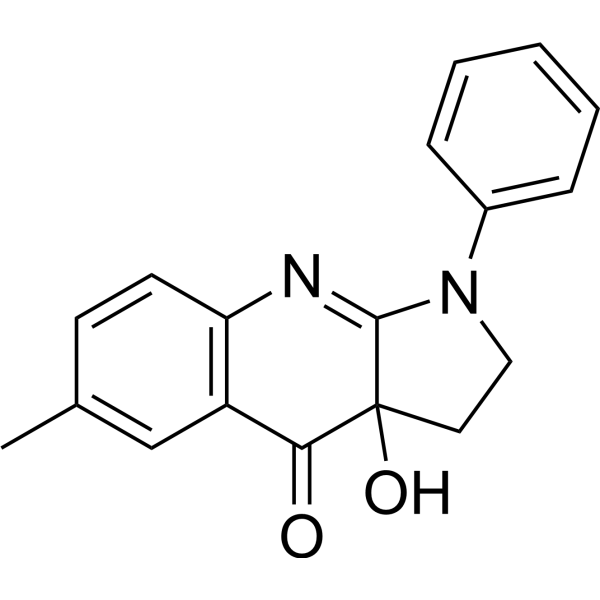
HY-13813
BlebbistatinMyosin II Inhibitor -
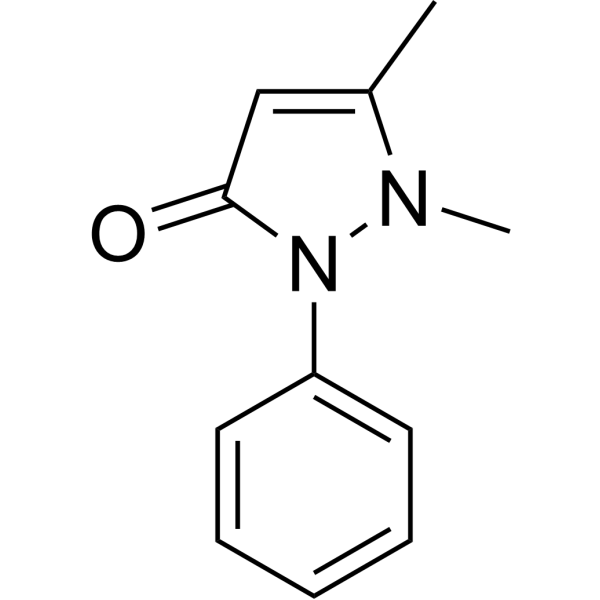
HY-B0171
AntipyrineAntipyretic/Analgesic -
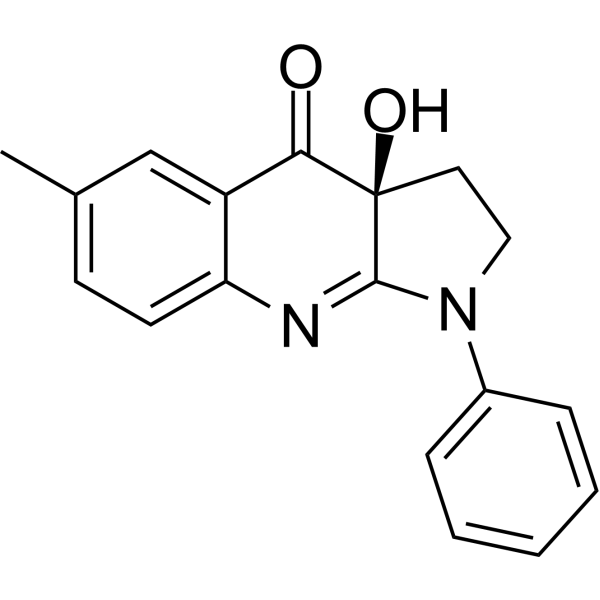
HY-13441
(-)-BlebbistatinMyosin II ATPase Inhibitor -
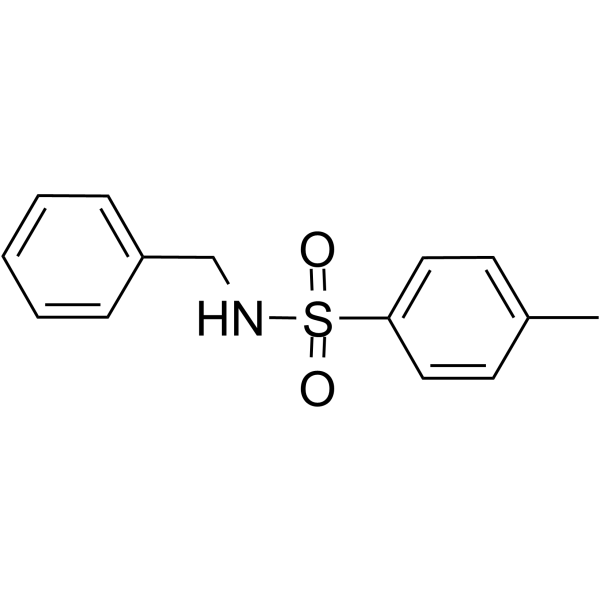
HY-16690
BTSMyosin S1 ATPase Inhibitor -
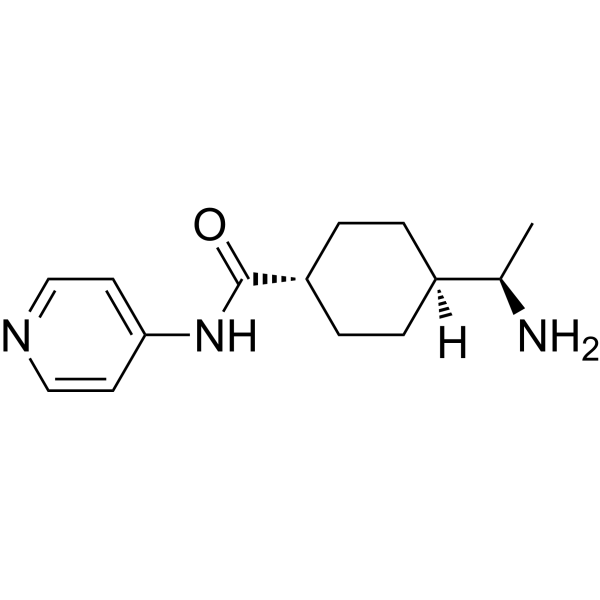
HY-10071
Y-27632ROCK Inhibitor -
HY-109037
MavacamtenCardiac Myosin Modulator -

HY-N6782
OligomycinH+-ATP-Synthase Inhibitor -
HY-14233
Omecamtiv mecarbilCardiac Myosin Activator -
HY-W015240
N-Acetyl-L-glutamic acidGlutamic Acid -
HY-W027592
1H-1,2,4-Triazol-3-amineBiochemical Assay Reagent


Biological Activity
Description
In Vitro
Biacetyl monoxime (Diacetyl monoxime) (50 mM, 6 and 48 h) decreases cellulase secretion in C. cinerea[1].
Biacetyl monoxime (50 mM, 2 and 4 h) disrupts the localization of the Golgi apparatus, but not that of the endoplasmic reticulum[1].
Biacetyl monoxime (0-30 mM) induces SR Ca2+ release (no efflux inhibitors) in a concentration-dependent manner, with a maximal reduction of 72% of SR Ca2+ at pCa 6.0[2].
Biacetyl monoxime acts as a chemical phosphatase, which has led to speculation that dephosphorylation of key Ca2+ channel proteins may be involved in its inhibition of contraction[2].
Biacetyl monoxime does not inhibit the ATPase activity of two different myosin-I isoforms, myosin-V, or myosin-VI[3].
Biacetyl monoxime (0-50 mM) suppresses L-type Ca2+ current of single cardiac myocytes isolated from SHR and WKY rats[4].
Biacetyl monoxime significantly reduces the duration of both spontaneous and electrically stimulated action potentials of cultured neonatal rat cardiomyocytes[4].
MedChemExpress (MCE) has not independently confirmed the accuracy of these methods. They are for reference only. Further protocols information, click here.
In Vivo
Biacetyl monoxime (0-205 mg/kg; i.p.; once) shows anticonvulsant effect against Picrotoxin (HY-101391)-induced convulsions[5].
MedChemExpress (MCE) has not independently confirmed the accuracy of these methods. They are for reference only.
-
Animal Model:Male SHR and age-matched WKY rat[4]
-
Dosage:5, 30, I00 and 200 mg/kg
-
Administration:Intravenous administration, 1 mL/kg, once
-
Result:Decreased arterial blood pressure for both strains, the SHR was significantly more responsive.
-
Animal Model:Male mice (20 to 25 g)[5]
-
Dosage:51, 103 and 205 mg/kg in combination with intraperitoneal injection of 3.0 mg/kg Picrotoxin (HY-101391)
-
Administration:Intraperitoneal injection, once
-
Result:Showed dose-dependent anticonvulsant effect against Picrotoxin-induced convulsions.
Clinical Trial
| NCT Number | Sponsor | Condition | Start Date |
Phase

|
|---|---|---|---|---|
| NCT01329991 | Plexxikon| | 2011-05 | PHASE1 |


Chemical Information
-
CAS No. 57-71-6
-
Appearance Solid
-
Molecular Weight 101.10
-
Formula C4H7NO2
-
Color White to light yellow
-
SMILES
C/C(C(C)=O)=N\O
-
Synonyms
Diacetyl monoxime; DAM
-
Shipping
Room temperature in continental US; may vary elsewhere.
-
Storage
4°C, sealed storage, away from moisture
* In solvent : -80°C, 6 months; -20°C, 1 month (sealed storage, away from moisture)


Solvent & Solubility
In Vitro:
DMSO : 100 mg/mL (989.12 mM; Need ultrasonic; Hygroscopic DMSO has a significant impact on the solubility of product, please use newly opened DMSO)
Please refer to the solubility information to select the appropriate solvent. Once prepared, please aliquot and store the solution to prevent product inactivation from repeated freeze-thaw cycles.
Storage method and period of stock solution: -80°C, 6 months; -20°C, 1 month (sealed storage, away from moisture). When stored at -80°C, please use it within 6 months. When stored at -20°C, please use it within 1 month.
Please refer to the solubility information to select the appropriate solvent. Once prepared, please aliquot and store the solution to prevent product inactivation from repeated freeze-thaw cycles.
Storage method and period of stock solution: -80°C, 6 months; -20°C, 1 month (sealed storage, away from moisture). When stored at -80°C, please use it within 6 months. When stored at -20°C, please use it within 1 month.
Concentration (start) × Volume (start) = Concentration (final) × Volume (final)
In Vivo:
Select the appropriate dissolution method based on your experimental animal and administration route.
- For the following dissolution methods, please ensure to first prepare a clear stock solution using an In Vitro approach and then sequentially add co-solvents:
- To ensure reliable experimental results, the clarified stock solution can be appropriately stored based on storage conditions. As for the working solution for In Vivo experiments, it is recommended to prepare freshly and use it on the same day.
- The percentages shown for the solvents indicate their volumetric ratio in the final prepared solution. If precipitation or phase separation occurs during preparation, heat and/or sonication can be used to aid dissolution.
Add each solvent one by one: 10% DMSO 40% PEG300 5% Tween-80 45% Saline
Solubility: ≥ 2.08 mg/mL (20.57 mM); Clear solution
This protocol yields a clear solution of ≥ 2.08 mg/mL (saturation unknown).
Taking 1 mL working solution as an example, add 100 μL DMSO stock solution (20.8 mg/mL) to 400 μL PEG300, and mix evenly; then add 50 μL Tween-80 and mix evenly; then add 450 μL Saline to adjust the volume to 1 mL.
Preparation of Saline: Dissolve 0.9 g sodium chloride in ddH₂O and dilute to 100 mL to obtain a clear Saline solution.
Add each solvent one by one: 10% DMSO 90% (20% SBE-β-CD in Saline)
Solubility: ≥ 2.08 mg/mL (20.57 mM); Clear solution
This protocol yields a clear solution of ≥ 2.08 mg/mL (saturation unknown).
Taking 1 mL working solution as an example, add 100 μL DMSO stock solution (20.8 mg/mL) to 900 μL 20% SBE-β-CD in Saline, and mix evenly.
Preparation of 20% SBE-β-CD in Saline (4°C, storage for one week): 2 g SBE-β-CD powder is dissolved in 10 mL Saline, completely dissolve until clear.
In Vivo Dissolution Calculator
Please enter the basic information of animal experiments:
-
-
-
-
Recommended: Prepare an additional quantity of animals to account for potential losses during experiments.
Please enter your animal formula composition:
-
%DMSO +
Recommended: Keep the proportion of DMSO in working solution below 2% if your animal is weak.
-
%+
-
+%Tween-80 + +
-
%Saline +
The co-solvents required include: DMSO, . All of co-solvents are available by MedChemExpress (MCE). , Tween 80. All of co-solvents are available by MedChemExpress (MCE).
Working solution concentration: 0.22 mg/mL
Method for preparing stock solution: mg drug dissolved in μL DMSO. Stock solution concentration: mg/mL. * In solvent : -80°C, 6 months; -20°C, 1 month (sealed storage, away from moisture)
1. Take μL DMSO stock solution;
2. Add μL .
μL , mix evenly;
3. Then add μL Tween 80, mix evenly;
4. Then add μL
Please ensure that the stock solution in the first step is dissolved to a clear state, and add co-solvents in sequence. You can use ultrasonic heating (ultrasonic cleaner, recommended frequency 20-40 kHz), vortexing, etc. to assist dissolution.

Protocols
-
Ca2+ Staining Technique
Ca2+ staining is an experimental technique that utilizes specific fluorescent probes (such as Fluo-4 AM, Fura-2, etc.) to qualitatively or quantitatively detect dynamic changes in intracellular Ca2+ concentrations; this is achieved by monitoring the changes in fluorescent signals generated when these probes bind to free intracellular calcium ions. The underlying principle relies primarily on the presence of chelating groups within the probe's molecular structure that possess high affinity for calcium ions.


Purity & Documentation
-
Data Sheet (273 KB)
-
SDS (394 KB)
- English - EN (394 KB)
- Français - FR (394 KB)
- Deutsch - DE (394 KB)
- Norwegian - NO (394 KB)
- Español - ES (394 KB)
- Swedish - SV (394 KB)
- Italian - IT (394 KB)
- Korean - KR (394 KB)
- Portuguese - PT (394 KB)
-
Handling Instructions (2659 KB)
References
[1]. Kohsuke Hashimoto, et al. The myosin ATPase inhibitor, 2,3-butanedione 2-monoxime, prevents protein secretion by the basidiomycete Coprinopsis cinerea. Biotechnol Lett. 2011 Apr;33(4):769-75. [Content Brief]
[2]. R M Phillips, et al. 2,3-Butanedione 2-monoxime (BDM) induces calcium release from canine cardiac sarcoplasmic reticulum. Biochem Biophys Res Commun. 1996 Dec 4;229(1):154-7. [Content Brief]
[3]. Ostap EM. 2,3-Butanedione monoxime (BDM) as a myosin inhibitor. J Muscle Res Cell Motil. 2002;23(4):305-8. [Content Brief]
[4]. Xiao YF, et al. Effects of 2,3-butanedione monoxime on blood pressure, myocardial Ca2+ currents, and action potentials of rats. Am J Hypertens. 1995 Dec;8(12 Pt 1):1232-40. [Content Brief]
[5]. Brightman T, et al. 2,3-Butanedione monoxime protects mice against the convulsant effect of picrotoxin by facilitating GABA-activated currents. Brain Res. 1995 Apr 24;678(1-2):110-6. [Content Brief]


Complete Stock Solution Preparation Table
Please refer to the solubility information to select the appropriate solvent. Once prepared, please aliquot and store the solution to prevent product inactivation from repeated freeze-thaw cycles.
Storage method and period of stock solution: -80°C, 6 months; -20°C, 1 month (sealed storage, away from moisture). When stored at -80°C, please use it within 6 months. When stored at -20°C, please use it within 1 month.
| Optional Solvent | Concentration Solvent Mass | 1 mg | 5 mg | 10 mg | 25 mg |
|---|---|---|---|---|---|
| DMSO | 1 mM | 9.8912 mL | 49.4560 mL | 98.9120 mL | 247.2799 mL |
| 5 mM | 1.9782 mL | 9.8912 mL | 19.7824 mL | 49.4560 mL | |
| 10 mM | 0.9891 mL | 4.9456 mL | 9.8912 mL | 24.7280 mL | |
| 15 mM | 0.6594 mL | 3.2971 mL | 6.5941 mL | 16.4853 mL | |
| 20 mM | 0.4946 mL | 2.4728 mL | 4.9456 mL | 12.3640 mL | |
| 25 mM | 0.3956 mL | 1.9782 mL | 3.9565 mL | 9.8912 mL | |
| 30 mM | 0.3297 mL | 1.6485 mL | 3.2971 mL | 8.2427 mL | |
| 40 mM | 0.2473 mL | 1.2364 mL | 2.4728 mL | 6.1820 mL | |
| 50 mM | 0.1978 mL | 0.9891 mL | 1.9782 mL | 4.9456 mL | |
| 60 mM | 0.1649 mL | 0.8243 mL | 1.6485 mL | 4.1213 mL | |
| 80 mM | 0.1236 mL | 0.6182 mL | 1.2364 mL | 3.0910 mL | |
| 100 mM | 0.0989 mL | 0.4946 mL | 0.9891 mL | 2.4728 mL |


Biacetyl monoxime Related Classifications
HY-Y0413 Related Classifications
 Powered by Bioz