



CXCR3
CXC chemokine receptor 3 (CXCR3) is a G protein-coupled receptor that mediates leukocyte chemotaxis and modulates immune responses[1][2]. Mechanistically, CXCR3 signaling is triggered by ligands including CXCL9, CXCL10, CXCL11, CXCL4, and CXCL4L1, which activate downstream pathways such as PI3K/Akt, ERK, and p38 MAPK, leading to directed cell migration and adhesion[3][4][5]. In endothelial cells, CXCR3 limits angiogenesis and promotes pericyte recruitment, thereby stabilizing vascular networks during development and tissue repair[6][7][8]. CXCR3 isoforms exhibit distinct functions: CXCR3A enhances tumor cell migration and pro-inflammatory responses, whereas CXCR3B mediates anti-tumor effects and regulates pericyte function[9][10][8]. Disease models highlight CXCR3’s relevance in cancer metastasis, inflammatory disorders, intracerebral hemorrhage, and infectious diseases, with ligand-specific activation controlling endothelial integrity, immune cell recruitment, and tissue inflammation[5][2][9][11]. Small-molecule inhibitors and agonists, including AMG487 and SCH546738, demonstrate isoform-selective effects, with CXCR3A more sensitive to inhibition than CXCR3B, supporting targeted therapeutic strategies[1][9][3]. Differential subcellular localization further regulates biased signaling via G proteins and β-arrestins, emphasizing the importance of spatial dynamics for experimental and clinical applications[4]. Collectively, CXCR3 represents a versatile receptor linking chemotactic signaling, vascular stability, and disease modulation.
References:
- [1]. Huo R, et al. CXCR3 inhibitors for therapeutic interventions: current status and perspectives. Front Pharmacol. 2025 Jul 25;16:1556196. [Content Brief]
- [2]. Boyé K, et al. Ligand activation induces different conformational changes in CXCR3 receptor isoforms as evidenced by plasmon waveguide resonance (PWR). Sci Rep. 2017 Sep 6;7(1):10703. [Content Brief]
- [3]. Caccuri F, et al. The Synthetic Dipeptide Pidotimod Shows a Chemokine-Like Activity through CXC Chemokine Receptor 3 (CXCR3). Int J Mol Sci. 2019 Oct 24;20(21):5287. [Content Brief]
- [4]. Eiger DS, et al. Location bias contributes to functionally selective responses of biased CXCR3 agonists. Nat Commun. 2022 Oct 4;13(1):5846. [Content Brief]
- [5]. Wang X, et al. Effects of CXCL4/CXCR3 on the lipopolysaccharide-induced injury in human umbilical vein endothelial cells. J Cell Physiol. 2019 Dec;234(12):22378-22385. [Content Brief]
- [6]. Torraca V, et al. The CXCR3-CXCL11 signaling axis mediates macrophage recruitment and dissemination of mycobacterial infection. Dis Model Mech. 2015 Mar;8(3):253-69. [Content Brief]
- [7]. Wu Q, et al. Altered CXCR3 isoform expression regulates prostate cancer cell migration and invasion. Mol Cancer. 2012 Jan 11;11:3. [Content Brief]
- [8]. Sheng W, et al. Astrocyte-derived CXCL10 exacerbates endothelial cells pyroptosis and blood-brain barrier disruption via CXCR3/cGAS/AIM2 pathway after intracerebral hemorrhage. Cell Death Discov. 2025 Aug 8;11(1):373. [Content Brief]
- [9]. Lee J, et al. CXCR3-CXCL11 Signaling Restricts Angiogenesis and Promotes Pericyte Recruitment. Arterioscler Thromb Vasc Biol. 2024 Dec;44(12):2577-2595. [Content Brief]
- [10]. Huang YV, et al. Novel Therapeutic Approach Targeting CXCR3 to Treat Immunotherapy Myocarditis. Circ Res. 2025 Feb 28;136(5):473-490. [Content Brief]
- [11]. Bodnar RJ, et al. Differential regulation of pericyte function by the CXC receptor 3. Wound Repair Regen. 2015 Nov-Dec;23(6):785-96. [Content Brief]
-
CXCR3 Related Products (16)
Related Products (16)

-
Recombinant Proteins (3)
-
Antibodies (1)
- 1
-
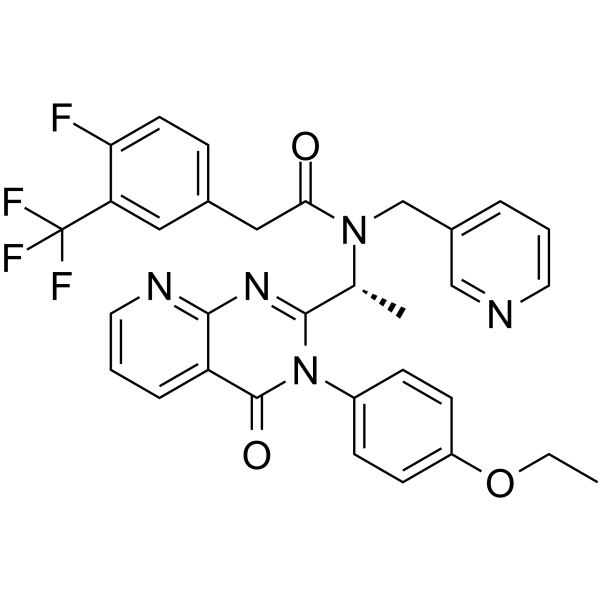
AMG 487
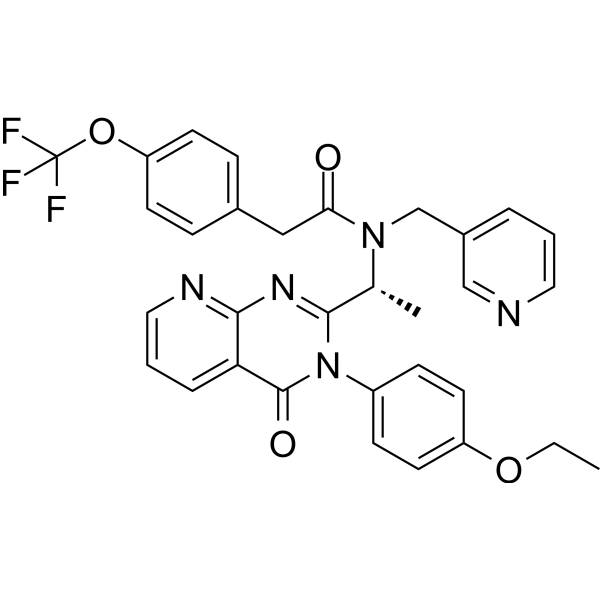 0 ImagesAMG 487 is an orally active and selective antagonist of CXC chemokine receptor 3 (CXCR3) which inhibits the binding of CXCL10 and CXCL11 to CXCR3 with IC50s of 8.0 and 8.2 nM, respectively.
-
Olopatadine hydrochloride
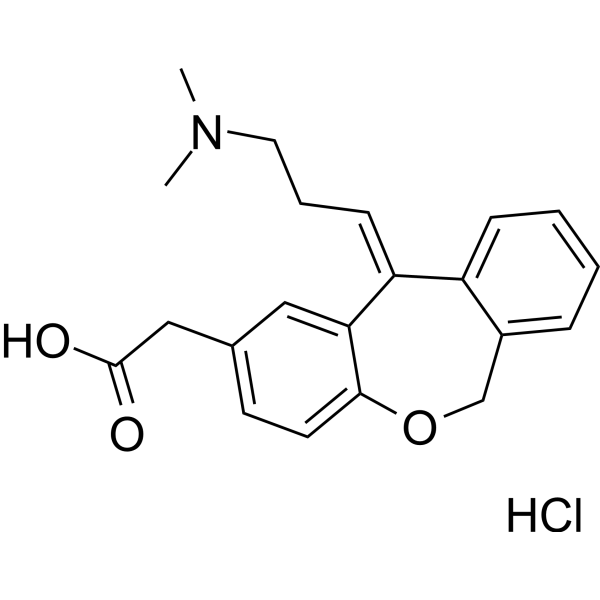 0 ImagesSynonyms: ALO4943A; KW4679Olopatadine hydrochloride (ALO4943A; KW4679) is an orally active histamine H1 receptor antagonist and mast cell stabilizer. Olopatadine hydrochloride exerts antiallergic effects by blocking histamine H1 receptor-mediated activities. Olopatadine hydrochloride inhibits exocytosis, chemokine release, F-actin polymerization, CXCL10-induced calcium influx, and T cell chemotactic activity. Olopatadine hydrochloride also reduces the expression levels of CXCR3 on the surface of CD4+ and CD8+ T cells. Olopatadine hydrochloride inhibits scratching behavior, improves dermatitis scores, and suppresses intraepidermal neurite outgrowth. Olopatadine hydrochloride simultaneously decreases the levels of inflammatory markers, growth factors, histamine, and specific IgE, while increasing the expression of ErbB3A/HER3A. Olopatadine hydrochloride can be used in research related to seasonal pollinosis, chronic rhinitis, urticaria, allergic conjunctivitis, alopecia areata, and atopic dermatitis.
-
Cyclazosin
 0 ImagesCat. No.: HY-184086CAS No.: 139953-73-4Cyclazosin is an α1D-adrenergic receptor antagonist and a partial agonist of CXCR4/ACKR3. The pKi values of Cyclazosin for cloned human α1D, α1B and α1A adrenergic receptors are 9.28, 9.23 and 8.18, respectively. Cyclazosin induces β-arrestin recruitment in CXCR4 and ACKR3 with EC50 values of 16 μM and 10 μM, respectively, stimulates ERK1/2 phosphorylation, and induces receptor internalization. Cyclazosin potently inhibits CXCL12-induced chemotaxis of primary human aortic vascular smooth muscle cells. Cyclazosin alters MDMA-induced thermoregulatory responses in mice, converting monophasic hyperthermia to a biphasic pattern without affecting resting core body temperature. Cyclazosin can be used for diseases related to tumor metastasis, MDMA-induced hyperthermia and vasoconstriction.
-
Sirt1/CXCR3-IN-1
 0 ImagesCat. No.: HY-184899Sirt1/CXCR3-IN-1 is a dual Sirt1/CXCR3 inhibitor with an IC50 of 0.77 μM against Sirt1. Sirt1/CXCR3-IN-1 inhibits dengue virus replication, upregulates the expression of interferon-stimulated genes, and enhances the antiviral defense capacity of the host. Sirt1/CXCR3-IN-1 suppresses CXCR3-mediated T cell chemotaxis and cytokine release, thereby reducing immune activation and inflammatory responses. Sirt1/CXCR3-IN-1 is applicable to research related to dengue virus infection.
-
Anti-Mouse CXCR3/CD183 Antibody (CXCR3-173)
 0 ImagesCat. No.: HY-P990254Purity: 99%Anti-Mouse CXCR3/CD183 Antibody (CXCR3-173) is an anti-mouse CXCR3/CD183 IgG monoclonal antibody. Anti-Mouse CXCR3/CD183 Antibody (CXCR3-173) weakens the immune response by reducing the infiltration of CD4+ and CD8+ T cells. Anti-Mouse CXCR3/CD183 Antibody (CXCR3-173) significantly prolongs the survival time of heart or islet transplants in mice. Anti-Mouse CXCR3/CD183 Antibody (CXCR3-173) can be used for researches on immunology and cancer such as pancreatic cancer.
-
PS372424 hydrochloride
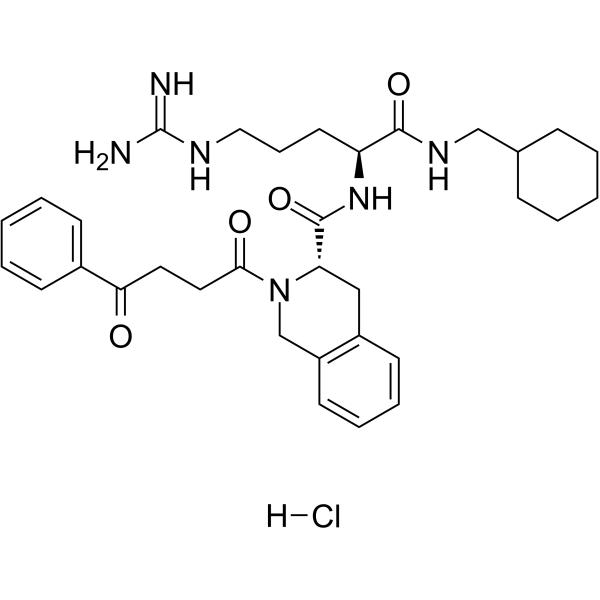 0 ImagesCat. No.: HY-111149ACAS No.: 1596362-29-6PS372424 hydrochloride, a three amino-acid fragment of CXCL10, is a specific human CXCR3 agonist with anti-inflammatory activity. PS372424 hydrochloride prevents human T-cell migration in a humanized model of arthritic inflammation.
-
AMG 487 (S-enantiomer)
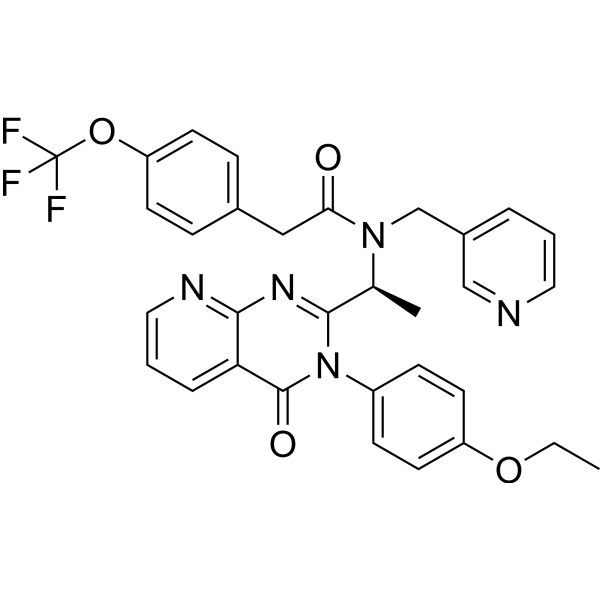 0 ImagesAMG 487 S-enantiomer is the S enantiomer of AMG 487. AMG 487 is an antagonist of the chemokine receptor CXCR3.
-
CXCR3 antagonist 1
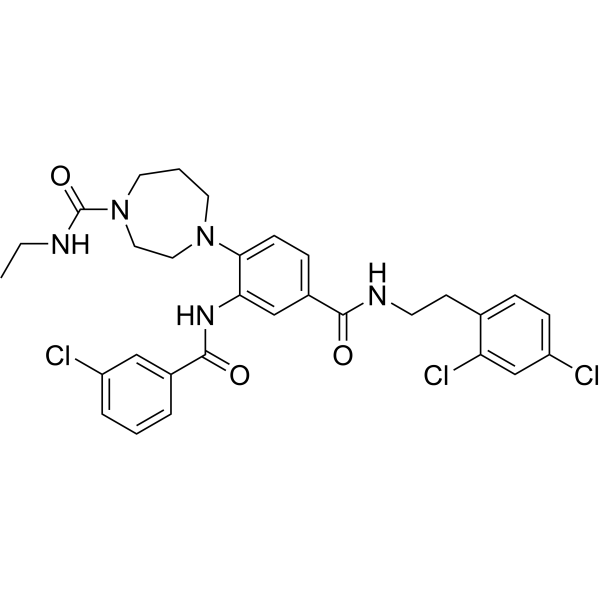 0 ImagesCXCR3 antagonist 1 (compound 6c) is a selective and non-cytotoxic CXCR3 antagonist (IC50=0.06 µM). CXCR3 antagonist 1 has potential in researching inflammatory diseases (including inflammatory bowel disease, multiple sclerosis, rheumatoid arthritis, and diabetes).
-
SCH-900875
 0 ImagesSCH-900875 is an orally active, brain-penetrant and selective CXCR3 receptor inhibitor, which also shows high selectivity over CXCR1 and CXCR2 receptors. SCH-900875 binds to CXCR3, blocking the binding of ligands CXCL9, CXCL10, and CXCL11, inhibiting downstream G protein and β-arrestin signaling pathways to suppress inflammatory cell migration. SCH-900875 is promising for research of autoimmune diseases (rheumatoid arthritis, multiple sclerosis) and inflammatory disorders (psoriasis, inflammatory bowel disease).
-
ACT-660602
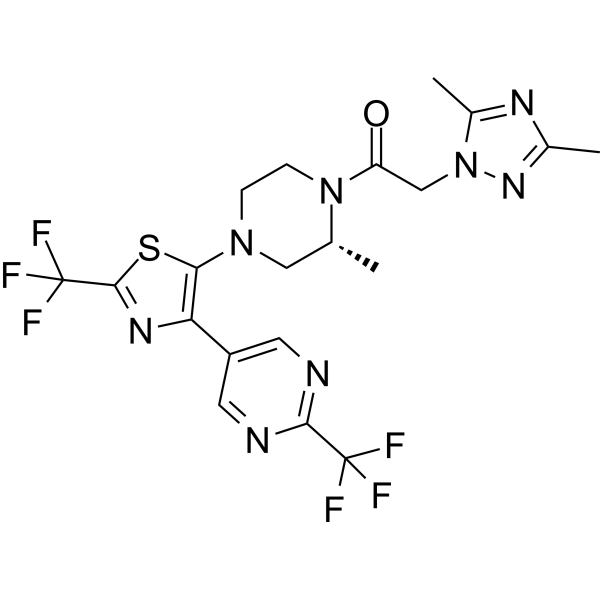 0 ImagesACT-660602 is an orally active antagonist of chemokine receptor (CXCR3) with an IC50 value of 204 nM. ACT-660602 inhibits T-cell migration and shows efficacy in acute lung ingury model. ACT-660602 can be used for autoimmune diseases research.
-
PS372424
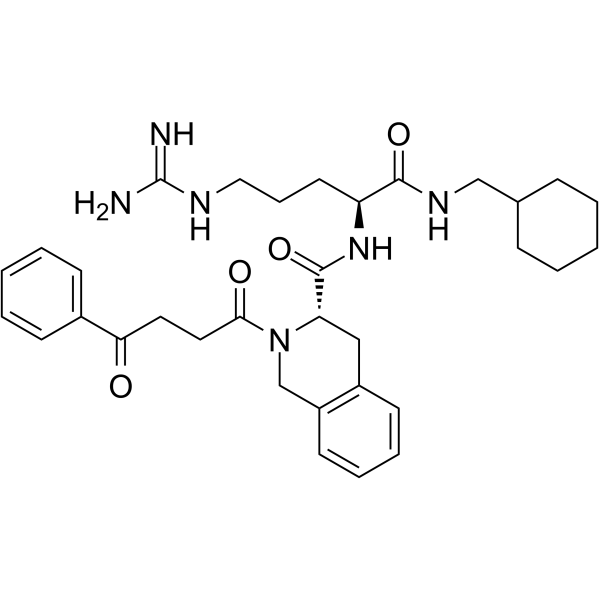 0 ImagesCat. No.: HY-111149CAS No.: 914291-61-5PS372424, a three amino-acid fragment of CXCL10, is a specific human CXCR3 agonist with anti-inflammatory activity. PS372424 prevents human T-cell migration in a humanized model of arthritic inflammation.
-
Hypoglaucin A
 0 ImagesCat. No.: HY-N16578CAS No.: 93528-39-3Hypoglaucin A is a CXCR3 antagonist with an IC50 of 0.47 μM. Hypoglaucin A can be used for the research of inflammation.
- 1




