



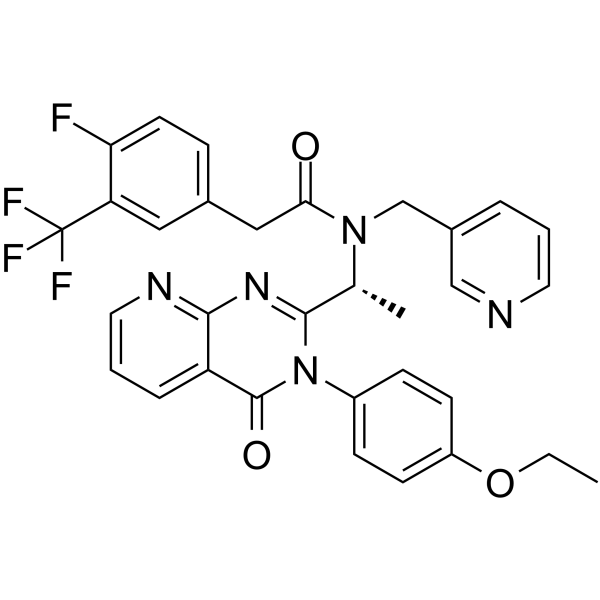
NBI-74330
Based on 9 publication(s) in Google Scholar
NBI-74330 is a potent antagonist for CXCR3, and exhibits potent inhibition of (125I)CXCL10 and (125I)CXCL11 specific binding with Ki of 1.5 and 3.2 nM, respectively.
For research use only. We do not sell to patients.
- Purity : 99.76%
- CAS No.: 855527-92-3
- Formula: C32H27F4N5O3
- Molecular Weight:605.58
-
Storage:Powder -20°C, 3 years , 4°C, 2 years ; In solvent -80°C, 2 years , -20°C, 1 year

To place orders, for customer services and technical support, please contact: MedChemExpress USA
Tel: 609-228-6898 E-mail: [email protected] [email protected]


-
 Biological Activity
-
Chemical Information
-
Solvent & Solubility
- Purity & Documentation
- References
-
 Help & FAQs


-
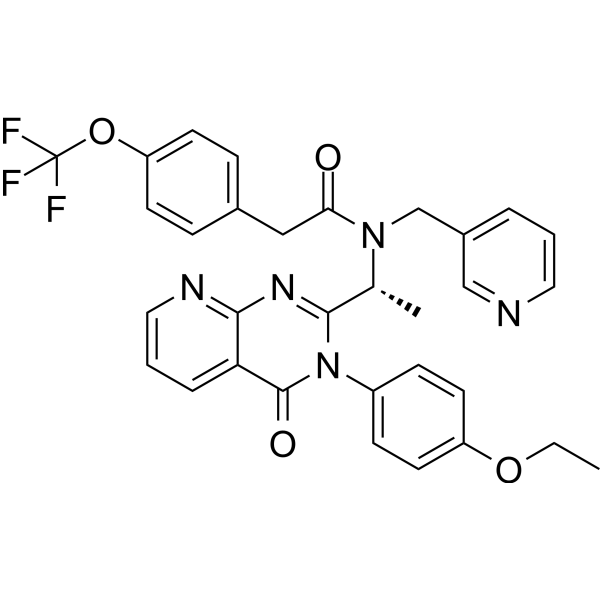
HY-15319
AMG 487CXCR3 Antagonist -
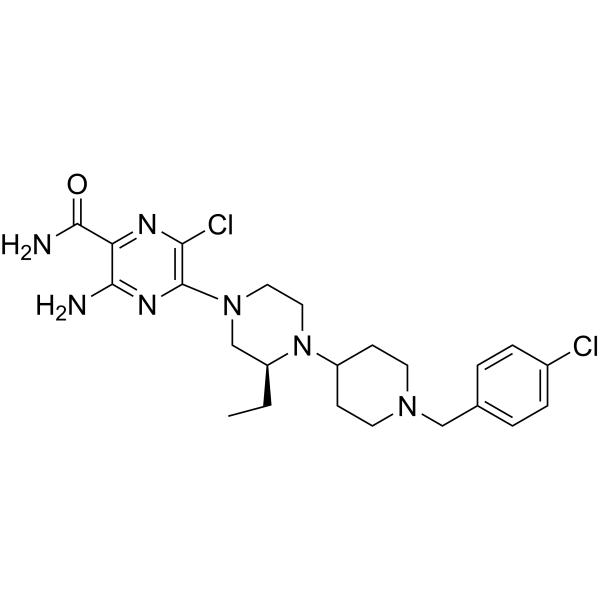
HY-10017
SCH 546738CXCR3 Antagonist -
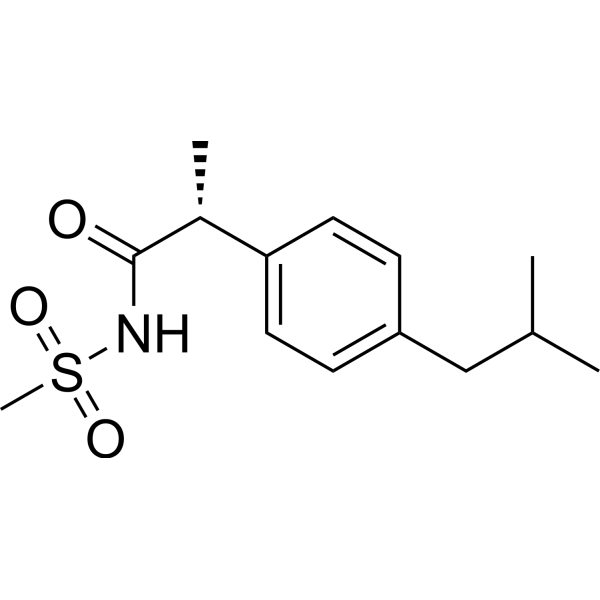
HY-15251
ReparixinCXCR1/2 Inhibitor -
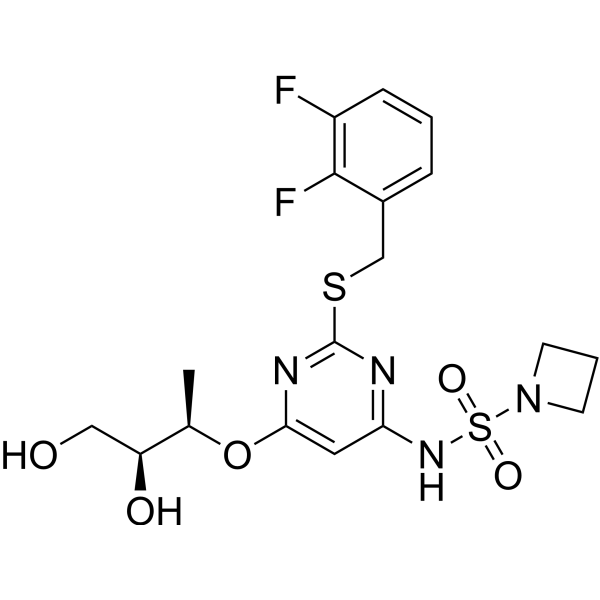
HY-19855
AZD-5069CXCR2 Antagonist -
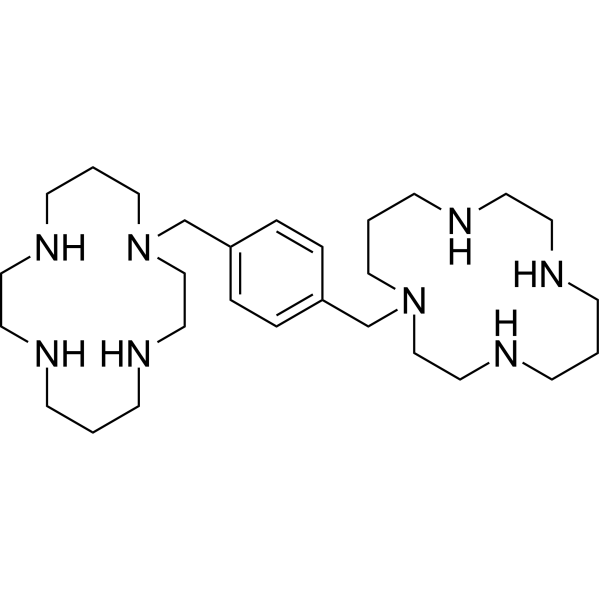
HY-10046
PlerixaforCXCR4 Antagonist -
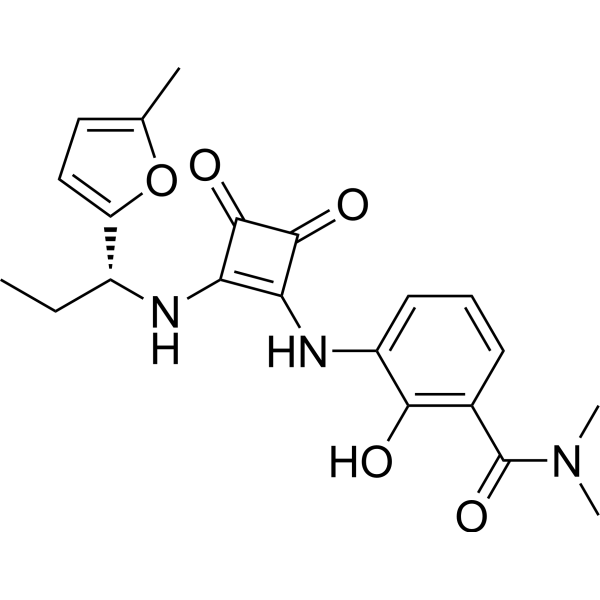
HY-10198
NavarixinCXCR1/2 Antagonist -
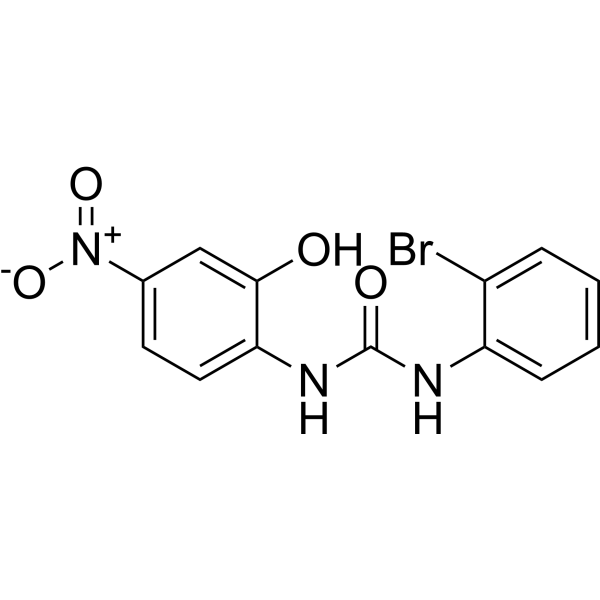
HY-16711
SB225002CXCR2 Antagonist -
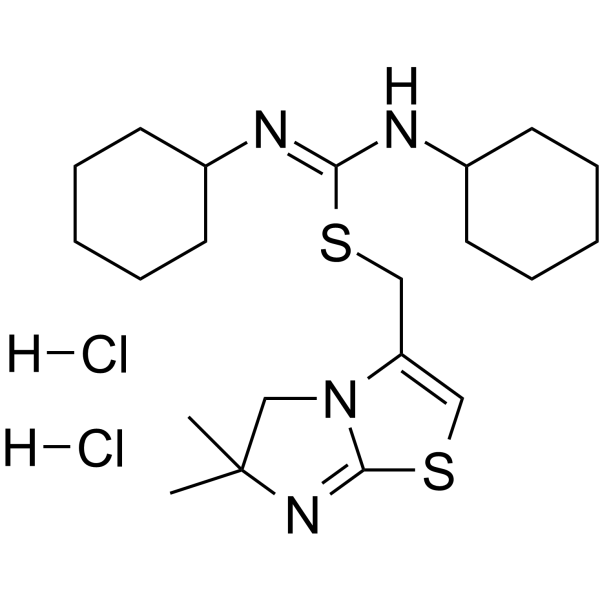
HY-101458A
IT1t dihydrochlorideCXCR4 Antagonist -
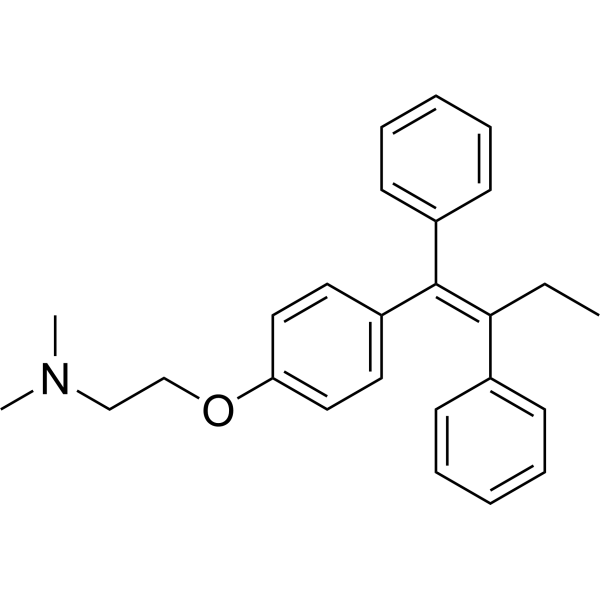
HY-13757A
TamoxifenEstrogen Receptor Modulator -
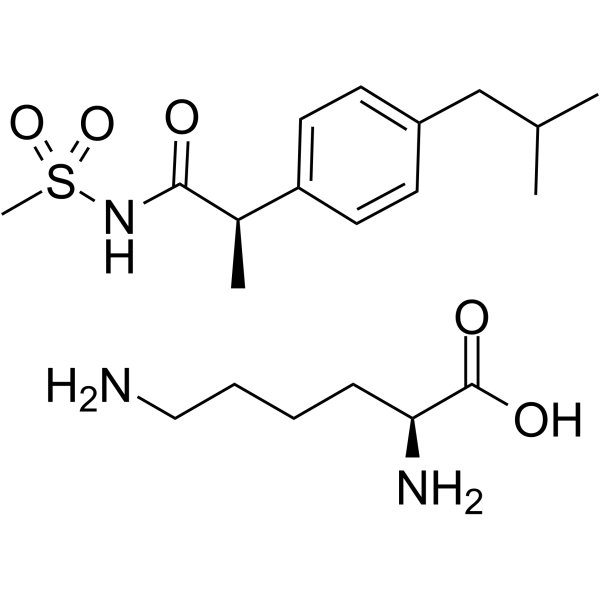
HY-15252
Reparixin L-lysine saltCXCR Inhibitor -
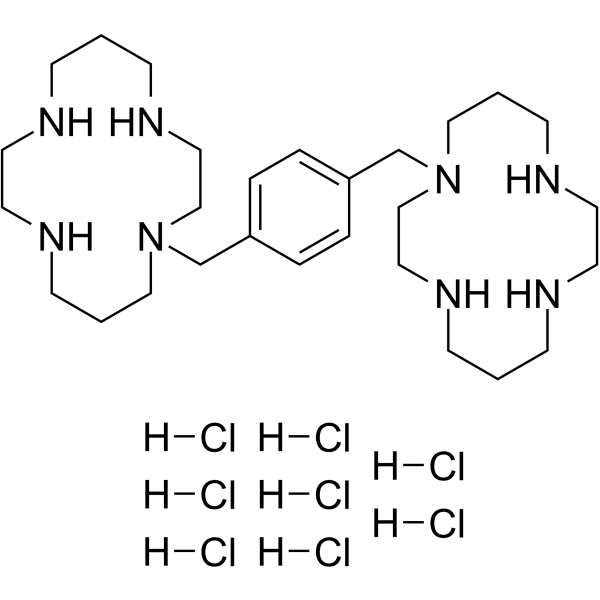
HY-50912
Plerixafor octahydrochlorideCXCR4 Antagonist -
HY-15462
SRT3109CXCR2 Antagonist
Publications Citing Use of MedChemExpress (MCE) NBI-74330
More- Immunity. 2025 Sep 9;58(9):2320-2335.e9. [Abstract]
- Nat Commun. 2025 Mar 10;16(1):2362. [Abstract]
- Cell Death Dis. 2025 May 30;16(1):424. [Abstract]
- Free Radic Biol Med. 2023 Feb 1:195:329-342. [Abstract]
- Stem Cell Res Ther. 2024 May 7;15(1):134. [Abstract]
- Sci Rep. 2018 Jul 3;8(1):9993. [Abstract]
- Sci Rep. 2017 Nov 6;7(1):14510. [Abstract]
- FASEB J. 2025 Oct 15;39(19):e71071. [Abstract]
- Front Biosci (Landmark Ed). 2025 Oct 31;30(10):45931. [Abstract]


Biological Activity
Description
IC50 & Target
[1]|
[125I]CXCL10-CXCR3 1.5 nM (Ki, in CXCR3-CHO cell membranes) |
[125I]CXCL11-CXCR3 3.2 nM (Ki, in CXCR3-CHO cell membranes) |
In Vitro
BI-74330 demonstrates potent inhibition of [125I]CXCL11 specific binding to membranes prepared from transfected CHO cells expressing CXCR3 (CXCR3-CHO) (Ki=3.6 nM). NBI-74330 is 12- and 3.5-fold more potent than CXCL9 (Ki=45.2 nM) and CXCL10 (Ki=12.5 nM), respectively, at inhibiting [125I]CXCL11 binding to CXCR3-CHO cell membranes. NBI-74330 inhibits calcium mobilization in response to CXCL11 and CXCL10 with an IC50 value of 7 nM for both ligands used at their EC80 concentrations (1 nM for CXCL11 and 30 nM for CXCL10). NBI-74330 specifically inhibits CXCR3-mediated calcium mobilization. NBI-74330 also dose-dependently inhibits CXCL11-induced [35S]GTPγS binding in membranes of cells endogenously expressing CXCR3 (H9 cells, IC50 value 5.5 nM). BI-74330 inhibits CXCL11-induced chemotaxis in these cells with an IC50 of 3.9 nM[1].
NBI-74330 (30-300 nm, 1-10 μM) produces concentration-dependent, parallel rightward shifts of the CXCL11 E/[A] curve with no significant change in the E/[A] curve maximal response[2].
MedChemExpress (MCE) has not independently confirmed the accuracy of these methods. They are for reference only.
In Vivo
Mice treated with 100 mg/kg NBI-74330 (in 1% Na Doc in 0.5% 400Cp Methylcellulose) result in serum concentrations of approximately 1 μM. This concentration is sufficient to fully block the CXCR3 receptor in vivo[3].
MedChemExpress (MCE) has not independently confirmed the accuracy of these methods. They are for reference only.


Chemical Information
-
CAS No. 855527-92-3
-
Appearance Solid
-
Molecular Weight 605.58
-
Formula C32H27F4N5O3
-
Color Light yellow to yellow
-
SMILES
O=C(N([C@@H](C1=NC2=NC=CC=C2C(N1C3=CC=C(OCC)C=C3)=O)C)CC4=CC=CN=C4)CC5=CC=C(F)C(C(F)(F)F)=C5
-
Shipping
Room temperature in continental US; may vary elsewhere.
-
Storage
Powder -20°C 3 years 4°C 2 years In solvent -80°C 2 years -20°C 1 year


Publications (9)
-
Journal Impact Factor
-
Most Recent
-
Immunity
Spatiotemporal dynamics of CXCL10 encode contextual immune information revealed by the genetically encoded fluorescent sensor. [Abstract]2025 Sep 9;58(9):2320-2335.e9. PMID: 40818452 -
Nat Commun
Interleukin-16 enhances anti-tumor immune responses by establishing a Th1 cell-macrophage crosstalk through reprogramming glutamine metabolism in mice. [Abstract]2025 Mar 10;16(1):2362. PMID: 40064918 -
Cell Death Dis
2025 May 30;16(1):424. PMID: 40447617 -
Free Radic Biol Med
2023 Feb 1:195:329-342. PMID: 36610561 -
Stem Cell Res Ther
CXCL10 is a crucial chemoattractant for efficient intranasal delivery of mesenchymal stem cells to the neonatal hypoxic-ischemic brain. [Abstract]2024 May 7;15(1):134. PMID: 38715091 -
Sci Rep
Upregulation of chemokine CXCL10 enhances chronic pulmonary inflammation in tree shrew collagen-induced arthritis. [Abstract]2018 Jul 3;8(1):9993. PMID: 29968810 -
Sci Rep
Protein profiling identified key chemokines that regulate the maintenance of human pluripotent stem cells. [Abstract]2017 Nov 6;7(1):14510. PMID: 29109449 -
FASEB J
Glycolytic Metabolite 3-Phosphoglycerate Induced by Inflammation Inhibits Chondrocyte Survival. [Abstract]2025 Oct 15;39(19):e71071. PMID: 41020567 -
Front Biosci (Landmark Ed)
A Comparative Study of the Effects of Nine CXCR3 Antagonists on Macrophage Function and the Treatment of Acute Lung Injury. [Abstract]2025 Oct 31;30(10):45931. PMID: 41198562


Solvent & Solubility
In Vitro:
DMSO : 100 mg/mL (165.13 mM; Need ultrasonic; Hygroscopic DMSO has a significant impact on the solubility of product, please use newly opened DMSO)
Please refer to the solubility information to select the appropriate solvent. Once prepared, please aliquot and store the solution to prevent product inactivation from repeated freeze-thaw cycles.
Storage method and period of stock solution: -80°C, 2 years; -20°C, 1 year. When stored at -80°C, please use it within 2 years. When stored at -20°C, please use it within 1 year.
Please refer to the solubility information to select the appropriate solvent. Once prepared, please aliquot and store the solution to prevent product inactivation from repeated freeze-thaw cycles.
Storage method and period of stock solution: -80°C, 2 years; -20°C, 1 year. When stored at -80°C, please use it within 2 years. When stored at -20°C, please use it within 1 year.
Concentration (start) × Volume (start) = Concentration (final) × Volume (final)
In Vivo:
Select the appropriate dissolution method based on your experimental animal and administration route.
- For the following dissolution methods, please ensure to first prepare a clear stock solution using an In Vitro approach and then sequentially add co-solvents:
- To ensure reliable experimental results, the clarified stock solution can be appropriately stored based on storage conditions. As for the working solution for In Vivo experiments, it is recommended to prepare freshly and use it on the same day.
- The percentages shown for the solvents indicate their volumetric ratio in the final prepared solution. If precipitation or phase separation occurs during preparation, heat and/or sonication can be used to aid dissolution.
Add each solvent one by one: 10% DMSO 40% PEG300 5% Tween-80 45% Saline
Solubility: 2.5 mg/mL (4.13 mM); Suspended solution; Need ultrasonic
This protocol yields a suspended solution of 2.5 mg/mL. Suspended solution can be used for oral and intraperitoneal injection.
Taking 1 mL working solution as an example, add 100 μL DMSO stock solution (25.0 mg/mL) to 400 μL PEG300, and mix evenly; then add 50 μL Tween-80 and mix evenly; then add 450 μL Saline to adjust the volume to 1 mL.
Preparation of Saline: Dissolve 0.9 g sodium chloride in ddH₂O and dilute to 100 mL to obtain a clear Saline solution.
Add each solvent one by one: 10% DMSO 90% (20% SBE-β-CD in Saline)
Solubility: 2.5 mg/mL (4.13 mM); Suspended solution; Need ultrasonic
This protocol yields a suspended solution of 2.5 mg/mL. Suspended solution can be used for oral and intraperitoneal injection.
Taking 1 mL working solution as an example, add 100 μL DMSO stock solution (25.0 mg/mL) to 900 μL 20% SBE-β-CD in Saline, and mix evenly.
Preparation of 20% SBE-β-CD in Saline (4°C, storage for one week): 2 g SBE-β-CD powder is dissolved in 10 mL Saline, completely dissolve until clear.
In Vivo Dissolution Calculator
Please enter the basic information of animal experiments:
-
-
-
-
Recommended: Prepare an additional quantity of animals to account for potential losses during experiments.
Please enter your animal formula composition:
-
%DMSO +
Recommended: Keep the proportion of DMSO in working solution below 2% if your animal is weak.
-
%+
-
+%Tween-80 + +
-
%Saline +
The co-solvents required include: DMSO, . All of co-solvents are available by MedChemExpress (MCE). , Tween 80. All of co-solvents are available by MedChemExpress (MCE).
Working solution concentration: 0.22 mg/mL
Method for preparing stock solution: mg drug dissolved in μL DMSO. Stock solution concentration: mg/mL.
1. Take μL DMSO stock solution;
2. Add μL .
μL , mix evenly;
3. Then add μL Tween 80, mix evenly;
4. Then add μL
Please ensure that the stock solution in the first step is dissolved to a clear state, and add co-solvents in sequence. You can use ultrasonic heating (ultrasonic cleaner, recommended frequency 20-40 kHz), vortexing, etc. to assist dissolution.


Purity & Documentation
-
Data Sheet (285 KB)
-
SDS (393 KB)
- English - EN (393 KB)
- Français - FR (393 KB)
- Deutsch - DE (393 KB)
- Norwegian - NO (393 KB)
- Español - ES (393 KB)
- Swedish - SV (393 KB)
- Italian - IT (393 KB)
- Korean - KR (393 KB)
- Portuguese - PT (393 KB)
-
Handling Instructions (2659 KB)
References
[1]. Heise CE, et al. Pharmacological characterization of CXC chemokine receptor 3 ligands and a small molecule antagonist. J Pharmacol Exp Ther. 2005 Jun;313(3):1263-71. [Content Brief]
[2]. Jopling LA, et al. Analysis of the pharmacokinetic/pharmacodynamic relationship of a small molecule CXCR3 antagonist, NBI-74330, using a murine CXCR3 internalization assay. Br J Pharmacol. 2007 Dec;152(8):1260-71. [Content Brief]
[3]. van Wanrooij EJ, et al. CXCR3 antagonist NBI-74330 attenuates atherosclerotic plaque formation in LDL receptor-deficient mice. Arterioscler Thromb Vasc Biol. 2008 Feb;28(2):251-7. [Content Brief]


Complete Stock Solution Preparation Table
Please refer to the solubility information to select the appropriate solvent. Once prepared, please aliquot and store the solution to prevent product inactivation from repeated freeze-thaw cycles.
Storage method and period of stock solution: -80°C, 2 years; -20°C, 1 year. When stored at -80°C, please use it within 2 years. When stored at -20°C, please use it within 1 year.
| Optional Solvent | Concentration Solvent Mass | 1 mg | 5 mg | 10 mg | 25 mg |
|---|---|---|---|---|---|
| DMSO | 1 mM | 1.6513 mL | 8.2565 mL | 16.5131 mL | 41.2827 mL |
| 5 mM | 0.3303 mL | 1.6513 mL | 3.3026 mL | 8.2565 mL | |
| 10 mM | 0.1651 mL | 0.8257 mL | 1.6513 mL | 4.1283 mL | |
| 15 mM | 0.1101 mL | 0.5504 mL | 1.1009 mL | 2.7522 mL | |
| 20 mM | 0.0826 mL | 0.4128 mL | 0.8257 mL | 2.0641 mL | |
| 25 mM | 0.0661 mL | 0.3303 mL | 0.6605 mL | 1.6513 mL | |
| 30 mM | 0.0550 mL | 0.2752 mL | 0.5504 mL | 1.3761 mL | |
| 40 mM | 0.0413 mL | 0.2064 mL | 0.4128 mL | 1.0321 mL | |
| 50 mM | 0.0330 mL | 0.1651 mL | 0.3303 mL | 0.8257 mL | |
| 60 mM | 0.0275 mL | 0.1376 mL | 0.2752 mL | 0.6880 mL | |
| 80 mM | 0.0206 mL | 0.1032 mL | 0.2064 mL | 0.5160 mL | |
| 100 mM | 0.0165 mL | 0.0826 mL | 0.1651 mL | 0.4128 mL |


NBI-74330 Related Classifications
HY-15320 Related Classifications
 Powered by Bioz