



Urticaria
-
Urticaria (16)

- 1
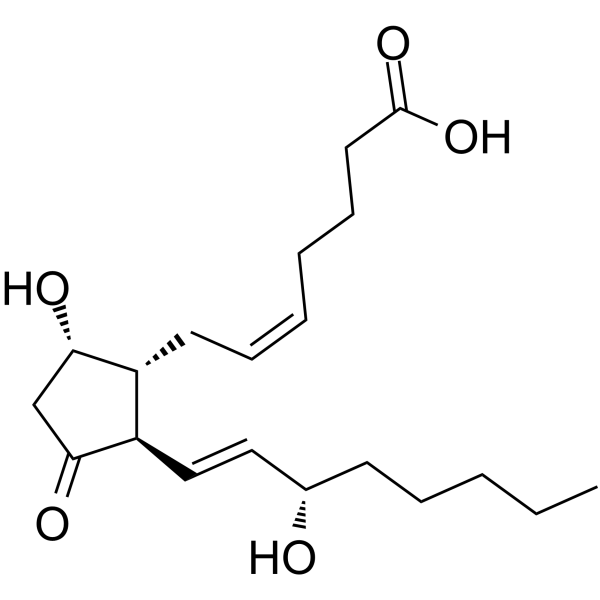
- Formula: C20H32O5
- Molecular Weight: 352.47
Prostaglandin D2 (PGD2) is one of the major PGs actively produced in the brain of various mammals. Prostaglandin D2 is one of the most potent endogenous sleep promoting substances. PGD2 plays a protective role by suppressing inflammation.

- Molecular Weight: 145.1 kDa

- Molecular Weight: 145.042 kDa
Vixarelimab (KPL-716) is a human anti-oncostatin M (OSM) receptor β subunit monoclonal antibody. Vixarelimab inhibits IL-31 and OSM signalling. Vixarelimab can be used in studies of inflammatory skin diseases such as atopic dermatitis and itchy nodular rash.
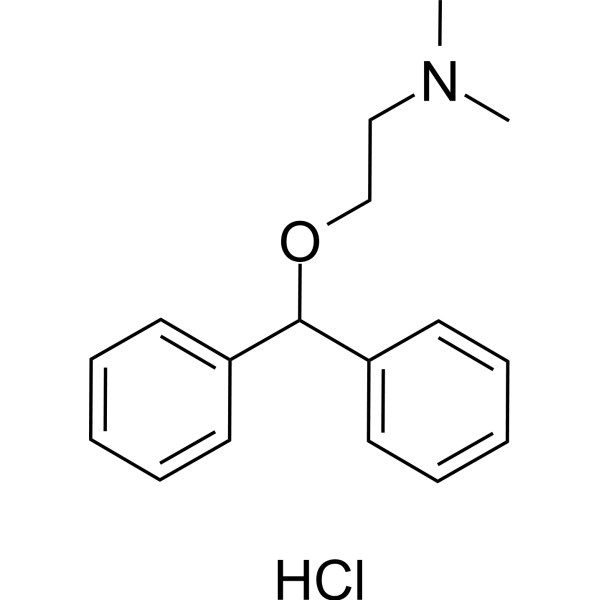

- Molecular Weight: 146.32 kDa
Ligelizumab (QGE 031) is a humanized high-affinity anti-immunoglobulin IgE monoclonal antibody. Ligelizumab selectively inhibits the binding of IgE to the high-affinity receptor FcεRI, while the inhibitory effect on the low-affinity receptor CD23 is weak. Ligelizumab can inhibit the activation of effector cells such as mast cells and Basophil, while reducing the production of IgE by B cells, and restoring the IFN-α production and regulatory T cell (Treg) induction function of plasmacytoid dendritic cells (pDC). Ligelizumab can be used in the study of allergic diseases (such as chronic spontaneous urticaria, allergic asthma).
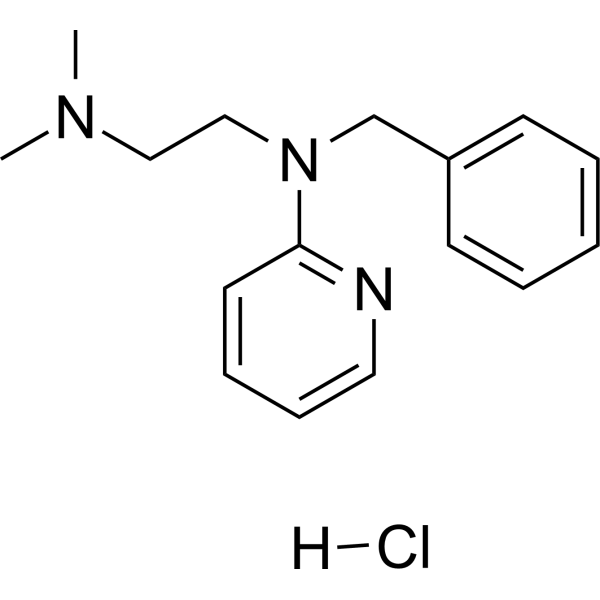
- Formula: C16H22ClN3
- Molecular Weight: 291.82
Tripelennamine hydrochloride is a histamine H1-receptor antagonist. Tripelennamine hydrochloride effectively reverses histamine-induced bronchoconstriction, increased transpulmonary pressure, elevated pulmonary vascular resistance and reduced dynamic compliance. Tripelennamine hydrochloride does not significantly affect arterial hypoxemia, hemoglobin desaturation and hypercapnia in horses undergoing short-term high-intensity exercise. Tripelennamine hydrochloride exhibits local and central analgesic activity. Tripelennamine hydrochloride can be used in studies related to emphysema, urticaria and acute laminitis.

- Formula: C27H28FN9O2
- Molecular Weight: 529.57
BLU-808 (c-Kit-IN-13) is an orally active and selective c-kit kinase inhibitor. BLU-808 inhibits autophosphorylation of wild-type c-kit with an IC50 of 0.3 nM. BLU-808 inhibits Exon 11 KIT with an IC50 of 0.9 nM. BLU-808 targets WT KIT to prevent stem cell factor-induced KIT autophosphorylation and activation of downstream intracellular signaling cascades. BLU-808 is used in research related to mast cell-mediated diseases (such as chronic urticaria, asthma, and gastrointestinal stromal tumors).

- Formula: C27H30F2N6O3
- Molecular Weight: 524.56
DAT-003 is a MRGPRX2 antagonist that selectively blocks MRGPRX2-mediated, IgE-independent mast cell degranulation without affecting IgE-dependent activation. DAT-003 can be used in studies of mast cell-related diseases, such as chronic spontaneous urticaria.
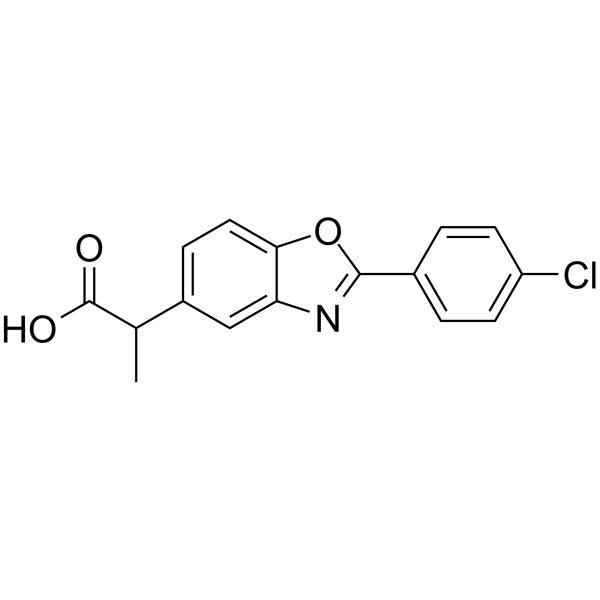
- Formula: C16H12ClNO3
- Molecular Weight: 301.72
Benoxaprofen (LRCL 3794) is a nonsteroidal anti-inflammatory agent that blocks the biosynthesis of inflammatory mediators such as leukotrienes and prostaglandins by inhibiting 5-LOX, PGH2 synthase and cytochrome P-450. Benoxaprofen exhibits significant toxicity: it not only alters cellular redox status, uncouples oxidative phosphorylation and disrupts calcium ion homeostasis, but also causes liver injury through the formation of covalent adducts between its active metabolites and hepatic proteins. Benoxaprofen shows strong phototoxicity under ultraviolet irradiation, and induces erythrocyte lysis, mast cell degranulation and histamine release. Benoxaprofen is widely used in studies of urticaria and related phototoxic mechanisms.
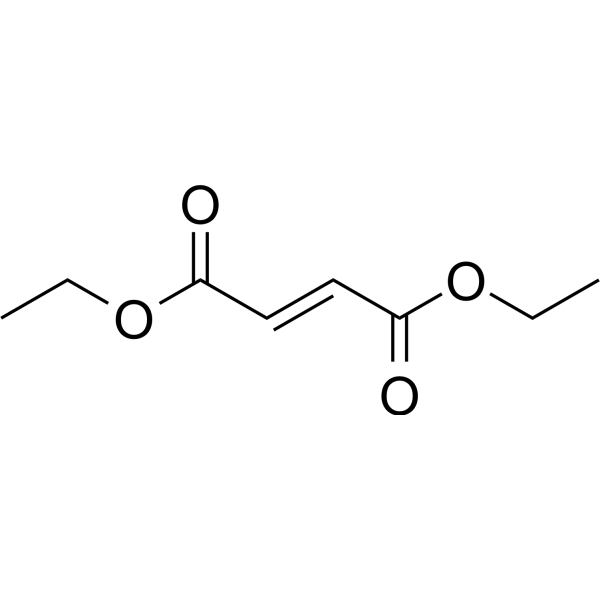
- Formula: C8H12O4
- Molecular Weight: 172.18
Diethyl fumarate is a Nrf2 inducer. Diethyl fumarate induces non-immunological contact urticaria, causing erythema, edema, and dose-dependent skin responses characterized by rapid onset, peak response, and subsequent resolution. The hybrid of Diethyl fumarate and Curcumin (HY-N0005) exerts neuroprotective effects. Diethyl fumarate can be used in the research of Parkinson's disease and non-immunological contact urticaria.
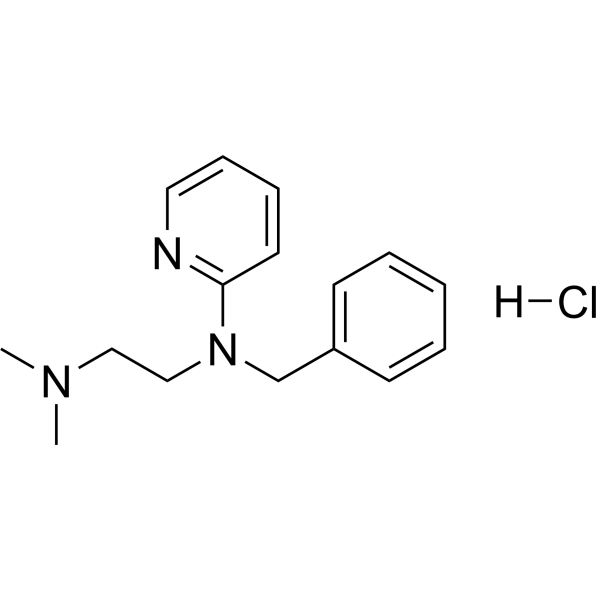
- Formula: C16H22ClN3
- Molecular Weight: 291.82
Tripelennamine hydrochloride (Standard) is the analytical standard of Tripelennamine hydrochloride (HY-17428). This product is intended for research and analytical applications. Tripelennamine hydrochloride is a histamine H1-receptor antagonist. Tripelennamine hydrochloride effectively reverses histamine-induced bronchoconstriction, increased transpulmonary pressure, elevated pulmonary vascular resistance and reduced dynamic compliance. Tripelennamine hydrochloride does not significantly affect arterial hypoxemia, hemoglobin desaturation and hypercapnia in horses undergoing short-term high-intensity exercise. Tripelennamine hydrochloride exhibits local and central analgesic activity. Tripelennamine hydrochloride can be used in studies related to emphysema, urticaria and acute laminitis.


- Formula: C26H25ClFN9O3
- Molecular Weight: 565.99
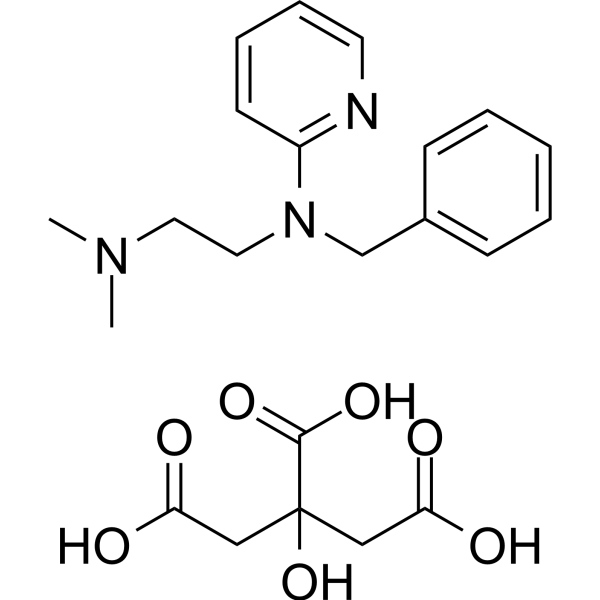
- Formula: C22H29N3O7
- Molecular Weight: 447.48
Tripelennamine citrate is a histamine H1-receptor antagonist. Tripelennamine citrate effectively reverses histamine-induced bronchoconstriction, increased transpulmonary pressure, elevated pulmonary vascular resistance and reduced dynamic compliance. Tripelennamine citrate does not significantly affect arterial hypoxemia, hemoglobin desaturation and hypercapnia in horses undergoing short-term high-intensity exercise. Tripelennamine citrate exhibits local and central analgesic activity. Tripelennamine citrate can be used in studies related to emphysema, urticaria and acute laminitis.
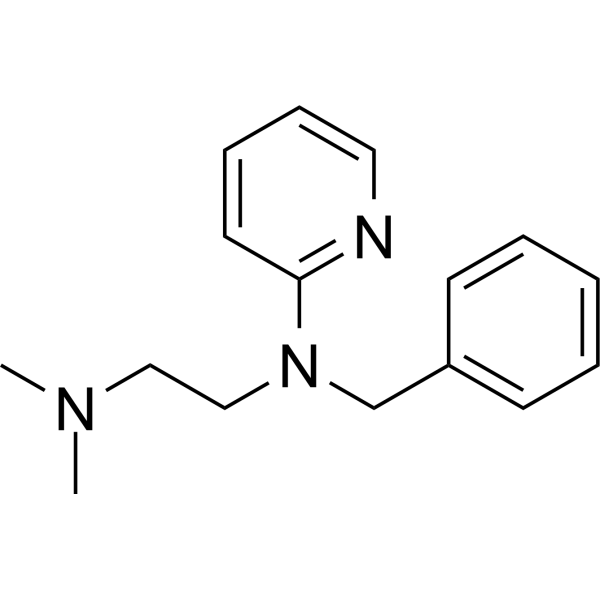
- Formula: C16H21N3
- Molecular Weight: 255.36
Tripelennamine is a histamine H1-receptor antagonist. Tripelennamine effectively reverses histamine-induced bronchoconstriction, increased transpulmonary pressure, elevated pulmonary vascular resistance and reduced dynamic compliance. Tripelennamine does not significantly affect arterial hypoxemia, hemoglobin desaturation and hypercapnia in horses undergoing short-term high-intensity exercise. Tripelennamine exhibits local and central analgesic activity. Tripelennamine can be used in studies related to emphysema, urticaria and acute laminitis.

- Formula: C20H23ClN2O4
- Molecular Weight: 390.86
(R)-(-)-Chlorpheniramine maleate is an enantiomer of Chlorpheniramine maleate (HY-B0286A). Chlorpheniramine maleate is a H1 antihistamines. (R)-(-)-Chlorpheniramine maleate can be used for allergic diseases such as rhinitis and urticaria research.
- 1



