



Emphysema
-
Emphysema (14)

- 1

Papain is a cysteine protease of the peptidase C1 family. Papain enhances red cell agglutination by anti-D and anti-A, and increases red cell sensitivity to K cell-mediated lysis in ADCC assays. Papain can induce pulmonary emphysema. Papain can be used for the researches of Rh haemolytic disease of the newborn and pulmonary emphysema.

- Formel: C43H67N5O9
- Molecular Weight: 798.02
NZ-97 is a locally deliverable, lung-retaining dipeptidyl peptidase 4 (DPP4) inhibitor with an IC50 of 18 nM. It exhibits selectivity for DPP8 and DPP9 (with IC50 values of 1.3 μM and 0.6 μM, respectively). NZ-97 inhibits the DPP4 pool in lung-resident cells and epithelial lining fluid, elevates IL-6 and IGF-1 levels, and induces the expansion of type 2 alveolar epithelial cells (AEC2). NZ-97 reduces protein content in bronchoalveolar lavage fluid (BALF), ameliorates lung injury and alleviates pulmonary fibrosis. NZ-97 shows tolerability in untreated Mus musculus mice after intratracheal administration, and does not alter the proliferation or differentiation of lung fibroblasts. NZ-97 can be used in studies related to idiopathic pulmonary fibrosis, acute lung injury and emphysema.

Papain (1.5-10 units/mg) is a cysteine protease of the peptidase C1 family. Papain (1.5-10 units/mg) enhances red cell agglutination by anti-D and anti-A, and increases red cell sensitivity to K cell-mediated lysis in ADCC assays. Papain (1.5-10 units/mg) can induce pulmonary emphysema. Papain (1.5-10 units/mg) can be used for the researches of Rh haemolytic disease of the newborn and pulmonary emphysema.
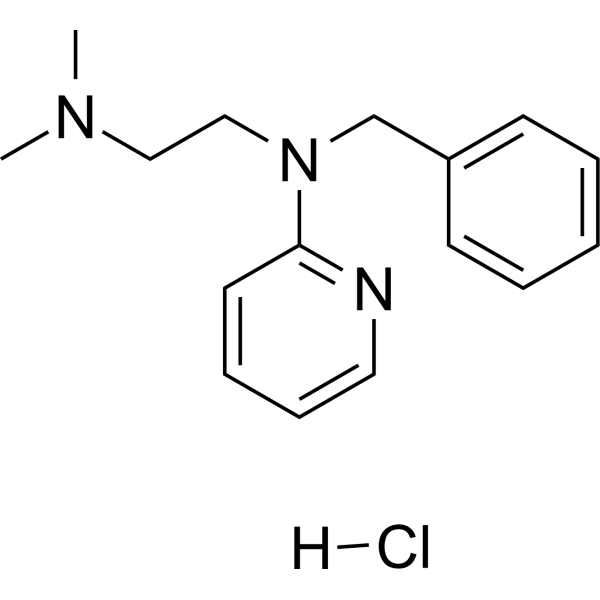
- Formel: C16H22ClN3
- Molecular Weight: 291.82
Tripelennamine hydrochloride is a histamine H1-receptor antagonist. Tripelennamine hydrochloride effectively reverses histamine-induced bronchoconstriction, increased transpulmonary pressure, elevated pulmonary vascular resistance and reduced dynamic compliance. Tripelennamine hydrochloride does not significantly affect arterial hypoxemia, hemoglobin desaturation and hypercapnia in horses undergoing short-term high-intensity exercise. Tripelennamine hydrochloride exhibits local and central analgesic activity. Tripelennamine hydrochloride can be used in studies related to emphysema, urticaria and acute laminitis.
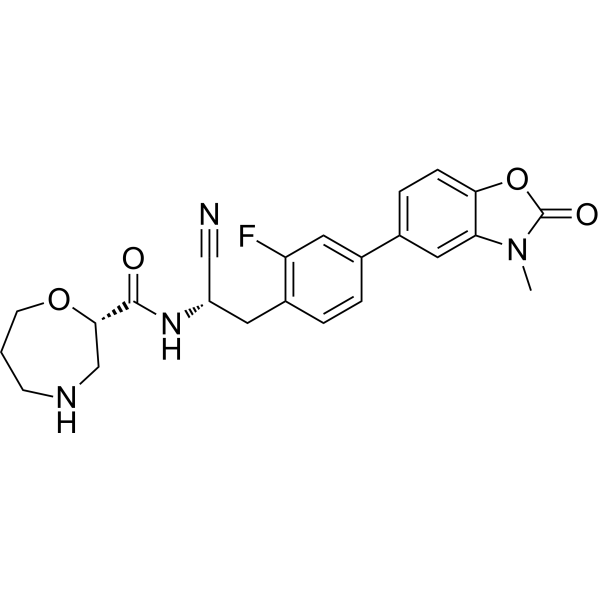
- Formel: C23H23FN4O4
- Molecular Weight: 438.45
Florensocatib (HSK31858) is a potent reversible dipeptidyl peptidase 1 (DPP1) inhibitor with an IC50 of 1.6 nM against DPP1. By inhibiting the DPP1-dependent maturation of neutrophil serine proteases (NSPs), Florensocatib can be used in studies of bronchiectasis and neutrophilic inflammation.

- Formel: C16H19NO
- Molecular Weight: 241.33

- Formel: C18H20Br2N2O2S
- Molecular Weight: 488.24
Neltenexine is a mucolytic agent and an inhibitor of anion hypersecretion. Neltenexine acts on NKCC1, NBC1 and AE2 transporters located on the basolateral membrane of airway epithelial cells. Neltenexine reduces Cl-/HCO3- uptake by inhibiting NKCC1 and NBC1, activates AE2 to promote Cl- excretion, reduces β2-adrenergic agonist-induced anion hypersecretion without blocking CFTR channels, and maintains appropriate airway fluid levels. Neltenexine can be used in research related to chronic obstructive pulmonary disease and emphysema.
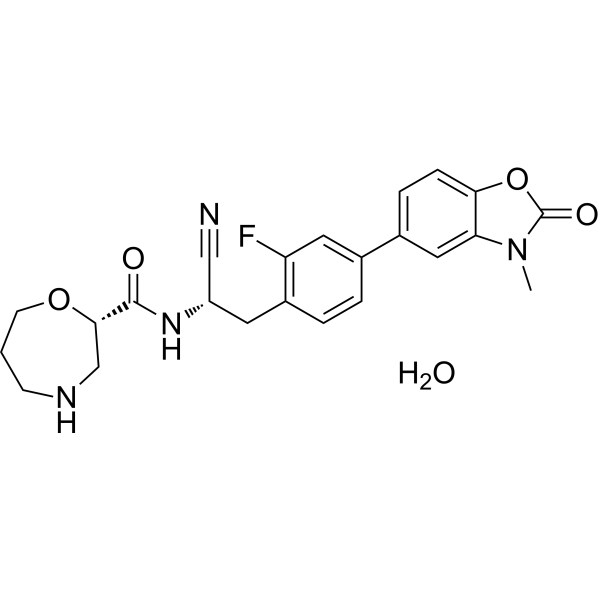
- Formel: C23H25FN4O5
- Molecular Weight: 456.47
Florensocatib hydrate (HSK31858 hydrate) is a potent reversible dipeptidyl peptidase 1 (DPP1) inhibitor with an IC50 of 1.6 nM against DPP1. Florensocatib hydrate inhibits DPP1 and thereby reduces DPP1-dependent maturation and activation of neutrophil serine proteases (NSPs). Florensocatib hydrate can be used in studies of bronchiectasis and neutrophilic inflammation.

Papain (lyophilized powder, ≥10 units/mg protein) is a cysteine protease of the peptidase C1 family. Papain (lyophilized powder, ≥10 units/mg protein) enhances red cell agglutination by anti-D and anti-A, and increases red cell sensitivity to K cell-mediated lysis in ADCC assays. Papain (lyophilized powder, ≥10 units/mg protein) can induce pulmonary emphysema. Papain (lyophilized powder, ≥10 units/mg protein) can be used for the researches of Rh haemolytic disease of the newborn and pulmonary emphysema.
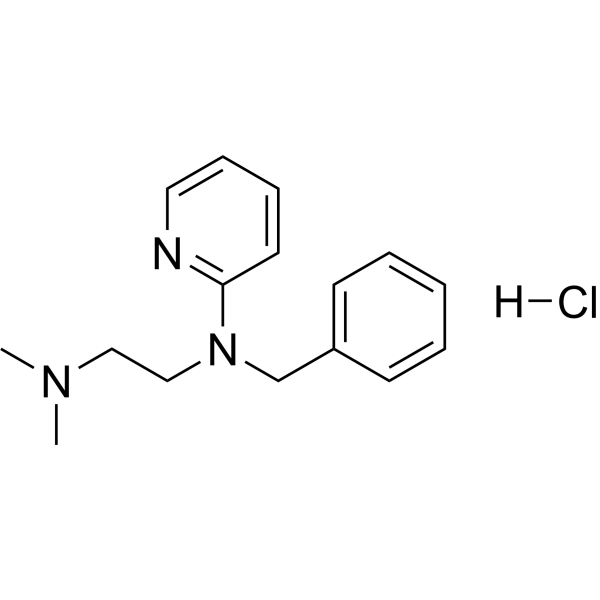
- Formel: C16H22ClN3
- Molecular Weight: 291.82
Tripelennamine hydrochloride (Standard) is the analytical standard of Tripelennamine hydrochloride (HY-17428). This product is intended for research and analytical applications. Tripelennamine hydrochloride is a histamine H1-receptor antagonist. Tripelennamine hydrochloride effectively reverses histamine-induced bronchoconstriction, increased transpulmonary pressure, elevated pulmonary vascular resistance and reduced dynamic compliance. Tripelennamine hydrochloride does not significantly affect arterial hypoxemia, hemoglobin desaturation and hypercapnia in horses undergoing short-term high-intensity exercise. Tripelennamine hydrochloride exhibits local and central analgesic activity. Tripelennamine hydrochloride can be used in studies related to emphysema, urticaria and acute laminitis.

- Formel: C16H15Cl2N5O2S
- Molecular Weight: 412.29
LJ-2698 (FM101) is an orally active adenosine A3 receptor (Adenosine A3 Receptor) antagonist. LJ-2698 blocks adenosine A3 receptor-dependent pro-inflammatory JNK, ERK, and NF-κB signaling pathways. LJ-2698 prevents alveolar cavity enlargement, restores pulmonary function, and inhibits matrix metalloproteinase activity and pulmonary cell apoptosis (apoptosis) in mice. LJ-2698 induces mitochondrial dysfunction, necroptosis, and intrinsic apoptosis. LJ-2698 ameliorates renal injury in mice with diabetic nephropathy, and alleviates diet-induced hepatic inflammation and fibrosis. LJ-2698 can be used in the research of emphysema, diabetic nephropathy, and metabolic dysfunction-associated steatotic liver disease.
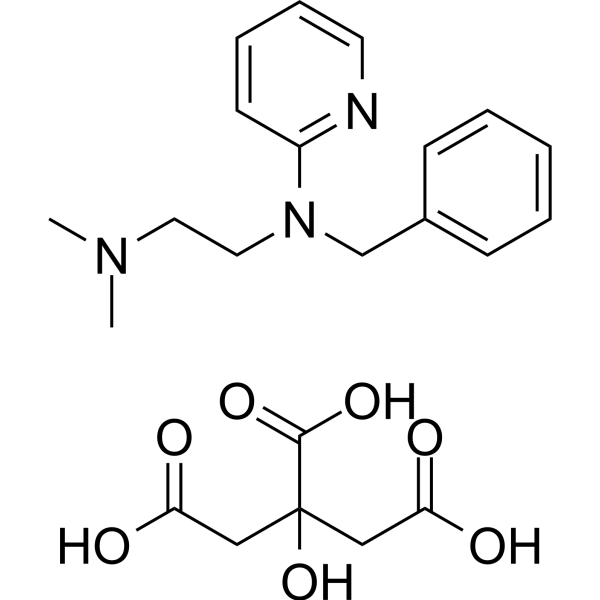
- Formel: C22H29N3O7
- Molecular Weight: 447.48
Tripelennamine citrate is a histamine H1-receptor antagonist. Tripelennamine citrate effectively reverses histamine-induced bronchoconstriction, increased transpulmonary pressure, elevated pulmonary vascular resistance and reduced dynamic compliance. Tripelennamine citrate does not significantly affect arterial hypoxemia, hemoglobin desaturation and hypercapnia in horses undergoing short-term high-intensity exercise. Tripelennamine citrate exhibits local and central analgesic activity. Tripelennamine citrate can be used in studies related to emphysema, urticaria and acute laminitis.
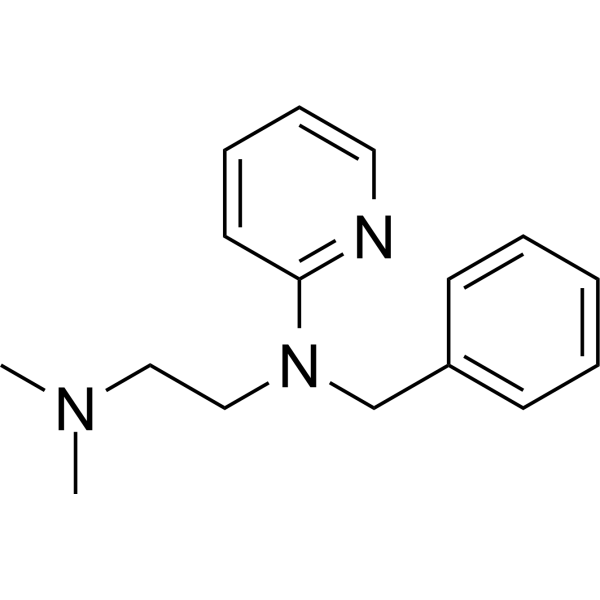
- Formel: C16H21N3
- Molecular Weight: 255.36
Tripelennamine is a histamine H1-receptor antagonist. Tripelennamine effectively reverses histamine-induced bronchoconstriction, increased transpulmonary pressure, elevated pulmonary vascular resistance and reduced dynamic compliance. Tripelennamine does not significantly affect arterial hypoxemia, hemoglobin desaturation and hypercapnia in horses undergoing short-term high-intensity exercise. Tripelennamine exhibits local and central analgesic activity. Tripelennamine can be used in studies related to emphysema, urticaria and acute laminitis.

- Formel: C18H21Br2ClN2O2S
- Molecular Weight: 524.70
Neltenexine hydrochloride is a mucolytic agent and an inhibitor of anion hypersecretion. Neltenexine hydrochloride acts on NKCC1, NBC1 and AE2 transporters located on the basolateral membrane of airway epithelial cells. Neltenexine hydrochloride reduces Cl-/HCO3- uptake by inhibiting NKCC1 and NBC1, activates AE2 to promote Cl- excretion, reduces β2-adrenergic agonist-induced anion hypersecretion without blocking CFTR channels, and maintains appropriate airway fluid levels. Neltenexine hydrochloride can be used in research related to chronic obstructive pulmonary disease and emphysema.
- 1



