



CYP4
CYP4 (cytochrome P450 family 4) enzymes are microsomal monooxygenases that primarily catalyze the ω-oxidation of endogenous fatty acids and eicosanoids, thereby regulating the metabolic turnover of bioactive lipid mediators involved in cellular signaling pathways[1][2]. Through the metabolism of arachidonic acid, leukotriene B4, and prostaglandins, CYP4 enzymes participate in eicosanoid-dependent processes that influence inflammation, cardiovascular homeostasis, and lipid-associated physiological responses[1][3]. Mechanistically, CYP4-mediated fatty acid hydroxylation contributes to the generation or inactivation of signaling molecules, linking lipid metabolism with disease-associated pathways in cancer, cardiovascular disorders, inflammatory conditions, and genetic diseases[1][2]. Compared with xenobiotic-metabolizing CYP1, CYP2, and CYP3 family members, human CYP4 subfamilies are more closely associated with endogenous substrate metabolism and include CYP4A, CYP4B, CYP4F, CYP4V, CYP4X, and CYP4Z isoforms that exhibit distinct substrate preferences and tissue expression patterns[1]. Several CYP4 enzymes show aberrant expression in tumor tissues, and elevated expression of specific CYP4A, CYP4F, CYP4B1, or CYP4Z1 isoforms has been associated with tumor progression and poor clinical outcomes in selected cancer models[1]. For experimental applications, small-molecule CYP4 inhibitors, including inhibitors of CYP4A11-mediated 20-HETE synthesis, are widely used to investigate CYP4-dependent lipid signaling pathways and evaluate potential therapeutic strategies targeting dysregulated eicosanoid metabolism[1][3].
References:
- [1]. Zhou M, et al. Exploring human CYP4 enzymes: Physiological roles, function in diseases and focus on inhibitors. Drug Discov Today. 2023 May;28(5):103560. [Content Brief]
- [2]. Jarrar YB, et al. Molecular Functionality of Cytochrome P450 4 (CYP4) Genetic Polymorphisms and Their Clinical Implications. Int J Mol Sci. 2019 Aug 31;20(17):4274. [Content Brief]
- [3]. Database: Guide to pharmacology.
- [4]. Database: Guide to pharmacology.
-
CYP4 Related Products (12)
Related Products (12)

- 1
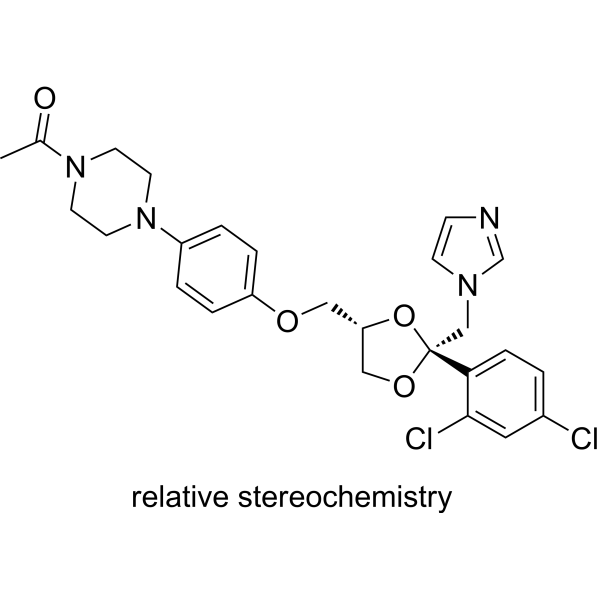
-
HET0016
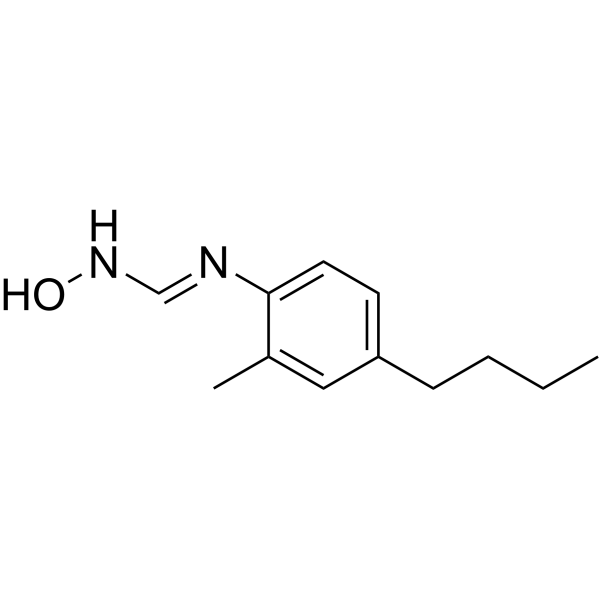 0 ImagesHET0016 is a potent and selective 20-hydroxyeicosatetraenoic acid (20-HETE) synthase inhibitor, with IC50 values of 17.7 nM, 12.1 nM and 20.6 nM for recombinant CYP4A1-, CYP4A2- and CYP4A3-catalyzed 20-HETE synthesis, respectively. HET0016 also is a selective CYP450 inhibitor, which has been shown to inhibit angiogenesis and tumor growth.
-
20-HETE inhibitor-2
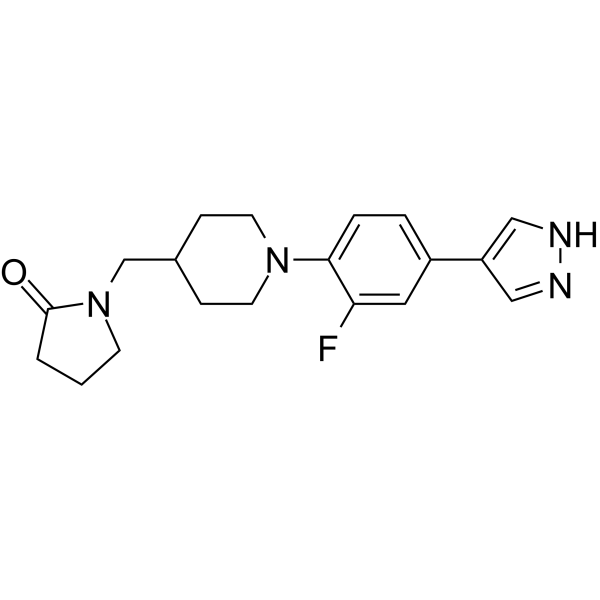 0 Images20-HETE inhibitor-2 is an orally active 20-HETE inhibitor. 20-HETE inhibitor-2 can inhibit the activities of CYP4F2 and CYP4A11, thereby suppressing the production of 20-HETE. 20-HETE inhibitor-2 has the effect of improving blood glucose and can be used for the research of various diseases related to 20-HETE such as obesity.
-
m-Tolualdehyde
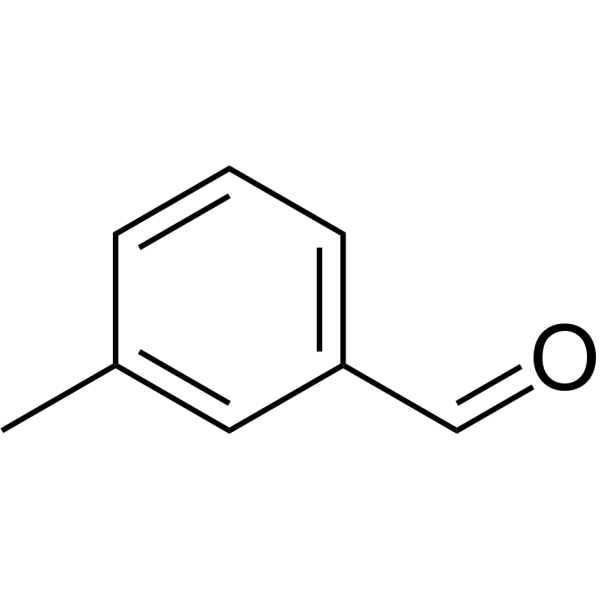 0 Imagesm-Tolualdehyde (3-Methylbenzaldehyde) is an aldehyde metabolite produced by m-xylene metabolism, and it bidirectionally regulates the CYP 2B1, CYP 2E1, and CYP 4B1 isoenzymes in the respiratory tract of rats. m-Tolualdehyde serves as an oxidation substrate and carbon source for Pseudomonas Pxy, and it can be oxidized to m-toluic acid in an NAD+ -dependent manner. m-Tolualdehyde exerts a dose-dependent inhibitory effect on CYP 2B1 and CYP 2E1 in the nasal mucosa and lungs of rats, and a dose-dependent activating effect on pulmonary CYP 4B1. m-Tolualdehyde can form aldehyde-heme adducts with the heme group of cytochrome P450. m-Tolualdehyde can be used in studies related to metabolic enzymes in the respiratory tract of rats.
-
ε-Viniferin
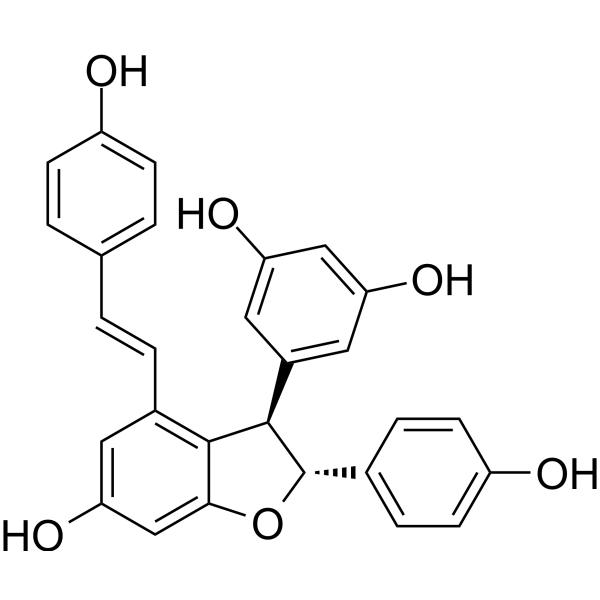 0 ImagesSynonyms: epsilon-Viniferinε-Viniferin (epsilon-Viniferin), the dimer of Resveratrol and can be isolated from Vitis vinifera, displays a potent inhibitory for all the CYP activities, with Ki values from 0.5-20 μM. ε-Viniferin possesses potent antioxidant, anti-inflammatory, anti-diabetic, and anti-neurodegenerative capacity.
-
BM-51
 0 ImagesCat. No.: HY-187170CAS No.: 3038211-56-9BM-51 is a selective inhibitor of CYP4Z1, with a human IC50 value of 91.7 nM. BM-51 binds to amino acid residues of CYP4Z1, thereby inhibiting its enzymatic activity. BM-51 downregulates the protein expression of stem cell markers (ALDH1A1, SOX2, OCT3/4 and KLF4) in cancer cells, inhibits cancer cell migration and invasion, and exhibits low toxicity to normal cells/tissues. BM-51 suppresses tumor initiation capacity and enhances the chemotherapeutic efficacy of Doxorubicin (HY-15142A). BM-51 can be used in breast cancer-related research.

-
TP0472993
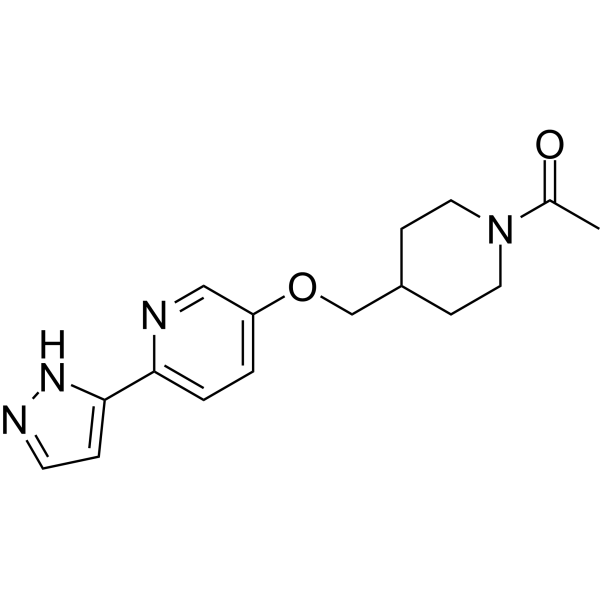 0 ImagesCYP4A11/CYP4F2-IN-2 is a potent and orally active dual inhibitor of cytochrome P450 (CYP) 4A11 and CYP4F2, with IC50s of 140 nM and 40 nM, respectively. CYP4A11/CYP4F2-IN-2 has potential for the research of renal diseases.
-
CYP4A11/CYP4F2-IN-1
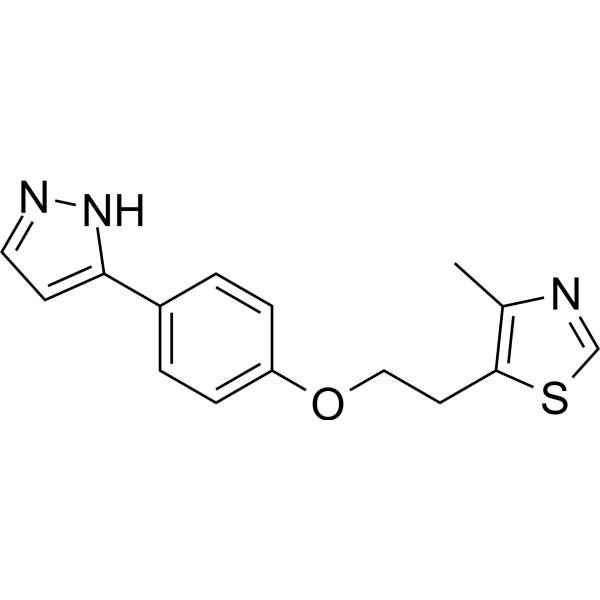 0 ImagesCYP4A11/CYP4F2-IN-1 is a potent dual inhibitor of cytochrome P450 (CYP) 4A11 and CYP4F2, with IC50s of 19 nM and 17 nM, respectively. CYP4A11/CYP4F2-IN-1 has potential for the research of renal diseases.
-
CYP4Z1-IN-1
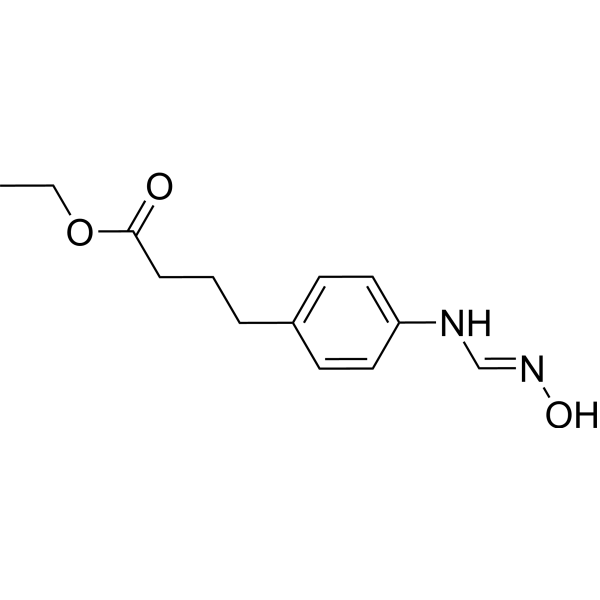 0 ImagesCat. No.: HY-152159CAS No.: 2760611-38-7CYP4Z1-IN-1 (compound 7c) is a potent CYP4Z1 inhibitor, with an IC50 of 41.8 nM. CYP4Z1-IN-1 decreases the expression of breast CSCs stemness markers, spheroid formation, and metastatic ability as well as tumor-initiation capability in a concentration-dependent manner in vitro and in vivo.
-
4-Ipomeanol
 0 ImagesCat. No.: HY-106315CAS No.: 32954-58-84-Ipomeanol is a pneumotoxin. 4-Ipomeanol can be produced by the common sweet potato, Ipomoea batatas, in the presence of Fusarium solani. 4-Ipomeanol can be bioactivated by CYP4B1.
-
CYP4Z1-IN-2
 0 ImagesCat. No.: HY-139002CAS No.: 2428734-45-4CYP4Z1-IN-2 (compound 7) is a reversible inhibitor of CYP4Z1 (Ki=2.2 μM), which inhibits the production of 14,15-EET in breast cancer cells. CYP4Z1-IN-2 inhibits the CYP4Z1-mediated Luc-BE O-debenzylation reaction with an IC50 of 5.9 μM.
- 1



