



m-Tolualdehyde

Based on 1 Customer Validation
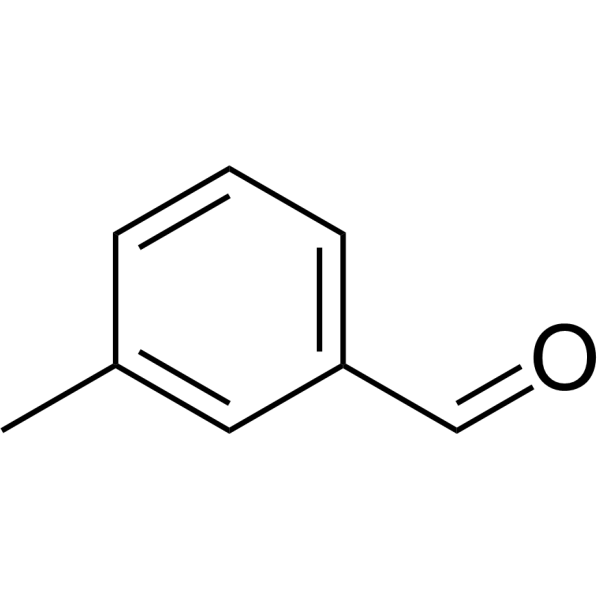
m-Tolualdehyde (3-Methylbenzaldehyde) is an aldehyde metabolite produced by m-xylene metabolism, and it bidirectionally regulates the CYP 2B1, CYP 2E1, and CYP 4B1 isoenzymes in the respiratory tract of rats. m-Tolualdehyde serves as an oxidation substrate and carbon source for Pseudomonas Pxy, and it can be oxidized to m-toluic acid in an NAD+ -dependent manner. m-Tolualdehyde exerts a dose-dependent inhibitory effect on CYP 2B1 and CYP 2E1 in the nasal mucosa and lungs of rats, and a dose-dependent activating effect on pulmonary CYP 4B1. m-Tolualdehyde can form aldehyde-heme adducts with the heme group of cytochrome P450. m-Tolualdehyde can be used in studies related to metabolic enzymes in the respiratory tract of rats.
Nos produits utilisent uniquement pour la recherche. Nous ne vendons pas aux patients.
- Pureté : 99.58%
- CAS No.: 620-23-5
- Formule: C8H8O
- Masse moléculaire:120.15
-
Stockage:
4°C, stored under nitrogen
* In solvent : -80°C, 6 months; -20°C, 1 month (stored under nitrogen)

To place orders, for customer services and technical support, please contact: MedChemExpress USA
Tel: 609-228-6898 E-mail: [email protected] [email protected]


-
 Activité biologique
-
Chemical Information
-
Solvant et solubilité
- Pureté et documentation
- Références
-
 Help & FAQs


-
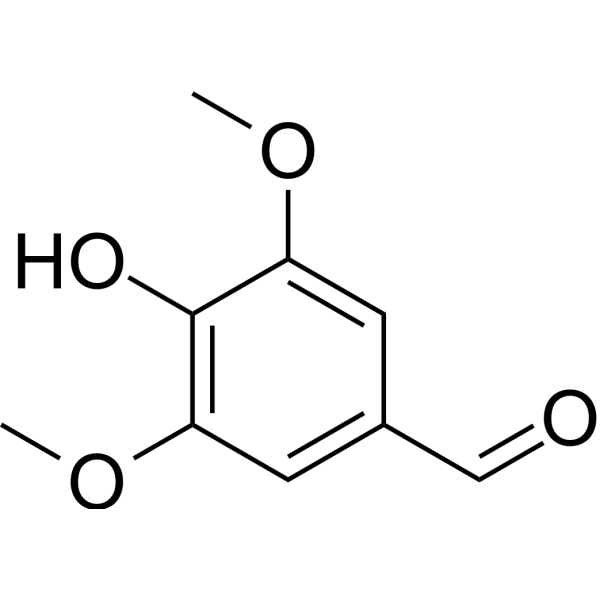
HY-N1390
SyringaldehydeCOX-2 Inhibitor -
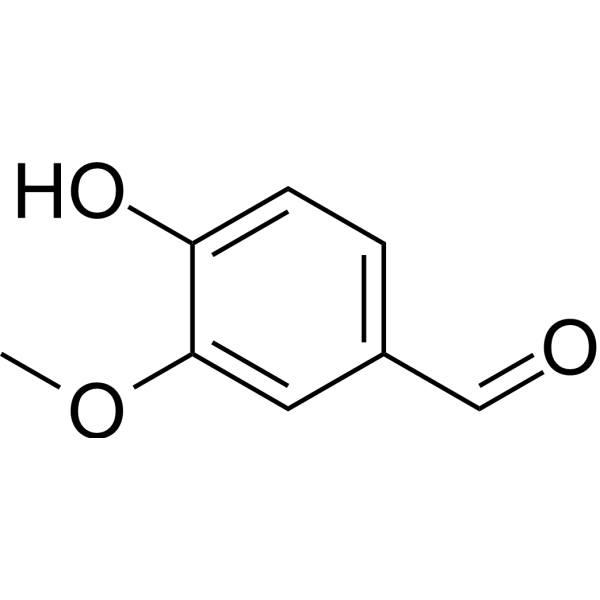
HY-N0098
VanillinPhenolic Aldehyde -
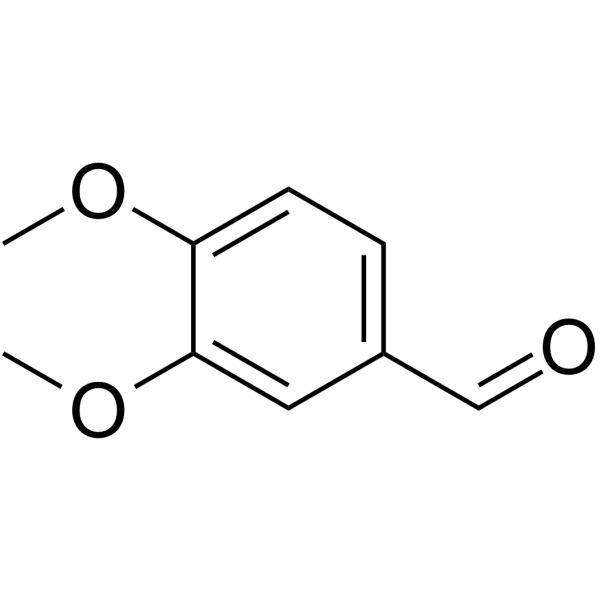
HY-N1096
VeratraldehydeAromatic Compound -
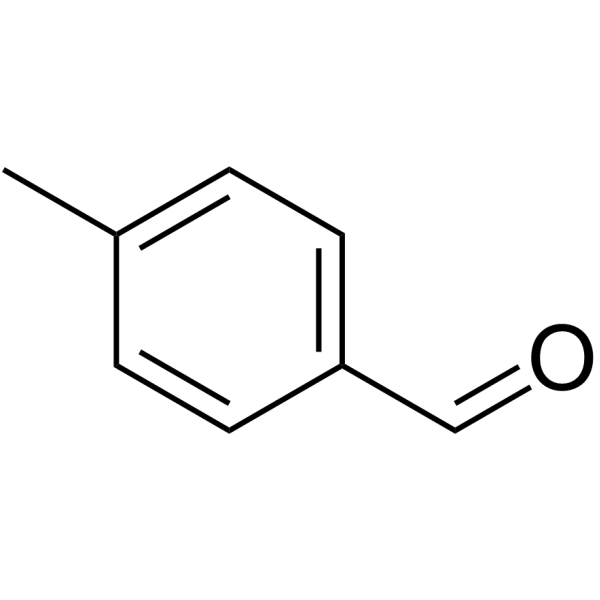
HY-W012860
p-TolualdehydeDrug Intermediate -
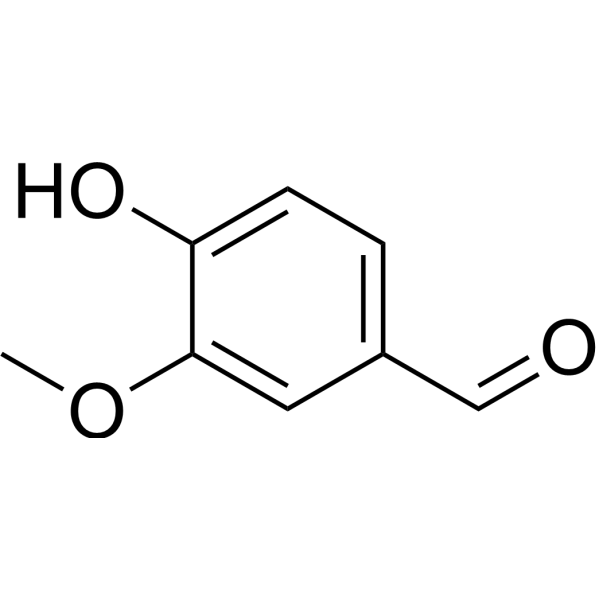
HY-N0098R
Vanillin (Standard) -
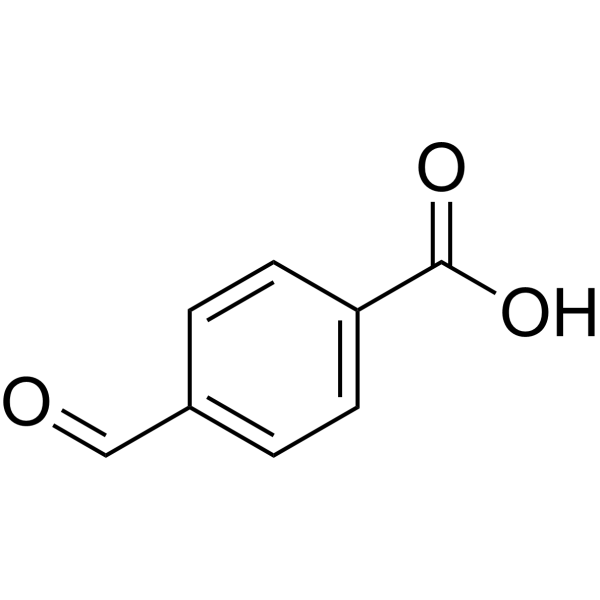
HY-W017446
4-Formylbenzoic acidBiochemical Reagent -
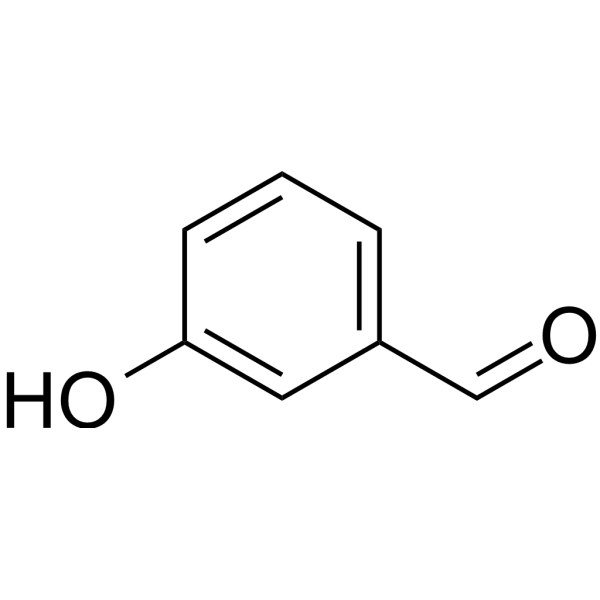
HY-76006
3-HydroxybenzaldehydeSubstrate For ALDH, Precursor Compound for Phenolic Compounds -
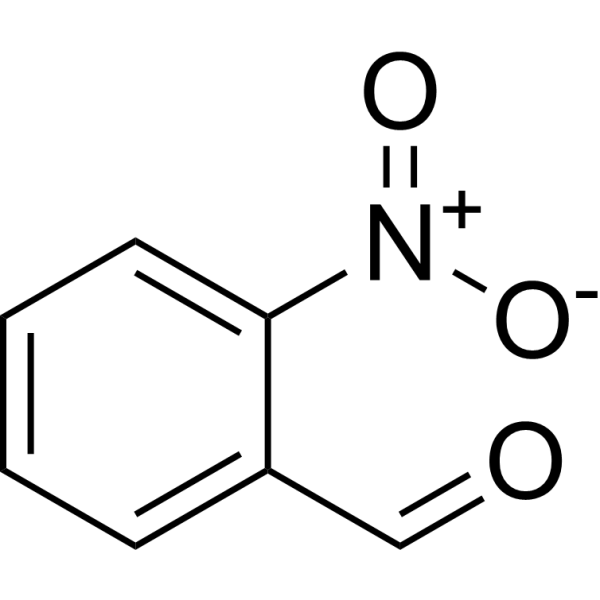
HY-W007454
2-NitrobenzaldehydeBiochemical Reagent -

HY-Y0785
Glyoxal (40% w/w in water)Drug Intermediate -
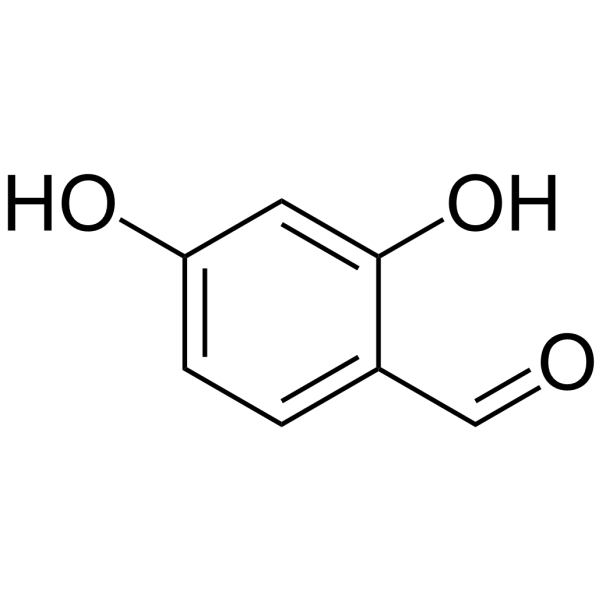
HY-W007539
2,4-DihydroxybenzaldehydeDrug Intermediate -

HY-N1096R
Veratraldehyde (Standard)Synthesis Intermediate -

HY-W012860R
p-Tolualdehyde (Standard)Drug Intermediate
Voir tous les produits spécifiques à Isoform Endogenous Metabolite
More

Activité biologique
Description
IC50 & Target
[2]|
CYP2B1 |
CYP2E1 |
CYP4 |
In Vitro
m-Tolualdehyde is oxidized to m-toluic acid in an NAD+-dependent manner under the catalysis of crude cell extracts of Pseudomonas Pxy cultured with m-xylene or p-xylene[1].
m-Tolualdehyde can serve as the sole carbon and energy source to support the growth of Pseudomonas Pxy[1].
MedChemExpress (MCE) has not independently confirmed the accuracy of these methods. They are for reference only.
In Vivo
MedChemExpress (MCE) has not independently confirmed the accuracy of these methods. They are for reference only.
-
Animal Model:Sprague-Dawley (male, 200-250 g)[2]
-
Dosage:50 ppm; 100 ppm
-
Administration:inhalation; single exposure; 6 hours
-
Result:Suppressed lung CYP 2B1 and CYP 2E1 only at 100 ppm (51% and 24% of control), while dose-dependently elevated lung CYP 4B1 by 25%-50% over control.
Yielded lung m-tolualdehyde tissue loads of 71 ng/g (50 ppm) and 193.3 ng/g (100 ppm).
Dose-dependently inhibited all three nasal mucosal CYP isoforms: CYP 2B1 reduced 15%-22%, CYP 2E1 reduced 37%-52%, CYP 4B1 dropped to 52% of control at 100 ppm.
Reached nasal mucosa m-tolualdehyde concentrations of 83.5 ng/g (50 ppm) and 195.6 ng/g (100 ppm).
Exerted no significant regulatory effects on liver CYP 2B1 and CYP 2E1 at either concentration.
Accumulated m-tolualdehyde at 27 ng/g (50 ppm) / 73.7 ng/g (100 ppm) in liver and 62.7 ng/g (50 ppm) / 92 ng/g (100 ppm) in blood.


Chemical Information
-
CAS No. 620-23-5
-
Appearance Liquid (Density: 1.019 g/cm3 )
-
Masse moléculaire 120.15
-
Formule C8H8O
-
Color Colorless to light yellow
-
SMILES
O=CC1=CC=CC(C)=C1
-
Synonyms
3-Methylbenzaldehyde
-
Structure Classification
-
Initial Source
-
Livraison
Room temperature in continental US; may vary elsewhere.
-
Stockage
4°C, stored under nitrogen
* In solvent : -80°C, 6 months; -20°C, 1 month (stored under nitrogen)


Solvant et solubilité
In Vitro:
DMSO : 100 mg/mL (832.29 mM; Need ultrasonic; Hygroscopic DMSO has a significant impact on the solubility of product, please use newly opened DMSO)
Please refer to the solubility information to select the appropriate solvent. Once prepared, please aliquot and store the solution to prevent product inactivation from repeated freeze-thaw cycles.
Storage method and period of stock solution: -80°C, 6 months; -20°C, 1 month (stored under nitrogen). When stored at -80°C, please use it within 6 months. When stored at -20°C, please use it within 1 month.
Please refer to the solubility information to select the appropriate solvent. Once prepared, please aliquot and store the solution to prevent product inactivation from repeated freeze-thaw cycles.
Storage method and period of stock solution: -80°C, 6 months; -20°C, 1 month (stored under nitrogen). When stored at -80°C, please use it within 6 months. When stored at -20°C, please use it within 1 month.
Concentration (start) × Volume (start) = Concentration (final) × Volume (final)
In Vivo:
Select the appropriate dissolution method based on your experimental animal and administration route.
- For the following dissolution methods, please ensure to first prepare a clear stock solution using an In Vitro approach and then sequentially add co-solvents:
- To ensure reliable experimental results, the clarified stock solution can be appropriately stored based on storage conditions. As for the working solution for In Vivo experiments, it is recommended to prepare freshly and use it on the same day.
- The percentages shown for the solvents indicate their volumetric ratio in the final prepared solution. If precipitation or phase separation occurs during preparation, heat and/or sonication can be used to aid dissolution.
Add each solvent one by one: 10% DMSO 40% PEG300 5% Tween-80 45% Saline
Solubility: ≥ 2.5 mg/mL (20.81 mM); Clear solution
This protocol yields a clear solution of ≥ 2.5 mg/mL (saturation unknown).
Taking 1 mL working solution as an example, add 100 μL DMSO stock solution (25.0 mg/mL) to 400 μL PEG300, and mix evenly; then add 50 μL Tween-80 and mix evenly; then add 450 μL Saline to adjust the volume to 1 mL.
Preparation of Saline: Dissolve 0.9 g sodium chloride in ddH₂O and dilute to 100 mL to obtain a clear Saline solution.
In Vivo Dissolution Calculator
Please enter the basic information of animal experiments:
-
-
-
-
Recommended: Prepare an additional quantity of animals to account for potential losses during experiments.
Please enter your animal formula composition:
-
%DMSO +
Recommended: Keep the proportion of DMSO in working solution below 2% if your animal is weak.
-
%+
-
+%Tween-80 + +
-
%Saline +
The co-solvents required include: DMSO, . All of co-solvents are available by MedChemExpress (MCE). , Tween 80. All of co-solvents are available by MedChemExpress (MCE).
Working solution concentration: 0.22 mg/mL
Method for preparing stock solution: mg drug dissolved in μL DMSO. Stock solution concentration: mg/mL. * In solvent : -80°C, 6 months; -20°C, 1 month (stored under nitrogen)
1. Take μL DMSO stock solution;
2. Add μL .
μL , mix evenly;
3. Then add μL Tween 80, mix evenly;
4. Then add μL
Please ensure that the stock solution in the first step is dissolved to a clear state, and add co-solvents in sequence. You can use ultrasonic heating (ultrasonic cleaner, recommended frequency 20-40 kHz), vortexing, etc. to assist dissolution.


Pureté et documentation
-
Fiche technique (273 KB)
-
SDS (393 KB)
- English - EN (393 KB)
- Français - FR (393 KB)
- Deutsch - DE (393 KB)
- Norwegian - NO (393 KB)
- Español - ES (393 KB)
- Swedish - SV (393 KB)
- Italian - IT (393 KB)
- Korean - KR (393 KB)
- Portuguese - PT (393 KB)
-
Instruction de manipulation (2659 KB)
Références
[1]. Davey JF, et al.. Bacterial metabolism of para- and meta-xylene: oxidation of a methyl substituent. Journal of bacteriology. 1974 Sep;119(3):923-9. [Content Brief]
[2]. Vaidyanathan A, et al.. Inhibition of rat respiratory-tract cytochrome P-450 isozymes following inhalation of m-Xylene: possible role of metabolites. Journal of toxicology and environmental health. Part A. 2003 Jun 27;66(12):1133-43. [Content Brief]


Complete Stock Solution Preparation Table
Please refer to the solubility information to select the appropriate solvent. Once prepared, please aliquot and store the solution to prevent product inactivation from repeated freeze-thaw cycles.
Storage method and period of stock solution: -80°C, 6 months; -20°C, 1 month (stored under nitrogen). When stored at -80°C, please use it within 6 months. When stored at -20°C, please use it within 1 month.
| Optional Solvent | Concentration Solvent Mass | 1 mg | 5 mg | 10 mg | 25 mg |
|---|---|---|---|---|---|
| DMSO | 1 mM | 8.3229 mL | 41.6146 mL | 83.2293 mL | 208.0732 mL |
| 5 mM | 1.6646 mL | 8.3229 mL | 16.6459 mL | 41.6146 mL | |
| 10 mM | 0.8323 mL | 4.1615 mL | 8.3229 mL | 20.8073 mL | |
| 15 mM | 0.5549 mL | 2.7743 mL | 5.5486 mL | 13.8715 mL | |
| 20 mM | 0.4161 mL | 2.0807 mL | 4.1615 mL | 10.4037 mL | |
| 25 mM | 0.3329 mL | 1.6646 mL | 3.3292 mL | 8.3229 mL | |
| 30 mM | 0.2774 mL | 1.3872 mL | 2.7743 mL | 6.9358 mL | |
| 40 mM | 0.2081 mL | 1.0404 mL | 2.0807 mL | 5.2018 mL | |
| 50 mM | 0.1665 mL | 0.8323 mL | 1.6646 mL | 4.1615 mL | |
| 60 mM | 0.1387 mL | 0.6936 mL | 1.3872 mL | 3.4679 mL | |
| 80 mM | 0.1040 mL | 0.5202 mL | 1.0404 mL | 2.6009 mL | |
| 100 mM | 0.0832 mL | 0.4161 mL | 0.8323 mL | 2.0807 mL |


m-Tolualdehyde Related Classifications
HY-78086 Related Classifications
 Powered by Bioz