



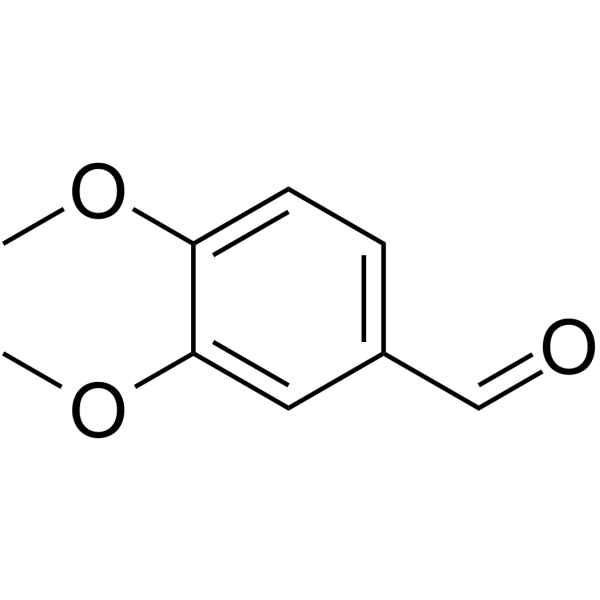
Veratraldehyde

Based on 1 Customer Validation
Veratraldehyde is an orally active aromatic compound and antibacterial agent. Veratraldehyde can be isolated from essential oils of plants such as peppermint and ginger. Veratraldehyde targets the PilY1 protein. Veratraldehyde has antibacterial activity against Pseudomonas aeruginosa. Veratraldehyde has a repellent effect against mosquitoes and ticks. Veratraldehyde can be used as a flavoring agent.
Para uso exclusivo en investigación. No vendemos a pacientes.
- Pureza : 99.94%
- No. CAS: 120-14-9
- Fòrmula: C9H10O3
- Peso molecular:166.18
-
Almacenamiento:
4°C, stored under nitrogen
* In solvent : -80°C, 6 months; -20°C, 1 month (stored under nitrogen)

To place orders, for customer services and technical support, please contact: MedChemExpress USA
Tel: 609-228-6898 E-mail: [email protected] [email protected]


-
 Actividad biológica
-
Chemical Information
-
Solvente y solubilidad
- Protocolo
- Pureza y Documentación
- Referencias
-
 Help & FAQs


-
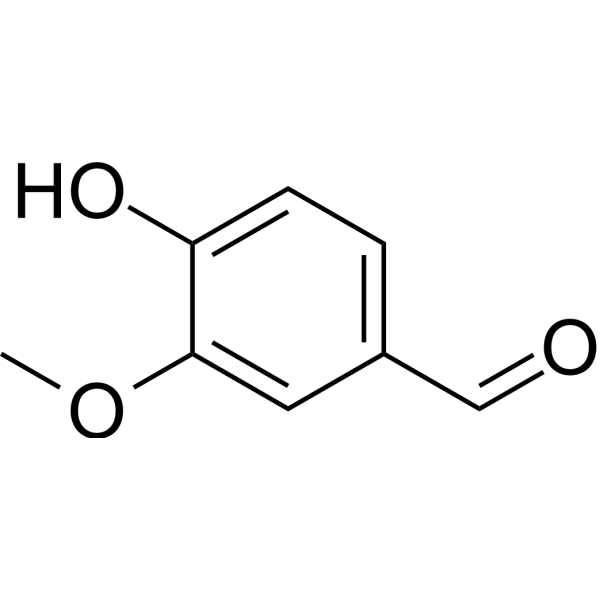
HY-N0098
VanillinPhenolic Aldehyde -
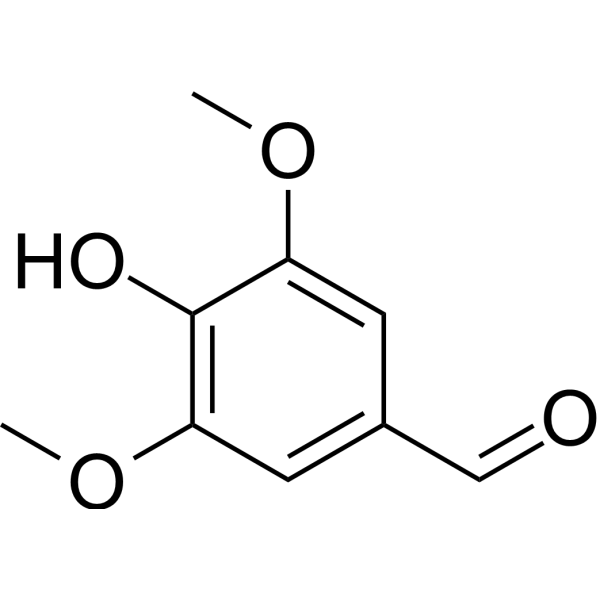
HY-N1390
SyringaldehydeCOX-2 Inhibitor -
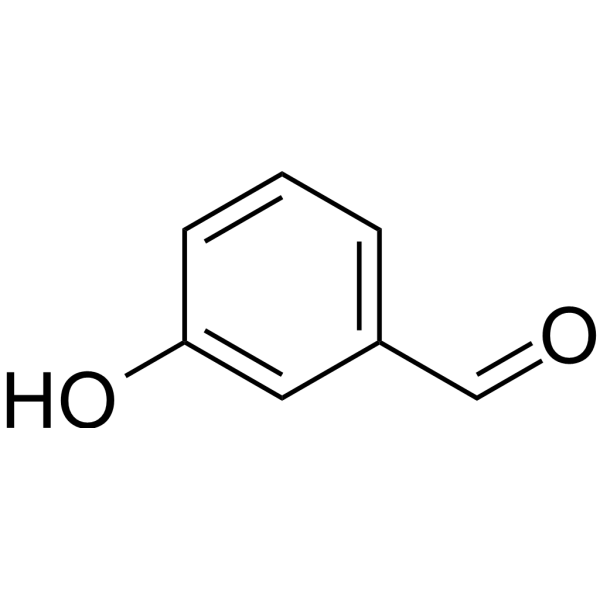
HY-76006
3-HydroxybenzaldehydeSubstrate For ALDH, Precursor Compound for Phenolic Compounds -
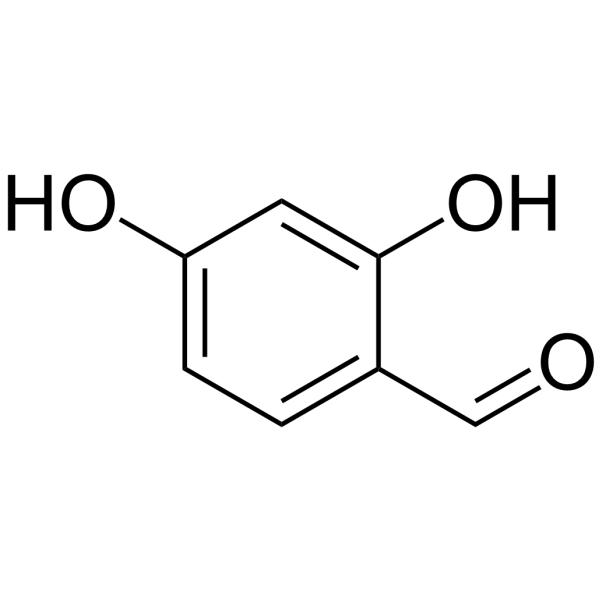
HY-W007539
2,4-DihydroxybenzaldehydeDrug Intermediate -
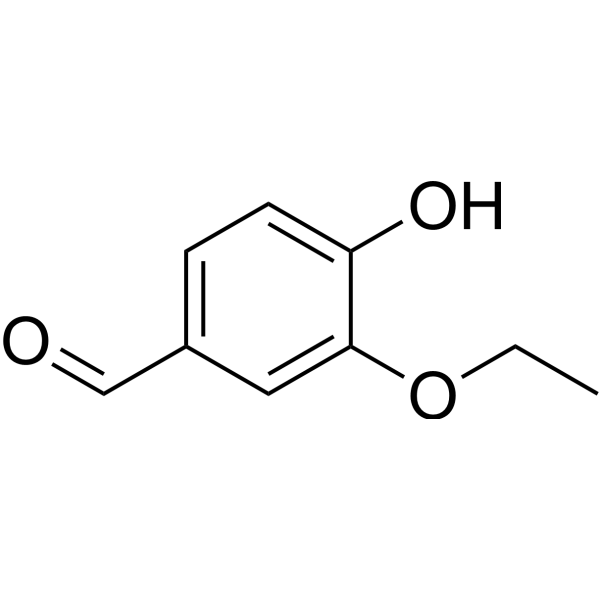
HY-B0940
EthylvanillinFlavouring Agent -
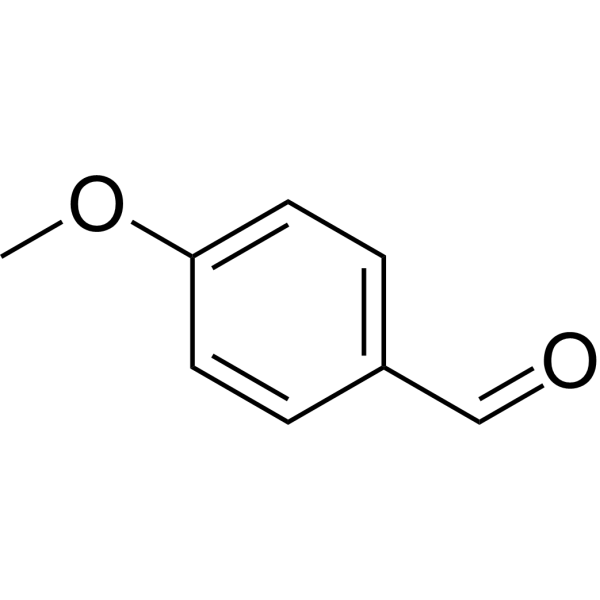
HY-Y0740
4-MethoxybenzaldehydePhenol -
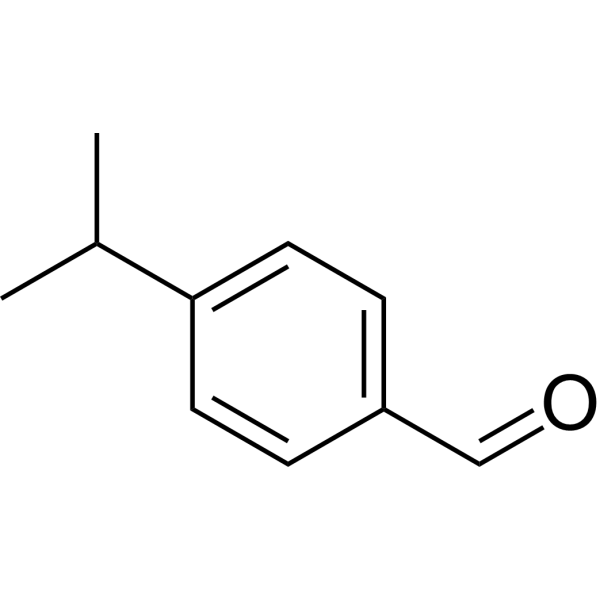
HY-Y0790
CuminaldehydeAnti-inflammatory Compound -

HY-N1096R
Veratraldehyde (Standard)Synthesis Intermediate -

HY-Y1356
2,4-DimethoxybenzaldehydeTumor Initiator -
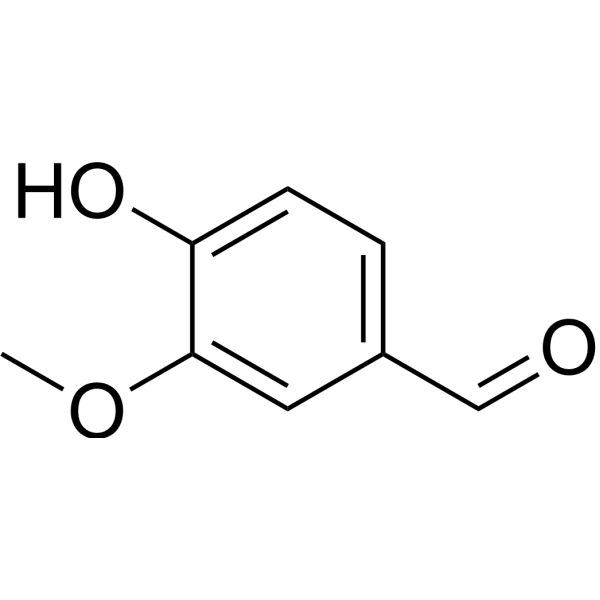
HY-N0098R
Vanillin (Standard) -
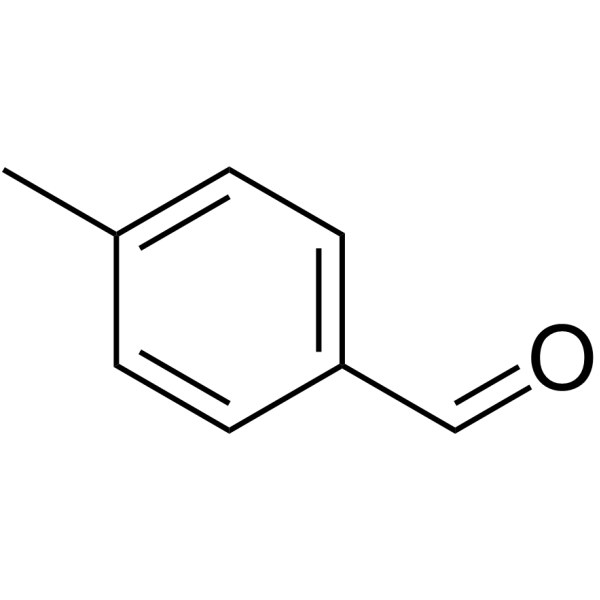
HY-W012860
p-TolualdehydeDrug Intermediate -
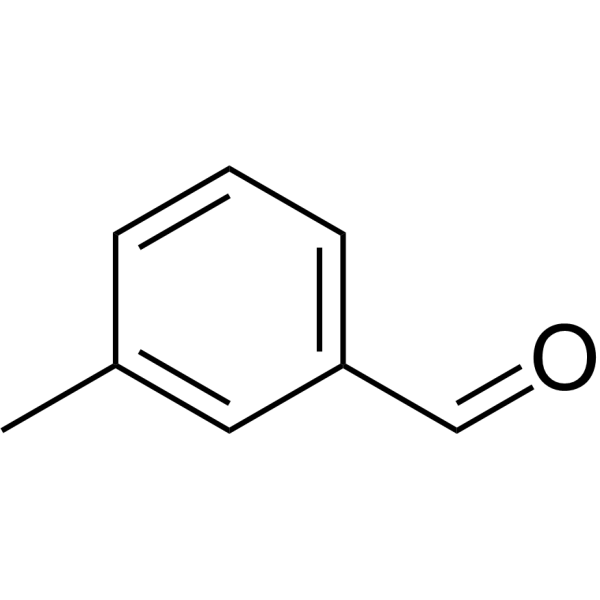
HY-78086
m-TolualdehydeNatural Product
Ver todos los productos específicos de isoformas Parasite
More

Actividad biológica
Descripciòn
Cellular Effect
|
Cell Line

|
Type | Value | Description | References |
|---|---|---|---|---|
| HepG2 2.2.15 | CC50 |
>1500 μM
Compound: 1a
|
Cytotoxicity against human HepG2.2.15 cells assessed as cell death after 9 days by MTT assay
Cytotoxicity against human HepG2.2.15 cells assessed as cell death after 9 days by MTT assay
|
[PMID: 25847765] |
In Vitro
Veratraldehyde (200 µg/mL) significantly inhibits the swimming, twitching and swarming motility of Pseudomonas aeruginosa by 78.13%, 70.96% and 56.74%, respectively[4].
Veratraldehyde (0.01-0.09 mg/cm2; 1-5 h) exhibits 48%-100% repellency against Haemaphysalis longicornis nymphs[6].
MedChemExpress (MCE) has not independently confirmed the accuracy of these methods. They are for reference only.
In Vivo
MedChemExpress (MCE) has not independently confirmed the accuracy of these methods. They are for reference only.


Chemical Information
-
No. CAS 120-14-9
-
Appearance Solid
-
Peso molecular 166.18
-
Fòrmula C9H10O3
-
Color White to light yellow
-
SMILES
O=CC1=CC=C(OC)C(OC)=C1
-
Structure Classification
-
Initial Source
-
Envío
Room temperature in continental US; may vary elsewhere.
-
Almacenamiento
4°C, stored under nitrogen
* In solvent : -80°C, 6 months; -20°C, 1 month (stored under nitrogen)


Solvente y solubilidad
In Vitro:
DMSO : 100 mg/mL (601.76 mM; Need ultrasonic; Hygroscopic DMSO has a significant impact on the solubility of product, please use newly opened DMSO)
Please refer to the solubility information to select the appropriate solvent. Once prepared, please aliquot and store the solution to prevent product inactivation from repeated freeze-thaw cycles.
Storage method and period of stock solution: -80°C, 6 months; -20°C, 1 month (stored under nitrogen). When stored at -80°C, please use it within 6 months. When stored at -20°C, please use it within 1 month.
Please refer to the solubility information to select the appropriate solvent. Once prepared, please aliquot and store the solution to prevent product inactivation from repeated freeze-thaw cycles.
Storage method and period of stock solution: -80°C, 6 months; -20°C, 1 month (stored under nitrogen). When stored at -80°C, please use it within 6 months. When stored at -20°C, please use it within 1 month.
Concentration (start) × Volume (start) = Concentration (final) × Volume (final)
In Vivo:
Select the appropriate dissolution method based on your experimental animal and administration route.
- For the following dissolution methods, please ensure to first prepare a clear stock solution using an In Vitro approach and then sequentially add co-solvents:
- To ensure reliable experimental results, the clarified stock solution can be appropriately stored based on storage conditions. As for the working solution for In Vivo experiments, it is recommended to prepare freshly and use it on the same day.
- The percentages shown for the solvents indicate their volumetric ratio in the final prepared solution. If precipitation or phase separation occurs during preparation, heat and/or sonication can be used to aid dissolution.
Add each solvent one by one: 10% DMSO 40% PEG300 5% Tween-80 45% Saline
Solubility: ≥ 2.5 mg/mL (15.04 mM); Clear solution
This protocol yields a clear solution of ≥ 2.5 mg/mL (saturation unknown).
Taking 1 mL working solution as an example, add 100 μL DMSO stock solution (25.0 mg/mL) to 400 μL PEG300, and mix evenly; then add 50 μL Tween-80 and mix evenly; then add 450 μL Saline to adjust the volume to 1 mL.
Preparation of Saline: Dissolve 0.9 g sodium chloride in ddH₂O and dilute to 100 mL to obtain a clear Saline solution.
Add each solvent one by one: 10% DMSO 90% (20% SBE-β-CD in Saline)
Solubility: ≥ 2.5 mg/mL (15.04 mM); Clear solution
This protocol yields a clear solution of ≥ 2.5 mg/mL (saturation unknown).
Taking 1 mL working solution as an example, add 100 μL DMSO stock solution (25.0 mg/mL) to 900 μL 20% SBE-β-CD in Saline, and mix evenly.
Preparation of 20% SBE-β-CD in Saline (4°C, storage for one week): 2 g SBE-β-CD powder is dissolved in 10 mL Saline, completely dissolve until clear.
In Vivo Dissolution Calculator
Please enter the basic information of animal experiments:
-
-
-
-
Recommended: Prepare an additional quantity of animals to account for potential losses during experiments.
Please enter your animal formula composition:
-
%DMSO +
Recommended: Keep the proportion of DMSO in working solution below 2% if your animal is weak.
-
%+
-
+%Tween-80 + +
-
%Saline +
The co-solvents required include: DMSO, . All of co-solvents are available by MedChemExpress (MCE). , Tween 80. All of co-solvents are available by MedChemExpress (MCE).
Working solution concentration: 0.22 mg/mL
Method for preparing stock solution: mg drug dissolved in μL DMSO. Stock solution concentration: mg/mL. * In solvent : -80°C, 6 months; -20°C, 1 month (stored under nitrogen)
1. Take μL DMSO stock solution;
2. Add μL .
μL , mix evenly;
3. Then add μL Tween 80, mix evenly;
4. Then add μL
Please ensure that the stock solution in the first step is dissolved to a clear state, and add co-solvents in sequence. You can use ultrasonic heating (ultrasonic cleaner, recommended frequency 20-40 kHz), vortexing, etc. to assist dissolution.


Pureza y Documentación
-
Ficha de datos (275 KB)
-
SDS (393 KB)
- English - EN (393 KB)
- Français - FR (393 KB)
- Deutsch - DE (393 KB)
- Norwegian - NO (393 KB)
- Español - ES (393 KB)
- Swedish - SV (393 KB)
- Italian - IT (393 KB)
- Korean - KR (393 KB)
- Portuguese - PT (393 KB)
-
Instrucciones de manejo (2659 KB)
Referencias
[3]. Bourbonnais R, et al. Electrochemical analysis of the interactions of laccase mediators with lignin model compounds. Biochim Biophys Acta. 1998 Mar 2;1379(3):381-90. [Content Brief]
[4]. Bisen M, et al. Veratraldehyde Inhibits Motility Phenotypes and Targets Biofilm Formation of Pseudomonas aeruginosa: Insights From Computational and Experimental Studies. Chem Biodivers. 2025 May 30:e00074. [Content Brief]
[5]. Guillén F, et al. Anisaldehyde and Veratraldehyde Acting as Redox Cycling Agents for H(2)O(2) Production by Pleurotus eryngii. Appl Environ Microbiol. 1994 Aug;60(8):2811-7. [Content Brief]
[7]. Huh HW, et al. Bioanalytical Method Development and Validation of Veratraldehyde and Its Metabolite Veratric Acid in Rat Plasma: An Application for a Pharmacokinetic Study. Molecules. 2020 Jun 17;25(12):2800. [Content Brief]


Complete Stock Solution Preparation Table
Please refer to the solubility information to select the appropriate solvent. Once prepared, please aliquot and store the solution to prevent product inactivation from repeated freeze-thaw cycles.
Storage method and period of stock solution: -80°C, 6 months; -20°C, 1 month (stored under nitrogen). When stored at -80°C, please use it within 6 months. When stored at -20°C, please use it within 1 month.
| Optional Solvent | Concentration Solvent Mass | 1 mg | 5 mg | 10 mg | 25 mg |
|---|---|---|---|---|---|
| DMSO | 1 mM | 6.0176 mL | 30.0879 mL | 60.1757 mL | 150.4393 mL |
| 5 mM | 1.2035 mL | 6.0176 mL | 12.0351 mL | 30.0879 mL | |
| 10 mM | 0.6018 mL | 3.0088 mL | 6.0176 mL | 15.0439 mL | |
| 15 mM | 0.4012 mL | 2.0059 mL | 4.0117 mL | 10.0293 mL | |
| 20 mM | 0.3009 mL | 1.5044 mL | 3.0088 mL | 7.5220 mL | |
| 25 mM | 0.2407 mL | 1.2035 mL | 2.4070 mL | 6.0176 mL | |
| 30 mM | 0.2006 mL | 1.0029 mL | 2.0059 mL | 5.0146 mL | |
| 40 mM | 0.1504 mL | 0.7522 mL | 1.5044 mL | 3.7610 mL | |
| 50 mM | 0.1204 mL | 0.6018 mL | 1.2035 mL | 3.0088 mL | |
| 60 mM | 0.1003 mL | 0.5015 mL | 1.0029 mL | 2.5073 mL | |
| 80 mM | 0.0752 mL | 0.3761 mL | 0.7522 mL | 1.8805 mL | |
| 100 mM | 0.0602 mL | 0.3009 mL | 0.6018 mL | 1.5044 mL |


Veratraldehyde Related Classifications
HY-N1096 Related Classifications
 Powered by Bioz