



CYP2C19
CYP2C19 is a human cytochrome P450 enzyme that contributes to oxidative drug metabolism and interindividual pharmacokinetic variability[1]. Mechanistically, CYP enzymes also participate in arachidonic acid epoxygenase pathways that generate epoxyeicosatrienoic acids, linking monooxygenase biology with lipid signaling research[2]. In disease-relevant pharmacology, CYP2C19 catalyzes clopidogrel bioactivation, and reduced-function phenotypes show reduced platelet inhibition and increased cardiovascular or cerebrovascular event risk during clopidogrel therapy[3]. Compared with related isoforms, CYP2C19 differs structurally from CYP2C8 and CYP2C9 in active-site architecture, supporting isoform-selective substrate recognition[4]. Direct comparison with CYP2C9 further shows distinct variant abundance patterns in substrate-recognition regions, providing experimental models for mapping isoform-specific function[5]. For research applications, proton pump inhibitors serve as clinically important CYP2C19 substrates because most PPIs are metabolized primarily by CYP2C19 into inactive metabolites, and genotype data guide exposure-focused study design[6].
References:
- [1]. Zanger UM, et al. Cytochrome P450 enzymes in drug metabolism: regulation of gene expression, enzyme activities, and impact of genetic variation. Pharmacol Ther. 2013 Apr;138(1):103-41. [Content Brief]
- [2]. Spector AA. Arachidonic acid cytochrome P450 epoxygenase pathway. J Lipid Res. 2009 Apr;50 Suppl(Suppl):S52-6. [Content Brief]
- [3]. Lee CR, et al. Clinical Pharmacogenetics Implementation Consortium Guideline for CYP2C19 Genotype and Clopidogrel Therapy: 2022 Update. Clin Pharmacol Ther. 2022 Nov;112(5):959-967. [Content Brief]
- [4]. Reynald RL, et al. Structural characterization of human cytochrome P450 2C19: active site differences between P450s 2C8, 2C9, and 2C19. J Biol Chem. 2012 Dec 28;287(53):44581-91. [Content Brief]
- [5]. Boyle GE, et al. Deep mutational scanning of CYP2C19 in human cells reveals a substrate specificity-abundance tradeoff. Genetics. 2024 Nov 6;228(3):iyae156. [Content Brief]
- [6]. Lima JJ, et al. Clinical Pharmacogenetics Implementation Consortium (CPIC) Guideline for CYP2C19 and Proton Pump Inhibitor Dosing. Clin Pharmacol Ther. 2021 Jun;109(6):1417-1423. [Content Brief]
All Product Categories
-
CYP2C19 Related Products (9)
Related Products (9)

-
(S)-(+)-N-3-Benzylnirvanol
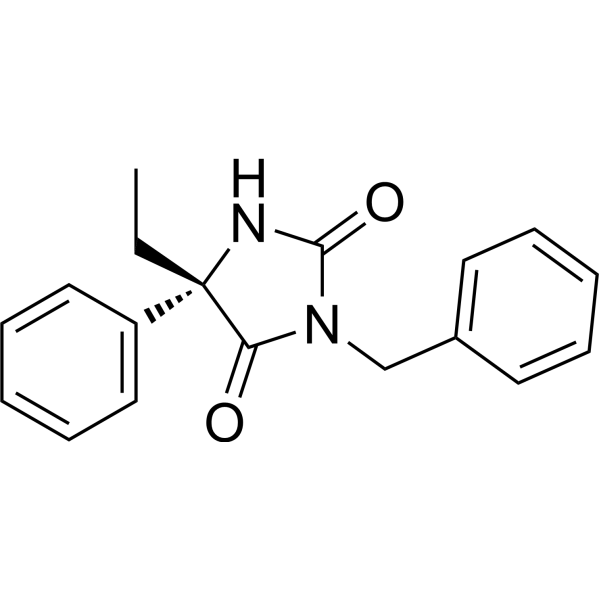 0 ImagesSynonyms: (+)-N-3-Benzylnirvanol
-
Oteseconazole
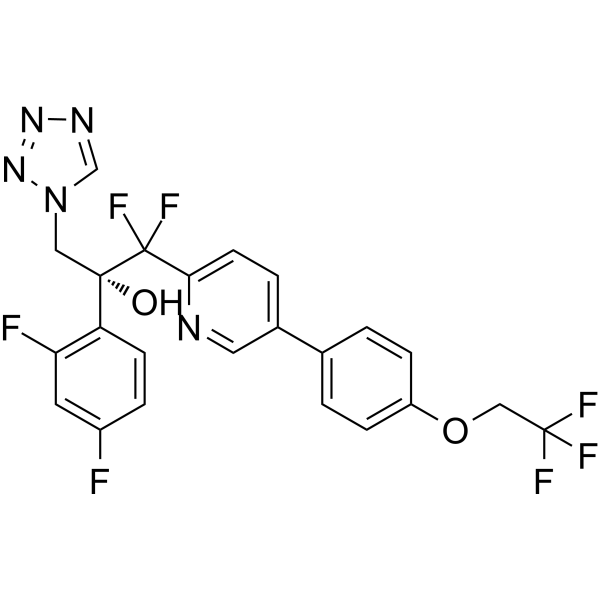 0 ImagesSynonyms: VT-1161
-
(-)-(E)-Guggulsterone
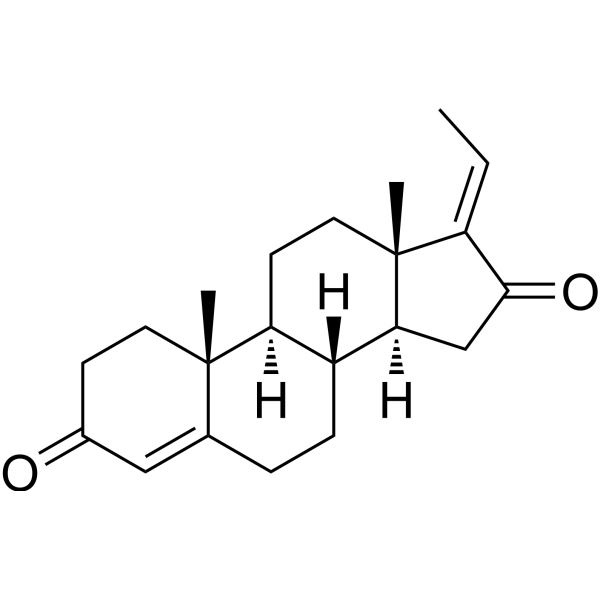 0 ImagesSynonyms: (E)-Guggulsterone(-)-(E)-Guggulsterone ((E)-Guggulsterone) is an orally active natural stereoisomer of Guggulsterone (HY-107738). (-)-(E)-Guggulsterone is an antagonist for the Farnesoid X Receptor (FXR) with an IC50 of 24.06 μM and possesses potent hypolipidemic properties. (-)-(E)-Guggulsterone suppresses dengue virus (DENV) replication by upregulating antiviral interferon responses by inducing HO-1 expression via Nrf2 activation. (-)-(E)-Guggulsterone exhibits antibacterial activities against Bacillus subtilis, Staphylococcus aureus and Pseudomonas aeruginosa. (-)-(E)-Guggulsterone has cardiac protective and antioxidant activities in rats.
-
Dihydrokavain
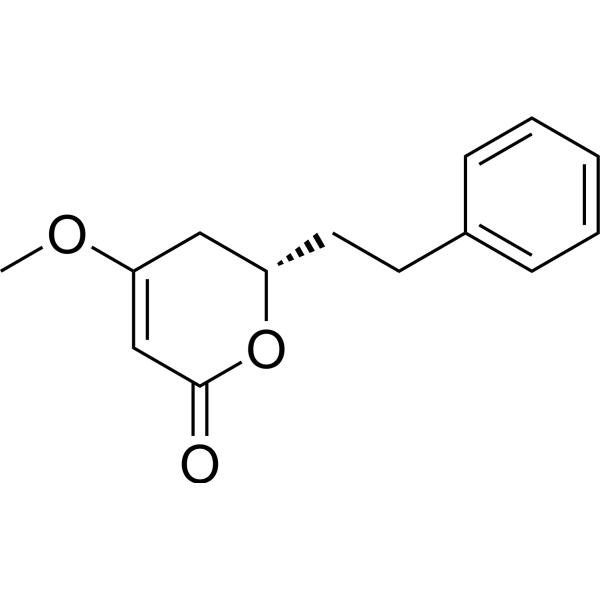 0 ImagesSynonyms: 7,8-Dihydrokawain; 7,8-Dihydrokavain; Marindinin
-
Nivasorexant
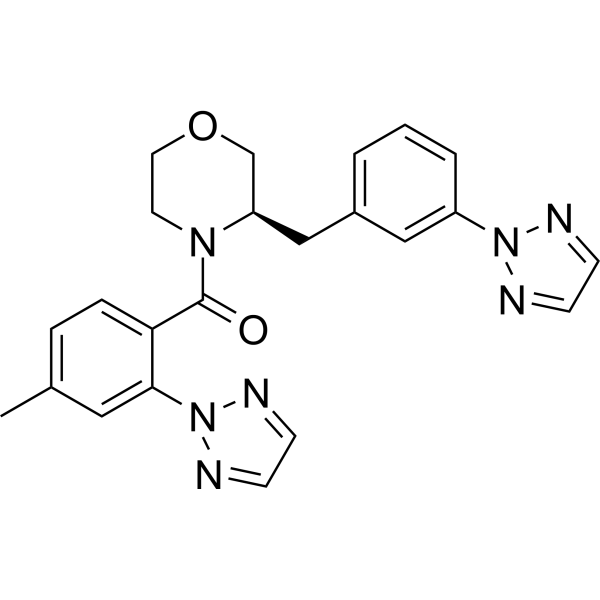 0 ImagesSynonyms: ACT-539313Nivasorexant (ACT-539313) is an orally active, blood-brain barrier penetrant, selective orexin OX1R inhibitor. Nivasorexant specifically blocks central OX1Rs without affecting OX2Rs, and exhibits competitive inhibitory activity against CYP2C8, CYP2C9, CYP2C19 and CYP3A4 (IC50 values are 25 μM, 8.6 μM, 1.6 μM, 19 μM/44 μM, respectively). Nivasorexant significantly reduces binge-like eating behavior of highly palatable food in rat models and has long-acting properties. Nivasorexant shows no relevant off-target activity against over 130 selected proteins, exhibits favorable safety profiles, and can be used for studies related to binge eating disorder.

-
FGFRs-IN-1
 0 ImagesCat. No.: HY-170846FGFRs-IN-1 (Compound A16) is the orally active inhibitor for FGFR, that inhibits FGFR1/2/3/4 with IC50s of 2.3, 7, 11, and 163 nM, respectively. FGFRs-IN-1 also inhibits VEGFR1/2/3, Abl, and Flt3 with IC50s of 61, 176, 112, 26, and 353 nM, respectively. FGFRs-IN-1 exhibits weak inhibitory efficacy against CYP enzymes. FGFRs-IN-1 reduces the expression of α-SMA and collagen I, and inhibits epithelial-mesenchymal transition (EMT) in TGF-β1 stimulated A549 cell. FGFRs-IN-1 exhibits anti-inflammatory activity in Bleomycin (HY-17565)-induced mouse pulmonary fibrosis model and CCl4 (HY-Y0298)-induced mouse liver fibrosis model.
-
BMS-223131
 0 ImagesCat. No.: HY-19397CAS No.: 275375-69-4BMS-223131 (Compound 1) is a potent maxi-K potassium channel opener. BMS-223131 has a strong inhibitory effect on the CYP2C9 enzyme (IC50 = 1.7 μM) and also shows varying degrees of inhibition on other common CYP enzymes such as CYP1A2, CYP2C19, CYP2D6, and CYP3A4. BMS-223131 can enhance the outward current mediated by maxi-K, by promoting K+ efflux to hyperpolarize the cell membrane and reducing Ca2+ influx. BMS-223131 can be used for the research of neurological disease, such as stroke.
-
NNRT-IN-10
 0 ImagesCat. No.: HY-174417CAS No.: 2459751-62-1NNRT-IN-10 is a potent, selective and orally active non-nucleoside HIV-1 reverse transcriptase (NNRTI) inhibitor with with an EC50 values ranging from 1.16 to 18.3 nM for HIV and its mutant strains. NNRT-IN-10 exhibits good pharmacokinetic properties and favorable safety profiles. NNRT-IN-10 can be used for the study of AIDS, caused by HIV-1.



