



Nivasorexant

Based on 1 Customer Validation
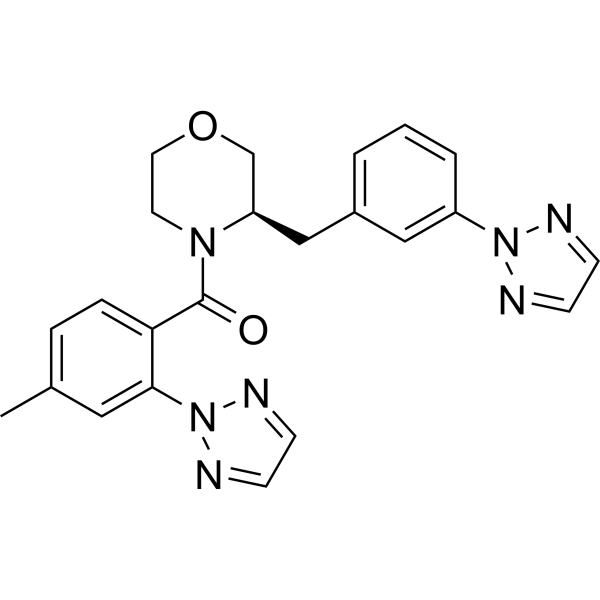
Nivasorexant (ACT-539313) is an orally active, blood-brain barrier penetrant, selective orexin OX1R inhibitor. Nivasorexant specifically blocks central OX1Rs without affecting OX2Rs, and exhibits competitive inhibitory activity against CYP2C8, CYP2C9, CYP2C19 and CYP3A4 (IC50 values are 25 μM, 8.6 μM, 1.6 μM, 19 μM/44 μM, respectively). Nivasorexant significantly reduces binge-like eating behavior of highly palatable food in rat models and has long-acting properties. Nivasorexant shows no relevant off-target activity against over 130 selected proteins, exhibits favorable safety profiles, and can be used for studies related to binge eating disorder.
Nur für Forschungszwecke. Wir verkaufen nicht an Patienten.
- Reinheit : 99.83%
- CAS. Nr.: 1435480-40-2
- Formel: C23H23N7O2
- Molecular Weight:429.47
-
Speicherung:Powder -20°C, 3 years , 4°C, 2 years ; In solvent -80°C, 6 months , -20°C, 1 month

To place orders, for customer services and technical support, please contact: MedChemExpress USA
Tel: 609-228-6898 E-mail: [email protected] [email protected]


-
 Biologische Aktivität
-
Chemical Information
-
Lösungsmittel & Löslichkeit
- Reinheit & Dokumentation
- Verweise
-
 Help & FAQs


-
HY-10895
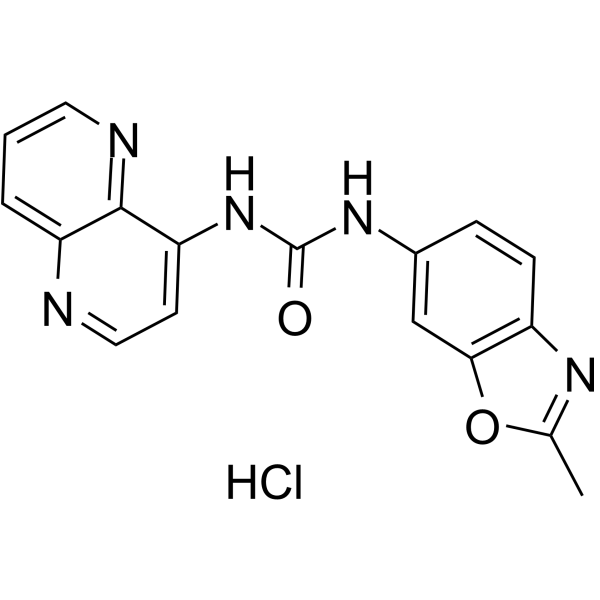
SB-334867OX1 Receptor Antagonist -
HY-133898
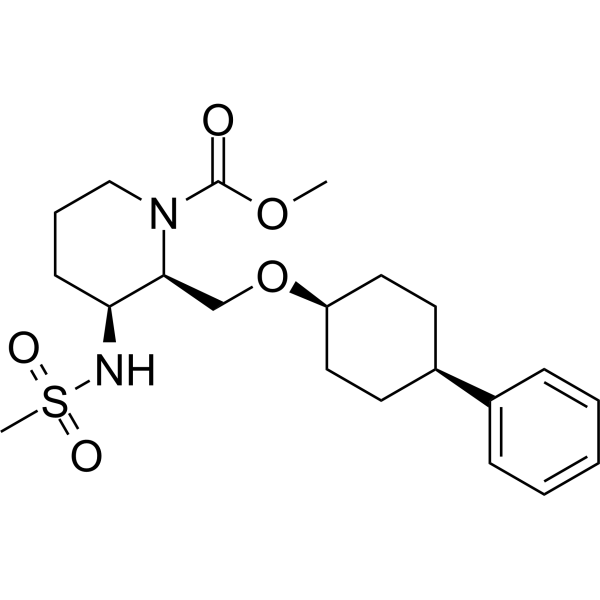
DanavorextonOrexin Receptor Agonist -
HY-10805
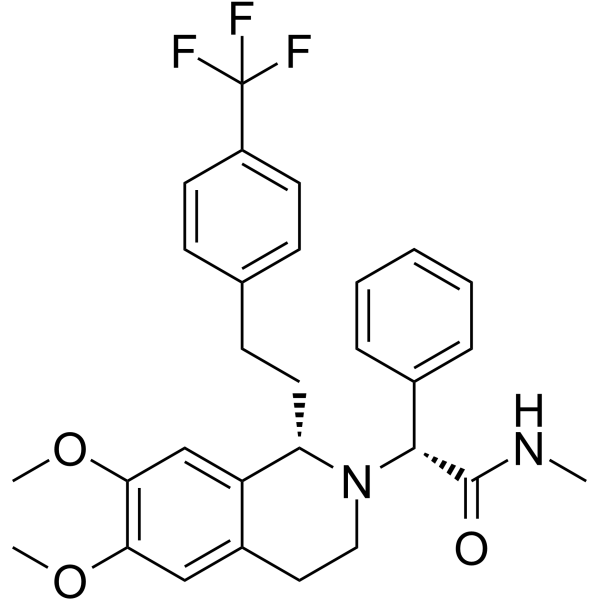
AlmorexantOrexin Receptor Antagonist -
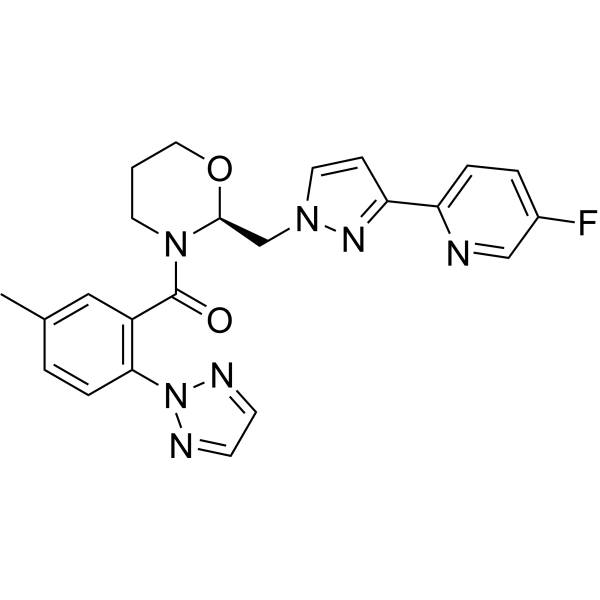
HY-139559
VornorexantOX1R/OX2R Antagonist -
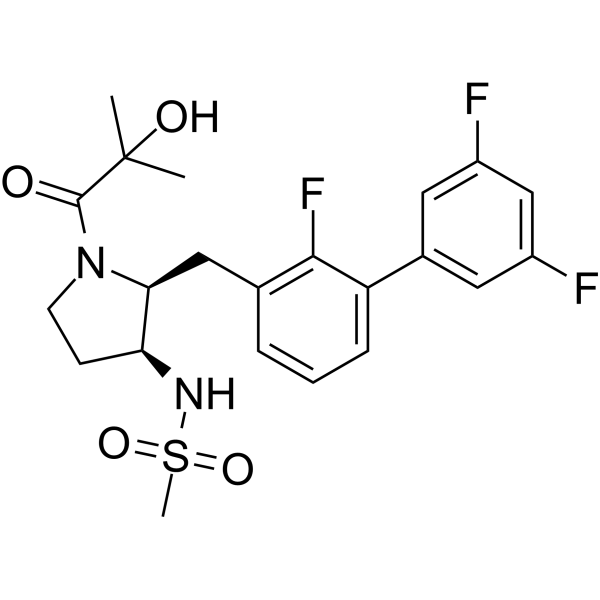
HY-137440
FirazorextonOX2R Agonist -
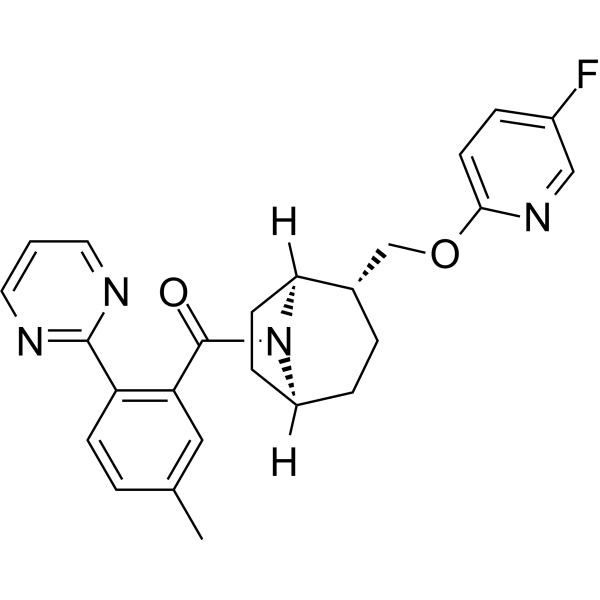
HY-152843
FazamorexantOrexin Receptor Antagonist -
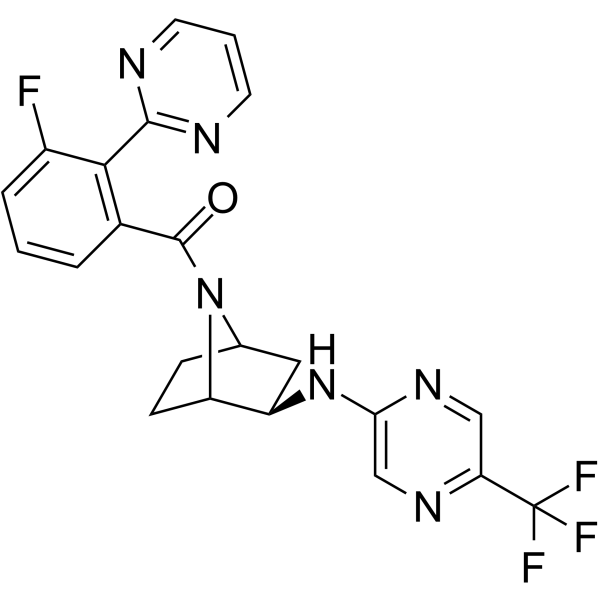
HY-134188
JNJ-54717793OX1R Antagonist -
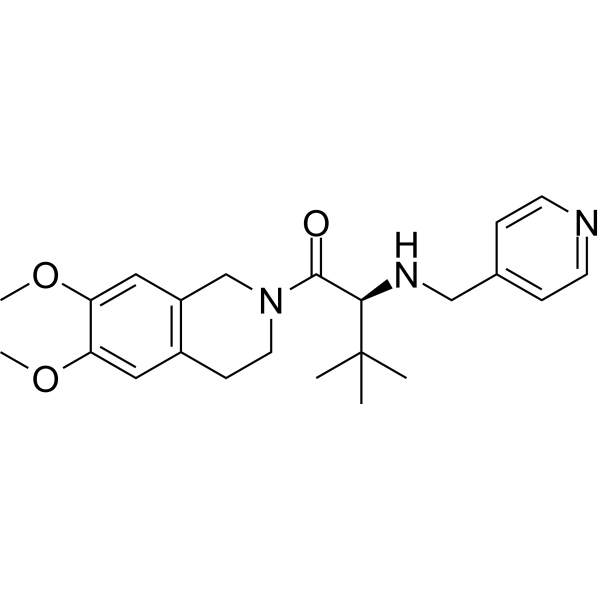
HY-100452
TCS-OX2-29OX2R Antagonist -
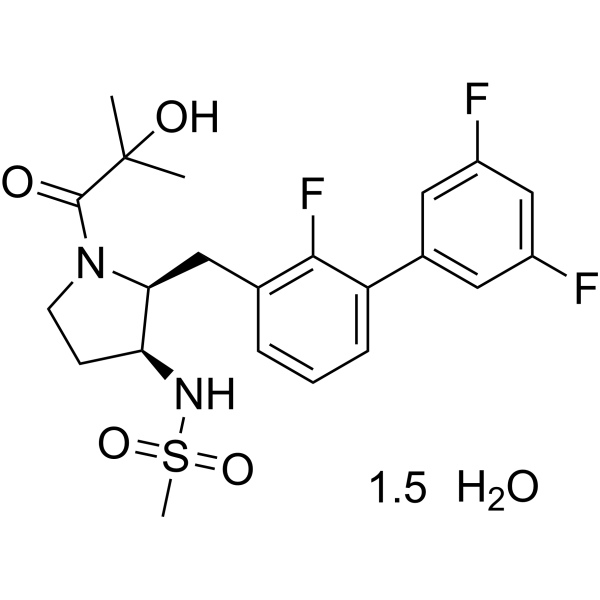
HY-137440A
Firazorexton hydrateOX2R Agonist -
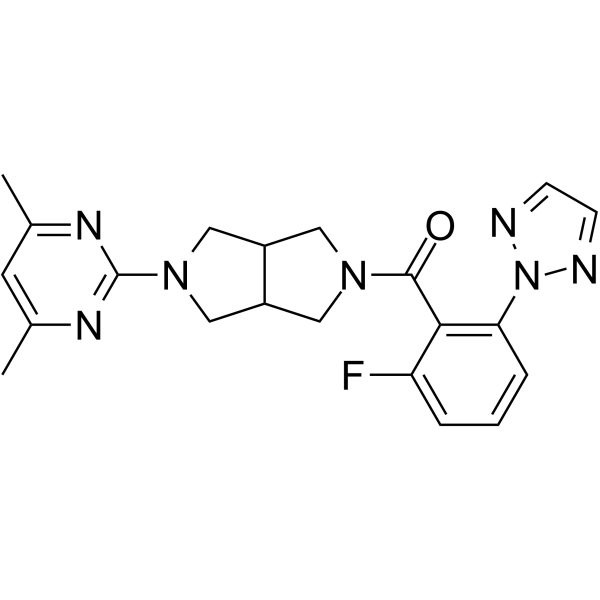
HY-109012
SeltorexantOrexin-2 Receptor Antagonist -
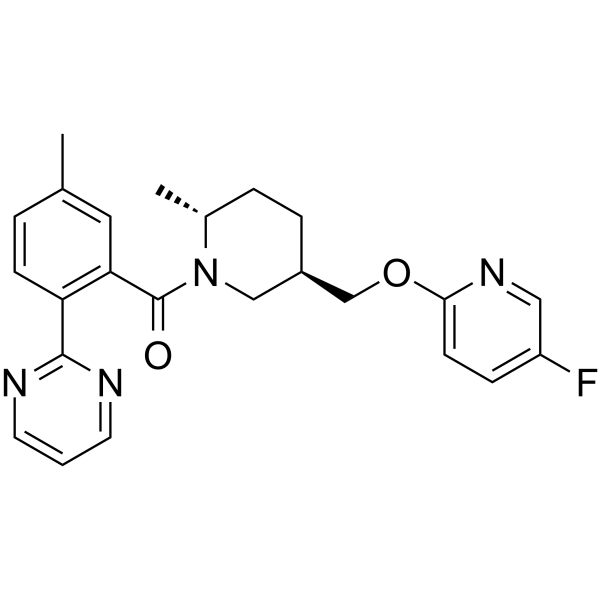
HY-15653
FilorexantOX Receptor Antagonist -
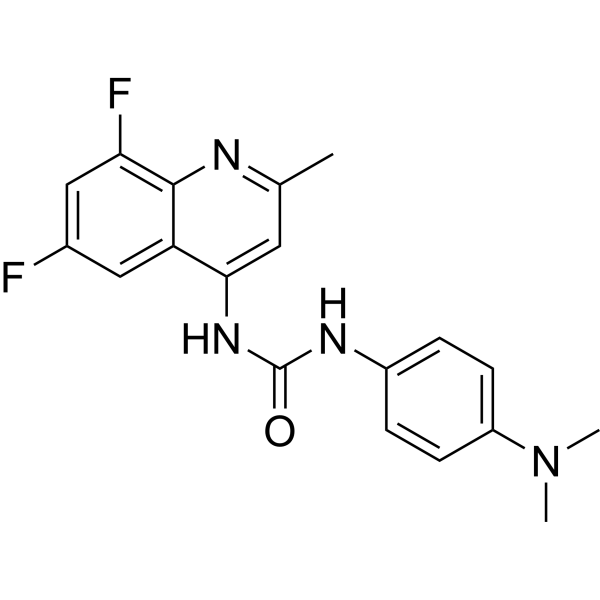
HY-70068
SB-408124OX1 Receptor Antagonist
Alle Orexin Receptor (OX Receptor) Isoform-spezifische Produkte anzeigen
More

Biologische Aktivität
Beschreibung
IC50 & Target
|
OX1 Receptor |
CYP2C9 8.6 μM (IC50) |
CYP2C19 1.6 |
CYP3A4 19 μM (IC50) |
CYP3A4 44 μM (IC50) |
In Vitro
Nivasorexant potently and selectively antagonizes human OX1R over OX2R in CHO cells, with an OX1R appKb of 0.5 nM and an OX2R appKb of 69 nM[1].
Nivasorexant potently and selectively antagonizes human OX1R over OX2R in HEK293 cells, with an OX1R Kb of 1.5 nM and an OX2R Kb of 172 nM[1].
Nivasorexant (up to 100 μM) potently inhibits recombinant CYP2C19 (IC50=1.6 μM, Ki=0.8 μM) and human liver microsomal CYP2C9 (IC50=8.6 μM, Ki=5.0 μM), moderately inhibits human liver microsomal CYP2C8 (IC50=25 μM) and CYP3A4 (IC50=19-44 μM), and weakly inhibits human liver microsomal CYP1A2, CYP2A6, CYP2B6, and CYP2D6 (IC50 >100 μM) in competitive reversible inhibition assays[2].
Nivasorexant (up to 100 μM; 30 min pre-incubated in the presence of NADPH) acts as a time-dependent irreversible inhibitor of recombinant CYP2C19 (IC50 shift=67, Ki=4.2 μM, kinact=0.079 min-1) but does not exhibit time-dependent inhibition of human liver microsomal CYP2C8, CYP2C9, CYP2D6, or CYP3A4[2].
MedChemExpress (MCE) has not independently confirmed the accuracy of these methods. They are for reference only. .
In Vivo
MedChemExpress (MCE) has not independently confirmed the accuracy of these methods. They are for reference only.
-
Animal Model:Sprague Dawley (female, 9 weeks old, 200-225 g at study start, binge-eating disorder model via three 8-day cycles of intermittent dieting with intermittent highly palatable food access, frustration stress challenge)[1]
-
Dosage:1.5 mg/kg; 5 mg/kg; 15 mg/kg; 50 mg/kg
-
Administration:p.o.; single dose, 1 h pre-test; daily for 10 consecutive days (15 mg/kg only)
-
Result:Reduced binge-like highly palatable food intake in a dose-dependent manner (p < .001).
Achieved calculated free brain concentrations corresponding to 57%-80% OX1R occupancy and <3% OX2R occupancy at the lowest efficacious dose of 5 mg/kg.
Showed no effect on highly palatable food intake under control conditions (no restriction/no stress, restriction/no stress, no restriction/stress, no restriction/repeated stress).
Maintained efficacy under repeated stress exposure and after chronic daily dosing for 10 days.
Increased the number of orexin-A-positive neurons in the lateral hypothalamus (p < .01), perifornical area (p = .03), and nominally in the dorsomedial hypothalamus (p = .08).
Increased ΔFosB-positive cells in the perifornical area (p = .03) and nominally in the lateral hypothalamus (p = .09).


Chemical Information
-
CAS. Nr. 1435480-40-2
-
Appearance Solid
-
Molecular Weight 429.47
-
Formel C23H23N7O2
-
Color White to off-white
-
SMILES
O=C(C1=CC=C(C)C=C1N2N=CC=N2)N3[C@H](CC4=CC=CC(N5N=CC=N5)=C4)COCC3
-
Synonyms
ACT-539313
-
Versand
Room temperature in continental US; may vary elsewhere.
-
Speicherung
Powder -20°C 3 years 4°C 2 years In solvent -80°C 6 months -20°C 1 month


Lösungsmittel & Löslichkeit
In Vitro:
DMSO : 100 mg/mL (232.85 mM; Need ultrasonic; Hygroscopic DMSO has a significant impact on the solubility of product, please use newly opened DMSO)
Please refer to the solubility information to select the appropriate solvent. Once prepared, please aliquot and store the solution to prevent product inactivation from repeated freeze-thaw cycles.
Storage method and period of stock solution: -80°C, 6 months; -20°C, 1 month. When stored at -80°C, please use it within 6 months. When stored at -20°C, please use it within 1 month.
Please refer to the solubility information to select the appropriate solvent. Once prepared, please aliquot and store the solution to prevent product inactivation from repeated freeze-thaw cycles.
Storage method and period of stock solution: -80°C, 6 months; -20°C, 1 month. When stored at -80°C, please use it within 6 months. When stored at -20°C, please use it within 1 month.
Konzentration (Stammlösung) × Volumen (Stammlösung) = Konzentration (Ziellösung) × Volumen (Ziellösung)
In Vivo:
Select the appropriate dissolution method based on your experimental animal and administration route.
- For the following dissolution methods, please ensure to first prepare a clear stock solution using an In Vitro approach and then sequentially add co-solvents:
- To ensure reliable experimental results, the clarified stock solution can be appropriately stored based on storage conditions. As for the working solution for In Vivo experiments, it is recommended to prepare freshly and use it on the same day.
- The percentages shown for the solvents indicate their volumetric ratio in the final prepared solution. If precipitation or phase separation occurs during preparation, heat and/or sonication can be used to aid dissolution.
Add each solvent one by one: 10% DMSO 40% PEG300 5% Tween-80 45% Saline
Solubility: ≥ 5 mg/mL (11.64 mM); Clear solution
This protocol yields a clear solution of ≥ 5 mg/mL (saturation unknown).
Taking 1 mL working solution as an example, add 100 μL DMSO stock solution (50.0 mg/mL) to 400 μL PEG300, and mix evenly; then add 50 μL Tween-80 and mix evenly; then add 450 μL Saline to adjust the volume to 1 mL.
Preparation of Saline: Dissolve 0.9 g sodium chloride in ddH₂O and dilute to 100 mL to obtain a clear Saline solution.
Add each solvent one by one: 10% DMSO 90% (20% SBE-β-CD in Saline)
Solubility: ≥ 5 mg/mL (11.64 mM); Clear solution
This protocol yields a clear solution of ≥ 5 mg/mL (saturation unknown).
Taking 1 mL working solution as an example, add 100 μL DMSO stock solution (50.0 mg/mL) to 900 μL 20% SBE-β-CD in Saline, and mix evenly.
Preparation of 20% SBE-β-CD in Saline (4°C, storage for one week): 2 g SBE-β-CD powder is dissolved in 10 mL Saline, completely dissolve until clear.
In Vivo Dissolution Calculator
Please enter the basic information of animal experiments:
-
-
-
-
Recommended: Prepare an additional quantity of animals to account for potential losses during experiments.
Please enter your animal formula composition:
-
%DMSO +
Recommended: Keep the proportion of DMSO in working solution below 2% if your animal is weak.
-
%+
-
+%Tween-80 + +
-
%Saline +
The co-solvents required include: DMSO, . All of co-solvents are available by MedChemExpress (MCE). , Tween 80. All of co-solvents are available by MedChemExpress (MCE).
Working solution concentration: 0.22 mg/mL
Method for preparing stock solution: mg drug dissolved in μL DMSO. Stock solution concentration: mg/mL.
1. Take μL DMSO stock solution;
2. Add μL .
μL , mix evenly;
3. Then add μL Tween 80, mix evenly;
4. Then add μL
Please ensure that the stock solution in the first step is dissolved to a clear state, and add co-solvents in sequence. You can use ultrasonic heating (ultrasonic cleaner, recommended frequency 20-40 kHz), vortexing, etc. to assist dissolution.


Reinheit & Dokumentation
-
Data Sheet (281 KB)
-
SDS (254 KB)
- English - EN (254 KB)
- Français - FR (254 KB)
- Deutsch - DE (254 KB)
- Norwegian - NO (254 KB)
- Español - ES (254 KB)
- Swedish - SV (254 KB)
- Italian - IT (254 KB)
- Korean - KR (254 KB)
- Portuguese - PT (254 KB)
-
Handling Instructions (2659 KB)
Verweise
[1]. Steiner MA, et al. Evaluating the efficacy of the selective orexin 1 receptor antagonist nivasorexant in an animal model of binge-eating disorder. Int J Eat Disord. 2024;57(7):1418-1432. [Content Brief]
[2]. Berger B, et al. Effect of nivasorexant (ACT-539313), a selective orexin-1-receptor antagonist, on multiple cytochrome P450 probe substrates in vitro and in vivo using a cocktail approach in healthy subjects. Pharmacol Res Perspect. 2023;11(5):e01143. [Content Brief]


Complete Stock Solution Preparation Table
Please refer to the solubility information to select the appropriate solvent. Once prepared, please aliquot and store the solution to prevent product inactivation from repeated freeze-thaw cycles.
Storage method and period of stock solution: -80°C, 6 months; -20°C, 1 month. When stored at -80°C, please use it within 6 months. When stored at -20°C, please use it within 1 month.
| Optional Solvent | Concentration Solvent Mass | 1 mg | 5 mg | 10 mg | 25 mg |
|---|---|---|---|---|---|
| DMSO | 1 mM | 2.3285 mL | 11.6423 mL | 23.2845 mL | 58.2113 mL |
| 5 mM | 0.4657 mL | 2.3285 mL | 4.6569 mL | 11.6423 mL | |
| 10 mM | 0.2328 mL | 1.1642 mL | 2.3285 mL | 5.8211 mL | |
| 15 mM | 0.1552 mL | 0.7762 mL | 1.5523 mL | 3.8808 mL | |
| 20 mM | 0.1164 mL | 0.5821 mL | 1.1642 mL | 2.9106 mL | |
| 25 mM | 0.0931 mL | 0.4657 mL | 0.9314 mL | 2.3285 mL | |
| 30 mM | 0.0776 mL | 0.3881 mL | 0.7762 mL | 1.9404 mL | |
| 40 mM | 0.0582 mL | 0.2911 mL | 0.5821 mL | 1.4553 mL | |
| 50 mM | 0.0466 mL | 0.2328 mL | 0.4657 mL | 1.1642 mL | |
| 60 mM | 0.0388 mL | 0.1940 mL | 0.3881 mL | 0.9702 mL | |
| 80 mM | 0.0291 mL | 0.1455 mL | 0.2911 mL | 0.7276 mL | |
| 100 mM | 0.0233 mL | 0.1164 mL | 0.2328 mL | 0.5821 mL |


Nivasorexant Related Classifications
HY-147294 Related Classifications
 Powered by Bioz