



SB-334867
Based on 14 publication(s) in Google Scholar
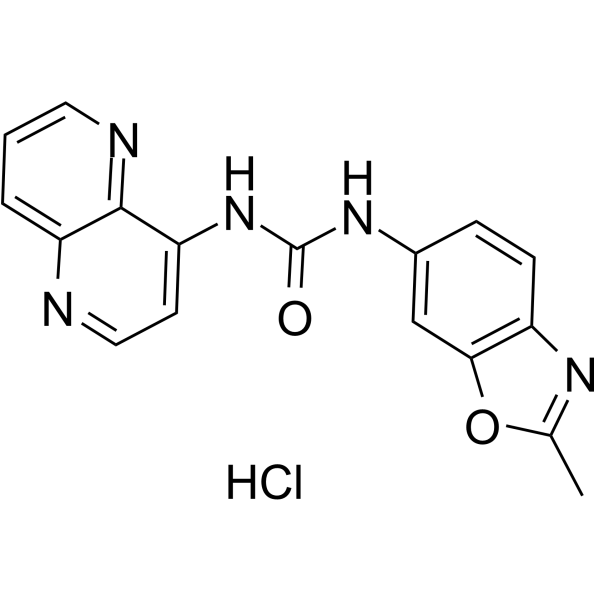
SB-334867 (SB 334867A) is an excellent,selective and blood-brain barrier permeable orexin-1 (OX1) receptor antagonist, shows selectivity over OX2 (pKb=7.4), 100-fold over 5-HT2B, 5-HT2C with pKi values of 5.4 and 5.3, respectively. SB-334867 reduces ethanol consumption and inhibits the acquisition of morphine-induced sensitization to locomotor activity in vivo.
For research use only. We do not sell to patients.
- Purity : 99.08%
- CAS No.: 249889-64-3
- Formula: C17H14ClN5O2
- Molecular Weight:355.78
-
Storage:
4°C, sealed storage, away from moisture
* In solvent : -80°C, 6 months; -20°C, 1 month (sealed storage, away from moisture)

To place orders, for customer services and technical support, please contact: MedChemExpress USA
Tel: 609-228-6898 E-mail: [email protected] [email protected]


-
 Biological Activity
-
Chemical Information
-
Solvent & Solubility
- Protocols
- Purity & Documentation
- References
-
 Help & FAQs


-
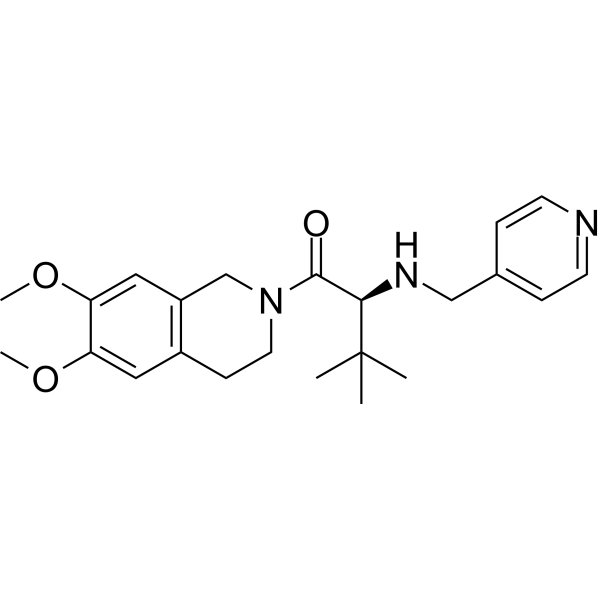
HY-100452
TCS-OX2-29OX2R Antagonist -
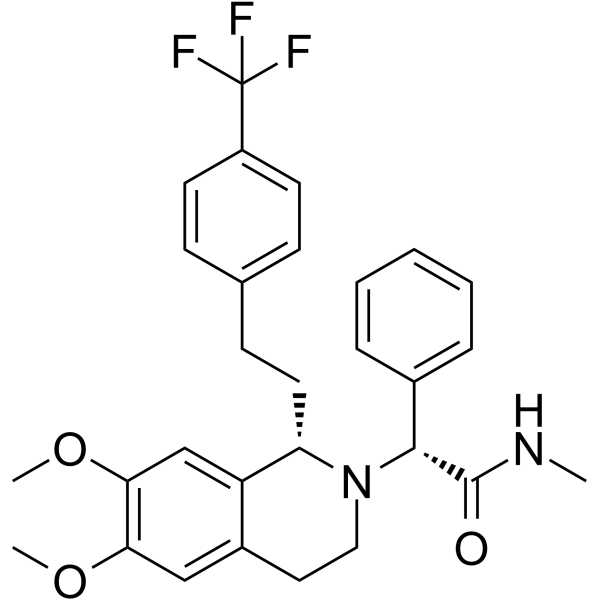
HY-10805
AlmorexantOrexin Receptor Antagonist -
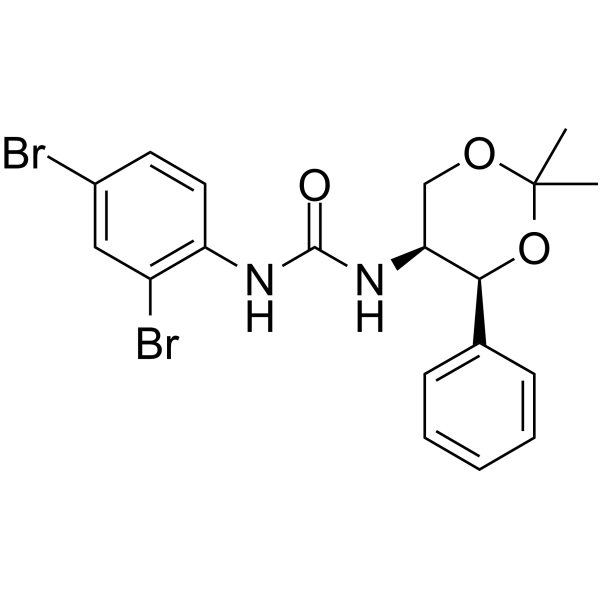
HY-10896
JNJ-10397049OX2R Antagonist -
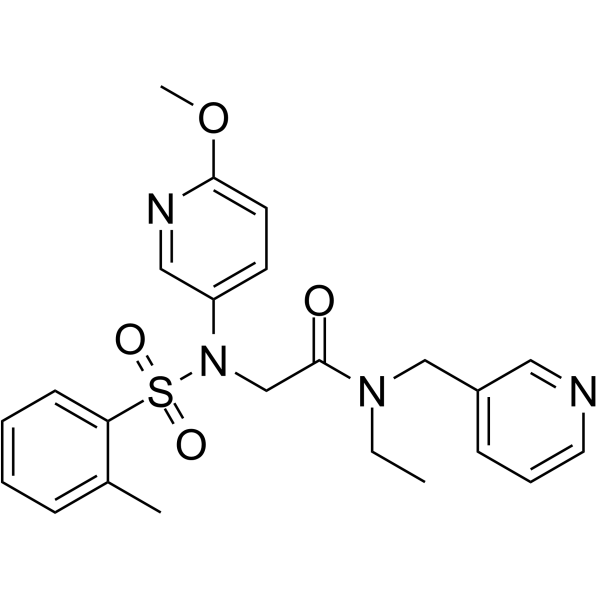
HY-108682
EMPAOX Receptor Antagonist -
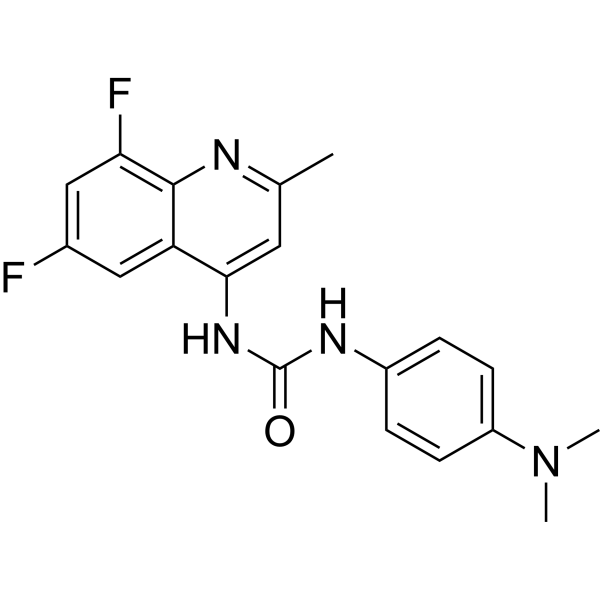
HY-70068
SB-408124OX1 Receptor Antagonist -
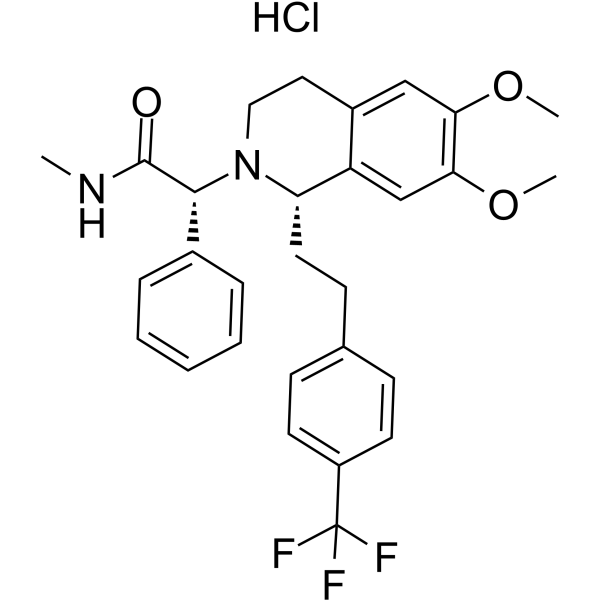
HY-10805A
Almorexant hydrochlorideOrexin Receptor Antagonist -
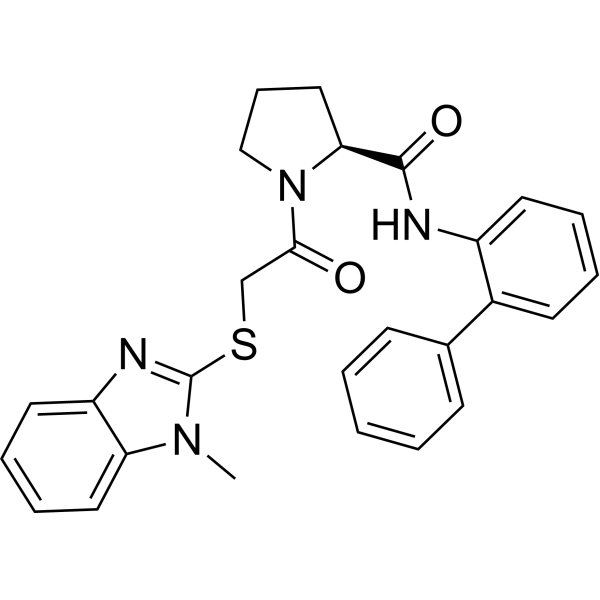
HY-10900
TCS 1102OX Receptor Antagonist -
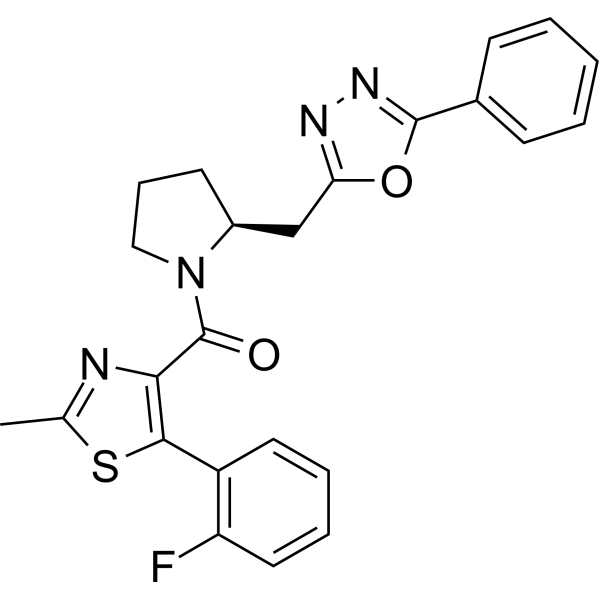
HY-10898
SB-674042OX1 Receptor Antagonist -
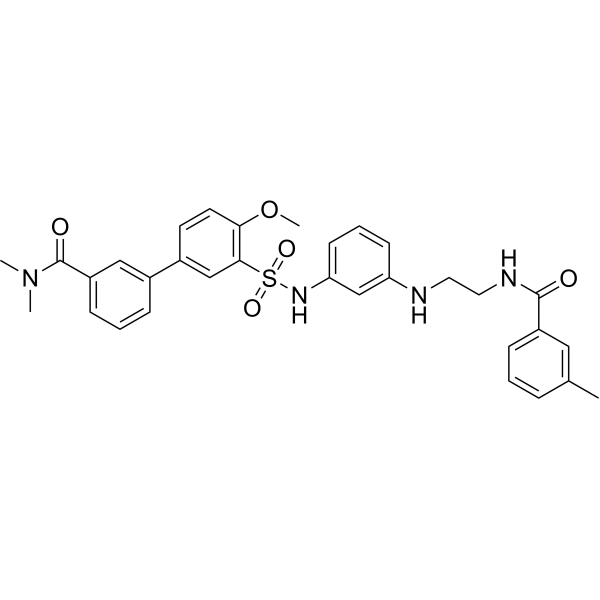
HY-19320
Orexin 2 Receptor AgonistOX2R Agonist -
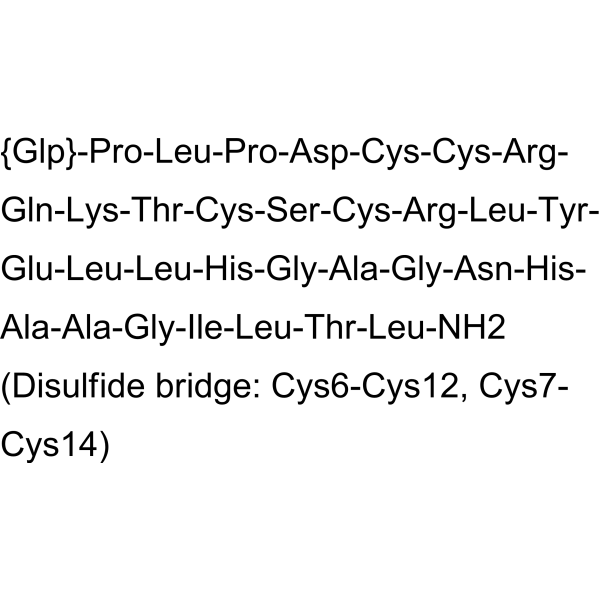
HY-106224
Orexin A (human, rat, mouse)Orexin Receptor Agonist -
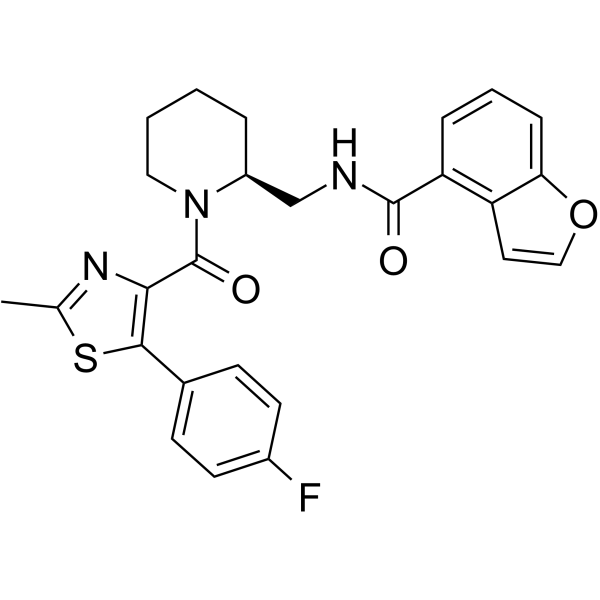
HY-10806
SB-649868OX1/OX2 Receptor Antagonist -
HY-109012A
Seltorexant hydrochlorideOrexin-2 Receptor Antagonist
Publications Citing Use of MedChemExpress (MCE) SB-334867
More- J Neuroinflammation. 2024 May 17;21(1):131. [Abstract]
- Curr Biol. 2026 Aug 3;36(15):3767-3782.e6.
- Drug Des Devel Ther. 2022 Jul 5;16:2145-2160. [Abstract]
- Eur J Pharmacol. 2026 Feb 15:1015:178566. [Abstract]
- Exp Neurol. 2025 Nov:393:115378. [Abstract]
- J Inflamm Res. 2021 May 18:14:2007-2017. [Abstract]
- Brain Res Bull. 2023 Sep:201:110712. [Abstract]
- Front Neurosci. 2016 Jul 26:10:355. [Abstract]
- Brain Res. 2025 Nov 27:1872:150081. [Abstract]
- Neurogastroenterol Motil. 2026 Jul;38(7):e70389.
- Fundam Clin Pharmacol. 2026 May;40(3):e70091. [Abstract]
- Addict Biol. 2026 Jul;31(7):e70173. [Abstract]
- Biomed Pharmacother. 2021 Jul:139:111649. [Abstract]
- Research Square Preprint. 2021 Jan.
 Customer Validation & Images

-
Cell Proliferation/Viability Assay
All Orexin Receptor (OX Receptor) Isoforms
More

Biological Activity
Description
IC50 & Target
[1]|
5-HT2B Receptor |
5-HT2C Receptor |
OX1 |
Cellular Effect
|
Cell Line

|
Type | Value | Description | References |
|---|---|---|---|---|
| CHO | IC50 |
40 nM
Compound: SB-334867
|
Antagonist activity at OX1 receptor expressed in CHO cells assessed as inhibition of OXA-stimulated intracellular calcium mobilization after 30 mins by FLIPR assay
Antagonist activity at OX1 receptor expressed in CHO cells assessed as inhibition of OXA-stimulated intracellular calcium mobilization after 30 mins by FLIPR assay
|
[PMID: 22617492] |
In Vitro
SB-334867 (100 pM- 10 μM) inhibits the orexin-A (10 nM) and orexin-B (100 nM)-induced calcium responses in a concentration-dependent manner, with apparent pKb values of 7.27±0.04 and 7.23±0.03, but has no effect on the calcium response elicited by UTP (3 μM), which activates an endogenous purinergic receptor in CHO-OX1 and CHO-OX2 cells[4].
MedChemExpress (MCE) has not independently confirmed the accuracy of these methods. They are for reference only.
In Vivo
MedChemExpress (MCE) has not independently confirmed the accuracy of these methods. They are for reference only.
-
Animal Model:Male Swiss mice[2]
-
Dosage:20 mg/kg
-
Administration:Intraperitoneal injection
-
Result:Inhibited the acquisition of morphine-induced sensitization to locomotor activity of mice.
-
Animal Model:C57BL/6J Mice[3]
-
Dosage:3, 10 and 30 mg/kg
-
Administration:Intraperitoneal injection
-
Result:Reduced ethanol consumption, BECs and suppressed sucrose intake in mice.


Chemical Information
-
CAS No. 249889-64-3
-
Appearance Solid
-
Molecular Weight 355.78
-
Formula C17H14ClN5O2
-
Color Light yellow to yellow
-
SMILES
O=C(NC1=CC(OC(C)=N2)=C2C=C1)NC3=CC=NC4=CC=CN=C43.Cl
-
Synonyms
SB 334867A
-
Shipping
Room temperature in continental US; may vary elsewhere.
-
Storage
4°C, sealed storage, away from moisture
* In solvent : -80°C, 6 months; -20°C, 1 month (sealed storage, away from moisture)


Publications (14)
-
Journal Impact Factor
-
Most Recent
-
J Neuroinflammation
2024 May 17;21(1):131. PMID: 38760784 -
-
Drug Des Devel Ther
Orexin-A Reverse Bone Mass Loss Induced by Chronic Intermittent Hypoxia Through OX1R-Nrf2/HIF-1α Pathway. [Abstract]2022 Jul 5;16:2145-2160. PMID: 35818538 -
Eur J Pharmacol
Bombesin improves visceral hypersensitivity and colonic hyperpermeability via BB1 receptor-dependent multi-pathway mechanisms in a rat model of irritable bowel syndrome. [Abstract]2026 Feb 15:1015:178566. PMID: 41548687 -
Exp Neurol
Orexin A alleviates chronic cerebral hypoperfusion-induced neuroinflammation and cognitive dysfunction by inhibiting the NEK7/NLRP3 pathway. [Abstract]2025 Nov:393:115378. PMID: 40691984 -
J Inflamm Res
Orexin-A Attenuates Inflammatory Responses in Lipopolysaccharide-Induced Neural Stem Cells by Regulating NF-KB and Phosphorylation of MAPK/P38/Erk Pathways. [Abstract]2021 May 18:14:2007-2017. PMID: 34040413 -
Brain Res Bull
Lateral hypothalamic orexin neurons mediate electroacupuncture-induced anxiolytic effects in a rat model of post-traumatic stress disorder. [Abstract]2023 Sep:201:110712. PMID: 37481143 -
Front Neurosci
Evidence for a Role of Orexin/Hypocretin System in Vestibular Lesion-Induced Locomotor Abnormalities in Rats. [Abstract]2016 Jul 26:10:355. PMID: 27507932
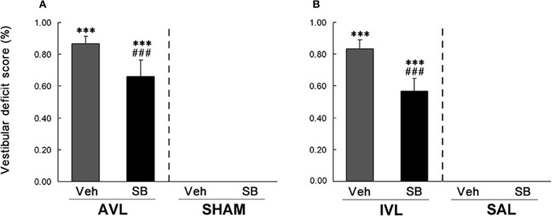
SB-334867 purchased from MedChemExpress. Usage Cited in: Front Neurosci. 2016 Jul 26:10:355. [Abstract]
Effects of the orexin receptor type 1 (OX1R) antagonist SB334867 on the vestibular deficit syndrome after vestibular lesions induced by arsanilate (A) and IDPN (B) in rats.
-
Brain Res
Sex differences in interactions between the muscarinic-1 and orexin-1 receptors on cognitive flexibility in rats. [Abstract]2025 Nov 27:1872:150081. PMID: 41317779 -
-
Fundam Clin Pharmacol
Repurposing Cimetidine as a Therapeutic Candidate for Irritable Bowel Syndrome in a Rat Model. [Abstract]2026 May;40(3):e70091. PMID: 42083465 -
Addict Biol
The Orexin System Modulates Stress-Induced Alcohol Preference and Reinstatement in Adolescents: Bioinformatics and Experimental Evidence. [Abstract]2026 Jul;31(7):e70173. PMID: 42337660 -
Biomed Pharmacother
Phlorizin attenuates visceral hypersensitivity and colonic hyperpermeability in a rat model of irritable bowel syndrome. [Abstract]2021 Jul:139:111649. PMID: 33957565 -


Solvent & Solubility
In Vitro:
H2O : 20 mg/mL (56.21 mM; ultrasonic and warming and heat to 60°C)
DMSO : 3.33 mg/mL (9.36 mM; ultrasonic and warming and heat to 60°C; Hygroscopic DMSO has a significant impact on the solubility of product, please use newly opened DMSO)
Please refer to the solubility information to select the appropriate solvent. Once prepared, please aliquot and store the solution to prevent product inactivation from repeated freeze-thaw cycles.
Storage method and period of stock solution: -80°C, 6 months; -20°C, 1 month (sealed storage, away from moisture). When stored at -80°C, please use it within 6 months. When stored at -20°C, please use it within 1 month.
* Note: If you choose water as the stock solution, please dilute it to the working solution, then filter and sterilize it with a 0.22 μm filter before use.
Please refer to the solubility information to select the appropriate solvent. Once prepared, please aliquot and store the solution to prevent product inactivation from repeated freeze-thaw cycles.
Storage method and period of stock solution: -80°C, 6 months; -20°C, 1 month (sealed storage, away from moisture). When stored at -80°C, please use it within 6 months. When stored at -20°C, please use it within 1 month.
* Note: If you choose water as the stock solution, please dilute it to the working solution, then filter and sterilize it with a 0.22 μm filter before use.
Concentration (start) × Volume (start) = Concentration (final) × Volume (final)
In Vivo:
Select the appropriate dissolution method based on your experimental animal and administration route.
- For the following dissolution methods, please ensure to first prepare a clear stock solution using an In Vitro approach and then sequentially add co-solvents:
- To ensure reliable experimental results, the clarified stock solution can be appropriately stored based on storage conditions. As for the working solution for In Vivo experiments, it is recommended to prepare freshly and use it on the same day.
- The percentages shown for the solvents indicate their volumetric ratio in the final prepared solution. If precipitation or phase separation occurs during preparation, heat and/or sonication can be used to aid dissolution.
Add each solvent one by one: 10% DMSO 40% PEG300 5% Tween-80 45% Saline
Solubility: ≥ 0.33 mg/mL (0.93 mM); Clear solution
This protocol yields a clear solution of ≥ 0.33 mg/mL (saturation unknown).
Taking 1 mL working solution as an example, add 100 μL DMSO stock solution (3.3 mg/mL) to 400 μL PEG300, and mix evenly; then add 50 μL Tween-80 and mix evenly; then add 450 μL Saline to adjust the volume to 1 mL.
Preparation of Saline: Dissolve 0.9 g sodium chloride in ddH₂O and dilute to 100 mL to obtain a clear Saline solution.
Add each solvent one by one: 10% DMSO 90% (20% SBE-β-CD in Saline)
Solubility: ≥ 0.33 mg/mL (0.93 mM); Clear solution
This protocol yields a clear solution of ≥ 0.33 mg/mL (saturation unknown).
Taking 1 mL working solution as an example, add 100 μL DMSO stock solution (3.3 mg/mL) to 900 μL 20% SBE-β-CD in Saline, and mix evenly.
Preparation of 20% SBE-β-CD in Saline (4°C, storage for one week): 2 g SBE-β-CD powder is dissolved in 10 mL Saline, completely dissolve until clear.
In Vivo Dissolution Calculator
Please enter the basic information of animal experiments:
-
-
-
-
Recommended: Prepare an additional quantity of animals to account for potential losses during experiments.
Working solution concentration: 0.22 mg/mL
This product has good water solubility, please refer to the measured solubility data in water/PBS/Saline for details.


Purity & Documentation
-
Data Sheet (284 KB)
-
SDS (393 KB)
- English - EN (393 KB)
- Français - FR (393 KB)
- Deutsch - DE (393 KB)
- Norwegian - NO (393 KB)
- Español - ES (393 KB)
- Swedish - SV (393 KB)
- Italian - IT (393 KB)
- Korean - KR (393 KB)
- Portuguese - PT (393 KB)
-
Handling Instructions (2659 KB)
References
[1]. Porter RA, et al. 1,3-Biarylureas as selective non-peptide antagonists of the orexin-1 receptor.Bioorg Med Chem Lett. 2001 Jul 23;11(14):1907-10. [Content Brief]
[2]. Łupina M, et al. SB-334867 (an Orexin-1 Receptor Antagonist) Effects on Morphine-Induced Sensitization in Mice-a View on Receptor Mechanisms. [Content Brief]
[3]. Anderson RI, et al. Orexin-1 and orexin-2 receptor antagonists reduce ethanol self-administration in high-drinking rodent models.Front Neurosci. 2014 Feb 25;8:33. [Content Brief]
[4]. Smart D, et al. SB-334867-A: the first selective orexin-1 receptor antagonist.Br J Pharmacol. 2001 Mar;132(6):1179-82. [Content Brief]


Complete Stock Solution Preparation Table
Please refer to the solubility information to select the appropriate solvent. Once prepared, please aliquot and store the solution to prevent product inactivation from repeated freeze-thaw cycles.
Storage method and period of stock solution: -80°C, 6 months; -20°C, 1 month (sealed storage, away from moisture). When stored at -80°C, please use it within 6 months. When stored at -20°C, please use it within 1 month.
| Optional Solvent | Concentration Solvent Mass | 1 mg | 5 mg | 10 mg | 25 mg |
|---|---|---|---|---|---|
| DMSO / H2O | 1 mM | 2.8107 mL | 14.0536 mL | 28.1073 mL | 70.2681 mL |
| 5 mM | 0.5621 mL | 2.8107 mL | 5.6215 mL | 14.0536 mL | |
| H2O | 10 mM | 0.2811 mL | 1.4054 mL | 2.8107 mL | 7.0268 mL |
| 15 mM | 0.1874 mL | 0.9369 mL | 1.8738 mL | 4.6845 mL | |
| 20 mM | 0.1405 mL | 0.7027 mL | 1.4054 mL | 3.5134 mL | |
| 25 mM | 0.1124 mL | 0.5621 mL | 1.1243 mL | 2.8107 mL | |
| 30 mM | 0.0937 mL | 0.4685 mL | 0.9369 mL | 2.3423 mL | |
| 40 mM | 0.0703 mL | 0.3513 mL | 0.7027 mL | 1.7567 mL | |
| 50 mM | 0.0562 mL | 0.2811 mL | 0.5621 mL | 1.4054 mL |
* Note: If you choose water as the stock solution, please dilute it to the working solution, then filter and sterilize it with a 0.22 μm filter before use.


SB-334867 Related Classifications
HY-10895 Related Classifications
 Powered by Bioz