



CYP26
CYP26 enzymes are cytochrome P450 retinoic acid hydroxylases that regulate intracellular all-trans-retinoic acid (atRA) concentrations and maintain retinoid homeostasis through rapid metabolic clearance of active retinoids[1][2]. The CYP26 family comprises CYP26A1, CYP26B1, and CYP26C1, which efficiently metabolize atRA and related retinoid isomers, thereby controlling retinoic acid receptor signaling during development and in adult tissues[2][3]. Mechanistically, CYP26-mediated catabolism generates retinoic acid gradients that shape tissue-specific gene expression patterns and protect selected tissues from excessive retinoid signaling during embryogenesis[4][5]. Disruption of CYP26-dependent retinoic acid homeostasis has been linked to developmental abnormalities, altered neuronal retinoid signaling, and pathological changes associated with cancer and other retinoid-responsive diseases[5][6][7]. Compared with related isoforms, CYP26A1 is the predominant hepatic atRA hydroxylase with higher catalytic capacity, whereas CYP26B1 exhibits higher substrate affinity and primarily regulates extrahepatic retinoid clearance[8][9]. CYP26C1 also contributes to retinoid metabolism but remains less extensively characterized than CYP26A1 and CYP26B1[2][3]. For experimental applications, selective and dual CYP26 inhibitors, including retinoic acid metabolism blocking agents (RAMBAs) such as talarozole and DX314, increase endogenous atRA exposure and are widely used to investigate tissue-specific retinoid signaling and therapeutic responses in dermatological and cancer-related models[7][10][11].
References:
- [1]. Huang PI, et al. Targeted genetic and viral therapy for advanced head and neck cancers. Drug Discov Today. 2009 Jun;14(11-12):570-8. [Content Brief]
- [2]. Mariadoss AVA, et al. Phloretin loaded chitosan nanoparticles enhance the antioxidants and apoptotic mechanisms in DMBA induced experimental carcinogenesis. Chem Biol Interact. 2019 Aug 1;308:11-19. [Content Brief]
- [3]. Isoherranen N, et al. Biochemical and physiological importance of the CYP26 retinoic acid hydroxylases. Pharmacol Ther. 2019 Dec;204:107400. [Content Brief]
- [4]. Graves BJ, et al. Transcription saga tells developmental stories. Development. 2006 Nov;133(22):4393-7. [Content Brief]
- [5]. Roberts C. Regulating Retinoic Acid Availability during Development and Regeneration: The Role of the CYP26 Enzymes. J Dev Biol. 2020 Mar 5;8(1):6. doi: 10.3390/jdb8010006. PMID: 32151018; PMCID: PMC7151129. et al. Regulating Retinoic Acid Availability during Development and Regeneration: The Role of the CYP26 Enzymes. J Dev Biol. 2020 Mar 5;8(1):6. [Content Brief]
- [6]. Stoney PN, et al. Expression of the retinoic acid catabolic enzyme CYP26B1 in the human brain to maintain signaling homeostasis. Brain Struct Funct. 2016 Jul;221(6):3315-26. [Content Brief]
- [7]. Stevison F, et al. Inhibition of the all-trans Retinoic Acid (atRA) Hydroxylases CYP26A1 and CYP26B1 Results in Dynamic, Tissue-Specific Changes in Endogenous atRA Signaling. Drug Metab Dispos. 2017 Jul;45(7):846-854. [Content Brief]
- [8]. Yamada T, et al. Bile-acid-induced calcium signaling in mouse esophageal epithelial cells. Biochem Biophys Res Commun. 2011 Nov 4;414(4):789-94. [Content Brief]
- [9]. Yabut KCB, et al. CRABPs Alter all-trans-Retinoic Acid Metabolism by CYP26A1 via Protein-Protein Interactions. Nutrients. 2022 Apr 24;14(9):1784. [Content Brief]
- [10]. Veit JGS, et al. Characterization of CYP26B1-Selective Inhibitor, DX314, as a Potential Therapeutic for Keratinization Disorders. J Invest Dermatol. 2021 Jan;141(1):72-83.e6. [Content Brief]
- [11]. Wang Z, et al. Modular pharmacology: deciphering the interacting structural organization of the targeted networks. Drug Discov Today. 2013 Jun;18(11-12):560-6. [Content Brief]
All Product Categories
-
CYP26 Related Products (6)
Related Products (6)

-
Talarozole
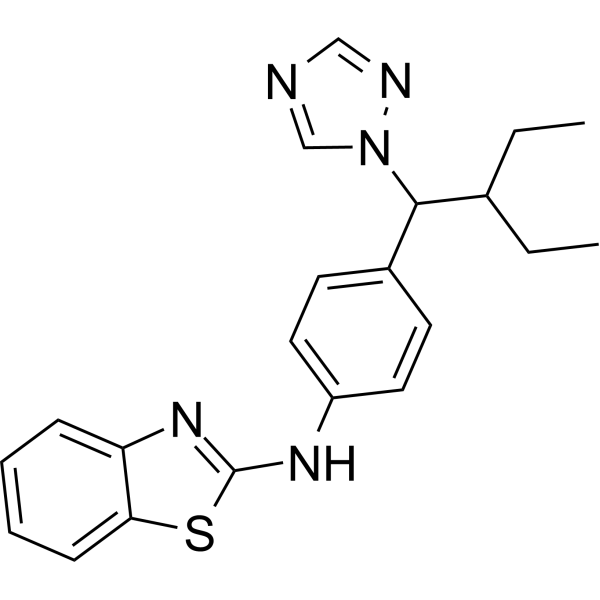 0 ImagesSynonyms: R115866Talarozole (R115866) is an oral systemic all-trans retinoic acid metabolism blocking agent (RAMBA) which increases intracellular levels of endogenous all-trans retinoic acid (RA). Talarozole inhibits both CYP26A1 and CYP26B1 with IC50s of 5.4 and 0.46 nM, respectively.
-
Liarozole
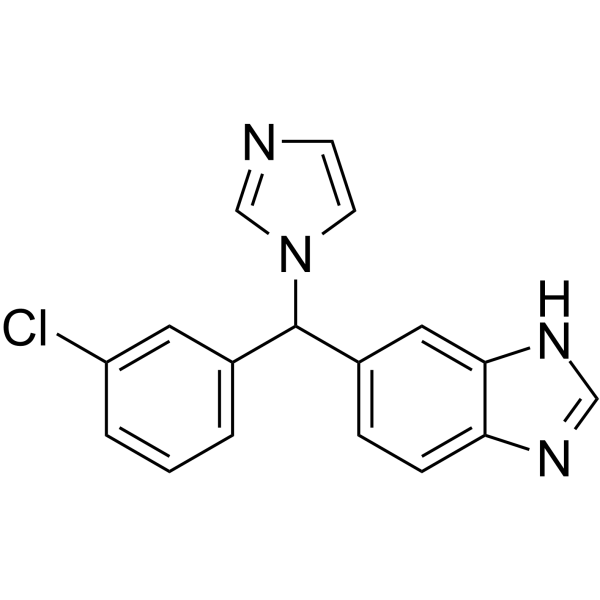 0 ImagesSynonyms: R75251Liarozole (R75251; R85246) is an imidazole derivative and orally active retinoic acid (RA) metabolism-blocking agent (RAMBA). Liarozole inhibits the cytochrome P450 (CYP26)-dependent 4-hydroxylation of retinoic acid (IC50=7 μM), resulting in increased tissue levels of retinoic acid. Liarozole shows antitumoral properties.
-
Nicotelline
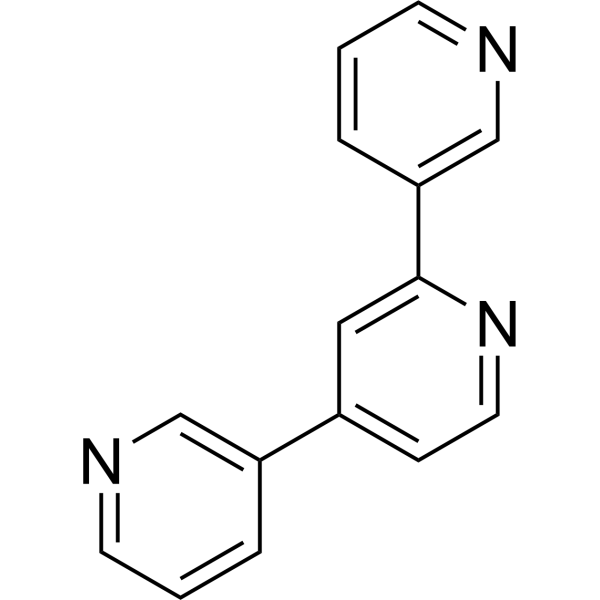 0 ImagesNicotelline (Nicotellin) is a nicotine-related alkaloid, as well as a weak inhibitor of human cDNA-expressed cytochrome P-450 2A6 (CYP2A6). CYP2A6 mediates coumarin 7-hydroxylation, while Nicotelline fails to exhibit inhibition at 300 μM. Nicotelline can be used as a tracer and biomarker of particulate matter (PM) derived from tobacco smoke.
-
Liarozole dihydrochloride
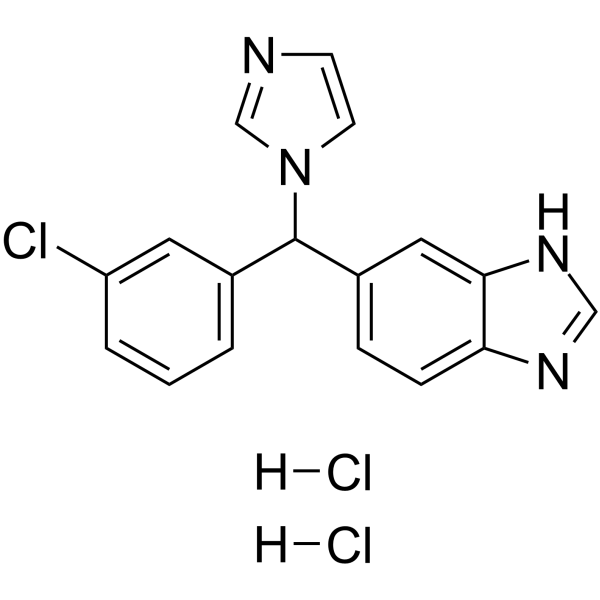 0 ImagesSynonyms: R75251 dihydrochlorideLiarozole (R75251) dihydrochloride is an imidazole derivative and orally active retinoic acid (RA) metabolism-blocking agent (RAMBA). Liarozole dihydrochloride inhibits the cytochrome P450 (CYP26)-dependent 4-hydroxylation of RA (IC50=7 μM), resulting in increased tissue levels of RA. Liarozole dihydrochloride shows antitumoral properties.
-
Dapaconazole
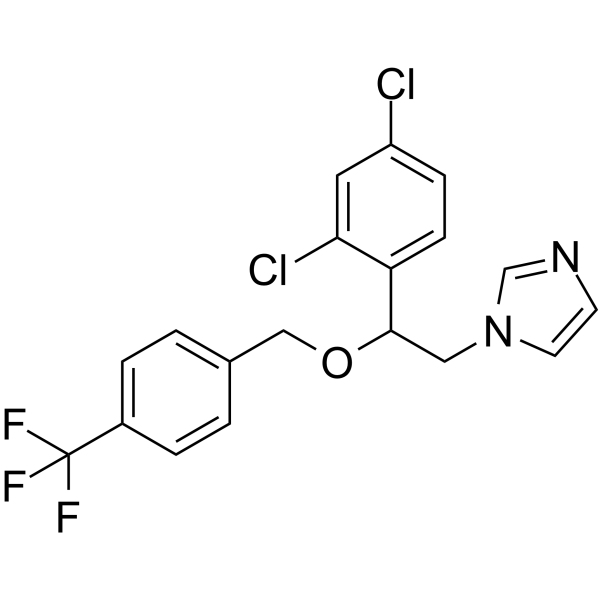 0 ImagesDapaconazole, as an antifungal agent, inhibits sterol 14α-demethylase cytochrome P450 activity with an IC50 of 1.4 μM.
-
(S,S)-R116010
 0 ImagesCat. No.: HY-121500CAS No.: 355860-40-1R-116010 is a potent and selective retinoic acid (RA) metabolism inhibitor and can inhibit hydroxylase CYP26. R-116010 can enhance the anti-tumor effect of retinoic acid drugs. R-116010 can be used for the research of cancer, metabolic and neurological disease, such as neuroblastoma.



