



Liarozole dihydrochloride

Based on 1 Customer Validation
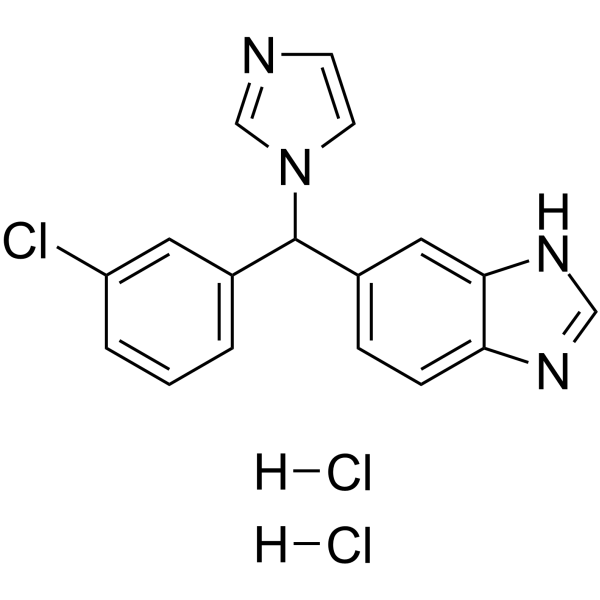
Liarozole (R75251) dihydrochloride is an imidazole derivative and orally active retinoic acid (RA) metabolism-blocking agent (RAMBA). Liarozole dihydrochloride inhibits the cytochrome P450 (CYP26)-dependent 4-hydroxylation of RA (IC50=7 μM), resulting in increased tissue levels of RA. Liarozole dihydrochloride shows antitumoral properties.
For research use only. We do not sell to patients.
- Purity : 99.04%
- CAS No.: 1883548-96-6
- Formula: C17H15Cl3N4
- Molecular Weight:381.69
-
Storage:
4°C, sealed storage, away from moisture
* In solvent : -80°C, 6 months; -20°C, 1 month (sealed storage, away from moisture)

To place orders, for customer services and technical support, please contact: MedChemExpress USA
Tel: 609-228-6898 E-mail: [email protected] [email protected]


-
 Biological Activity
-
Chemical Information
-
Solvent & Solubility
- Protocols
- Purity & Documentation
- References
-
 Help & FAQs


-
HY-N1201
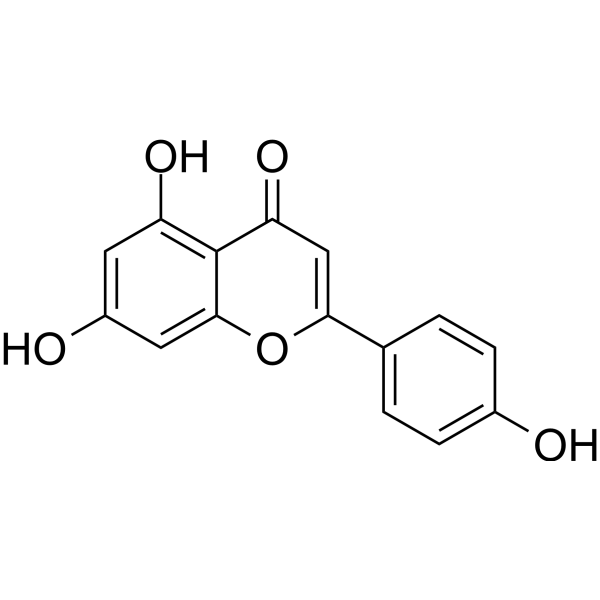
ApigeninCytochrome P450 Inhibitor -
HY-N0196
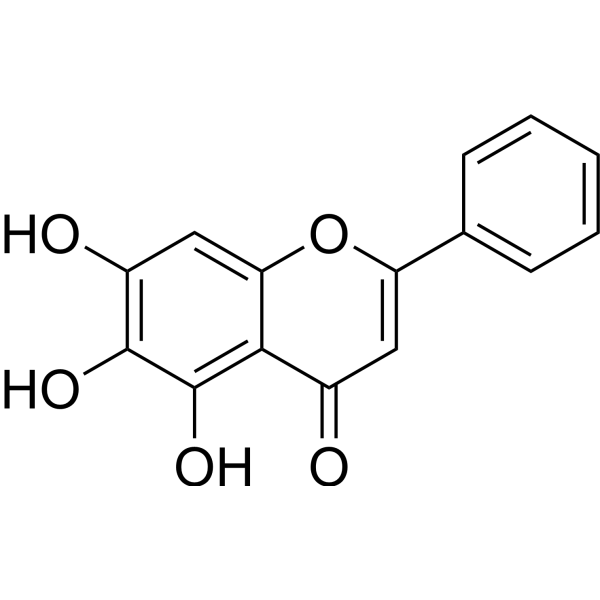
BaicaleinXanthine Oxidase Inhibitor -
HY-14531
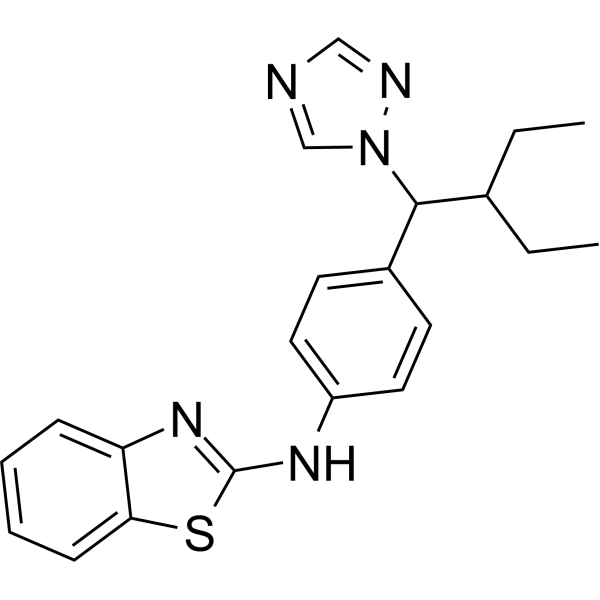
TalarozoleCYP26 Inhibitor/RAMBA -
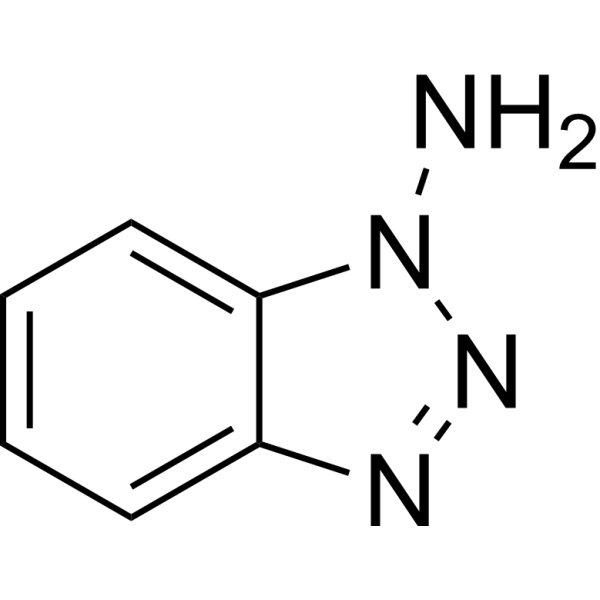
HY-103389
1-AminobenzotriazoleCytochrome P450 Inhibitor -

HY-106019CR
Liarozole dihydrochloride (Standard)RAMBA -
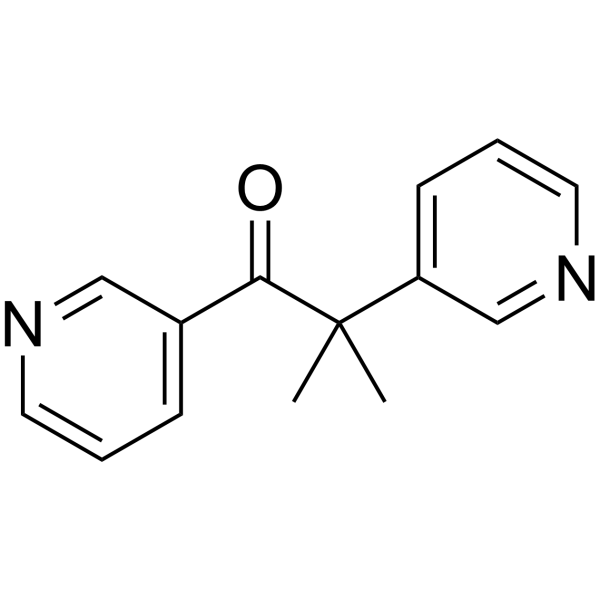
HY-B1232
Metyrapone11β-hydroxylase Inhibitor -
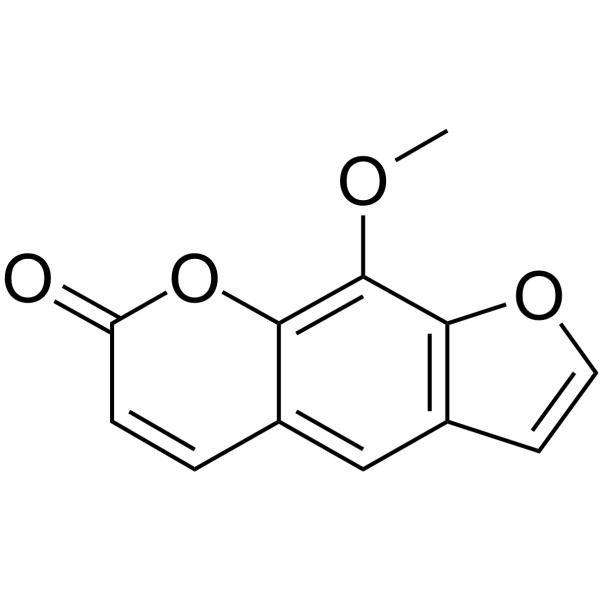
HY-30151
MethoxsalenCytochrome P450 Inhibitor -
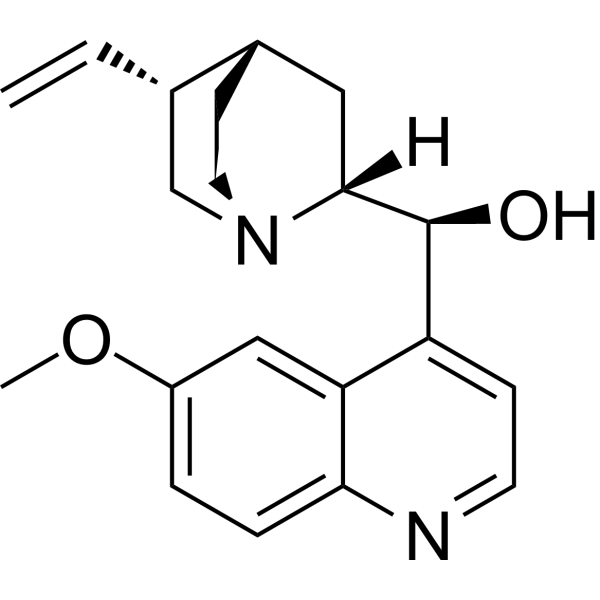
HY-B1751
Quinidine (15% dihydroquinidine)Anti-arrythmic Agent -
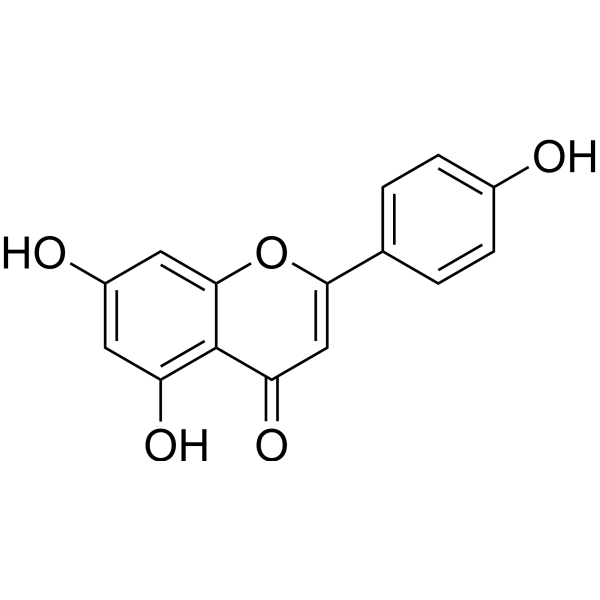
HY-N1201R
Apigenin (Standard) -
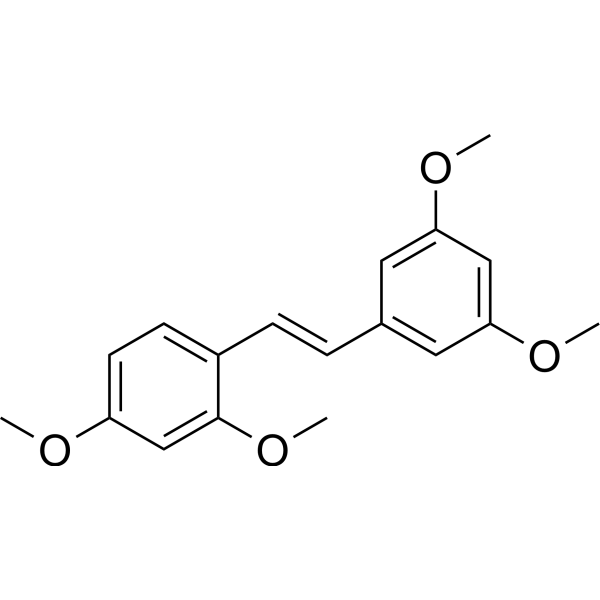
HY-19340
TMSCYP1B1 Inhibitor -
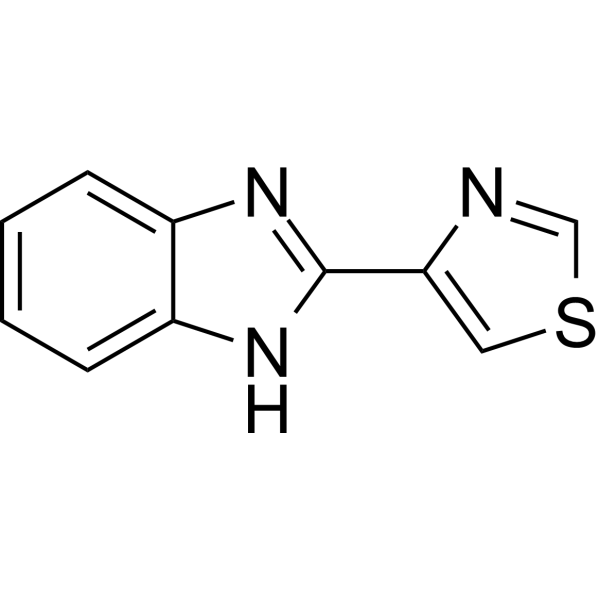
HY-B0263
Thiabendazolefungicide -

HY-N0196R
Baicalein (Standard)Xanthine Oxidase Inhibitor


Biological Activity
Description
IC50 & Target
|
CYP26 7 μM (IC50) |
In Vitro
Liarozole dihydrochloride (0.01~10 μM; 9 days; MCF-7 cells) inhibits cells proliferation[3].
Liarozole dihydrochloride (1 μM; 4 days; mesenchymal cells) completely inhibits chondrogenesis[4].
MedChemExpress (MCE) has not independently confirmed the accuracy of these methods. They are for reference only. Further protocols information, click here.
-
Cell Line:MCF-7 cells
-
Concentration:0.01~10 μM
-
Incubation Time:9 days
-
Result:Had an effect of 35% inhibition at 10 μM on cell proliferation.
-
Cell Line:Mesenchymal cells
-
Concentration:1 μM
-
Incubation Time:4 days
-
Result:Completely inhibited chondrogenesis.
In Vivo
Liarozole dihydrochloride (40 mg/kg; p.o.) reduces tumor burden substantially[6].
MedChemExpress (MCE) has not independently confirmed the accuracy of these methods. They are for reference only.
-
Animal Model:Ovariectomized rats
-
Dosage:5~20 mg/kg
-
Administration:P.o.
-
Result:Reversed the vaginal keratosis caused by estrogen stimulation.
-
Animal Model:SCID mice
-
Dosage:40 mg/kg
-
Administration:P.o.
-
Result:Inhibited tumor growth and survival.


Chemical Information
-
CAS No. 1883548-96-6
-
Appearance Solid
-
Molecular Weight 381.69
-
Formula C17H15Cl3N4
-
Color White to off-white
-
SMILES
ClC1=CC(C(C2=CC=C3N=CNC3=C2)N4C=CN=C4)=CC=C1.[H]Cl.[H]Cl
-
Synonyms
R75251 dihydrochloride
-
Shipping
Room temperature in continental US; may vary elsewhere.
-
Storage
4°C, sealed storage, away from moisture
* In solvent : -80°C, 6 months; -20°C, 1 month (sealed storage, away from moisture)


Solvent & Solubility
In Vitro:
DMSO : 250 mg/mL (654.98 mM; Need ultrasonic; Hygroscopic DMSO has a significant impact on the solubility of product, please use newly opened DMSO)
Please refer to the solubility information to select the appropriate solvent. Once prepared, please aliquot and store the solution to prevent product inactivation from repeated freeze-thaw cycles.
Storage method and period of stock solution: -80°C, 6 months; -20°C, 1 month (sealed storage, away from moisture). When stored at -80°C, please use it within 6 months. When stored at -20°C, please use it within 1 month.
Please refer to the solubility information to select the appropriate solvent. Once prepared, please aliquot and store the solution to prevent product inactivation from repeated freeze-thaw cycles.
Storage method and period of stock solution: -80°C, 6 months; -20°C, 1 month (sealed storage, away from moisture). When stored at -80°C, please use it within 6 months. When stored at -20°C, please use it within 1 month.
Concentration (start) × Volume (start) = Concentration (final) × Volume (final)
In Vivo:
Select the appropriate dissolution method based on your experimental animal and administration route.
- For the following dissolution methods, please ensure to first prepare a clear stock solution using an In Vitro approach and then sequentially add co-solvents:
- To ensure reliable experimental results, the clarified stock solution can be appropriately stored based on storage conditions. As for the working solution for In Vivo experiments, it is recommended to prepare freshly and use it on the same day.
- The percentages shown for the solvents indicate their volumetric ratio in the final prepared solution. If precipitation or phase separation occurs during preparation, heat and/or sonication can be used to aid dissolution.
Add each solvent one by one: 10% DMSO 40% PEG300 5% Tween-80 45% Saline
Solubility: ≥ 2.08 mg/mL (5.45 mM); Clear solution
This protocol yields a clear solution of ≥ 2.08 mg/mL (saturation unknown).
Taking 1 mL working solution as an example, add 100 μL DMSO stock solution (20.8 mg/mL) to 400 μL PEG300, and mix evenly; then add 50 μL Tween-80 and mix evenly; then add 450 μL Saline to adjust the volume to 1 mL.
Preparation of Saline: Dissolve 0.9 g sodium chloride in ddH₂O and dilute to 100 mL to obtain a clear Saline solution.
Add each solvent one by one: 10% DMSO 90% (20% SBE-β-CD in Saline)
Solubility: ≥ 2.08 mg/mL (5.45 mM); Clear solution
This protocol yields a clear solution of ≥ 2.08 mg/mL (saturation unknown).
Taking 1 mL working solution as an example, add 100 μL DMSO stock solution (20.8 mg/mL) to 900 μL 20% SBE-β-CD in Saline, and mix evenly.
Preparation of 20% SBE-β-CD in Saline (4°C, storage for one week): 2 g SBE-β-CD powder is dissolved in 10 mL Saline, completely dissolve until clear.
For the following dissolution methods, please prepare the working solution directly:
It is recommended to prepare fresh solutions and use them promptly within a short period of time.
The percentages shown for the solvents indicate their volumetric ratio in the final prepared solution. If precipitation or phase separation occurs during preparation, heat and/or sonication can be used to aid dissolution.
Add each solvent one by one: PBS
Solubility: 100 mg/mL (261.99 mM); Clear solution; Need ultrasonic
In Vivo Dissolution Calculator
Please enter the basic information of animal experiments:
-
-
-
-
Recommended: Prepare an additional quantity of animals to account for potential losses during experiments.
Please enter your animal formula composition:
-
%DMSO +
Recommended: Keep the proportion of DMSO in working solution below 2% if your animal is weak.
-
%+
-
+%Tween-80 + +
-
%Saline +
The co-solvents required include: DMSO, . All of co-solvents are available by MedChemExpress (MCE). , Tween 80. All of co-solvents are available by MedChemExpress (MCE).
Working solution concentration: 0.22 mg/mL
Method for preparing stock solution: mg drug dissolved in μL DMSO. Stock solution concentration: mg/mL. * In solvent : -80°C, 6 months; -20°C, 1 month (sealed storage, away from moisture)
1. Take μL DMSO stock solution;
2. Add μL .
μL , mix evenly;
3. Then add μL Tween 80, mix evenly;
4. Then add μL
Please ensure that the stock solution in the first step is dissolved to a clear state, and add co-solvents in sequence. You can use ultrasonic heating (ultrasonic cleaner, recommended frequency 20-40 kHz), vortexing, etc. to assist dissolution.

Protocols
-
Cell Cytotoxicity Assay
Cytotoxicity assays are usually based on the assessment of cell membrane damage, which can also be indirectly detected by measuring cell viability. Detection methods include MTT assay, CKK-8 assay, LDH assay and ATP assay, etc.


Purity & Documentation
-
Data Sheet (281 KB)
-
SDS (252 KB)
- English - EN (252 KB)
- Français - FR (252 KB)
- Deutsch - DE (252 KB)
- Norwegian - NO (252 KB)
- Español - ES (252 KB)
- Swedish - SV (252 KB)
- Italian - IT (252 KB)
- Korean - KR (252 KB)
- Portuguese - PT (252 KB)
-
Handling Instructions (2659 KB)
References
[1]. Kuijpers AL, et al. The effects of oral liarozole on epidermal proliferation and differentiation in severe plaque psoriasis are comparable with those of acitretin. Br J Dermatol. 1998;139(3):380-389. [Content Brief]
[2]. Lucker GP, et al. Oral treatment of ichthyosis by the cytochrome P-450 inhibitor liarozole. Br J Dermatol. 1997;136(1):71-75. [Content Brief]
[3]. Wouters W, et al. Effects of liarozole, a new antitumoral compound, on retinoic acid-induced inhibition of cell growth and on retinoic acid metabolism in MCF-7 human breast cancer cells. Cancer Res. 1992;52(10):2841-2846. [Content Brief]
[4]. Pignatello MA, et al. Liarozole markedly increases all trans-retinoic acid toxicity in mouse limb bud cell cultures: a model to explain the potency of the aromatic retinoid (E)-4-[2-(5,6,7,8-tetrahydro-5,5,8,8-tetramethyl-2-naphthylenyl)-1-propenyl] benzoic acid. Toxicol Appl Pharmacol. 2002; 178(3):186-194. [Content Brief]
[5]. Van Wauwe J, et al. Liarozole, an inhibitor of retinoic acid metabolism, exerts retinoid-mimetic effects in vivo. J Pharmacol Exp Ther. 1992;261(2):773-779. [Content Brief]
[6]. Stearns ME, et al. Liarozole and 13-cis-retinoic acid anti-prostatic tumor activity [published correction appears in Cancer Res 1993 Dec 1;53(23):5831]. Cancer Res. 1993;53(13):3073-3077. [Content Brief]


Complete Stock Solution Preparation Table
Please refer to the solubility information to select the appropriate solvent. Once prepared, please aliquot and store the solution to prevent product inactivation from repeated freeze-thaw cycles.
Storage method and period of stock solution: -80°C, 6 months; -20°C, 1 month (sealed storage, away from moisture). When stored at -80°C, please use it within 6 months. When stored at -20°C, please use it within 1 month.
| Optional Solvent | Concentration Solvent Mass | 1 mg | 5 mg | 10 mg | 25 mg |
|---|---|---|---|---|---|
| DMSO | 1 mM | 2.6199 mL | 13.0996 mL | 26.1993 mL | 65.4982 mL |
| 5 mM | 0.5240 mL | 2.6199 mL | 5.2399 mL | 13.0996 mL | |
| 10 mM | 0.2620 mL | 1.3100 mL | 2.6199 mL | 6.5498 mL | |
| 15 mM | 0.1747 mL | 0.8733 mL | 1.7466 mL | 4.3665 mL | |
| 20 mM | 0.1310 mL | 0.6550 mL | 1.3100 mL | 3.2749 mL | |
| 25 mM | 0.1048 mL | 0.5240 mL | 1.0480 mL | 2.6199 mL | |
| 30 mM | 0.0873 mL | 0.4367 mL | 0.8733 mL | 2.1833 mL | |
| 40 mM | 0.0655 mL | 0.3275 mL | 0.6550 mL | 1.6375 mL | |
| 50 mM | 0.0524 mL | 0.2620 mL | 0.5240 mL | 1.3100 mL | |
| 60 mM | 0.0437 mL | 0.2183 mL | 0.4367 mL | 1.0916 mL | |
| 80 mM | 0.0327 mL | 0.1637 mL | 0.3275 mL | 0.8187 mL | |
| 100 mM | 0.0262 mL | 0.1310 mL | 0.2620 mL | 0.6550 mL |


Liarozole dihydrochloride Related Classifications
HY-106019C Related Classifications
 Powered by Bioz