



RXRα
RXRα is a nuclear receptor that regulates transcription through heterodimerization with diverse nuclear receptors, linking retinoid signaling to cell proliferation, differentiation, lipid metabolism, and pharmacology[1]. Mechanistically, RXR-containing heterodimers control liver physiology by modulating lipid and bile acid metabolism in hepatocytes, cholesterol transport in macrophages, and fibrogenesis in hepatic stellate cells[2]. In mouse liver, RXRα binds widely across the genome and supports sex-dimorphic expression of lipid-processing genes, including Scd1, Fasn, Elovl6, and Pnpla3[3]. In disease models, altered RXRα expression or truncated RXRα connects RXRα biology to prostate cancer, chronic myeloid leukemia, and tumor-growth pathways involving PI3K/AKT and NF-κB signaling[4][5][6]. Compared with RXRβ and RXRγ, RXRα belongs to RXR isotypes with distinct properties that modulate RXR-containing heterodimer activity, making isoform selection important in experimental design[1]. For research applications, RXR ligands such as LG268, clinically relevant RXRA ligands, and sulindac analogs provide tools to test RXRα-dependent transcriptional regulation, leukemia drug sensitivity, and truncated RXRα signaling[3][5][6].
Verweise:
- [1]. Lefebvre P, et al. Retinoid X receptors: common heterodimerization partners with distinct functions. Trends Endocrinol Metab. 2010 Nov;21(11):676-83. [Content Brief]
- [2]. Li B, et al. The role of the retinoid receptor, RAR/RXR heterodimer, in liver physiology. Biochim Biophys Acta Mol Basis Dis. 2021 May 1;1867(5):166085. [Content Brief]
- [3]. Kosters A, et al. Sexually dimorphic genome-wide binding of retinoid X receptor alpha (RXRα) determines male-female differences in the expression of hepatic lipid processing genes in mice. PLoS One. 2013 Aug 19;8(8):e71538. [Content Brief]
- [4]. Zhong C, et al. Aberration in the expression of the retinoid receptor, RXRalpha, in prostate cancer. Cancer Biol Ther. 2003 Mar-Apr;2(2):179-84. [Content Brief]
- [5]. Rajamani BM, et al. Modulating retinoid-X-receptor alpha (RXRA) expression sensitizes chronic myeloid leukemia cells to imatinib in vitro and reduces disease burden in vivo. Front Pharmacol. 2023 May 31;14:1187066. [Content Brief]
- [6]. Zhang X, et al. Targeting truncated RXRα for cancer therapy. Acta Biochim Biophys Sin (Shanghai). 2016 Jan;48(1):49-59. [Content Brief]
-
RXRα Verwandte Produkte (13)
Verwandte Produkte (13)

-
Antibodies (1)
- 1
-
2,4-Di-tert-butylphenol
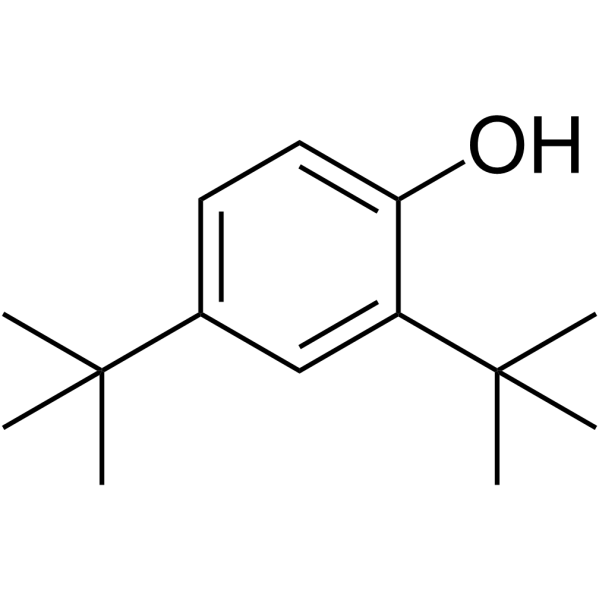 0 ImagesSynonyms: 2,4-DTBP2,4-Di-tert-butylphenol (2,4-DTBP) is an orally active RXRα activator and a human estrogen receptor ligand with anti-inflammatory and antioxidant activities, which can induce apoptosis in tumor cells. 2,4-Di-tert-butylphenol can activate the RXRα subtype in LXRα/RXRα, PPARγ/RXRα, and hormone receptor β/RXRα. 2,4-Di-tert-butylphenol also has antiviral and antifungal activities and has the potential to inhibit Aβ-induced neurotoxicity. 2,4-Di-tert-butylphenol can be used as an intermediate in the preparation of antioxidants and UV stabilizers, and is also used in the manufacture of drugs and fragrances.
-
ER 50891
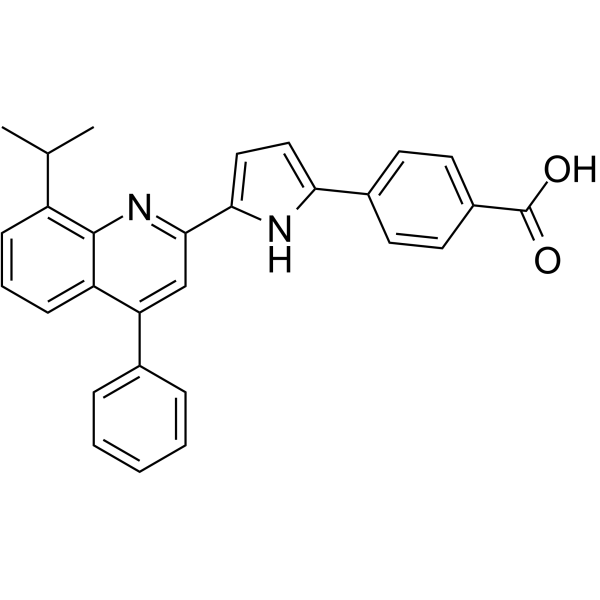 0 ImagesER 50891 is a RARα antagonist. ER 50891 can significantly antagonize the inhibitory effect of all-trans retinoic acid (ATRA) on the total cell metabolic activity and proliferation of MC3T3-E1 preosteoblasts. ER 50891 rescues ATRA-inhibited osteocalcin (OCN) expression and extracellular matrix mineralization, and suppresses alkaline phosphatase (ALP) activity synergistically. ER 50891 can be used for the study of osteoporosis related to ATRA-induced inhibition of osteoblastogenesis.
-
F44-A13
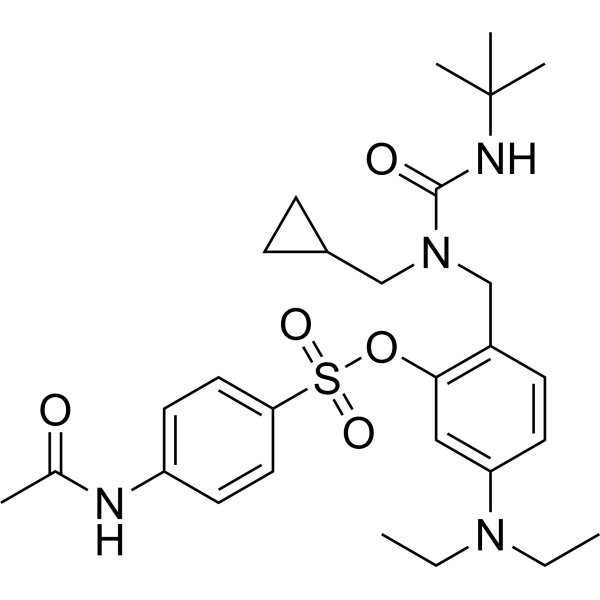 0 ImagesArt. -Nr.: HY-163436CAS. Nr.: 1338190-14-9F44-A13 is an orally active and highly selective farnesoid X receptor (FXR) antagonist with an IC50 value of 1.1 μM. F44-A13 can optimize cholesterol metabolism and reduce its activity by inducing CYP7A1 expression. F44-A13 reduces levels of cholesterol, triglycerides, and low-density lipoprotein cholesterol (LDL-C) in mouse models. F44-A13 can be used in the study of metabolic diseases associated with lipid disorders.
-
HX600
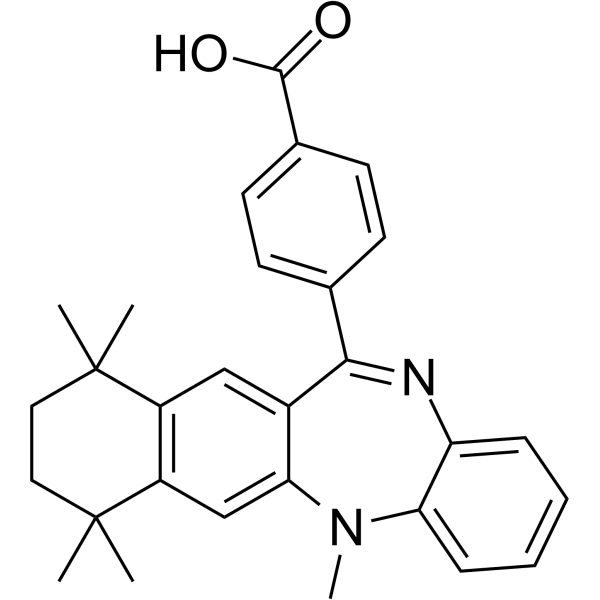 0 ImagesHX600 is a synthetic agonist for RXR (Retinoid X Receptor) heterodimer complex. HX600 prevents ischemia-induced neuronal damage. HX600 has orally bioactivity.
-
K-8012
 0 ImagesK-8012 is a Sulindac (HY-B0008) analog and RXRα antagonist with an IC50 of 9.2 µM. K-8012 inhibits the activation of AKT. K-8012 induces Apoptosis, redirecting the TNFα signaling pathway from survival to death. K-8012 exerts anticancer activity against lung cancer, prostate cancer, and breast cancer. K-8012 can be used in research related to lung cancer, prostate cancer, breast cancer, and hepatocellular carcinoma.
-
Sampsonione P
 0 ImagesArt. -Nr.: HY-N21705CAS. Nr.: 1562672-80-3Sampsonione P is an RXRα inhibitor isolated and extracted from Hypericum sampsonii. Sampsonione P inhibits RXRα transcriptional activity and can downregulate the expression of pro-inflammatory proteins such as iNOS and COX-2, thereby exerting anti-inflammatory effects. Sampsonione P has antitumor activity. Sampsonione P can be used for research on inflammatory diseases and cancer.
-
SR210831C
 0 ImagesArt. -Nr.: HY-183986SR210831C is a highly selective, orally active retinoic acid receptor α (RARα) inhibitor with an IC50 of 0.051 nM. SR210831C suppresses spermatogenesis by reducing sperm count in house mice via acting on the early stages of spermatogenesis, and it does not cross the blood-testis barrier. SR210831C can be used in male contraception research.
-
PROTAC RAR Degrader-1
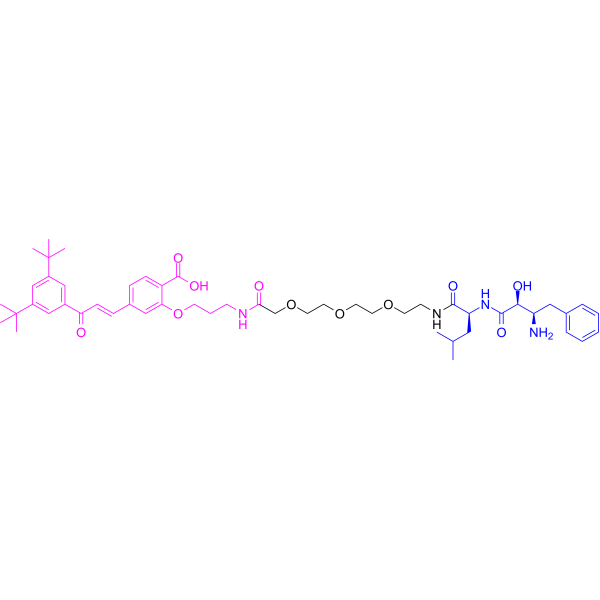 0 ImagesArt. -Nr.: HY-111844CAS. Nr.: 1351169-27-1PROTAC RAR degrader-1 (Compound 9) is a potent and selective RAR PROTAC Degrader consisting of apoptotic protein inhibitors (IAPs) ligands. IAPs-based degraders are also known as SNIPERs. PROTAC RAR Degrader-1 reduces RARα levels in HT1080 cells in a concentration-dependent manner but is blocked by the proteasome inhibitor MG132 (HY-13259). PROTAC RAR Degrader-1 can be used in the study of nuclear receptor-related diseases. (Pink: RAR ligand 1 (HY-111843); Black: Linker (HY-140189); Blue: IAPs Ligand (HY-B0134)).
-
AGN 193109 sodium
 0 ImagesArt. -Nr.: HY-U00449ACAS. Nr.: 2319838-82-7AGN 193109 sodium is the sodium salt form of AGN 193109 (HY-U00449). AGN 193109 sodium is the pan antagonist for retinoic acid receptor (RAR), with Kd of 2, 2 and 3 nM, for RARα, RARβ and RARγ, respectively. AGN 193109 sodium reverses TTNPB-induced morphology changes and all-trans retinoic acid (tRA)/9-cis RA/13-cis RA-induced proliferation suppression in ECE16-1 cell. AGN 193109 sodium is the antidote for retinoic acidosis, that ameliorates the skin and mucosal toxicity.
-
AGN-191659
 0 ImagesArt. -Nr.: HY-167262CAS. Nr.: 156691-86-0AGN-191659 is an orally active RAR/RXR agonist with EC50 values of 11 nM, 23 nM, and 37 nM for RXRα, RARβ, and RARγ, respectively. AGN-191659 activates RXRα, RARβ and RARγ to induce gene transcription. AGN-191659 induces tissue transglutaminase activity, inhibits ornithine decarboxylase activity induced by tumor promoters, and suppresses chondrogenesis. AGN-191659 reverses basic fibroblast growth factor-induced endothelial cell proliferation. AGN-191659 induces hypertriglyceridemia in rat models. AGN-191659 inhibits total heparin-releasable lipase activity. AGN-191659 can be used in research related to promyelocytic leukemia and hypertriglyceridemia.
-
GW0791
 0 ImagesArt. -Nr.: HY-119574CAS. Nr.: 503620-39-1
-
RXR agonist 3
 0 ImagesArt. -Nr.: HY-180182RXR agonist 3 (Compound 35) is a potent, partial RXR agonist (EC50s: 3, 3, 8 nM for RXRα, RXRβ, RXRγ, respectively). RXR agonist 3 can be used in the research of Alzheimer's disease, multiple sclerosis, and lymphoma.
-
(E)-XS-060
 0 ImagesArt. -Nr.: HY-149085ACAS. Nr.: 2787626-06-4(E)-XS-060 is an isomer of XS-060. XS-060 is a RXRα antagonist. XS-060 inhibits pRXRα-PLK1 interaction. XS-060 induces RXRα-dependent mitotic arrest. XS-060 exhibits good antitumor activity against breast cancer, lung adenocarcinoma, and liver cancer.
- 1




