



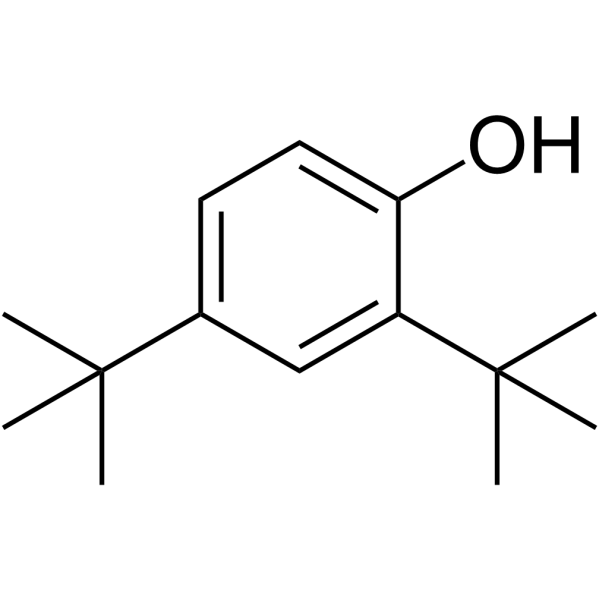
2,4-Di-tert-butylphenol
Based on 2 publication(s) in Google Scholar
2,4-Di-tert-butylphenol (2,4-DTBP) is an orally active RXRα activator and a human estrogen receptor ligand with anti-inflammatory and antioxidant activities, which can induce apoptosis in tumor cells. 2,4-Di-tert-butylphenol can activate the RXRα subtype in LXRα/RXRα, PPARγ/RXRα, and hormone receptor β/RXRα. 2,4-Di-tert-butylphenol also has antiviral and antifungal activities and has the potential to inhibit Aβ-induced neurotoxicity. 2,4-Di-tert-butylphenol can be used as an intermediate in the preparation of antioxidants and UV stabilizers, and is also used in the manufacture of drugs and fragrances.
For research use only. We do not sell to patients.
- Purity : 99.93%
- CAS No.: 96-76-4
- Formula: C14H22O
- Molecular Weight:206.33
-
Storage:Powder -20°C, 3 years , 4°C, 2 years ; In solvent -80°C, 6 months , -20°C, 1 month

To place orders, for customer services and technical support, please contact: MedChemExpress USA
Tel: 609-228-6898 E-mail: [email protected] [email protected]


-
 Biological Activity
-
Chemical Information
-
Solvent & Solubility
- Purity & Documentation
- References
-
 Help & FAQs


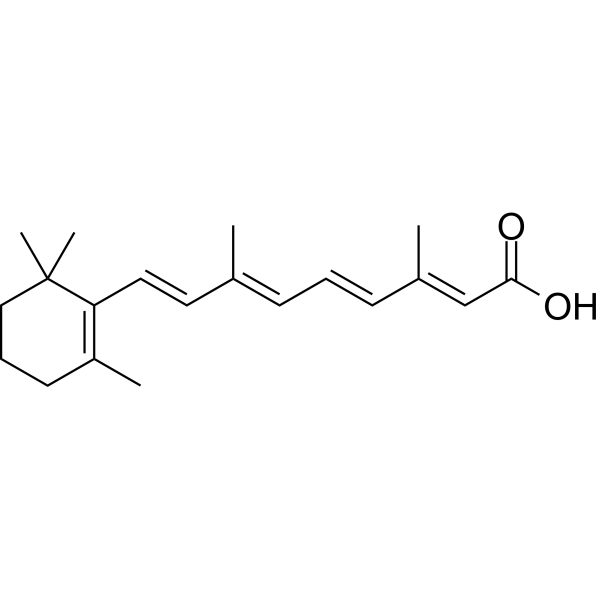

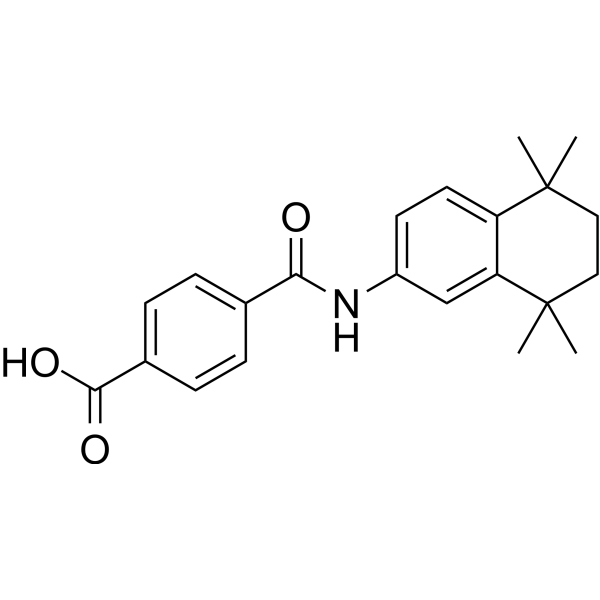
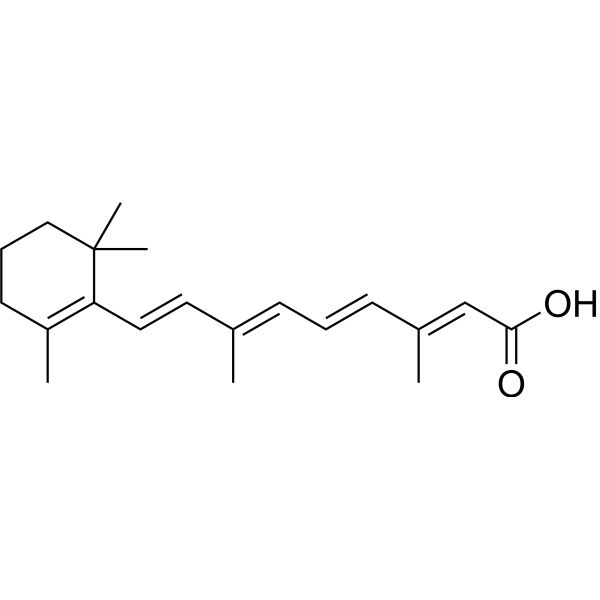
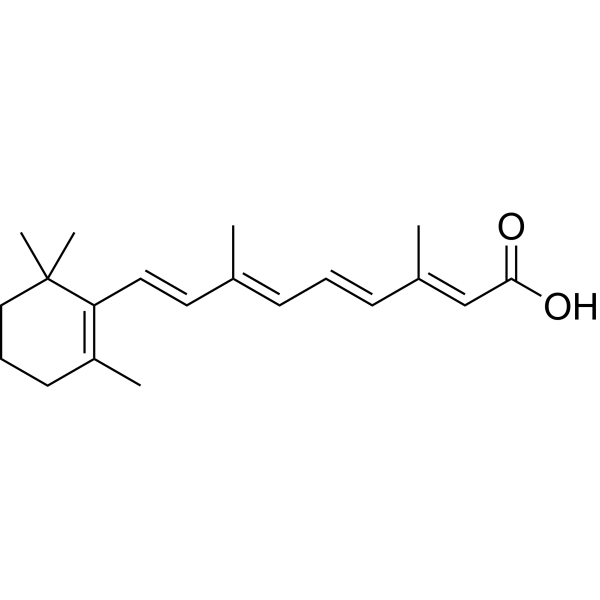
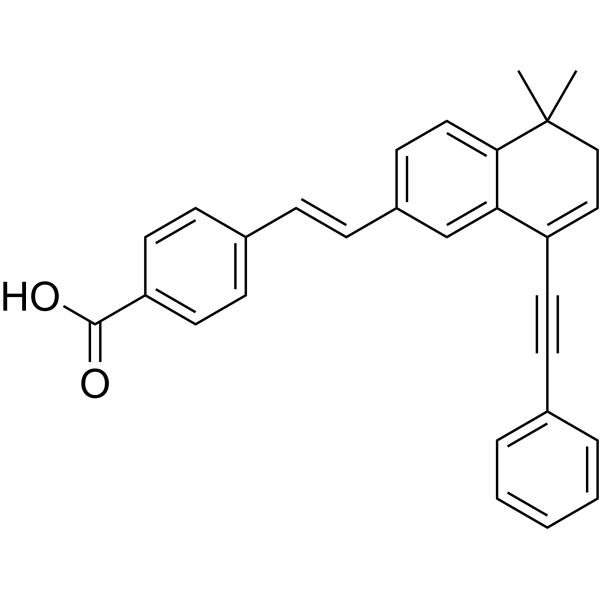
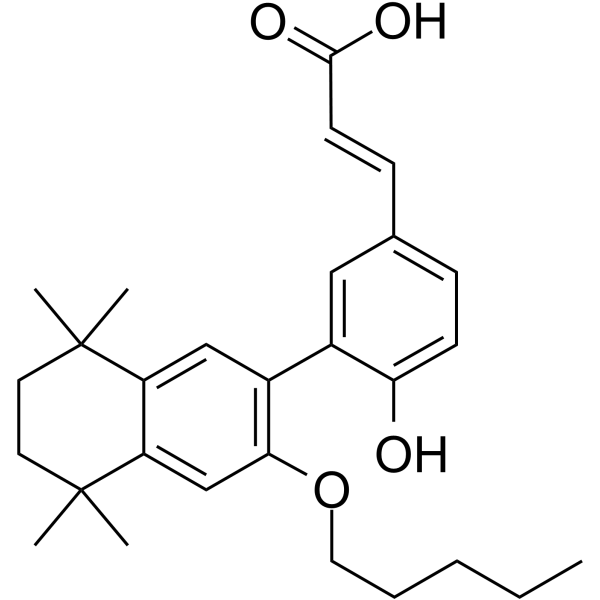
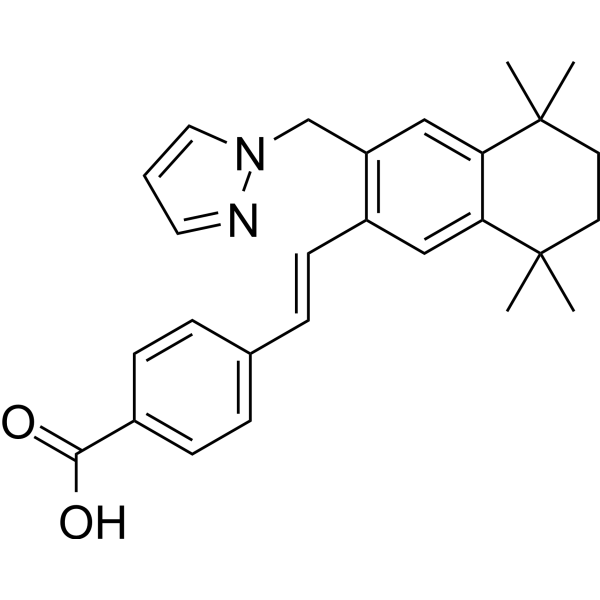
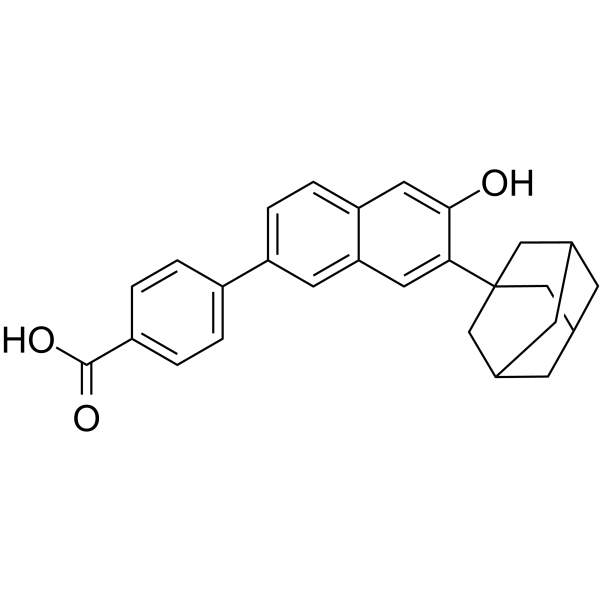
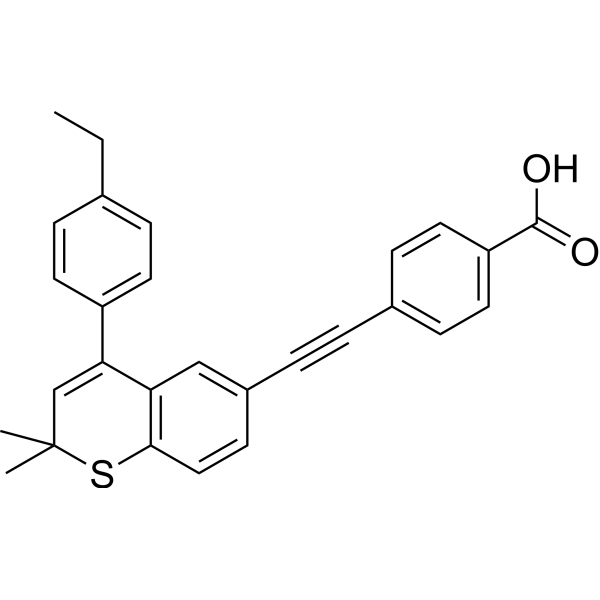
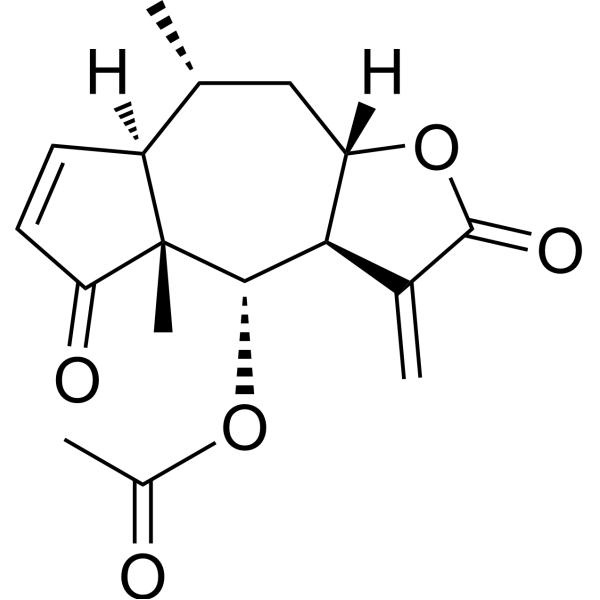
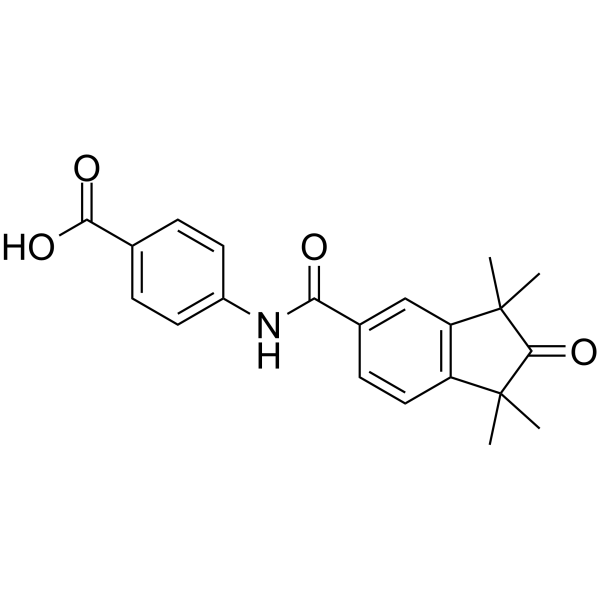
Publications Citing Use of MedChemExpress (MCE) 2,4-Di-tert-butylphenol
MoreAll Endogenous Metabolite Isoforms
More

Biological Activity
Description
IC50 & Target
|
Human Endogenous Metabolite |
RXR α |
In Vitro
2,4-Di-tert-butylphenol (10 μM; 14 d) can increase adipogenesis in human mesenchymal cells, with the same effect as PPARγ agonist (500 nM; 14 d)[2].
2,4-Di-tert-butylphenol (10 μM; 14 d) can also increase adipogenesis that is blocked by PPARγ antagonist T0070907 (HY-13202) (10 μM) or RXRα antagonist HX531 (HY-108521) (1 μM)[2].
2,4-Di-tert-butylphenol can also activate PPARγ and RXRα in human COS-7 cells[2].
MedChemExpress (MCE) has not independently confirmed the accuracy of these methods. They are for reference only.
In Vivo
2,4-Di-tert-butylphenol (5-40 mg/kg/day; po; 28 d) can significantly attenuate Aβ1-24-induced cognitive impairment and exert an anti-amnestic effect[3].
MedChemExpress (MCE) has not independently confirmed the accuracy of these methods. They are for reference only.


Chemical Information
-
CAS No. 96-76-4
-
Appearance Solid
-
Molecular Weight 206.33
-
Formula C14H22O
-
Color White to yellow
-
SMILES
OC1=CC=C(C(C)(C)C)C=C1C(C)(C)C
-
Synonyms
2,4-DTBP
-
Structure Classification
-
Initial Source
-
Shipping
Room temperature in continental US; may vary elsewhere.
-
Storage
Powder -20°C 3 years 4°C 2 years In solvent -80°C 6 months -20°C 1 month


Publications (2)
-
Journal Impact Factor
-
Most Recent
-
Ecotoxicol Environ Saf
Autophagy and PPARs/NF-κB-associated inflammation are involved in hepatotoxicity induced by the synthetic phenolic antioxidant 2,4-di-tert-butylphenol in common carp (Cyprinus carpio). [Abstract]2024 Oct 1:284:116937. PMID: 39226863 -
Int Immunopharmacol
Targeting RXRα inhibits foamy macrophage formation and neuroinflammation by promoting cholesterol efflux channels post traumatic spinal cord injury. [Abstract]2026 Jan 1;168(Pt 2):115945. PMID: 41317538


Solvent & Solubility
In Vitro:
DMSO : 100 mg/mL (484.66 mM; Need ultrasonic; Hygroscopic DMSO has a significant impact on the solubility of product, please use newly opened DMSO)
Please refer to the solubility information to select the appropriate solvent. Once prepared, please aliquot and store the solution to prevent product inactivation from repeated freeze-thaw cycles.
Storage method and period of stock solution: -80°C, 6 months; -20°C, 1 month. When stored at -80°C, please use it within 6 months. When stored at -20°C, please use it within 1 month.
Please refer to the solubility information to select the appropriate solvent. Once prepared, please aliquot and store the solution to prevent product inactivation from repeated freeze-thaw cycles.
Storage method and period of stock solution: -80°C, 6 months; -20°C, 1 month. When stored at -80°C, please use it within 6 months. When stored at -20°C, please use it within 1 month.
Concentration (start) × Volume (start) = Concentration (final) × Volume (final)
In Vivo:
Select the appropriate dissolution method based on your experimental animal and administration route.
- For the following dissolution methods, please ensure to first prepare a clear stock solution using an In Vitro approach and then sequentially add co-solvents:
- To ensure reliable experimental results, the clarified stock solution can be appropriately stored based on storage conditions. As for the working solution for In Vivo experiments, it is recommended to prepare freshly and use it on the same day.
- The percentages shown for the solvents indicate their volumetric ratio in the final prepared solution. If precipitation or phase separation occurs during preparation, heat and/or sonication can be used to aid dissolution.
Add each solvent one by one: 10% DMSO 40% PEG300 5% Tween-80 45% Saline
Solubility: ≥ 2.5 mg/mL (12.12 mM); Clear solution
This protocol yields a clear solution of ≥ 2.5 mg/mL (saturation unknown).
Taking 1 mL working solution as an example, add 100 μL DMSO stock solution (25.0 mg/mL) to 400 μL PEG300, and mix evenly; then add 50 μL Tween-80 and mix evenly; then add 450 μL Saline to adjust the volume to 1 mL.
Preparation of Saline: Dissolve 0.9 g sodium chloride in ddH₂O and dilute to 100 mL to obtain a clear Saline solution.
Add each solvent one by one: 10% DMSO 90% (20% SBE-β-CD in Saline)
Solubility: ≥ 2.5 mg/mL (12.12 mM); Clear solution
This protocol yields a clear solution of ≥ 2.5 mg/mL (saturation unknown).
Taking 1 mL working solution as an example, add 100 μL DMSO stock solution (25.0 mg/mL) to 900 μL 20% SBE-β-CD in Saline, and mix evenly.
Preparation of 20% SBE-β-CD in Saline (4°C, storage for one week): 2 g SBE-β-CD powder is dissolved in 10 mL Saline, completely dissolve until clear.
In Vivo Dissolution Calculator
Please enter the basic information of animal experiments:
-
-
-
-
Recommended: Prepare an additional quantity of animals to account for potential losses during experiments.
Please enter your animal formula composition:
-
%DMSO +
Recommended: Keep the proportion of DMSO in working solution below 2% if your animal is weak.
-
%+
-
+%Tween-80 + +
-
%Saline +
The co-solvents required include: DMSO, . All of co-solvents are available by MedChemExpress (MCE). , Tween 80. All of co-solvents are available by MedChemExpress (MCE).
Working solution concentration: 0.22 mg/mL
Method for preparing stock solution: mg drug dissolved in μL DMSO. Stock solution concentration: mg/mL.
1. Take μL DMSO stock solution;
2. Add μL .
μL , mix evenly;
3. Then add μL Tween 80, mix evenly;
4. Then add μL
Please ensure that the stock solution in the first step is dissolved to a clear state, and add co-solvents in sequence. You can use ultrasonic heating (ultrasonic cleaner, recommended frequency 20-40 kHz), vortexing, etc. to assist dissolution.


Purity & Documentation
-
Data Sheet (286 KB)
-
SDS (620 KB)
- English - EN (620 KB)
- Français - FR (620 KB)
- Deutsch - DE (620 KB)
- Norwegian - NO (620 KB)
- Español - ES (620 KB)
- Swedish - SV (620 KB)
- Italian - IT (620 KB)
- Korean - KR (620 KB)
- Portuguese - PT (620 KB)
-
Handling Instructions (2659 KB)
References
[1]. Zhao F, et al. Natural sources and bioactivities of 2, 4-di-tert-butylphenol and its analogs[J]. Toxins, 2020, 12(1): 35. [Content Brief]
[2]. Ren XM, et al. 2,4-Di-tert-butylphenol Induces Adipogenesis in Human Mesenchymal Stem Cells by Activating Retinoid X Receptors. Endocrinology. 2023 Feb 11;164(4):bqad021. [Content Brief]
[3]. Choi SJ, et al. 2,4-Di-tert-butylphenol from sweet potato protects against oxidative stress in PC12 cells and in mice. J Med Food. 2013 Nov;16(11):977-83. [Content Brief]


Complete Stock Solution Preparation Table
Please refer to the solubility information to select the appropriate solvent. Once prepared, please aliquot and store the solution to prevent product inactivation from repeated freeze-thaw cycles.
Storage method and period of stock solution: -80°C, 6 months; -20°C, 1 month. When stored at -80°C, please use it within 6 months. When stored at -20°C, please use it within 1 month.
| Optional Solvent | Concentration Solvent Mass | 1 mg | 5 mg | 10 mg | 25 mg |
|---|---|---|---|---|---|
| DMSO | 1 mM | 4.8466 mL | 24.2330 mL | 48.4660 mL | 121.1651 mL |
| 5 mM | 0.9693 mL | 4.8466 mL | 9.6932 mL | 24.2330 mL | |
| 10 mM | 0.4847 mL | 2.4233 mL | 4.8466 mL | 12.1165 mL | |
| 15 mM | 0.3231 mL | 1.6155 mL | 3.2311 mL | 8.0777 mL | |
| 20 mM | 0.2423 mL | 1.2117 mL | 2.4233 mL | 6.0583 mL | |
| 25 mM | 0.1939 mL | 0.9693 mL | 1.9386 mL | 4.8466 mL | |
| 30 mM | 0.1616 mL | 0.8078 mL | 1.6155 mL | 4.0388 mL | |
| 40 mM | 0.1212 mL | 0.6058 mL | 1.2117 mL | 3.0291 mL | |
| 50 mM | 0.0969 mL | 0.4847 mL | 0.9693 mL | 2.4233 mL | |
| 60 mM | 0.0808 mL | 0.4039 mL | 0.8078 mL | 2.0194 mL | |
| 80 mM | 0.0606 mL | 0.3029 mL | 0.6058 mL | 1.5146 mL | |
| 100 mM | 0.0485 mL | 0.2423 mL | 0.4847 mL | 1.2117 mL |


2,4-Di-tert-butylphenol Related Classifications
HY-W014589 Related Classifications
 Powered by Bioz