



RXRγ
Retinoid X receptor gamma (RXRγ, NR2B3) is a member of the nuclear receptor superfamily that functions as a ligand-activated transcription factor and an obligate heterodimerization partner for multiple nuclear receptors, including retinoic acid receptors (RARs), thyroid hormone receptors, and vitamin D receptors, thereby enhancing DNA binding and transcriptional regulation of target genes[1][2]. RXRγ is a key component of retinoid signaling pathways that regulate cellular differentiation, metabolism, development, and tissue homeostasis[6][3]. Mechanistically, RXRγ recognizes nuclear receptor response elements through heterodimeric complexes and contributes to transcriptional programs that mediate the biological effects of retinoids and related ligands[1][6]. In experimental models, RXRγ has been implicated in neural and metabolic regulation, as RXRγ-deficient mice display metabolic and behavioral abnormalities, while loss of RXRγ disrupts specific neuronal functions including hippocampal synaptic plasticity and retinal cone photoreceptor patterning[7][4][5]. Disease-associated studies further indicate that RXRG expression is reduced in non-small cell lung cancer and that RXRγ may contribute to tumor-suppressive retinoid responses in selected cancer contexts[1]. Compared with the broadly expressed RXRα and RXRβ isoforms, RXRγ exhibits a more restricted tissue distribution, with prominent expression in brain, skeletal muscle, and cardiac muscle, supporting isoform-specific physiological functions[7]. For experimental applications, RXRγ is pharmacologically targetable by rexinoids and selective RXR ligands, and its role as a common heterodimer partner makes it a useful model for investigating nuclear receptor crosstalk and transcriptional regulation networks[6][7].
References:
- [1]. RXRγ gene information from NCBI.
- [2]. Allenby G, et al. Retinoic acid receptors and retinoid X receptors: interactions with endogenous retinoic acids. Proc Natl Acad Sci U S A. 1993;90(1):30-34. [Content Brief]
- [3]. Dawson MI, et al. The retinoid X receptors and their ligands. Biochim Biophys Acta. 2012 Jan;1821(1):21-56. [Content Brief]
- [4]. Brown NS, et al. Thyroid hormone resistance and increased metabolic rate in the RXR-gamma-deficient mouse. J Clin Invest. 2000 Jul;106(1):73-9. [Content Brief]
- [5]. Chanson M, et al. Enhanced secretion of amylase from exocrine pancreas of connexin32-deficient mice[J]. The Journal of cell biology, 1998, 141(5): 1267-1275. [Content Brief]
- [6]. Szanto A, et al. Retinoid X receptors: X-ploring their (patho)physiological functions. Cell Death Differ. 2004;11 Suppl 2:S126-S143. [Content Brief]
- [7]. Guide to pharmacology. Database.
-
RXRγ Related Products (9)
Related Products (9)

-
F44-A13
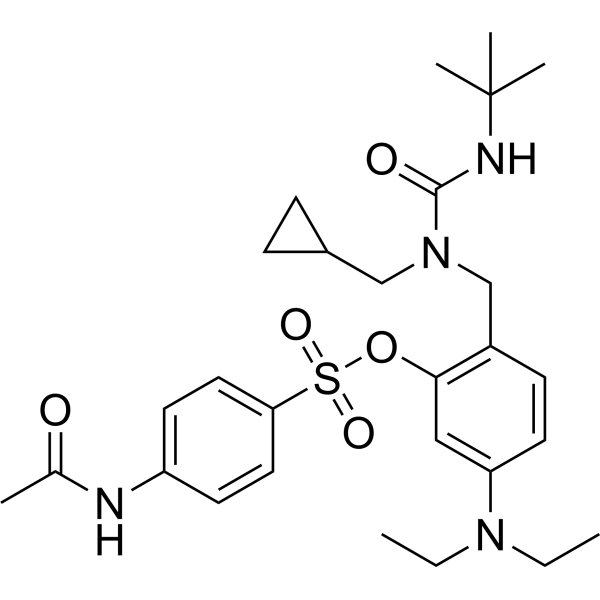 0 ImagesCat. No.: HY-163436CAS No.: 1338190-14-9F44-A13 is an orally active and highly selective farnesoid X receptor (FXR) antagonist with an IC50 value of 1.1 μM. F44-A13 can optimize cholesterol metabolism and reduce its activity by inducing CYP7A1 expression. F44-A13 reduces levels of cholesterol, triglycerides, and low-density lipoprotein cholesterol (LDL-C) in mouse models. F44-A13 can be used in the study of metabolic diseases associated with lipid disorders.
-
HX600
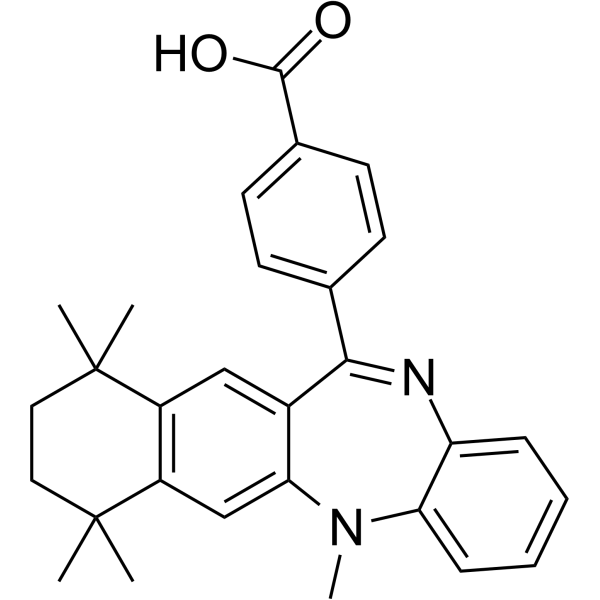 0 ImagesHX600 is a synthetic agonist for RXR (Retinoid X Receptor) heterodimer complex. HX600 prevents ischemia-induced neuronal damage. HX600 has orally bioactivity.
-
BMS270394
 0 ImagesBMS270394 is a nuclear retinoic acid receptor (RAR-γ) agonist with the EC50 values of 30 nM and 400 nM for humanRAR-γ and RAR-β, respectively.
-
RARγ antagonist 1
 0 ImagesCat. No.: HY-186156CAS No.: 859498-19-4RARγ antagonist 1 (Compound in claim 4, P20) is a RARγ antagonist. RARγ antagonist 1 can be used for the researches of inflammation and immunology.
-
AGN 193109 sodium
 0 ImagesCat. No.: HY-U00449ACAS No.: 2319838-82-7AGN 193109 sodium is the sodium salt form of AGN 193109 (HY-U00449). AGN 193109 sodium is the pan antagonist for retinoic acid receptor (RAR), with Kd of 2, 2 and 3 nM, for RARα, RARβ and RARγ, respectively. AGN 193109 sodium reverses TTNPB-induced morphology changes and all-trans retinoic acid (tRA)/9-cis RA/13-cis RA-induced proliferation suppression in ECE16-1 cell. AGN 193109 sodium is the antidote for retinoic acidosis, that ameliorates the skin and mucosal toxicity.
-
WCF-598
 0 ImagesCat. No.: HY-182331CAS No.: 3059574-58-9WCF-598 is a RXRγ (Kd: 234.2 nM) PROTAC degrader. WCF-598 induces RXRγ degradation via the ubiquitin-proteasome pathway and binds directly to RXRγ. WCF-598 indirectly induces AR-V7 degradation, impairs the stability of the RXRγ-AR-V7 complex, downregulates AR-V7 levels, and inhibits the transcription of downstream target genes of AR-V7. WCF-598 induces tumor cell apoptosis, inhibits cell proliferation, activates the p53 signaling pathway, and suppresses cell cycle progression. WCF-598 can be used for the research of prostate cancer.
-
BMS-185354
 0 ImagesCat. No.: HY-173159CAS No.: 110952-22-2BMS-185354 is a selective RARγ activator with an EC50 value of 28 nM. BMS-185354 is promising for research of cancers.
-
RXR agonist 3
 0 ImagesCat. No.: HY-180182RXR agonist 3 (Compound 35) is a potent, partial RXR agonist (EC50s: 3, 3, 8 nM for RXRα, RXRβ, RXRγ, respectively). RXR agonist 3 can be used in the research of Alzheimer's disease, multiple sclerosis, and lymphoma.




