



BMS493
Based on 10 publication(s) in Google Scholar
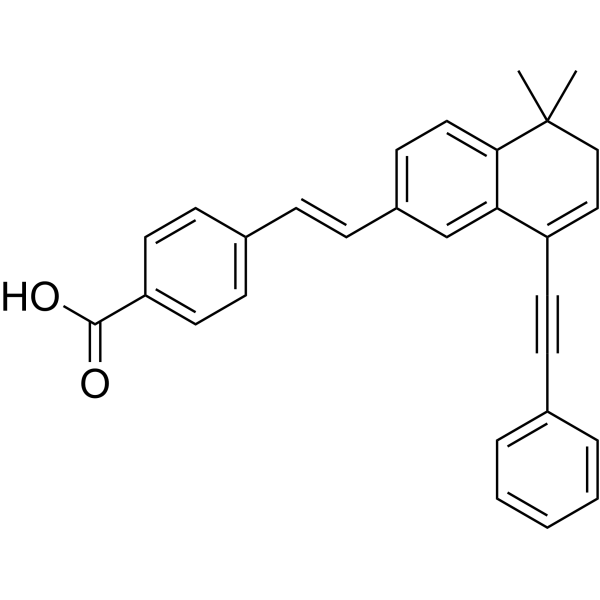
BMS493 is an inverse pan-retinoic acid receptor (RAR) agonist. BMS493 increases nuclear corepressor interaction with RARs. BMS493 also could prevent retinoic acid-induced differentiation. BMS493 is a click chemistry reagent, it contains an Alkyne group and can undergo copper-catalyzed azide-alkyne cycloaddition (CuAAc) with molecules containing Azide groups.
For research use only. We do not sell to patients.
- Purity : 99.44%
- CAS No.: 215030-90-3
- Formula: C29H24O2
- Molecular Weight:404.50
-
Storage:Powder -20°C, 3 years , 4°C, 2 years ; In solvent -80°C, 6 months , -20°C, 1 month

To place orders, for customer services and technical support, please contact: MedChemExpress USA
Tel: 609-228-6898 E-mail: [email protected] [email protected]


-
 Biological Activity
-
Chemical Information
-
Solvent & Solubility
- Protocols
- Purity & Documentation
- References
-
 Help & FAQs


-
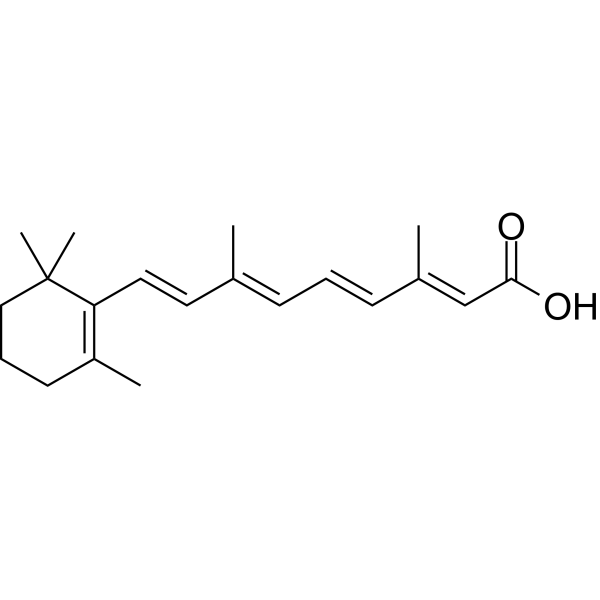
HY-14649
Retinoic acidRAR Agonist -
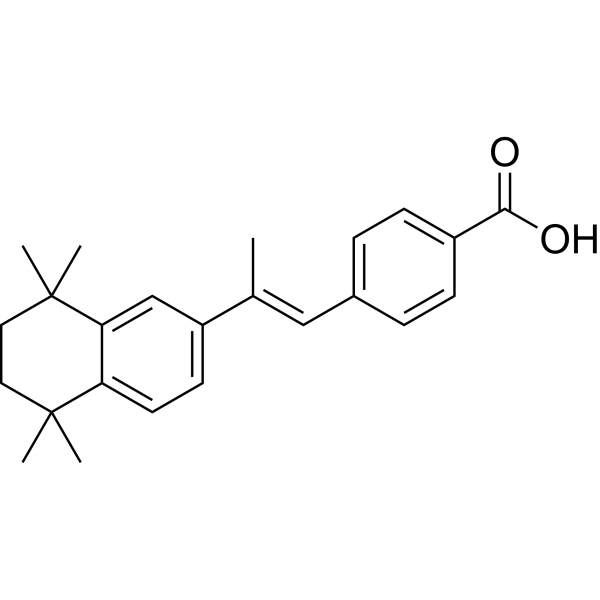
HY-15682
TTNPBApoptosis Inducer -
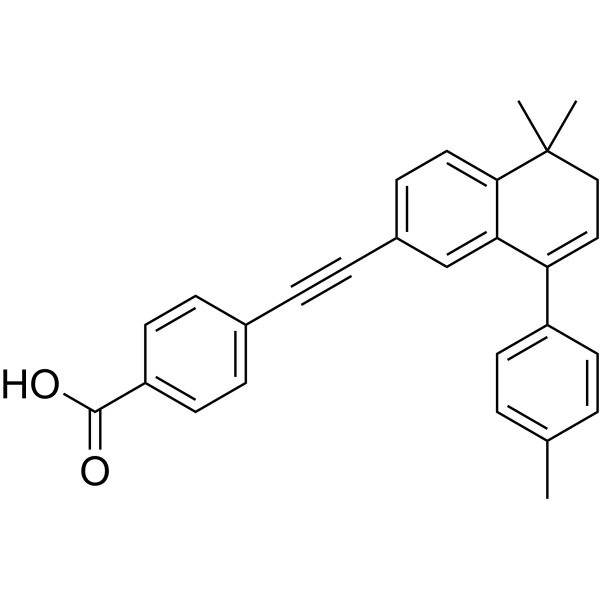
HY-U00449
AGN 193109RAR Antagonist -
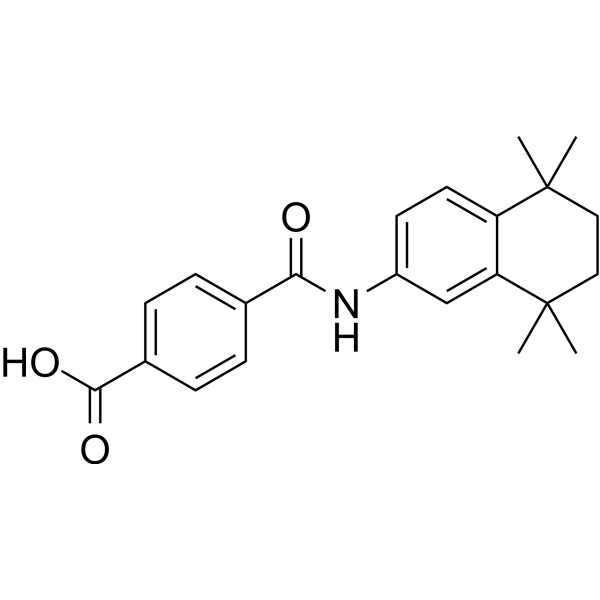
HY-14652
TamibaroteneApoptosis Inducer -
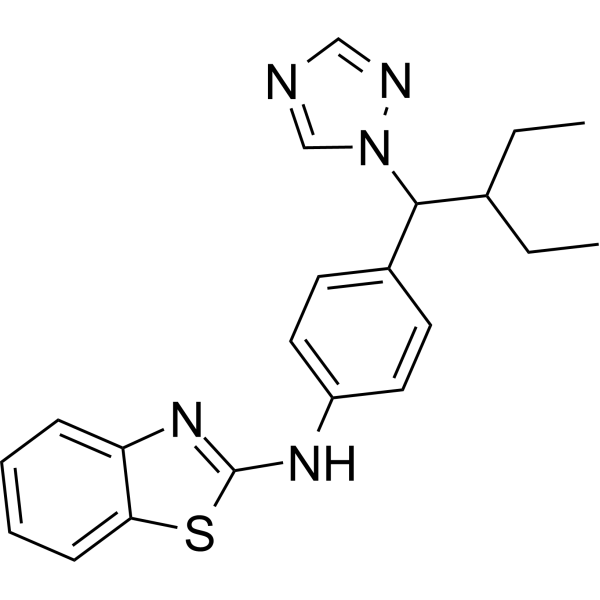
HY-14531
TalarozoleCYP26 Inhibitor/RAMBA -
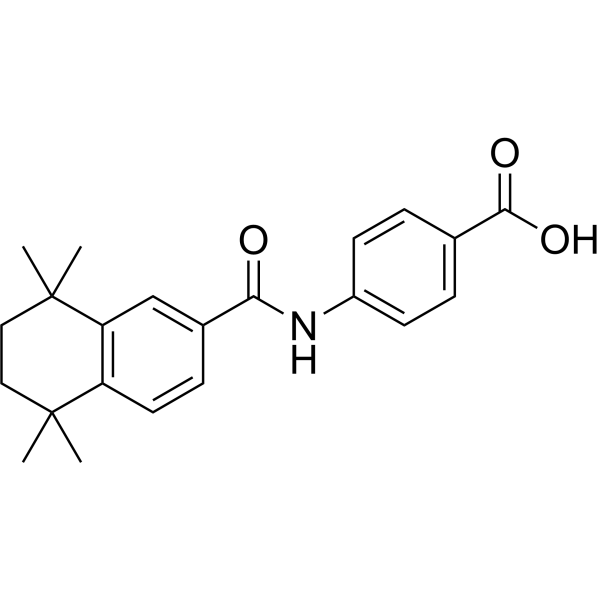
HY-10475
AM580RARα Agonist -
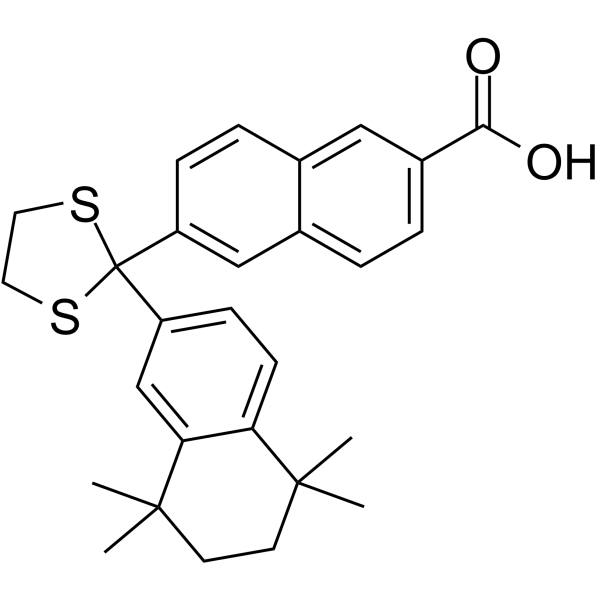
HY-108530
MM11253RARγ Antagonist -
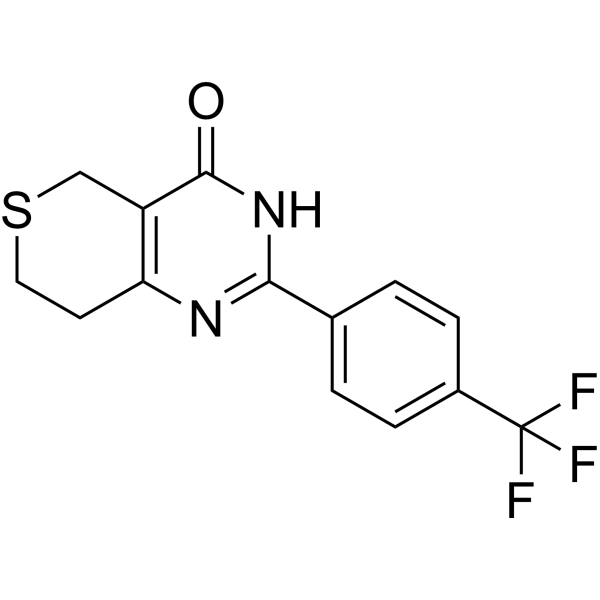
HY-15147
XAV-939Tankyrase Inhibitor -
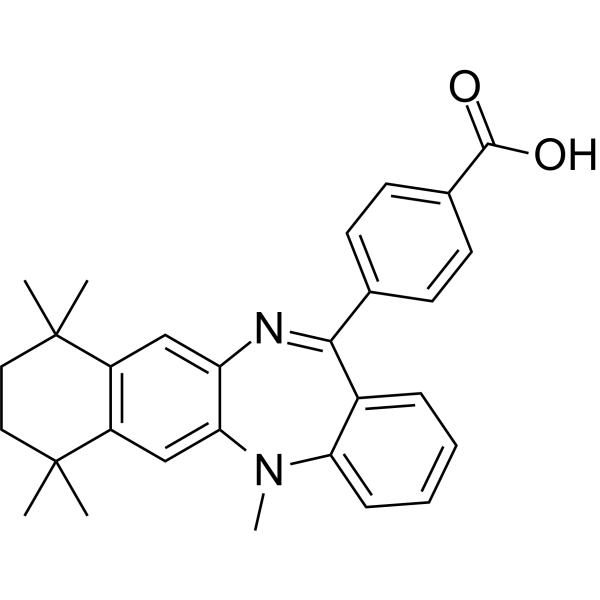
HY-107436
LE135RARβ/RARα Antagonist -
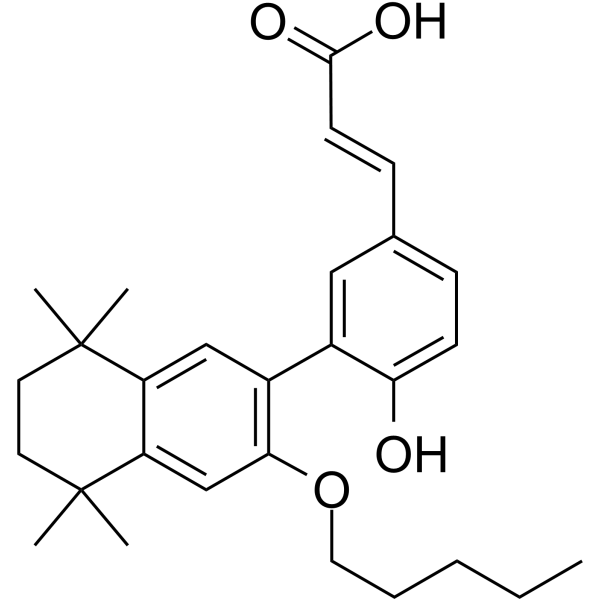
HY-107500
UVI 3003RXR Inhibitor -
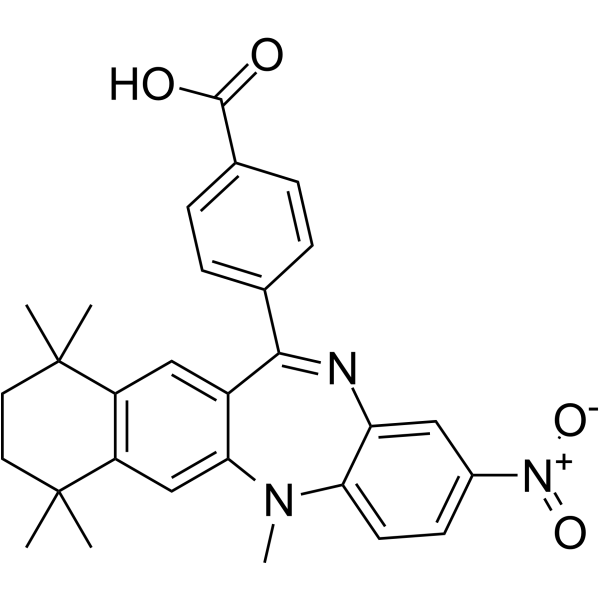
HY-108521
HX531RXR Antagonist -
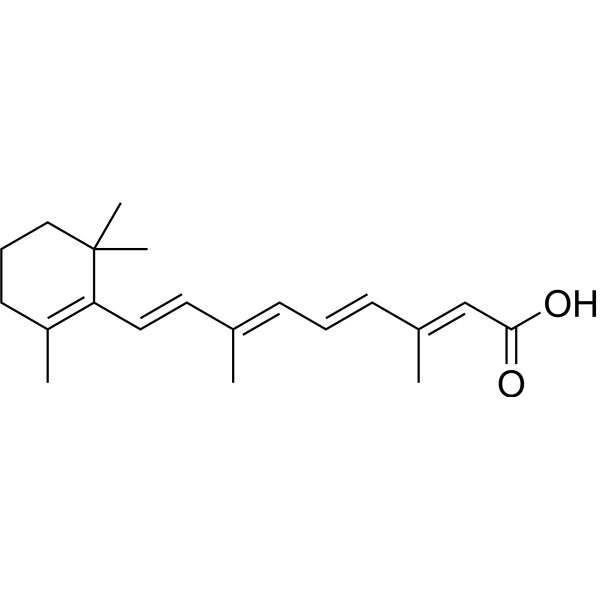
HY-14649R
Retinoic acid (Standard)
Publications Citing Use of MedChemExpress (MCE) BMS493
More- Cell Death Dis. 2022 Sep 29;13(9):838. [Abstract]
- Proc Natl Acad Sci U S A. 2024 Jan 30;121(5):e2316446121. [Abstract]
- Food Res Int. 2026 Oct 31;242(Pt 1):119807.
- Microbiol Res. 2025 Sep:298:128203. [Abstract]
- EMBO J. 2024 Sep;43(18):3895-3915. [Abstract]
- Cell Rep. 2026 Aug 5;45(8):117789.
- Cell Prolif. 2025 Mar;58(3):e13762. [Abstract]
- J Cell Biol. 2026 Jun 1;225(6):e202504054. [Abstract]
- Anim Biotechnol. 2024 May 8;35(1):2351973. [Abstract]
- SSRN. 2026 Jul 16.
 Customer Validation & Images

-
Cell Imaging/Staining
-
IHC


Biological Activity
Description
In Vitro
BMS493 (100 nM; 6 days; ALDHhi UCB cells) treatment shows a twofold increase in the number of ALDHhi cells available for transplantation compared with untreated controls. Newly expanded ALDHhi cells shows increased numbers of CD34 and CD133-positive cells, as well as a reduction in CD38 expression, a marker of hematopoietic cell differentiation[1].
MedChemExpress (MCE) has not independently confirmed the accuracy of these methods. They are for reference only.
-
Cell Line:ALDHhi UCB cells
-
Concentration:100 nM
-
Incubation Time:6 days
-
Result:Showed a twofold increase in the number of ALDHhi cells available for transplantation compared with untreated controls.
In Vivo
MedChemExpress (MCE) has not independently confirmed the accuracy of these methods. They are for reference only.


Chemical Information
-
CAS No. 215030-90-3
-
Appearance Solid
-
Molecular Weight 404.50
-
Formula C29H24O2
-
Color White to light yellow
-
SMILES
O=C(O)C1=CC=C(/C=C/C2=CC=C3C(C)(C)CC=C(C#CC4=CC=CC=C4)C3=C2)C=C1
-
Shipping
Room temperature in continental US; may vary elsewhere.
-
Storage
Powder -20°C 3 years 4°C 2 years In solvent -80°C 6 months -20°C 1 month


Publications (10)
-
Journal Impact Factor
-
Most Recent
-
Cell Death Dis
Retinoic acid and RARγ maintain satellite cell quiescence through regulation of translation initiation. [Abstract]2022 Sep 29;13(9):838. PMID: 36175396
BMS493 purchased from MedChemExpress. Usage Cited in: Cell Death Dis. 2022 Sep 29;13(9):838. [Abstract]
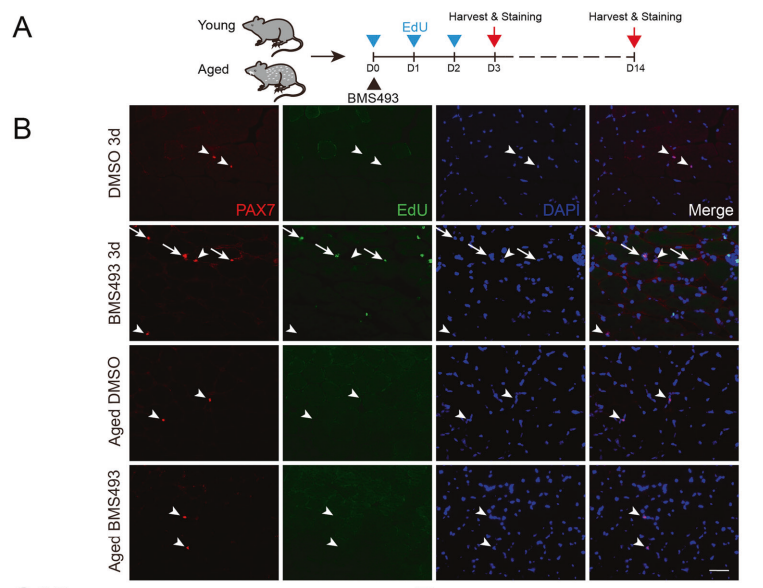
EdU and BMS493 (50 μl of 5 mM BMS493 ) were injected as described in A, and cryosections of the TA muscle from young and aged mice on D3 were stained for PAX7 and EdU. Arrows represent EdU+/PAX7+ cells; arrowheads represent EdU-/PAX7+ cells.
-
Proc Natl Acad Sci U S A
2024 Jan 30;121(5):e2316446121. PMID: 38271336 -
-
Microbiol Res
Clostridium butyricum-induced balance in colonic retinol metabolism and short-chain fatty acid levels inhibit IgA-related mucosal immunity and relieve colitis developments. [Abstract]2025 Sep:298:128203. PMID: 40319662 -
EMBO J
Non-canonical NF-κB signaling limits the tolerogenic β-catenin-Raldh2 axis in gut dendritic cells to exacerbate intestinal pathologies. [Abstract]2024 Sep;43(18):3895-3915. PMID: 39060515 -
-
Cell Prolif
Modelling myocardial ischemia/reperfusion injury with inflammatory response in human ventricular cardiac organoids. [Abstract]2025 Mar;58(3):e13762. PMID: 39377453
BMS493 purchased from MedChemExpress. Usage Cited in: Cell Prolif. 2025 Mar;58(3):e13762. [Abstract]
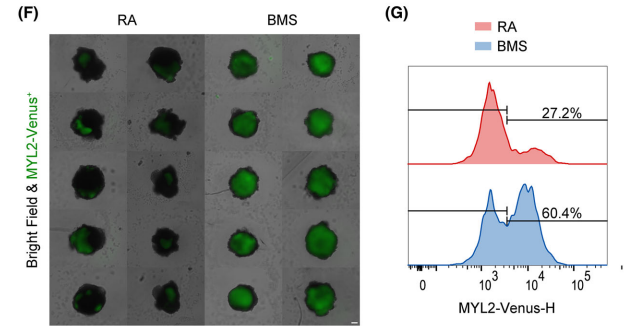
(F) Fluorescence microscopy images of MYL2-Venus hESCs reporter line-constructed RA and BMS493 (0.5 μM) treated groups on Day 21. Scale bar, 200 μm. (G) Histogram of flow cytometry analysis for MYL2-Venus hESCs reporter line-constructed RA and BMS493 (0.5 μM) treated groups on Day 21.
-
J Cell Biol
Bistable Otx2-Id1 circuitry governs a developmental transition state in the pluripotency continuum. [Abstract]2026 Jun 1;225(6):e202504054. PMID: 41995726 -
Anim Biotechnol
Retinoic acid signalling inhibits myogenesis by blocking MYOD translation in pig skeletal muscle cells. [Abstract]2024 May 8;35(1):2351973. PMID: 38753962 -


Solvent & Solubility
In Vitro:
DMSO : 50 mg/mL (123.61 mM; Need ultrasonic; Hygroscopic DMSO has a significant impact on the solubility of product, please use newly opened DMSO)
Please refer to the solubility information to select the appropriate solvent. Once prepared, please aliquot and store the solution to prevent product inactivation from repeated freeze-thaw cycles.
Storage method and period of stock solution: -80°C, 6 months; -20°C, 1 month. When stored at -80°C, please use it within 6 months. When stored at -20°C, please use it within 1 month.
Please refer to the solubility information to select the appropriate solvent. Once prepared, please aliquot and store the solution to prevent product inactivation from repeated freeze-thaw cycles.
Storage method and period of stock solution: -80°C, 6 months; -20°C, 1 month. When stored at -80°C, please use it within 6 months. When stored at -20°C, please use it within 1 month.
Concentration (start) × Volume (start) = Concentration (final) × Volume (final)
In Vivo:
Select the appropriate dissolution method based on your experimental animal and administration route.
- For the following dissolution methods, please ensure to first prepare a clear stock solution using an In Vitro approach and then sequentially add co-solvents:
- To ensure reliable experimental results, the clarified stock solution can be appropriately stored based on storage conditions. As for the working solution for In Vivo experiments, it is recommended to prepare freshly and use it on the same day.
- The percentages shown for the solvents indicate their volumetric ratio in the final prepared solution. If precipitation or phase separation occurs during preparation, heat and/or sonication can be used to aid dissolution.
Add each solvent one by one: 10% DMSO 40% PEG300 5% Tween-80 45% Saline
Solubility: 2.08 mg/mL (5.14 mM); Suspended solution; Need ultrasonic
This protocol yields a suspended solution of 2.08 mg/mL. Suspended solution can be used for oral and intraperitoneal injection.
Taking 1 mL working solution as an example, add 100 μL DMSO stock solution (20.8 mg/mL) to 400 μL PEG300, and mix evenly; then add 50 μL Tween-80 and mix evenly; then add 450 μL Saline to adjust the volume to 1 mL.
Preparation of Saline: Dissolve 0.9 g sodium chloride in ddH₂O and dilute to 100 mL to obtain a clear Saline solution.
Add each solvent one by one: 10% DMSO 90% (20% SBE-β-CD in Saline)
Solubility: 2.08 mg/mL (5.14 mM); Suspended solution; Need ultrasonic
This protocol yields a suspended solution of 2.08 mg/mL. Suspended solution can be used for oral and intraperitoneal injection.
Taking 1 mL working solution as an example, add 100 μL DMSO stock solution (20.8 mg/mL) to 900 μL 20% SBE-β-CD in Saline, and mix evenly.
Preparation of 20% SBE-β-CD in Saline (4°C, storage for one week): 2 g SBE-β-CD powder is dissolved in 10 mL Saline, completely dissolve until clear.
In Vivo Dissolution Calculator
Please enter the basic information of animal experiments:
-
-
-
-
Recommended: Prepare an additional quantity of animals to account for potential losses during experiments.
Please enter your animal formula composition:
-
%DMSO +
Recommended: Keep the proportion of DMSO in working solution below 2% if your animal is weak.
-
%+
-
+%Tween-80 + +
-
%Saline +
The co-solvents required include: DMSO, . All of co-solvents are available by MedChemExpress (MCE). , Tween 80. All of co-solvents are available by MedChemExpress (MCE).
Working solution concentration: 0.22 mg/mL
Method for preparing stock solution: mg drug dissolved in μL DMSO. Stock solution concentration: mg/mL.
1. Take μL DMSO stock solution;
2. Add μL .
μL , mix evenly;
3. Then add μL Tween 80, mix evenly;
4. Then add μL
Please ensure that the stock solution in the first step is dissolved to a clear state, and add co-solvents in sequence. You can use ultrasonic heating (ultrasonic cleaner, recommended frequency 20-40 kHz), vortexing, etc. to assist dissolution.


Purity & Documentation
-
Data Sheet (276 KB)
-
SDS (254 KB)
- English - EN (254 KB)
- Français - FR (254 KB)
- Deutsch - DE (254 KB)
- Norwegian - NO (254 KB)
- Español - ES (254 KB)
- Swedish - SV (254 KB)
- Italian - IT (254 KB)
- Korean - KR (254 KB)
- Portuguese - PT (254 KB)
-
Handling Instructions (2659 KB)
References
[1]. Elgamal RM, et al. BMS 493 Modulates Retinoic Acid-Induced Differentiation During Expansion of Human Hematopoietic Progenitor Cells for Islet Regeneration. Stem Cells Dev. 2018 Aug 1;27(15):1062-1075. [Content Brief]
[2]. Yu Z, et al. Apoptosis induced by atRA in MEPM cells is mediated through activation of caspase and RAR. Toxicol Sci. 2006 Feb;89(2):504-9. [Content Brief]


Complete Stock Solution Preparation Table
Please refer to the solubility information to select the appropriate solvent. Once prepared, please aliquot and store the solution to prevent product inactivation from repeated freeze-thaw cycles.
Storage method and period of stock solution: -80°C, 6 months; -20°C, 1 month. When stored at -80°C, please use it within 6 months. When stored at -20°C, please use it within 1 month.
| Optional Solvent | Concentration Solvent Mass | 1 mg | 5 mg | 10 mg | 25 mg |
|---|---|---|---|---|---|
| DMSO | 1 mM | 2.4722 mL | 12.3609 mL | 24.7219 mL | 61.8047 mL |
| 5 mM | 0.4944 mL | 2.4722 mL | 4.9444 mL | 12.3609 mL | |
| 10 mM | 0.2472 mL | 1.2361 mL | 2.4722 mL | 6.1805 mL | |
| 15 mM | 0.1648 mL | 0.8241 mL | 1.6481 mL | 4.1203 mL | |
| 20 mM | 0.1236 mL | 0.6180 mL | 1.2361 mL | 3.0902 mL | |
| 25 mM | 0.0989 mL | 0.4944 mL | 0.9889 mL | 2.4722 mL | |
| 30 mM | 0.0824 mL | 0.4120 mL | 0.8241 mL | 2.0602 mL | |
| 40 mM | 0.0618 mL | 0.3090 mL | 0.6180 mL | 1.5451 mL | |
| 50 mM | 0.0494 mL | 0.2472 mL | 0.4944 mL | 1.2361 mL | |
| 60 mM | 0.0412 mL | 0.2060 mL | 0.4120 mL | 1.0301 mL | |
| 80 mM | 0.0309 mL | 0.1545 mL | 0.3090 mL | 0.7726 mL | |
| 100 mM | 0.0247 mL | 0.1236 mL | 0.2472 mL | 0.6180 mL |


BMS493 Related Classifications
HY-108529 Related Classifications
 Powered by Bioz