



(-)-(E)-Guggulsterone

Based on 1 Customer Validation
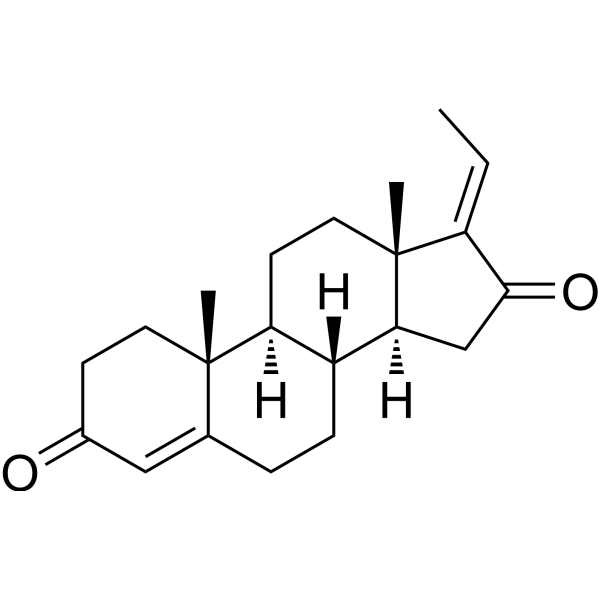
(-)-(E)-Guggulsterone ((E)-Guggulsterone) is an orally active natural stereoisomer of Guggulsterone (HY-107738). (-)-(E)-Guggulsterone is an antagonist for the Farnesoid X Receptor (FXR) with an IC50 of 24.06 μM and possesses potent hypolipidemic properties. (-)-(E)-Guggulsterone suppresses dengue virus (DENV) replication by upregulating antiviral interferon responses by inducing HO-1 expression via Nrf2 activation. (-)-(E)-Guggulsterone exhibits antibacterial activities against Bacillus subtilis, Staphylococcus aureus and Pseudomonas aeruginosa. (-)-(E)-Guggulsterone has cardiac protective and antioxidant activities in rats.
For research use only. We do not sell to patients.
- Purity : 99.19%
- CAS No.: 39025-24-6
- Formula: C21H28O2
- Molecular Weight:312.45
-
Storage:Powder -20°C, 3 years , 4°C, 2 years ; In solvent -80°C, 6 months , -20°C, 1 month

To place orders, for customer services and technical support, please contact: MedChemExpress USA
Tel: 609-228-6898 E-mail: [email protected] [email protected]


-
 Biological Activity
-
Chemical Information
-
Solvent & Solubility
- Protocols
- Purity & Documentation
- References
-
 Help & FAQs


-
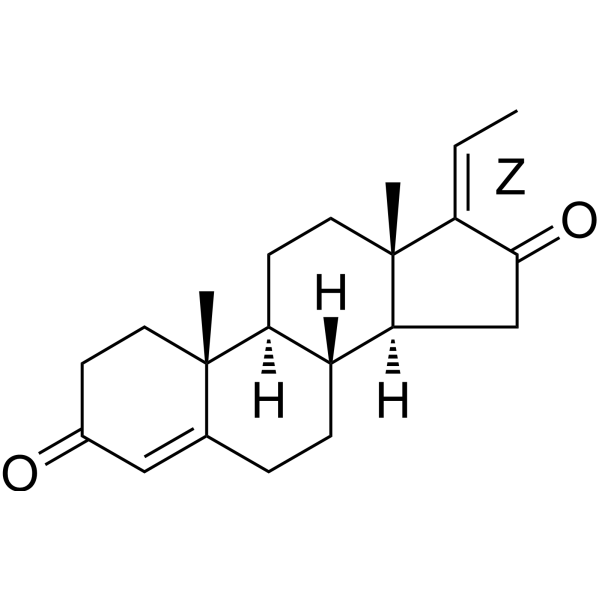
HY-110066
(Z)-GuggulsteroneApoptosis Inducer -
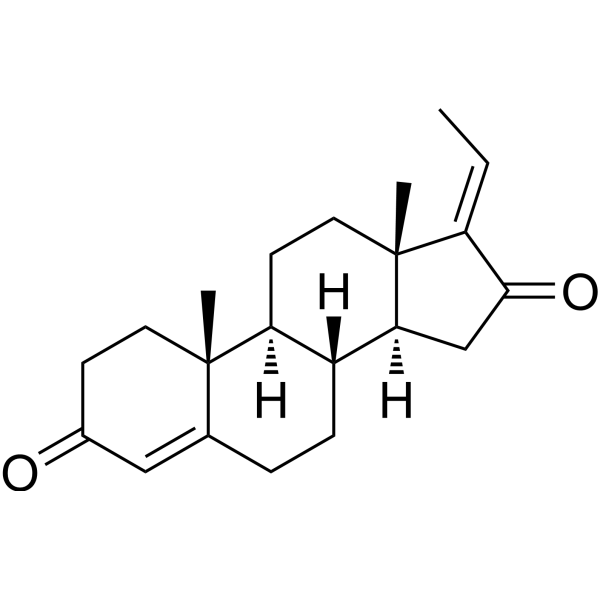
HY-N7781R
(-)-(E)-Guggulsterone (Standard)Analytical Standard -
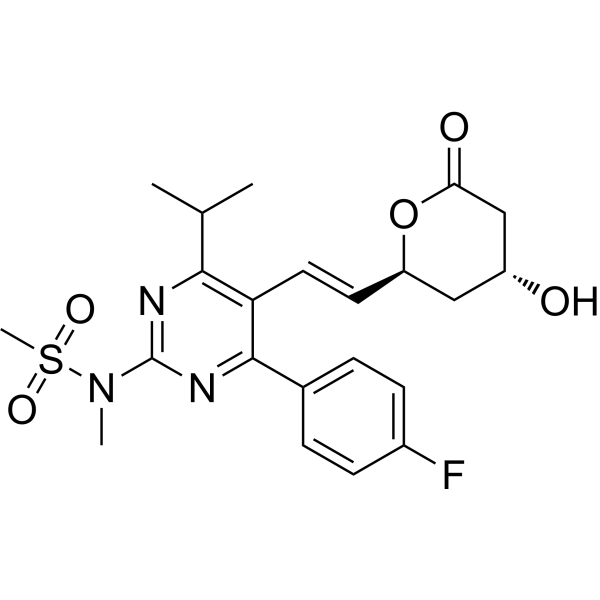
HY-138166
Rosuvastatin lactoneRosuvastatin Metabolite -
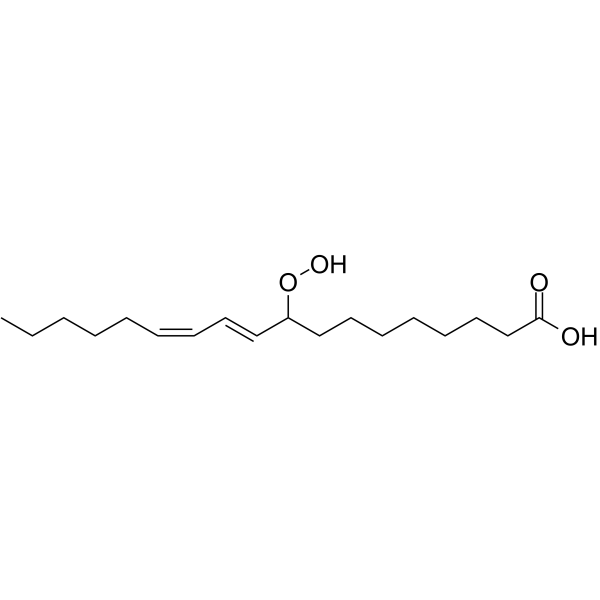
HY-118149A
(±)9-HpODEAntibacterial Agent -

HY-149507
1,3-Capryloyl-2-oleoylglycerolTriglyceride -

HY-138166R
Rosuvastatin lactone (Standard)Standard of Rosuvastatin lactone


Biological Activity
Description
|
ERα |
CYP2C19 2.1 μM (IC50) |
CYP2C9 19 μM (IC50) |
HO-1 |
Cellular Effect
|
Cell Line

|
Type | Value | Description | References |
|---|---|---|---|---|
| CV-1 | IC50 |
4.1 μM
Compound: E-guggulsterone
|
Antagonist activity at human FXR expressed in monkey CV1 cells after 24 hrs by ecdysone receptor response element-driven luciferase reporter assay
Antagonist activity at human FXR expressed in monkey CV1 cells after 24 hrs by ecdysone receptor response element-driven luciferase reporter assay
|
[PMID: 17988093] |
| CV-1 | IC50 |
44 μM
Compound: (E)-guggulsterone
|
Antagonist activity at human FXR expressed in CV-1 cells assessed as inhibition of CDCA-induced transactivation after 24 hrs by luciferase reporter gene assay
Antagonist activity at human FXR expressed in CV-1 cells assessed as inhibition of CDCA-induced transactivation after 24 hrs by luciferase reporter gene assay
|
[PMID: 21142112] |
| HEK293 | IC50 |
41 μM
Compound: E-guggulsterone
|
Antagonist activity at human FXR expressed in HEK293 cells assessed as inhibition of GW4064-induced transactivation after 24 hrs by luciferase reporter gene assay
Antagonist activity at human FXR expressed in HEK293 cells assessed as inhibition of GW4064-induced transactivation after 24 hrs by luciferase reporter gene assay
|
[PMID: 26821210] |
| PANC-1 | IC50 |
>100 μM
Compound: E-GS
|
Cytotoxicity against human PANC1 cells incubated in normal DMEM medium
Cytotoxicity against human PANC1 cells incubated in normal DMEM medium
|
[PMID: 32057581] |
In Vitro
(-)-(E)-Guggulsterone (5-25 μM, 0-12 h) induces activation of Nrf2 signaling and the subsequent HO-1 expression and the modest increase in the intracellular accumulation of ROS in human mammary epithelial MCF10A cells[1].
(-)-(E)-Guggulsterone (0-20 μM, 3 days) exerts potent anti-DENV activity through a unique mechanism involving Nrf2/HO-1 pathway activation and restoration of antiviral interferon responses in Huh-7 cells[2].
(-)-(E)-Guggulsterone (3.2 mM, 24 h) exhibits antibacterial activities against Bacillus subtilis, Staphylococcus aureus and Pseudomonas aeruginosa with inhibition zones of 14 mm, 14 mm and 11 mm[3].
(-)-(E)-Guggulsterone (1-20 μM) activates ERα, but does not activate the ERα isoform and induces the expression of Cyp3a11 and CYP3A4 in mouse hepatocytes and human hepatocytes[4].
(-)-(E)-Guggulsterone (5-20 μM) inhibits the Cu2+ mediated lipid peroxidation of LDL and the formation of oxygen free radicals in concentration dependent manner, in both enzymic and non-enzymic systems makes microsomes less susceptible against oxidative degradation of their lipids[6].
(-)-(E)-Guggulsterone exhibits plasma protein binding in human, monkey, rabbit and rat plasma was greater than 96% and promotes oxidative metabolism in liver microsomes[7].
(-)-(E)-Guggulsterone exhibits inhibition against CYP2C19, CYP2C8, CYP2C9 and CYP2B6 with IC50s of 2.1, 6.0, 19 and 22 μM, and week inhibition against CYP1A2, CYP2A6, CYP2D6, CYP2E1 and CYP3A4 with IC50s all > 50 μM[7].
MedChemExpress (MCE) has not independently confirmed the accuracy of these methods. They are for reference only.
-
Cell Line:MCF10A cells
-
Concentration:25 μM
-
Incubation Time:0, 1, 3, 6, 9, 12 h
-
Result:Induced the messenger RNA transcript of HO-1 in a time-dependent manner.
-
Cell Line:MCF10A cells
-
Concentration:5, 10, 25 μM
-
Incubation Time:6 h
-
Result:Confirmed the increased nuclear localization of Nrf2.
-
Cell Line:MCF10A cells
-
Concentration:5, 10, 25 μM
-
Incubation Time:0, 1, 3, 6, 9, 12 h
-
Result:Increased HO-1 expression in a concentration- and time-dependent manner.
Showed significantly greater potency than Z-guggulsterone at all concentrations.
Increased the nuclear translocation of Nrf2 in 1 h.
Dose- and time-dependently increased Nrf2-ARE binding.
-
Cell Line:Huh-7 cells
-
Concentration:0, 2.5, 5, 10 and 20 μM
-
Incubation Time:3 days after infection
-
Result:Decreased the mRNA level of DENV and increased the mRNA level of HO-1.
Increased IFN-α2, IFN-α5 and IFN-α17.
-
Cell Line:Huh-7 cells
-
Concentration:0, 2.5, 5, 10 and 20 μM
-
Incubation Time:3 days after infection
-
Result:Dose-dependently induced HO-1 protein.
Increased cytoplasmic Nrf2 expression.
Dose-dependently inhibited NS2B/NS3 protease.
Parmacokinetics
In Vivo
(-)-(E)-Guggulsterone (50 mg/kg, p.o., once daily for five days) significantly reverses the biochemical parameters in serum and hearts in myocardial ischemia rats model[6].
MedChemExpress (MCE) has not independently confirmed the accuracy of these methods. They are for reference only.
-
Animal Model:Anti-DENV Activity model established in six-day-old ICR suckling mice[2]
-
Dosage:5 and 10 mg/kg
-
Administration:Intraperitoneal injection (i.p.), at 1, 3, and, 5 days post-infection
-
Result:Reached 60% survival rate in the 10 mg/kg.
Decreased the viral load in the brain by 10 times.
Maintained weight.
Increased the expression of HO-1 and IFN-α in the brain.
-
Animal Model:Myocardial ischemia model established in male Chades Foster rats, each animal weighing 200-225g[6]
-
Dosage:50 mg/kg
-
Administration:Oral administration (p.o.), once daily for five days
-
Result:Reduced CPK (creatine phosphokinase) and transaminases (GOT/GPT).
Restored the activity of Ca-ATPase and glycogen levels, and reduced phospholipase and lipid peroxides.


Chemical Information
-
CAS No. 39025-24-6
-
Appearance Solid
-
Molecular Weight 312.45
-
Formula C21H28O2
-
Color White to off-white
-
SMILES
C/C=C1C(C[C@@]2([H])[C@]3([H])CCC4=CC(CC[C@]4(C)[C@@]3([H])CC[C@]/12C)=O)=O
-
Synonyms
(E)-Guggulsterone
-
Structure Classification
-
Initial Source
-
Shipping
Room temperature in continental US; may vary elsewhere.
-
Storage
Powder -20°C 3 years 4°C 2 years In solvent -80°C 6 months -20°C 1 month


Solvent & Solubility
In Vitro:
DMSO : 25 mg/mL (80.01 mM; ultrasonic and warming and heat to 60°C; Hygroscopic DMSO has a significant impact on the solubility of product, please use newly opened DMSO)
Please refer to the solubility information to select the appropriate solvent. Once prepared, please aliquot and store the solution to prevent product inactivation from repeated freeze-thaw cycles.
Storage method and period of stock solution: -80°C, 6 months; -20°C, 1 month. When stored at -80°C, please use it within 6 months. When stored at -20°C, please use it within 1 month.
Please refer to the solubility information to select the appropriate solvent. Once prepared, please aliquot and store the solution to prevent product inactivation from repeated freeze-thaw cycles.
Storage method and period of stock solution: -80°C, 6 months; -20°C, 1 month. When stored at -80°C, please use it within 6 months. When stored at -20°C, please use it within 1 month.
Concentration (start) × Volume (start) = Concentration (final) × Volume (final)
In Vivo:
Select the appropriate dissolution method based on your experimental animal and administration route.
- For the following dissolution methods, please ensure to first prepare a clear stock solution using an In Vitro approach and then sequentially add co-solvents:
- To ensure reliable experimental results, the clarified stock solution can be appropriately stored based on storage conditions. As for the working solution for In Vivo experiments, it is recommended to prepare freshly and use it on the same day.
- The percentages shown for the solvents indicate their volumetric ratio in the final prepared solution. If precipitation or phase separation occurs during preparation, heat and/or sonication can be used to aid dissolution.
In Vivo Dissolution Calculator
Please enter the basic information of animal experiments:
-
-
-
-
Recommended: Prepare an additional quantity of animals to account for potential losses during experiments.
Please enter your animal formula composition:
-
%DMSO +
Recommended: Keep the proportion of DMSO in working solution below 2% if your animal is weak.
-
%+
-
+%Tween-80 + +
-
%Saline +
The co-solvents required include: DMSO, . All of co-solvents are available by MedChemExpress (MCE). , Tween 80. All of co-solvents are available by MedChemExpress (MCE).
Working solution concentration: 0.22 mg/mL
Method for preparing stock solution: mg drug dissolved in μL DMSO. Stock solution concentration: mg/mL.
1. Take μL DMSO stock solution;
2. Add μL .
μL , mix evenly;
3. Then add μL Tween 80, mix evenly;
4. Then add μL
Please ensure that the stock solution in the first step is dissolved to a clear state, and add co-solvents in sequence. You can use ultrasonic heating (ultrasonic cleaner, recommended frequency 20-40 kHz), vortexing, etc. to assist dissolution.


Purity & Documentation
-
Data Sheet (286 KB)
-
SDS (393 KB)
- English - EN (393 KB)
- Français - FR (393 KB)
- Deutsch - DE (393 KB)
- Norwegian - NO (393 KB)
- Español - ES (393 KB)
- Swedish - SV (393 KB)
- Italian - IT (393 KB)
- Korean - KR (393 KB)
- Portuguese - PT (393 KB)
-
Handling Instructions (2659 KB)
References
[1]. Almazari I, et al. Guggulsterone induces heme oxygenase-1 expression through activation of Nrf2 in human mammary epithelial cells: PTEN as a putative target. Carcinogenesis. 2012 Feb;33(2):368-76. [Content Brief]
[2]. Chen WC, et al. (E)-Guggulsterone Inhibits Dengue Virus Replication by Upregulating Antiviral Interferon Responses through the Induction of Heme Oxygenase-1 Expression. Viruses. 2021 Apr 20;13(4):712. [Content Brief]
[3]. Choudhary MI, et al. Fungal metabolites of (E)-guggulsterone and their antibacterial and radical-scavenging activities. Chem Biodivers. 2005 Apr;2(4):516-24. [Content Brief]
[4]. Brobst DE, et al. Guggulsterone activates multiple nuclear receptors and induces CYP3A gene expression through the pregnane X receptor. J Pharmacol Exp Ther. 2004 Aug;310(2):528-35. [Content Brief]
[6]. Chander R, et al. Cardioprotective activity of synthetic guggulsterone (E and Z-isomers) in isoproterenol induced myocardial ischemia in rats: A comparative study. Indian J Clin Biochem. 2003 Jul;18(2):71-9. [Content Brief]
[7]. Chhonker YS, et al. In-vitro metabolism, CYP profiling and metabolite identification of E- and Z- guggulsterone, a potent hypolipidmic agent. J Pharm Biomed Anal. 2018 Oct 25;160:202-211. [Content Brief]
[8]. Hsu CW, et al. Quantitative high-throughput profiling of environmental chemicals and drugs that modulate farnesoid X receptor. Sci Rep. 2014 Sep 26;4:6437. [Content Brief]


Complete Stock Solution Preparation Table
Please refer to the solubility information to select the appropriate solvent. Once prepared, please aliquot and store the solution to prevent product inactivation from repeated freeze-thaw cycles.
Storage method and period of stock solution: -80°C, 6 months; -20°C, 1 month. When stored at -80°C, please use it within 6 months. When stored at -20°C, please use it within 1 month.
| Optional Solvent | Concentration Solvent Mass | 1 mg | 5 mg | 10 mg | 25 mg |
|---|---|---|---|---|---|
| DMSO | 1 mM | 3.2005 mL | 16.0026 mL | 32.0051 mL | 80.0128 mL |
| 5 mM | 0.6401 mL | 3.2005 mL | 6.4010 mL | 16.0026 mL | |
| 10 mM | 0.3201 mL | 1.6003 mL | 3.2005 mL | 8.0013 mL | |
| 15 mM | 0.2134 mL | 1.0668 mL | 2.1337 mL | 5.3342 mL | |
| 20 mM | 0.1600 mL | 0.8001 mL | 1.6003 mL | 4.0006 mL | |
| 25 mM | 0.1280 mL | 0.6401 mL | 1.2802 mL | 3.2005 mL | |
| 30 mM | 0.1067 mL | 0.5334 mL | 1.0668 mL | 2.6671 mL | |
| 40 mM | 0.0800 mL | 0.4001 mL | 0.8001 mL | 2.0003 mL | |
| 50 mM | 0.0640 mL | 0.3201 mL | 0.6401 mL | 1.6003 mL | |
| 60 mM | 0.0533 mL | 0.2667 mL | 0.5334 mL | 1.3335 mL | |
| 80 mM | 0.0400 mL | 0.2000 mL | 0.4001 mL | 1.0002 mL |


(-)-(E)-Guggulsterone Related Classifications
HY-N7781 Related Classifications
 Powered by Bioz
Keywords
- (-)-(E)-Guggulsterone
- 39025-24-6
- (E)-Guggulsterone
- FXR
- Keap1-Nrf2
- Heme Oxygenase (HO)
- Dengue Virus
- Bacterial
- Reactive Oxygen Species (ROS)
- Estrogen Receptor/ERR
- Cytochrome P450
- Drug Metabolite
- Liver toxicity
- Sesquiterpene
- Human ovarian cancer cell SKOV3
- Proliferation
- Cis and trans-guggulsterone
- Cardiprotective activity
- Antioxidant property
- Isoproterenol cardiac
- Inhibitor
- inhibitor
- inhibit