



HO-2
Heme oxygenase-2 (HO-2) is a constitutively expressed enzyme that catalyzes the degradation of heme into biliverdin, carbon monoxide (CO), and free iron, playing a critical role in cellular antioxidant defense and cytoprotection[1]. Unlike its inducible counterpart HO-1, HO-2 is primarily regulated at the transcriptional level and maintains baseline activity across various tissues, particularly in the brain, where it contributes to neuroprotection and modulation of oxidative stress[2]. Emerging evidence highlights HO-2's involvement in regulating inflammation, apoptosis, and mitochondrial function, positioning it as a key modulator in pathophysiological conditions such as neurodegenerative diseases, cardiovascular disorders, and ischemia-reperfusion injury[3]. In the central nervous system, HO-2 expression is tightly linked to neuronal survival and synaptic plasticity, with studies showing that HO-2 deficiency exacerbates neuronal damage following traumatic brain injury or stroke[4]. Furthermore, CO released by HO-2 exerts anti-inflammatory and vasodilatory effects, suggesting therapeutic potential in inflammatory and vascular diseases[5]. The dual roles of HO-2 in both protection and regulation of redox homeostasis underscore its significance as a molecular target for drug development. Despite its protective functions, excessive HO-2 activity may contribute to iron overload under pathological conditions, necessitating precise regulatory mechanisms[6].
References:
- [1]. Lee MJ, et al. Time to HIV rebound after infusion of long-acting broadly neutralising antibodies 3BNC117-LS and 10-1074-LS and analytical treatment interruption (the RIO trial): a double-blind, randomised, placebo-controlled trial. Lancet HIV. 2026 May 27:S2352-3018(26)00059-7. [Content Brief]
- [2]. Ding G, et al. MRI evaluation of BBB disruption after adjuvant AcSDKP treatment of stroke with tPA in rat. Neuroscience. 2014 Jun 20;271:1-8. [Content Brief]
- [3]. Ashraf A, et al. Iron dyshomeostasis, lipid peroxidation and perturbed expression of cystine/glutamate antiporter in Alzheimer's disease: evidence of ferroptosis. Redox Biol. 2020;32:101494. [Content Brief]
- [4]. Awad BI, et al. The role of the crossed phrenic pathway after cervical contusion injury and a new model to evaluate therapeutic interventions. Exp Neurol. 2013 Oct;248:398-405. [Content Brief]
- [5]. Ritterhoff J, et al. Metabolic remodeling promotes cardiac hypertrophy by directing glucose to aspartate biosynthesis. Circ Res. 2020;126(2):182-196.
- [6]. Fujiwara T, et al. Molecular pathophysiology and genetic mutations in congenital sideroblastic anemia. Free Radic Biol Med. 2019 Mar;133:179-185. [Content Brief]
All Product Categories
-
HO-2 Related Products (4)
Related Products (4)

-
QC-308
 0 ImagesCat. No.: HY-182604CAS No.: 1353712-58-9QC-308 is a HO-1/HO-2 inhibitor, with an IC50 of 0.27 μM against rat HO-1 and an IC50 of 0.46 μM against rat HO-2. QC-308 inhibits the activities of rat HO-1 and HO-2 in carbon monoxide generation assays using spleen and brain microsomes, respectively. QC-308 also exhibits senolytic activity, reducing the survival rate of adipogenic progenitor cells in skeletal muscle fibers of senescent mice and human skeletal muscle myoblasts. QC-308 is applicable for senescence-related research.
-
QC-308 hydrochloride
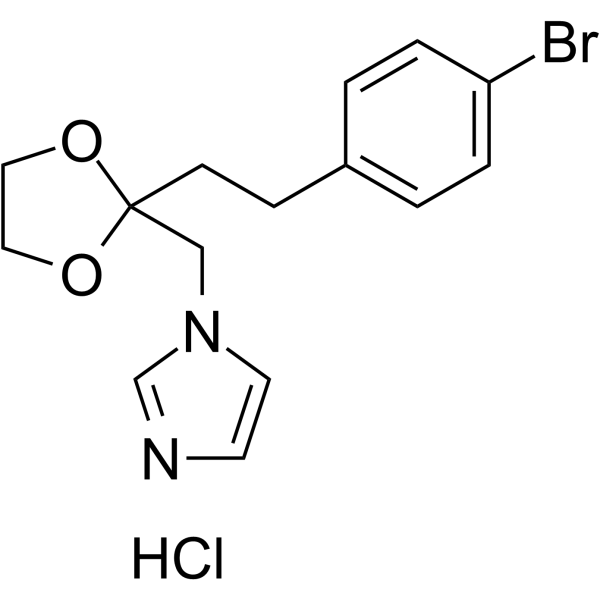
 0 ImagesCat. No.: HY-134310CAS No.: 1353586-18-1QC-308 hydrochloride is a HO-1/HO-2 inhibitor, with an IC50 of 0.27 μM against rat HO-1 and an IC50 of 0.46 μM against rat HO-2. QC-308 hydrochloride inhibits the activities of rat HO-1 and HO-2 in carbon monoxide generation assays using spleen and brain microsomes, respectively. QC-308 hydrochloride also exhibits senolytic activity, reducing the survival rate of adipogenic progenitor cells in skeletal muscle fibers of senescent mice and human skeletal muscle myoblasts. QC-308 hydrochloride is applicable for senescence-related research.
-
DL-Histidine hydrochloride hydrate
 0 ImagesDL-Histidine hydrochloride hydrate is a heme oxygenase (HO) regulator, with no activity against rat spleen HO-1 and rat brain HO-2. DL-Histidine hydrochloride hydrate can be used in research on cancer and neurodegenerative diseases.



