



Cataract
-
Cataract (14)

- 1
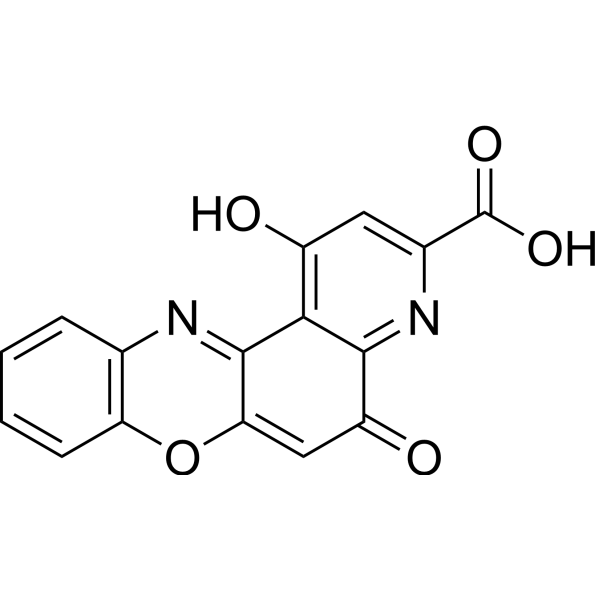
- Formula: C16H8N2O5
- Molecular Weight: 308.25
Pirenoxine (Catalin K) is an antioxidant with lens-protective activity. Pirenoxine inhibits lens sclerosis, prevents lipid peroxidation and suppresses lens protein opacification. Pirenoxine blocks benzoquinone acetic acid-induced cataract progression. Pirenoxine can be used in research related to presbyopia and cataracts.
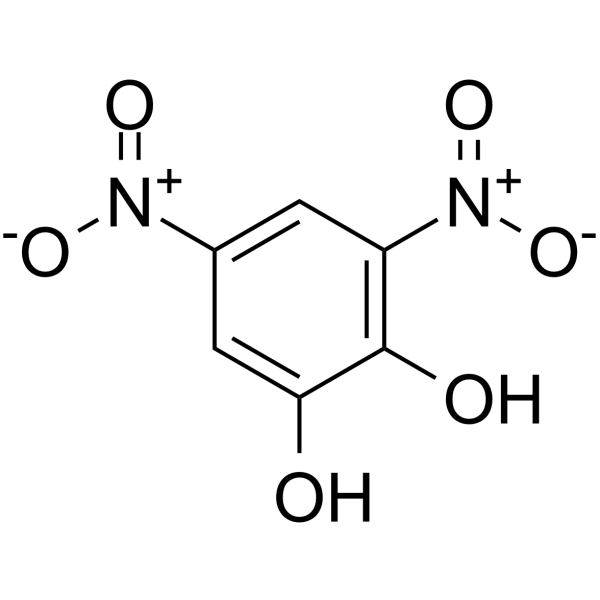
- Formula: C6H4N2O6
- Molecular Weight: 200.11
3,5-Dinitrocatechol (OR-486) is an orally active, blood-brain barrier-permeable selective catechol-O-methyltransferase (COMT) inhibitor. 3,5-Dinitrocatechol can be used in research related to Parkinson's disease, pheochromocytoma and adult cataract.
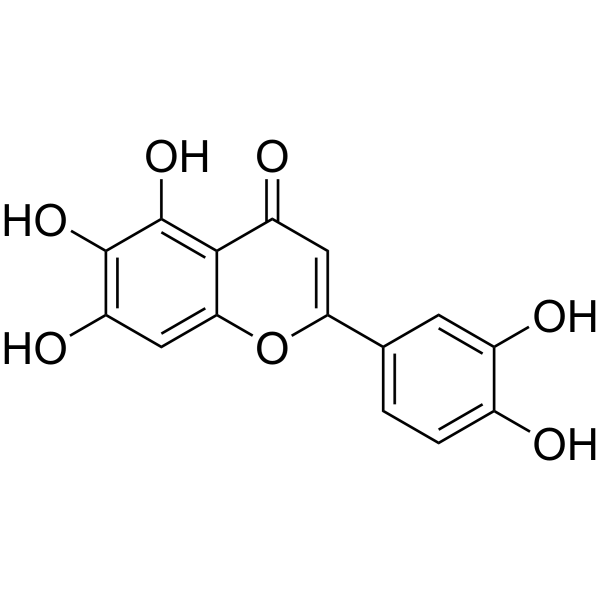
- Formula: C15H10O7
- Molecular Weight: 302.24
6-Hydroxyluteolin (Compound 17) is a flavonoid derivative and also an inhibitor of Aldose reductase, with an experimental -log IC50 value of 6.690. 6-Hydroxyluteolin can be isolated from the leaves of multiple plant families, including Plantaginaceae, Globulariaceae and Labiatae. 6-Hydroxyluteolin serves as a phylogenetic marker for higher plants. 6-Hydroxyluteolin can be used in the research of diabetic cataract.
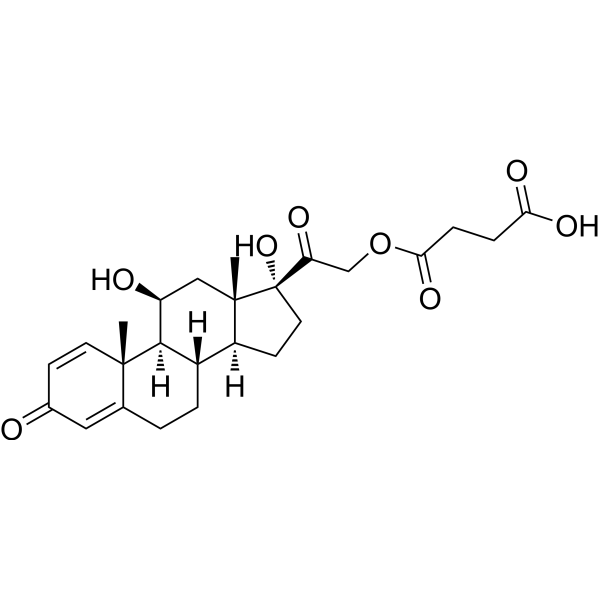
- Formula: C25H32O8
- Molecular Weight: 460.52
Prednisolone hemisuccinate (Prednisolone 21-hemisuccinate) is a prodrug of Prednisolone (HY-17463) and a glucocorticoid. Prednisolone hemisuccinate converts to Prednisolone in vivo. Prednisolone hemisuccinate induces the inactivation of glyceraldehyde-3-phosphate dehydrogenase (GAP-DH) in vitro. Prednisolone hemisuccinate can be used in research related to cataracts.

- Formula: C2H2O2
- Molecular Weight: 58.04
Glyoxal (40% w/w in water) is an α-oxoaldehyde that inhibits Aldose Reductase, Glutathione Reductase, and NADPH synthase. Glyoxal (40% w/w in water) exhibits cytotoxicity, triggers oxidative stress, induces ROS accumulation, lipid peroxidation, mitochondrial membrane potential collapse, DNA damage, apoptosis, and massive production of advanced glycation end products (AGEs). Glyoxal (40% w/w in water) depletes glutathione and activates MAPK phosphorylation. It has lower toxicity as a fixative than paraformaldehyde (PFA) and serves as a precursor for the synthesis of oxalates and dietary carcinogens. Glyoxal (40% w/w in water) is suitable for research related to calcium oxalate kidney stones, diabetes, atherosclerosis, cardiovascular diseases, retinopathy, and cataracts.

- Formula: C16H7N2NaO5
- Molecular Weight: 330.23
Pirenoxine sodium (Catalin K sodium) is an antioxidant with lens-protective activity. Pirenoxine sodium inhibits lens sclerosis, prevents lipid peroxidation and suppresses lens protein opacification. Pirenoxine sodium blocks benzoquinone acetic acid-induced cataract progression. Pirenoxine sodium can be used in research related to presbyopia and cataracts.
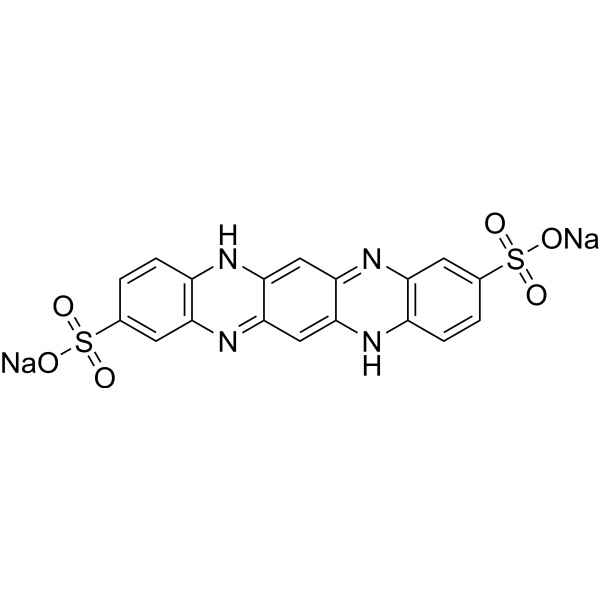
- Formula: C18H10N4Na2O6S2
- Molecular Weight: 488.40
Azapentacene (Phacolysine) sodium is an anti-cataract compound. Azapentacene sodium prevents cataract formation in guinea pigs with vitamin C deficiency and delays the progression of congenital cataract in Nakano mice. Azapentacene sodium undergoes reversible one-electron oxidation to form a stable radical cation, undergoes irreversible secondary oxidation to form a hydrolyzable unstable dication, and can also be oxidized by thallium (III) trifluoroacetate in trifluoroacetic acid to generate a detectable radical cation. Azapentacene sodium is used in research related to cataracts, vitamin C deficiency-induced cataracts, and congenital cataracts.

- Formula: C9H19NO2
- Molecular Weight: 173.25
TEMPOL-H is the reduced hydroxylamine form of the stable nitroxide radical Tempol (HY-100561), and serves as the active metabolite of OT-551 (HY-W556870). TEMPOL-H acts as a potent antioxidant and free radical scavenger. TEMPOL-H protects retinal pigment epithelial cells from acute light-induced damage, and protects mice from lethal whole-body radiation. TEMPOL-H inhibits lens opacification in mice, prevents glutathione loss in rat lenses under stress, blocks protein leakage in rhesus monkey lenses under stress, and maintains the 3H-choline accumulation capacity of the lens. TEMPOL-H can be used in studies related to light-induced retinal pigment epithelial degeneration and age-related cataract.

- Formula: C18H33N3O4S
- Molecular Weight: 387.54
N-Acetyl-L-leucyl-L-leucyl-L-methional is a Calpain II inhibitor with an IC50 of 0.24 μM against porcine Calpain II. N-Acetyl-L-leucyl-L-leucyl-L-methional forms a stable tetrahedral adduct with the thiol group at the active site of Calpain II, thereby inhibiting proteolytic activity. N-Acetyl-L-leucyl-L-leucyl-L-methionally inhibits cathepsins in a non-selective manner. N-Acetyl-L-leucyl-L-leucyl-L-methional reduces SARS-CoV-2 infection levels in human coronary artery endothelial cells in vitro. N-Acetyl-L-leucyl-L-leucyl-L-methional can be used in research related to cataracts and coronavirus infections.

- Formula: C17H26N6O4
- Molecular Weight: 378.43
Pentosidine is a fluorescent advanced glycation end product (AGE) and cross-linker. Pentosidine is a fluorescent cross-linked structure formed by lysine and arginine in sugar oxidation reactions, and it is commonly found in collagen, skin, bone, lens and plasma proteins. Pentosidine is used in research related to type 1 diabetes, brown cataracts, rheumatoid arthritis, atherosclerosis and neurodegenerative diseases.
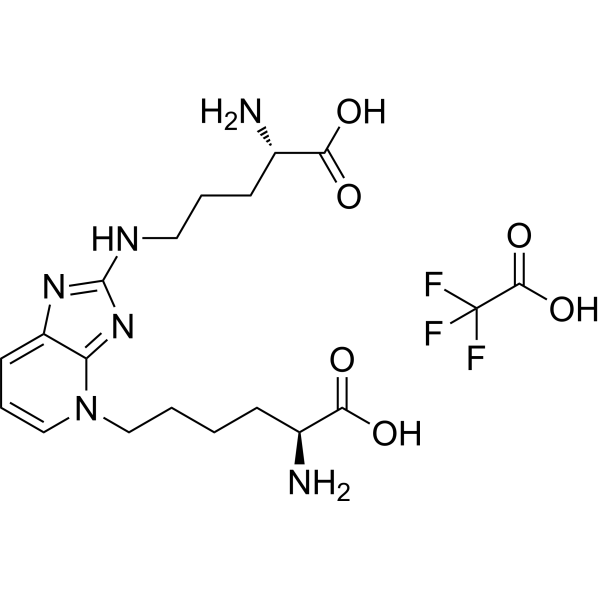
- Formula: C19H27F3N6O6
- Molecular Weight: 492.45
Pentosidine TFA is a fluorescent advanced glycation end product (AGE) and cross-linker. Pentosidine TFA is a fluorescent cross-linked structure formed by lysine and arginine in sugar oxidation reactions, and it is commonly found in collagen, skin, bone, lens and plasma proteins. Pentosidine TFA is used in research related to type 1 diabetes, brown cataracts, rheumatoid arthritis, atherosclerosis and neurodegenerative diseases.

- Formula: C₂₅H₃₂O₈
- Molecular Weight: 460.52
Prednisolone hemisuccinate (Standard) (Prednisolone 21-hemisuccinate (Standard)) is the analytical standard of Prednisolone hemisuccinate (HY-B1087). This product is intended for research and analytical applications. Prednisolone hemisuccinate (Prednisolone 21-hemisuccinate) is a prodrug of Prednisolone (HY-17463) and a glucocorticoid. Prednisolone hemisuccinate converts to Prednisolone in vivo. Prednisolone hemisuccinate induces the inactivation of glyceraldehyde-3-phosphate dehydrogenase (GAP-DH) in vitro. Prednisolone hemisuccinate can be used in research related to cataracts.

- Formula: C6H4N2O6
- Molecular Weight: 200.11
3,5-Dinitrocatechol (Standard) (OR-486 (Standard); 3,5-Dinitropyrocatechol (Standard)) is the analytical standard of 3,5-Dinitrocatechol (HY-100959). This product is intended for research and analytical applications. 3,5-Dinitrocatechol (OR-486) is an orally active, blood-brain barrier-permeable selective catechol-O-methyltransferase (COMT) inhibitor. 3,5-Dinitrocatechol can be used in research related to Parkinson's disease, pheochromocytoma and adult cataract.

- Formula: C11H7ClN2O5S
- Molecular Weight: 314.70
M 16287 is an orally active aldose reductase inhibitor, with an IC50 of 0.08 μM in rats and 0.25 μM in cattle. M 16287 improves lens fiber swelling and vacuolization, prevents galactitol accumulation, delays inositol depletion, inhibits glutathione reduction, restores the NADPH/NADP+ ratio to normal, and normalizes lens Na+ content and Na+/K+ ratio. M 16287 prevents galactose-induced cataract formation in rats. M 16287 improves motor nerve conduction velocity in diabetic rats, partially alleviates histopathological changes in the sciatic nerve, and inhibits sorbitol accumulation. M 16287 can be used in studies related to cataracts and diabetic neuropathy.
- 1



