



Pheochromocytoma
-
Pheochromocytoma (3)

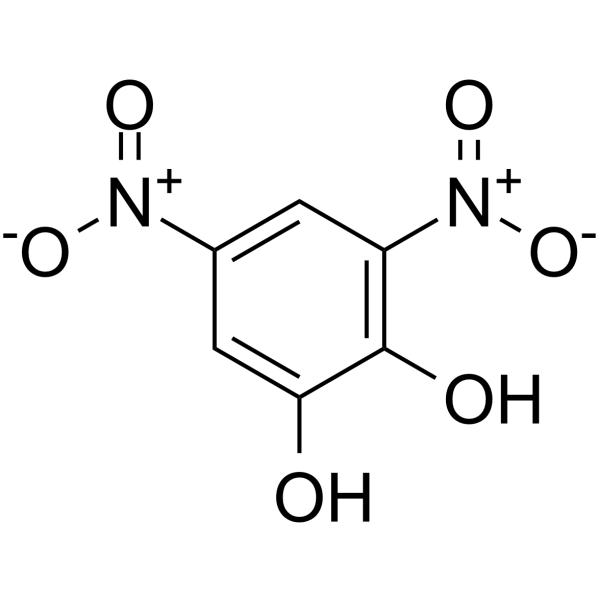
- Formula: C6H4N2O6
- Molecular Weight: 200.11
3,5-Dinitrocatechol (OR-486) is an orally active, blood-brain barrier-permeable selective catechol-O-methyltransferase (COMT) inhibitor. 3,5-Dinitrocatechol can be used in research related to Parkinson's disease, pheochromocytoma and adult cataract.

- Formula: C8H10IN3
- Molecular Weight: 275.09
m-Iodobenzylguanidine (Iobenguane) is a ligand with high affinity against norepinephrine transporter (NET). m-Iodobenzylguanidine is used as an imaging agent in the diagnostic imaging and radionuclide studies of neuroendocrine tumors, such as neuroblastoma, pheochromocytoma and carcinoid tumor.

- Formula: C6H4N2O6
- Molecular Weight: 200.11
3,5-Dinitrocatechol (Standard) (OR-486 (Standard); 3,5-Dinitropyrocatechol (Standard)) is the analytical standard of 3,5-Dinitrocatechol (HY-100959). This product is intended for research and analytical applications. 3,5-Dinitrocatechol (OR-486) is an orally active, blood-brain barrier-permeable selective catechol-O-methyltransferase (COMT) inhibitor. 3,5-Dinitrocatechol can be used in research related to Parkinson's disease, pheochromocytoma and adult cataract.



