



Trihexyphenidyl hydrochloride
Based on 3 publication(s) in Google Scholar
Trihexyphenidyl hydrochloride is a selective and orally active M1 muscarinic receptor antagonist with an IC50 of 3.7 nM for rat cerebral cortex M1 muscarinic receptors. Trihexyphenidyl hydrochloride modulates cholinergic activity, countering acetylcholine supersensitivity in neural pathways. Trihexyphenidyl hydrochloride improves movement disorder, inhibits McN-A-343 (HY-107648)-induced pressor responses, vagally-induced bradycardia and vasodilatation. Trihexyphenidyl hydrochloride can be used for the research of Parkinson's disease..
For research use only. We do not sell to patients.
- Purity : 99.44%
- CAS No.: 52-49-3
- Formula: C20H32ClNO
- Molecular Weight:337.93
-
Storage:
4°C, sealed storage, away from moisture
* In solvent : -80°C, 6 months; -20°C, 1 month (sealed storage, away from moisture)


To place orders, for customer services and technical support, please contact: MedChemExpress USA
Tel: 609-228-6898 E-mail: [email protected] [email protected]


-
 Biological Activity
-
Chemical Information
-
Solvent & Solubility
- Protocols
- Purity & Documentation
- References
-
 Help & FAQs


-
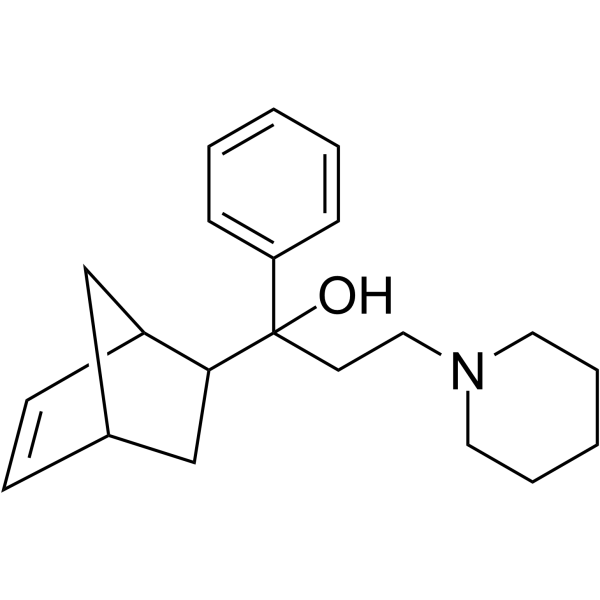
HY-13204A
BiperidenMuscarinic Receptor Antagonist -

HY-B0451
DopamineCatecholamine Neurotransmitter -
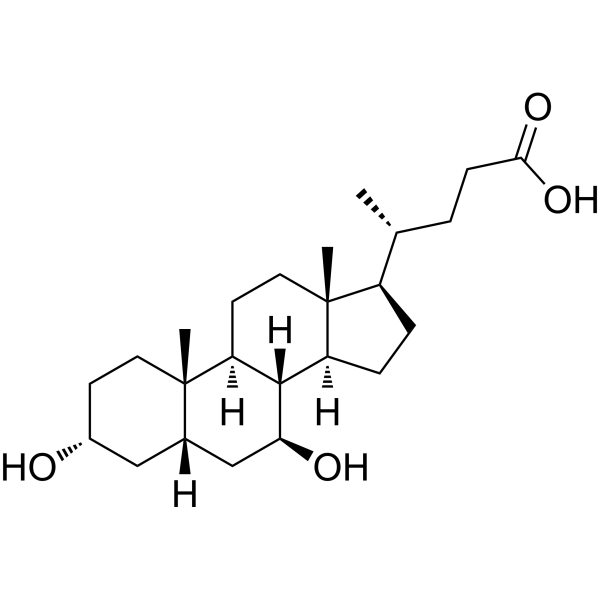
HY-13771
Ursodeoxycholic acidGPCR19 Agonist /FXR Antagonist -
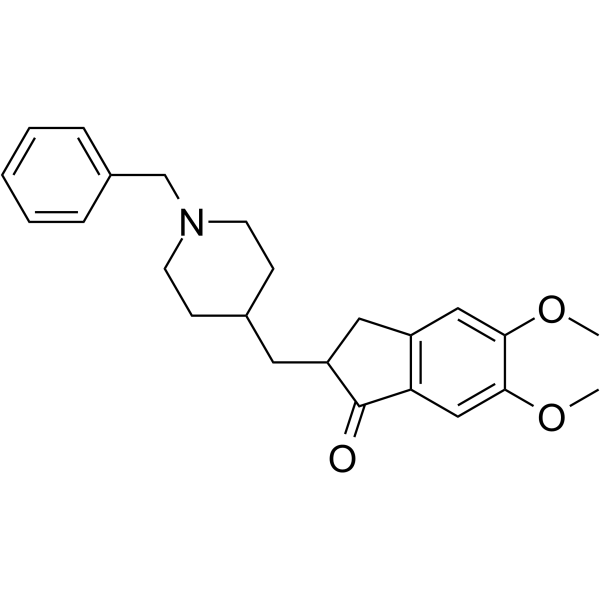
HY-14566
DonepezilSpecific AChE Inhibitor -

HY-B1277R
Trihexyphenidyl hydrochloride (Standard)M1 Muscarinic Receptor Antagonist -
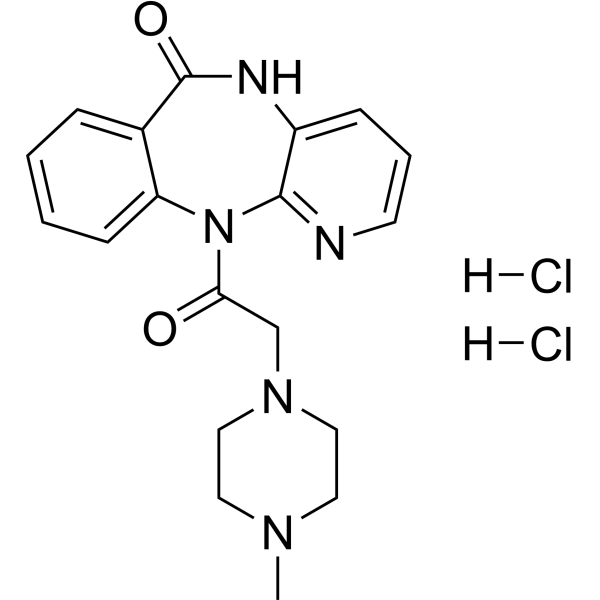
HY-17037
Pirenzepine dihydrochlorideM1 mAChR Antagonist -
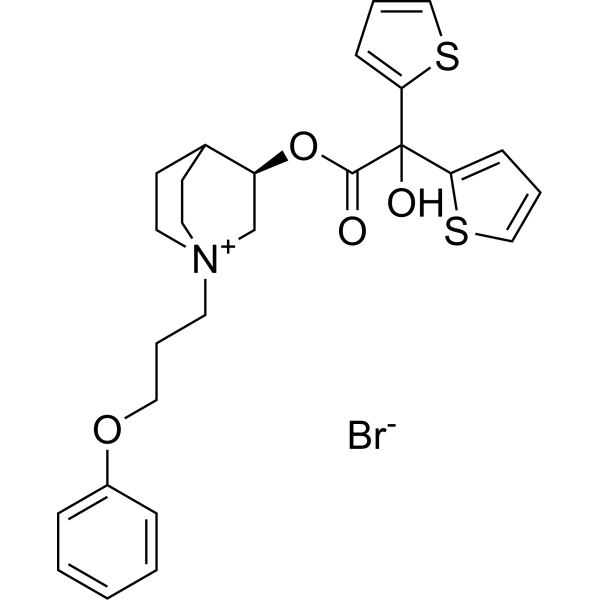
HY-14144
Aclidinium BromidemAChR Antagonist -
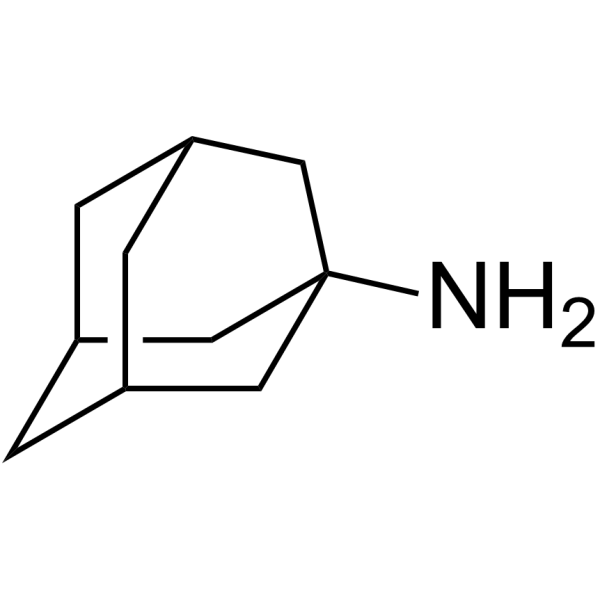
HY-B0402
AmantadineAntiviral Agent -
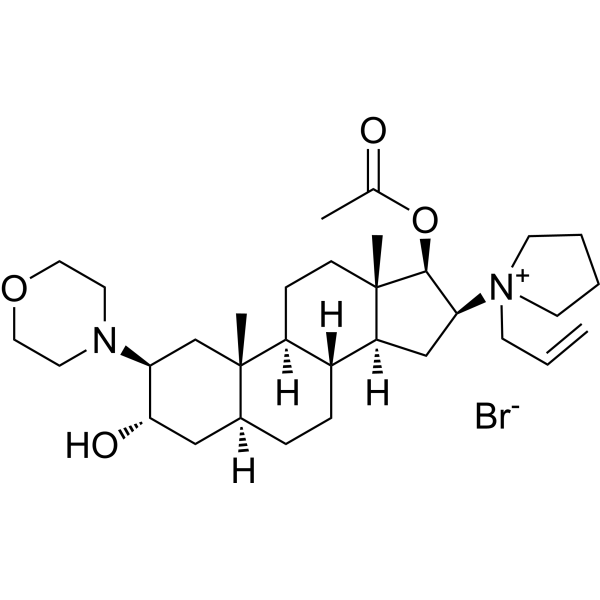
HY-17440
Rocuronium BromideMuscle Relaxant -
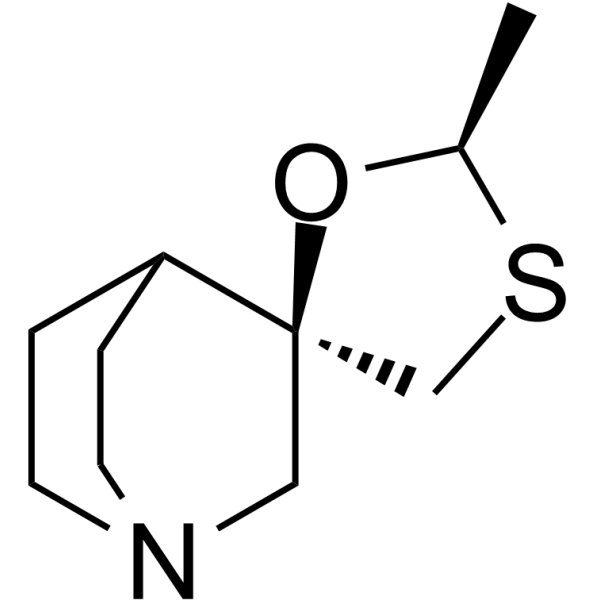
HY-70020
CevimelineMuscarinic M1/M3 Receptor Agonist -
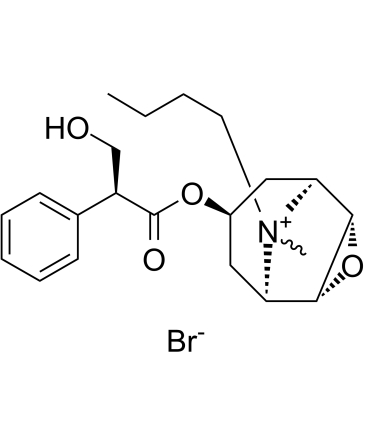
HY-N0340
Scopolamine butylbromideSpasmolytic -
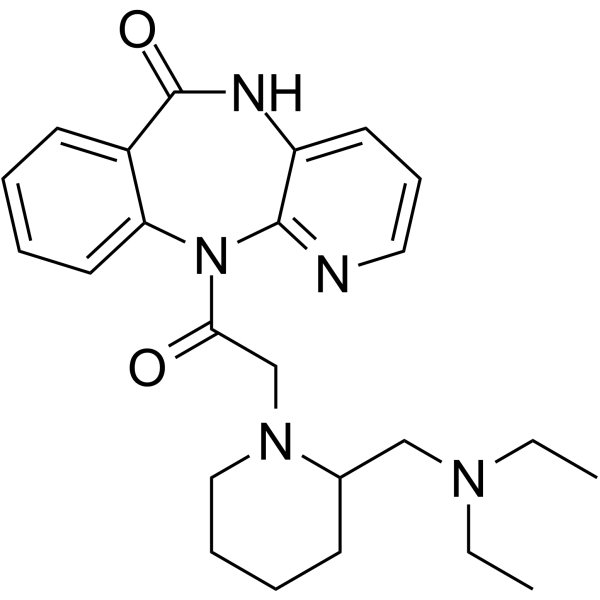
HY-101381
OtenzepadmAChR Antagonist
Publications Citing Use of MedChemExpress (MCE) Trihexyphenidyl hydrochloride
More

Biological Activity
Description
In Vitro
Trihexyphenidyl (45 min) hydrochloride binds with highest affinity to rat cerebral cortex M1 muscarinic receptors (IC50 = 3.7 nM), moderate affinity to rat submandibular gland receptors (IC50 = 17 nM), and lowest affinity to rat heart receptors (IC50 = 31 nM), with a selectivity ratio of 8 for heart versus cortex receptors[2].
MedChemExpress (MCE) has not independently confirmed the accuracy of these methods. They are for reference only. Further protocols information, click here.
In Vivo
Trihexyphenidyl (i.v.) hydrochloride shows moderate selectivity for M1 muscarinic receptor-mediated ganglionic nictitating membrane contractions over peripheral muscarinic receptor-mediated vagal bradycardia and vasodilatation in anaesthetized cats, with a selectivity ratio of 9[2].
MedChemExpress (MCE) has not independently confirmed the accuracy of these methods. They are for reference only.
-
Animal Model:Sprague-Dawley (male, 200-300 g, pithed rat model)[2]
-
Dosage:Multiple intravenous doses (3-4 doses per experiment to generate ID50 and DR2 values)
-
Administration:i.v.
-
Result:Achieved an ID50 of 54 μg/kg for inhibiting McN-A-343 (HY-107648)-induced pressor responses.
Achieved an ID50 of 313 μg/kg for inhibiting vagally-induced bradycardia.
Exhibited a selectivity ratio (ID50 vagal bradycardia / ID50 McN-A-343 pressor response) of 6.
Achieved a DR2 value of 11.9 μg/kg for causing a 2-fold rightward shift of the McN-A-343 dose-response curve.
-
Animal Model:Domestic cat (either sex, 3-4 kg, anaesthetized cat model)[2]
-
Dosage:Multiple intravenous doses (3-4 doses per experiment to generate ID50 values)
-
Administration:i.v.
-
Result:Achieved an ID50 of 27 μg/kg for inhibiting McN-A-343-induced nictitating membrane contractions.
Achieved an ID50 of 257 μg/kg for inhibiting vagally-induced bradycardia.
Achieved an ID50 of 226 μg/kg for inhibiting vagally-induced vasodilatation.
Exhibited a selectivity ratio (ID50 vagal bradycardia / ID50 McN-A-343-induced ganglionic response) of 9.
Clinical Trial
| NCT Number | Sponsor | Condition | Start Date |
Phase

|
|---|---|---|---|---|
| NCT01329991 | Plexxikon| | 2011-05 | PHASE1 |


Chemical Information
-
CAS No. 52-49-3
-
Appearance Solid
-
Molecular Weight 337.93
-
Formula C20H32ClNO
-
Color White to off-white
-
SMILES
OC(C1=CC=CC=C1)(C2CCCCC2)CCN3CCCCC3.[H]Cl
-
Shipping
Room temperature in continental US; may vary elsewhere.
-
Storage
4°C, sealed storage, away from moisture
* In solvent : -80°C, 6 months; -20°C, 1 month (sealed storage, away from moisture)


Publications (3)
-
Journal Impact Factor
-
Most Recent
-
Proc Natl Acad Sci U S A
2020 Oct 20;117(42):26438-26447. PMID: 33024014 -
Sci Rep
Acetylcholine acts through M3 muscarinic receptor to activate the EGFR signaling and promotes gastric cancer cell proliferation. [Abstract]2017 Jan 19:7:40802. PMID: 28102288 -


Solvent & Solubility
In Vitro:
DMSO : 10 mg/mL (29.59 mM; Need ultrasonic; Hygroscopic DMSO has a significant impact on the solubility of product, please use newly opened DMSO)
H2O : 5 mg/mL (14.80 mM; ultrasonic and warming and heat to 60°C)
Please refer to the solubility information to select the appropriate solvent. Once prepared, please aliquot and store the solution to prevent product inactivation from repeated freeze-thaw cycles.
Storage method and period of stock solution: -80°C, 6 months; -20°C, 1 month (sealed storage, away from moisture). When stored at -80°C, please use it within 6 months. When stored at -20°C, please use it within 1 month.
* Note: If you choose water as the stock solution, please dilute it to the working solution, then filter and sterilize it with a 0.22 μm filter before use.
Please refer to the solubility information to select the appropriate solvent. Once prepared, please aliquot and store the solution to prevent product inactivation from repeated freeze-thaw cycles.
Storage method and period of stock solution: -80°C, 6 months; -20°C, 1 month (sealed storage, away from moisture). When stored at -80°C, please use it within 6 months. When stored at -20°C, please use it within 1 month.
* Note: If you choose water as the stock solution, please dilute it to the working solution, then filter and sterilize it with a 0.22 μm filter before use.
Concentration (start) × Volume (start) = Concentration (final) × Volume (final)
In Vivo:
Select the appropriate dissolution method based on your experimental animal and administration route.
- For the following dissolution methods, please ensure to first prepare a clear stock solution using an In Vitro approach and then sequentially add co-solvents:
- To ensure reliable experimental results, the clarified stock solution can be appropriately stored based on storage conditions. As for the working solution for In Vivo experiments, it is recommended to prepare freshly and use it on the same day.
- The percentages shown for the solvents indicate their volumetric ratio in the final prepared solution. If precipitation or phase separation occurs during preparation, heat and/or sonication can be used to aid dissolution.
Add each solvent one by one: 10% DMSO 40% PEG300 5% Tween-80 45% Saline
Solubility: 1 mg/mL (2.96 mM); Suspended solution; Need ultrasonic
This protocol yields a suspended solution of 1 mg/mL. Suspended solution can be used for oral and intraperitoneal injection.
Taking 1 mL working solution as an example, add 100 μL DMSO stock solution (10.0 mg/mL) to 400 μL PEG300, and mix evenly; then add 50 μL Tween-80 and mix evenly; then add 450 μL Saline to adjust the volume to 1 mL.
Preparation of Saline: Dissolve 0.9 g sodium chloride in ddH₂O and dilute to 100 mL to obtain a clear Saline solution.
Add each solvent one by one: 10% DMSO 90% (20% SBE-β-CD in Saline)
Solubility: ≥ 1 mg/mL (2.96 mM); Clear solution
This protocol yields a clear solution of ≥ 1 mg/mL (saturation unknown).
Taking 1 mL working solution as an example, add 100 μL DMSO stock solution (10.0 mg/mL) to 900 μL 20% SBE-β-CD in Saline, and mix evenly.
Preparation of 20% SBE-β-CD in Saline (4°C, storage for one week): 2 g SBE-β-CD powder is dissolved in 10 mL Saline, completely dissolve until clear.
In Vivo Dissolution Calculator
Please enter the basic information of animal experiments:
-
-
-
-
Recommended: Prepare an additional quantity of animals to account for potential losses during experiments.
Please enter your animal formula composition:
-
%DMSO +
Recommended: Keep the proportion of DMSO in working solution below 2% if your animal is weak.
-
%+
-
+%Tween-80 + +
-
%Saline +
The co-solvents required include: DMSO, . All of co-solvents are available by MedChemExpress (MCE). , Tween 80. All of co-solvents are available by MedChemExpress (MCE).
Working solution concentration: 0.22 mg/mL
Method for preparing stock solution: mg drug dissolved in μL DMSO. Stock solution concentration: mg/mL. * In solvent : -80°C, 6 months; -20°C, 1 month (sealed storage, away from moisture)
1. Take μL DMSO stock solution;
2. Add μL .
μL , mix evenly;
3. Then add μL Tween 80, mix evenly;
4. Then add μL
Please ensure that the stock solution in the first step is dissolved to a clear state, and add co-solvents in sequence. You can use ultrasonic heating (ultrasonic cleaner, recommended frequency 20-40 kHz), vortexing, etc. to assist dissolution.

Protocols
-
Cell Cytotoxicity Assay
Cytotoxicity assays are usually based on the assessment of cell membrane damage, which can also be indirectly detected by measuring cell viability. Detection methods include MTT assay, CKK-8 assay, LDH assay and ATP assay, etc.
-
Human pluripotent stem cell midbrain dopaminergic neuron differentiation
Human pluripotent stem cells are directed toward midbrain dopaminergic neurons by first inducing a neural floor-plate-like progenitor state, then patterning cells with ventralizing SHH signaling and midbrain/WNT-FGF cues, and finally maturing progenitors into neurons expressing dopaminergic markers such as TH, NURR1/NR4A2, PITX3, DAT/SLC6A3, VMAT2/SLC18A2, GIRK2/KCNJ6, FOXA2, LMX1A, and EN1. The main readouts are loss of pluripotency, acquisition of FOXA2+/LMX1A+ midbrain floor-plate progenitors, emergence of βIII-tubulin+/MAP2+ neurons, and production of TH+ dopaminergic neurons with molecular, dopamine-release, and electrophysiological features of midbrain dopaminergic identity.


Purity & Documentation
-
Data Sheet (280 KB)
-
SDS (396 KB)
- English - EN (396 KB)
- Français - FR (396 KB)
- Deutsch - DE (396 KB)
- Norwegian - NO (396 KB)
- Español - ES (396 KB)
- Swedish - SV (396 KB)
- Italian - IT (396 KB)
- Korean - KR (396 KB)
- Portuguese - PT (396 KB)
-
Handling Instructions (2659 KB)
References
[1]. Jabbari B, et al. Treatment of movement disorders with trihexyphenidyl[J]. Movement disorders: official journal of the Movement Disorder Society, 1989, 4(3): 202-212. [Content Brief]
[2]. Giachetti A, et al. Binding and functional profiles of the selective M1 muscarinic receptor antagonists trihexyphenidyl and dicyclomine. Br J Pharmacol. 1986 Sep;89(1):83-90. [Content Brief]
[3]. Takahashi S, et al. The effect of trihexyphenidyl, an anticholinergic agent, on regional cerebral blood flow and oxygen metabolism in patients with Parkinson's disease. J Neurol Sci. 1999;167(1):56-61. [Content Brief]


Complete Stock Solution Preparation Table
Please refer to the solubility information to select the appropriate solvent. Once prepared, please aliquot and store the solution to prevent product inactivation from repeated freeze-thaw cycles.
Storage method and period of stock solution: -80°C, 6 months; -20°C, 1 month (sealed storage, away from moisture). When stored at -80°C, please use it within 6 months. When stored at -20°C, please use it within 1 month.
| Optional Solvent | Concentration Solvent Mass | 1 mg | 5 mg | 10 mg | 25 mg |
|---|---|---|---|---|---|
| H2O / DMSO | 1 mM | 2.9592 mL | 14.7960 mL | 29.5919 mL | 73.9798 mL |
| 5 mM | 0.5918 mL | 2.9592 mL | 5.9184 mL | 14.7960 mL | |
| 10 mM | 0.2959 mL | 1.4796 mL | 2.9592 mL | 7.3980 mL | |
| DMSO | 15 mM | 0.1973 mL | 0.9864 mL | 1.9728 mL | 4.9320 mL |
| 20 mM | 0.1480 mL | 0.7398 mL | 1.4796 mL | 3.6990 mL | |
| 25 mM | 0.1184 mL | 0.5918 mL | 1.1837 mL | 2.9592 mL |
* Note: If you choose water as the stock solution, please dilute it to the working solution, then filter and sterilize it with a 0.22 μm filter before use.


Trihexyphenidyl hydrochloride Related Classifications
HY-B1277 Related Classifications
 Powered by Bioz