



mAChR4
mAChR4/M4 muscarinic acetylcholine receptor is a GPCR that couples mainly to Gαi/o, inhibits adenylate cyclase, and lowers intracellular cAMP signaling[1]. In striatal neurons, M4 signaling restrains dopamine D1 receptor-mediated locomotor stimulation and supports inhibitory cholinergic control over dopamine-dependent behavior[2]. Mechanistically, endogenous cholinergic signaling through M4 receptors in direct-pathway striatal projection neurons promotes corticostriatal long-term depression by suppressing RGS4 activity and blocking D1-dependent long-term potentiation[3]. In disease models, enhancing M4 signaling corrected striatal plasticity deficits in L-DOPA-induced dyskinesia models, supporting M4 as a practical target for basal ganglia circuit studies[3]. Compared with related muscarinic isoforms, M1 and M4 crystal structures bound to tiotropium revealed differences in orthosteric and allosteric binding sites that contribute to subtype-selective drug design[4]. For experimental applications, M4 positive allosteric modulators potentiate acetylcholine responses without directly activating the receptor and showed antipsychotic-like activity in preclinical schizophrenia-relevant assays[5]. Xanomeline further demonstrates ligand complexity at human M4 because structural and pharmacological validation identified dual orthosteric and allosteric binding behavior[6].
Références:
- [1]. van der Westhuizen ET, et al. Fine Tuning Muscarinic Acetylcholine Receptor Signaling Through Allostery and Bias. Front Pharmacol. 2021 Jan 29;11:606656. [Content Brief]
- [2]. Gomeza J, et al. Enhancement of D1 dopamine receptor-mediated locomotor stimulation in M(4) muscarinic acetylcholine receptor knockout mice. Proc Natl Acad Sci U S A. 1999 Aug 31;96(18):10483-8. [Content Brief]
- [3]. Shen W, et al. M4 Muscarinic Receptor Signaling Ameliorates Striatal Plasticity Deficits in Models of L-DOPA-Induced Dyskinesia. Neuron. 2015 Nov 18;88(4):762-73. [Content Brief]
- [4]. Thal DM, et al. Crystal structures of the M1 and M4 muscarinic acetylcholine receptors. Nature. 2016 Mar 17;531(7594):335-40. [Content Brief]
- [5]. Chan WY, et al. Allosteric modulation of the muscarinic M4 receptor as an approach to treating schizophrenia. Proc Natl Acad Sci U S A. 2008 Aug 5;105(31):10978-83. [Content Brief]
- [6]. Burger WAC, et al. Xanomeline displays concomitant orthosteric and allosteric binding modes at the M4 mAChR. Nat Commun. 2023 Sep 6;14(1):5440. [Content Brief]
-
mAChR4 Produits associés (77)
Produits associés (77)

-
Clozapine N-oxide
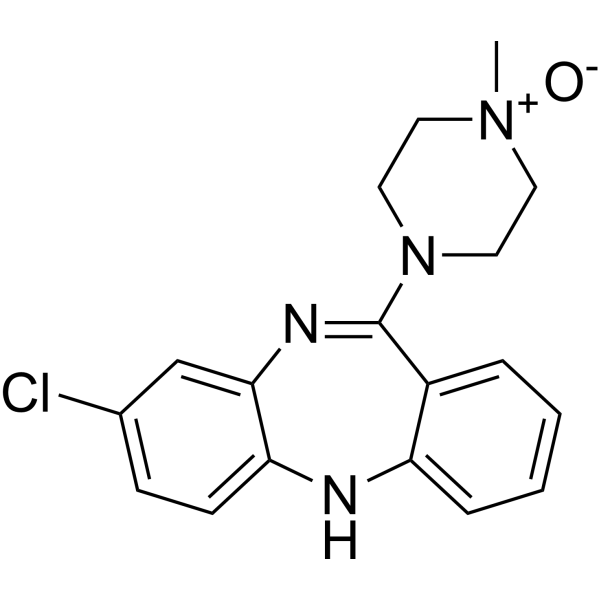 0 ImagesClozapine N-oxide is a major metabolite of Clozapine and a human muscarinic designer receptors (DREADDs) agonist. Clozapine N-oxide activates the DREADD receptor hM3Dq and hM4Di. Clozapine N-oxide can't cross the blood-brain barrier. Clozapine is a potent dopamine antagonist and also a potent and selective muscarinic M4 receptor (EC50=11 nM) agonist.
-
Deschloroclozapine
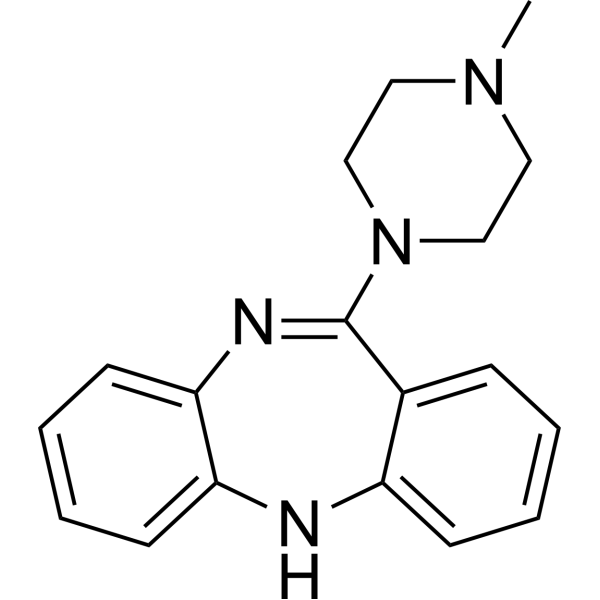 0 ImagesDeschloroclozapine, a metabolite of Clozapine, is a highly potent muscarinic DREADDs agonist, with blood-brain barrier permeability. Deschloroclozapine binds to DREADD receptor subtypes hM3Dq and hM4Di with Ki of 6.3 and 4.2 nM, respectively. [11C]-Deschloroclozapine is developed as a promising PET tracer for DREADD imaging.
-
Clozapine N-oxide dihydrochloride
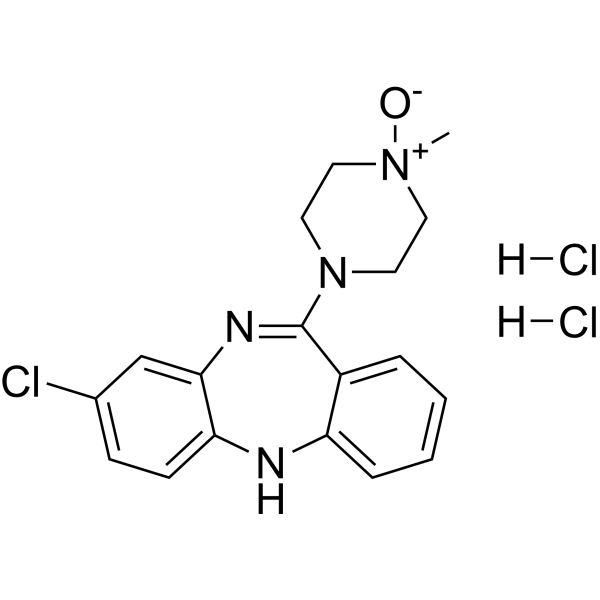 0 ImagesClozapine N-oxide dihydrochloride is a major metabolite of Clozapine and a human muscarinic designer receptors (DREADDs) agonist. Clozapine N-oxide dihydrochloride activates the DREADD receptor hM3Dq and hM4Di. Clozapine N-oxide dihydrochloride cannot cross the blood-brain barrier. Clozapine is a potent dopamine antagonist and also a potent and selective muscarinic M4 receptor (EC50=11 nM) agonist.
-
Atropine
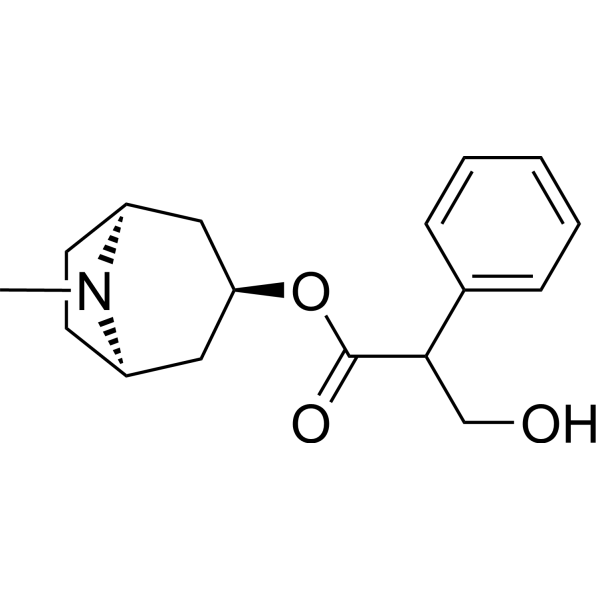 0 ImagesAtropine (Tropine tropate) is a competitive muscarinic acetylcholine receptor (mAChR) antagonist with IC50 values of 0.39 and 0.71 nM for Human mAChR M4 and Chicken mAChR M4, respectively. Atropine inhibits ACh-induced relaxations in human pulmonary veins. Atropine can be used for research of anti-myopia and bradycardia.
-
Clozapine
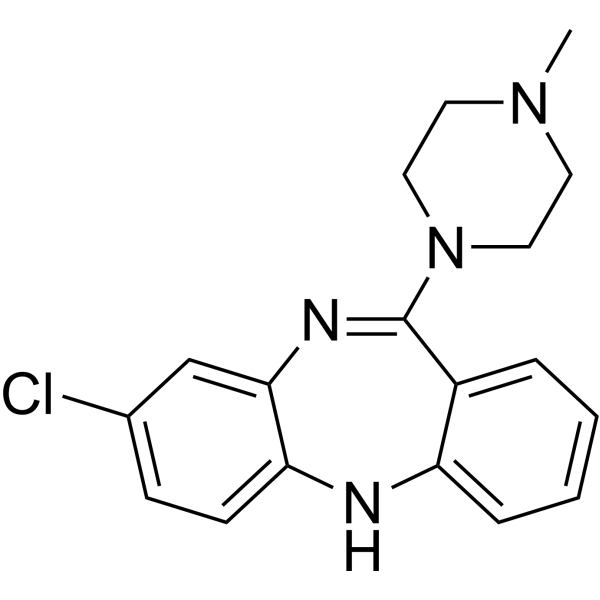 0 ImagesClozapine (HF 1854) is an antipsychotic used for the research of schizophrenia. Clozapine has high affinity for a number of neuroreceptors. Clozapine is a potent antagonist of dopamine D2 with a Ki of 75 nM. Clozapine inhibits the muscarinic M1 receptor and serotonin 5HT2A receptor with Kis of 9.5 nM and 4 nM, respectively. Clozapine is also a potent and selective agonist at the muscarinic M4 receptor (EC50=11 nM).
-
Clozapine (Standard)
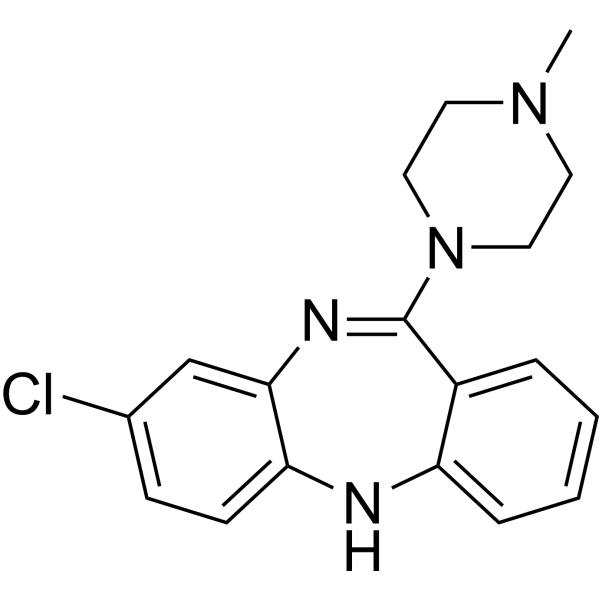 0 ImagesClozapine (Standard) is the analytical standard of Clozapine. This product is intended for research and analytical applications. Clozapine (HF 1854) is an antipsychotic used for the research of schizophrenia. Clozapine has high affinity for a number of neuroreceptors. Clozapine is a potent antagonist of dopamine D2 with a Ki of 75 nM. Clozapine inhibits the muscarinic M1 receptor and serotonin 5HT2A receptor with Kis of 9.5 nM and 4 nM, respectively. Clozapine is also a potent and selective agonist at the muscarinic M4 receptor (EC50=11 nM).
-
Oxyphenonium bromide
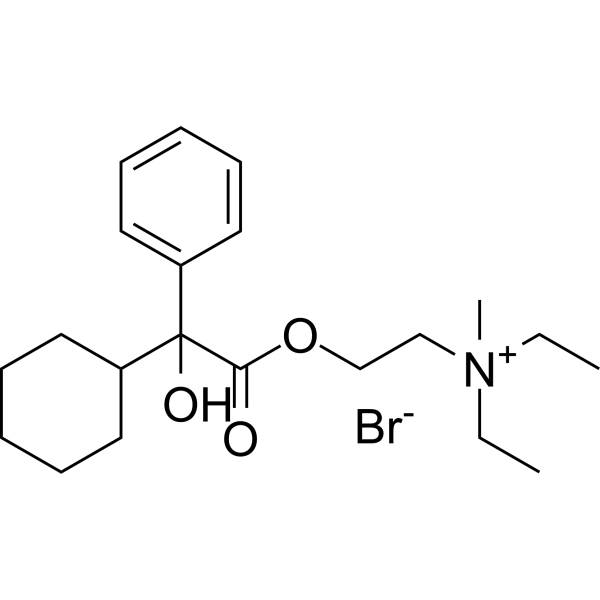 0 ImagesOxyphenonium bromide is an orally effective competitive muscarinic acetylcholine receptor (mAChR) antagonist. Oxyphenonium bromide competitively binds to and blocks mAChR, thereby inhibiting the parasympathetic pathway. By inhibiting CHRM4, Oxyphenonium bromide increases cAMP levels and activates the CREB transcriptional program, thereby promoting erythroid progenitor cell expansion. Oxyphenonium bromide can be used in research on asthma, anemia, and gastric ulcers.
-
Atropine (Standard)
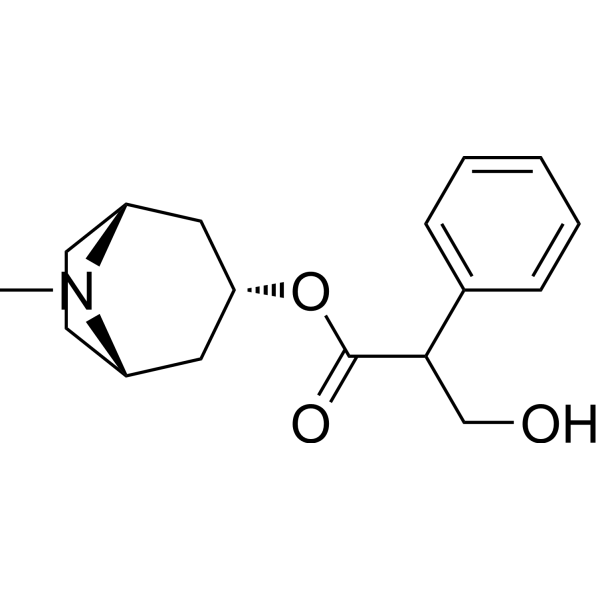 0 ImagesSynonyms: Tropine tropate (Standard); DL-Hyoscyamine (Standard)Atropine (Standard) is the analytical standard of Atropine. This product is intended for research and analytical applications. Atropine (Tropine tropate) is a competitive muscarinic acetylcholine receptor (mAChR) antagonist with IC50 values of 0.39 and 0.71 nM for Human mAChR M4 and Chicken mAChR M4, respectively. Atropine inhibits ACh-induced relaxations in human pulmonary veins. Atropine can be used for research of anti-myopia and bradycardia.
-
Deschloroclozapine dihydrochloride
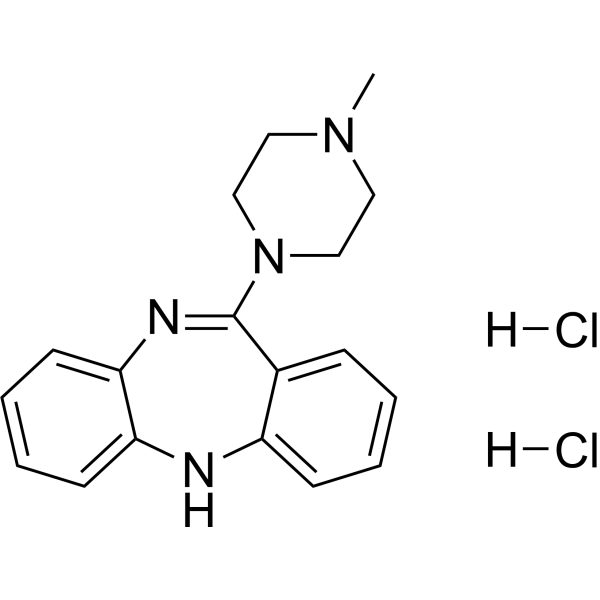 0 ImagesCat. No.: HY-42110APureté: 99.87%Deschloroclozapine dihydrochloride, a metabolite of Clozapine, is a highly potent muscarinic DREADDs agonist, with blood-brain barrier permeability. Deschloroclozapine dihydrochloride binds to DREADD receptor subtypes hM3Dq and hM4Di with Ki of 6.3 and 4.2 nM, respectively. [11C]-Deschloroclozapine dihydrochloride is developed as a promising PET tracer for DREADD imaging.
-
Xanomeline
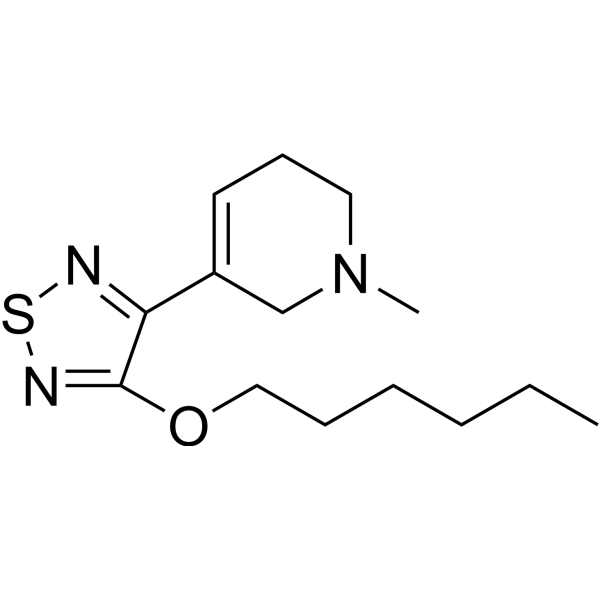 0 ImagesSynonyms: LY-246708Xanomeline, as an effective and selective muscarinic type 1 and type 4 (M1/M4) receptor agonist, increases neuronal excitability. Xanomeline can be used for the research of neurological disorders, such as schizophrenia.
-
Atropine sulfate
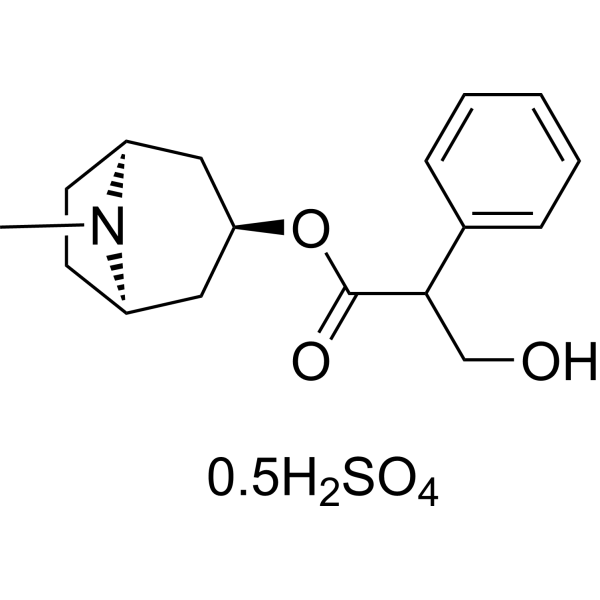 0 ImagesSynonyms: Tropine tropate sulfate; DL-Hyoscyamine sulfate; SulfatropinolAtropine (Tropine tropate) sulfate is a competitive muscarinic acetylcholine receptor (mAChR) antagonist with IC50 values of 0.39 and 0.71 nM for Human mAChR M4 and Chicken mAChR M4, respectively. Atropine sulfate inhibits ACh-induced relaxations in human pulmonary veins. Atropine sulfate can be used for research of anti-myopia and bradycardia.
-
(S)-(+)-Dimethindene maleate
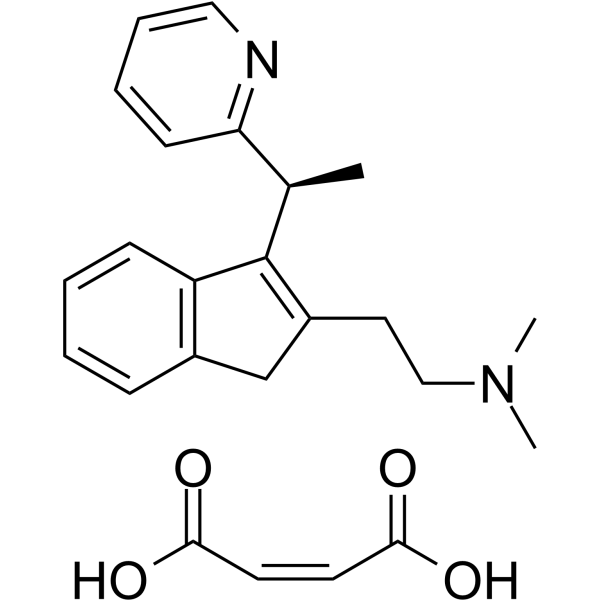 0 Images(S)-(+)-Dimethindene maleate, an enantiomer, is a potent M2-selective muscarinic receptor antagonist (pA2 = 7.86/7.74; pKi = 7.78). (S)-(+)-Dimethindene maleate shows lower affinities for the muscarinic M1 (pA2 = 6.83/6.36; pKi = 7.08), the M3 (pA2 = 6.92/6.96; pKi = 6.70) and the M4 receptors (pKi = 7.00), respectively. (S)-(+)-Dimethindene maleate also is a histamine H1 receptor antagonist (pA2 = 7.48).
-
Tropicamide
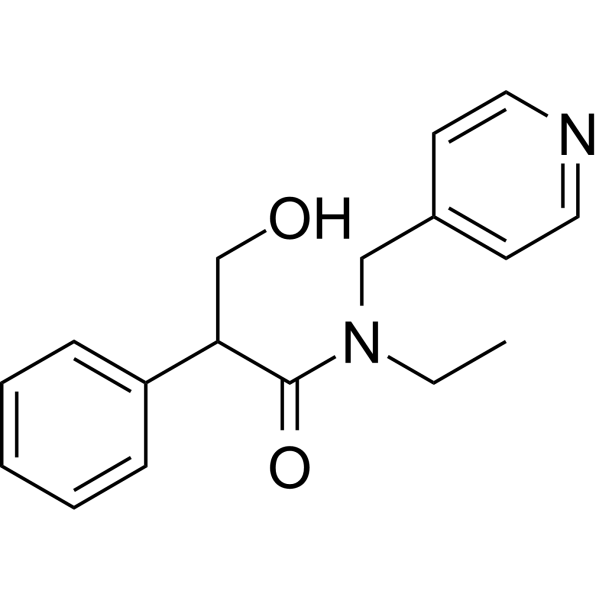 0 ImagesTropicamide (Ro 1-7683) is a selective M4 muscarinic acetylcholine receptor antagonist. When used as an eye drop, Tropicamide causes short-term mydriasis (pupil dilation) and cycloplegia. Tropicamide can be used in the research of neurological diseases, such as epilepsy.
-
Fesoterodine fumarate
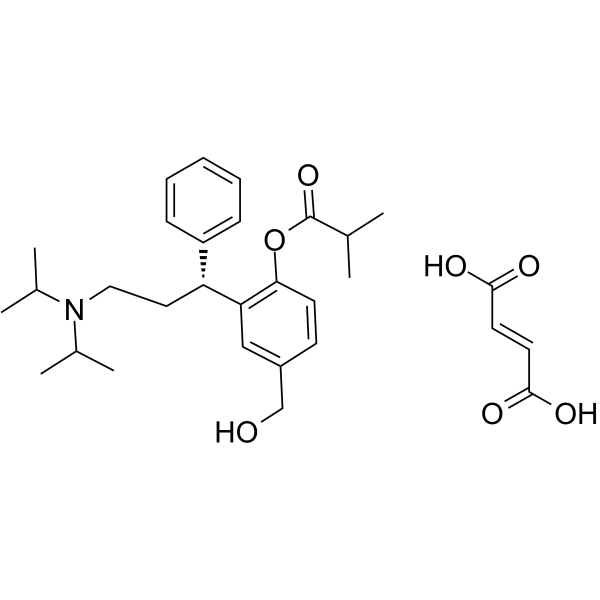 0 ImagesCat. No.: HY-A0030CAS No.: 286930-03-8Fesoterodine Fumarate is an orally active, nonsubtype selective, competitive muscarinic receptor (mAChR) antagonist with pKi values of 8.0, 7.7, 7.4, 7.3, 7.5 for M1, M2, M3, M4, M5 receptors, respectively. Fesoterodine Fumarate is used for the overactive bladder (OAB).
-
Atropine sulfate monohydrate
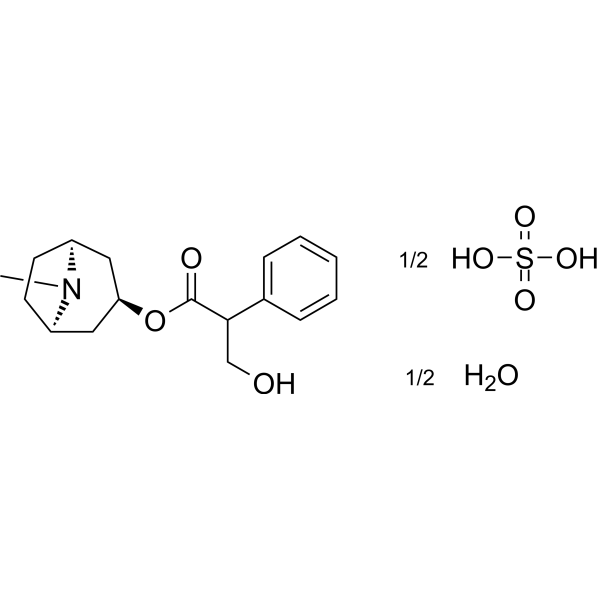 0 ImagesSynonyms: Tropine tropate sulfate monohydrate; DL-Hyoscyamine sulfate monohydrateAtropine (Tropine tropate) sulfate monohydrate is a competitive muscarinic acetylcholine receptor (mAChR) antagonist with IC50 values of 0.39 and 0.71 nM for Human mAChR M4 and Chicken mAChR M4, respectively. Atropine sulfate monohydrate inhibits ACh-induced relaxations in human pulmonary veins. Atropine sulfate monohydrate can be used for research of anti-myopia and bradycardia.
-
VU0467154
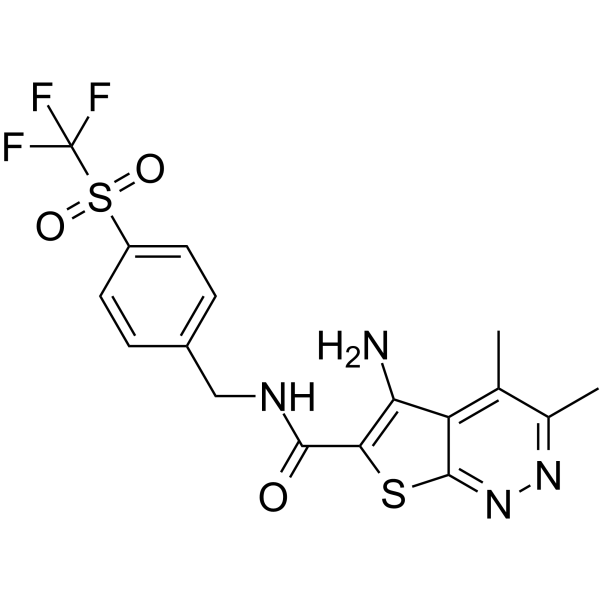 0 ImagesVU0467154 is a positive allosteric modulator of the M4 muscarinic acetylcholine receptor (mAChR), potentiating the response to ACh with pEC50s of 7.75, 6.2 and 6 for rat, human and cynomolgus monkey M4 receptor, respectively.
-
Diphenidol hydrochloride
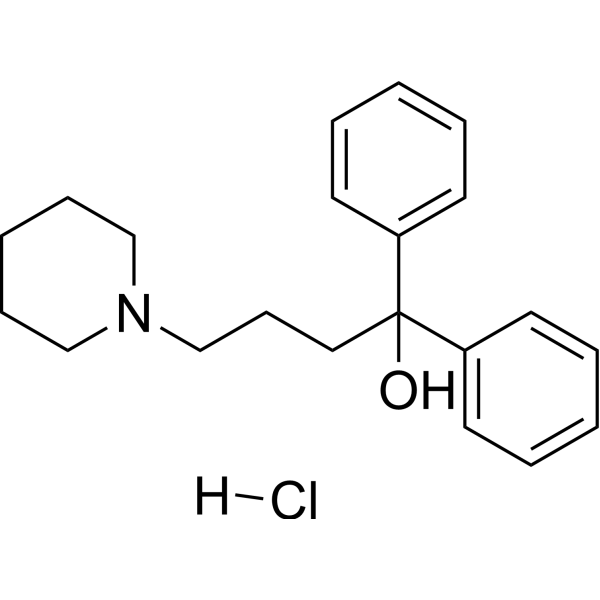 0 ImagesDiphenidol hydrochloride (Difenidol hydrochloride) is a non-selective muscarinic M1-M4 receptor antagonist, has anti-arrhythmic activity. Diphenidol hydrochloride is also a potent non-specific blocker of voltage-gated ion channels (Na+, K+, and Ca2+) in neuronal cells. Diphenidol hydrochloride can be used in the study of antivertigo and antinausea.
-
Sabcomeline hydrochloride
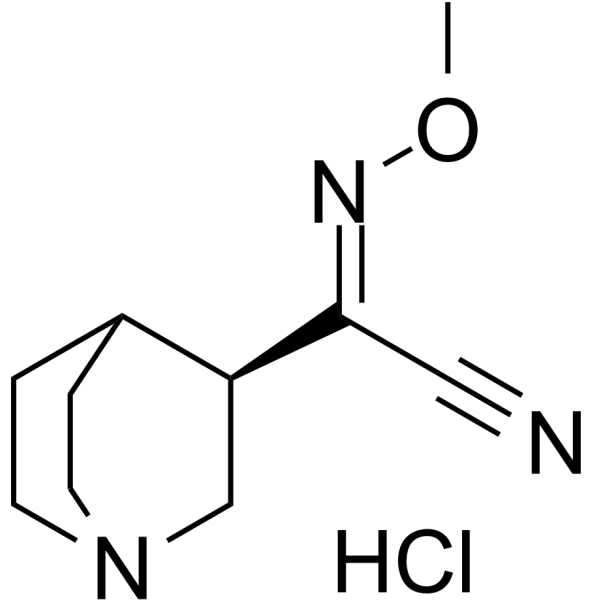 0 ImagesSynonyms: SB-202026 hydrochloride; Memric hydrochlorideSabcomeline (SB-202026; Memric) hydrochloride is a muscarinic receptor agonist capable of crossing the blood-brain barrier. Sabcomeline hydrochloride exhibits affinity for all hM1 to hM5 subtypes (pKi=6.72-7.23), and shows near-full agonism at the hM3 receptor, inducing extracellular acidification. Sabcomeline hydrochloride alters the binding kinetics of dopamine D2 receptors through neural network regulation. Sabcomeline hydrochloride also causes minimal cardiovascular changes, effectively reverses spatial memory deficits in rodents and induces conditioned taste aversion. Sabcomeline hydrochloride is an important tool compound in studies of Alzheimer's disease and related neurodegenerative diseases.
-
(Rac)-5-Hydroxymethyl Tolterodine
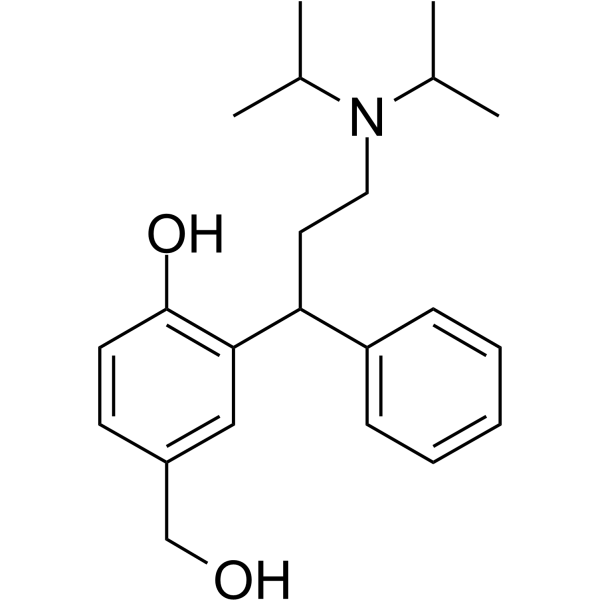 0 ImagesSynonyms: (Rac)-Desfesoterodine; (Rac)-PNU-200577(Rac)-5-Hydroxymethyl Tolterodine ((Rac)-Desfesoterodine), an active metabolite of Tolterodine, is a mAChR antagonist (Ki values of 2.3 nM, 2 nM, 2.5 nM, 2.8 nM, and 2.9 nM for M1, M2, M3, M4, and M5 receptors, respectively). (Rac)-5-Hydroxymethyl Tolterodine can be used for overactive bladder research.



