



mAChR4 Agonist
- 1
- 2
-
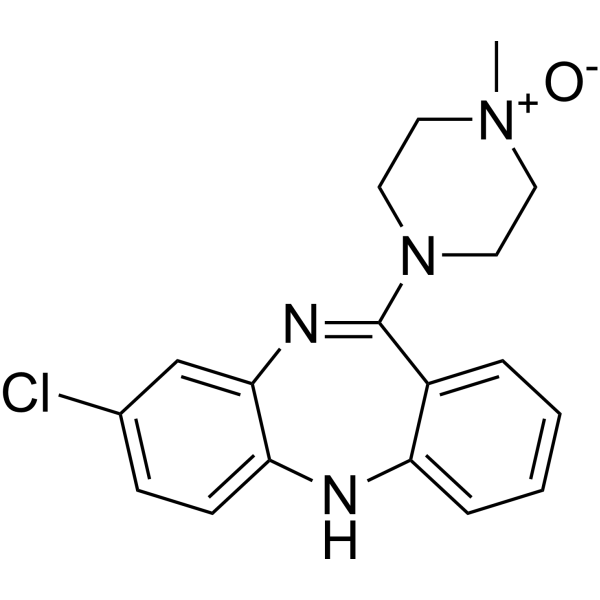
Clozapine N-oxide
 0 Images
Clozapine N-oxide is a major metabolite of Clozapine and a human muscarinic designer receptors (DREADDs) agonist. Clozapine N-oxide activates the DREADD receptor hM3Dq and hM4Di. Clozapine N-oxide can't cross the blood-brain barrier. Clozapine is a potent dopamine antagonist and also a potent and selective muscarinic M4 receptor (EC50=11 nM) agonist.
-
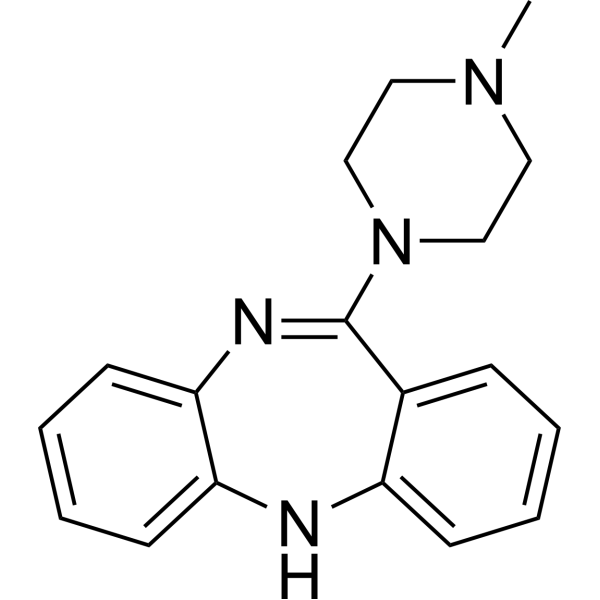
Deschloroclozapine
 0 Images
Deschloroclozapine, a metabolite of Clozapine, is a highly potent muscarinic DREADDs agonist, with blood-brain barrier permeability. Deschloroclozapine binds to DREADD receptor subtypes hM3Dq and hM4Di with Ki of 6.3 and 4.2 nM, respectively. [11C]-Deschloroclozapine is developed as a promising PET tracer for DREADD imaging.
-
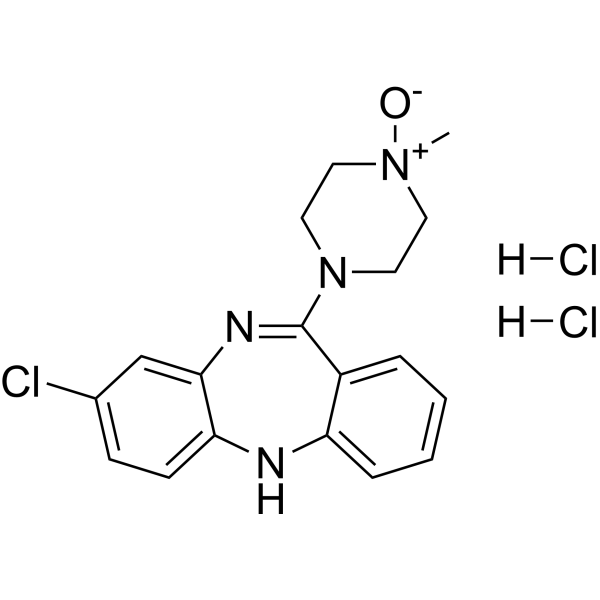
Clozapine N-oxide dihydrochloride
 0 Images
Clozapine N-oxide dihydrochloride is a major metabolite of Clozapine and a human muscarinic designer receptors (DREADDs) agonist. Clozapine N-oxide dihydrochloride activates the DREADD receptor hM3Dq and hM4Di. Clozapine N-oxide dihydrochloride cannot cross the blood-brain barrier. Clozapine is a potent dopamine antagonist and also a potent and selective muscarinic M4 receptor (EC50=11 nM) agonist.
-
HTL-9936
 0 ImagesCat. No.: HY-148961CAS No.: 1438242-59-1
HTL-9936 is an orally active partial agonist of muscarinic M1 receptor. HTL-9936 has an EC50 of 32 nM for human M1 receptor and an EC50 of 224 nM for human M4 receptor. HTL-9936 activates Gq/11 coupling, promotes inositol phosphate accumulation, ERK1/2 phosphorylation, β-arrestin recruitment and receptor internalization. HTL-9936 can be used in the research of Alzheimer's disease and schizophrenia.
-
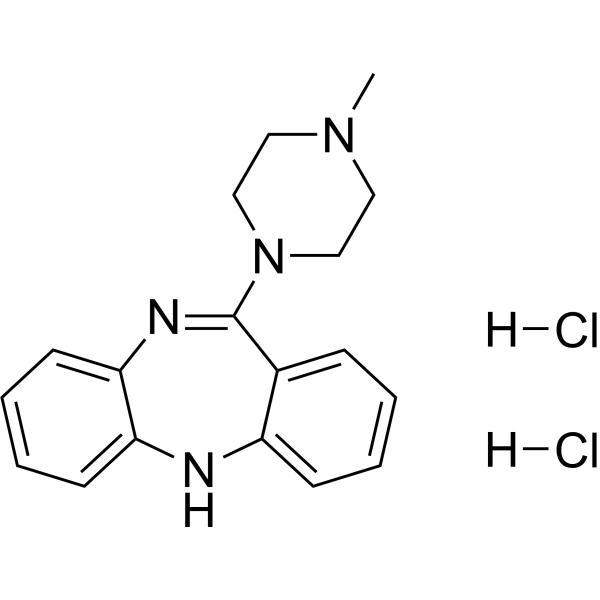
Deschloroclozapine dihydrochloride
 0 ImagesCat. No.: HY-42110APurity: 99.87%
Deschloroclozapine dihydrochloride, a metabolite of Clozapine, is a highly potent muscarinic DREADDs agonist, with blood-brain barrier permeability. Deschloroclozapine dihydrochloride binds to DREADD receptor subtypes hM3Dq and hM4Di with Ki of 6.3 and 4.2 nM, respectively. [11C]-Deschloroclozapine dihydrochloride is developed as a promising PET tracer for DREADD imaging.
-
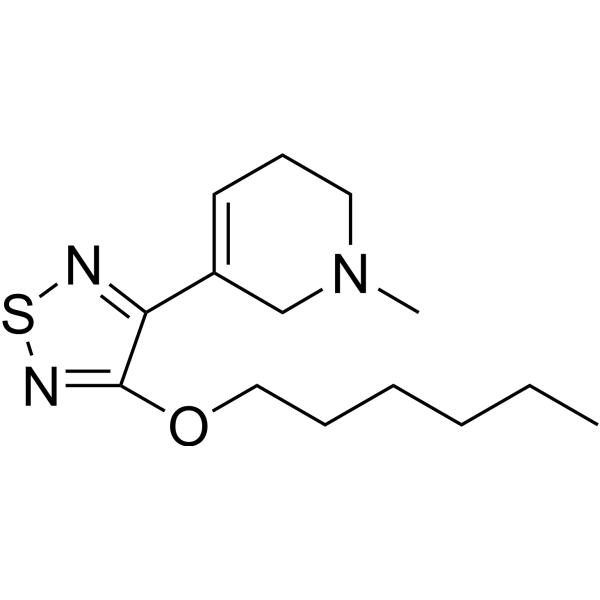
Xanomeline
 0 ImagesSynonyms: LY-246708
Xanomeline, as an effective and selective muscarinic type 1 and type 4 (M1/M4) receptor agonist, increases neuronal excitability. Xanomeline can be used for the research of neurological disorders, such as schizophrenia.
-
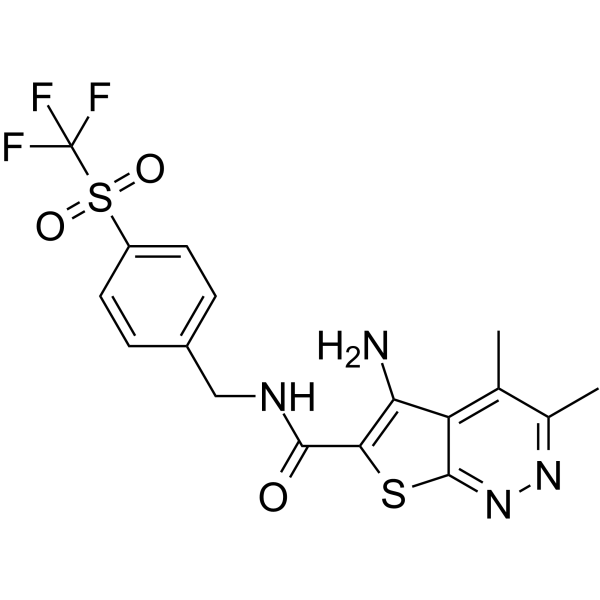
VU0467154
 0 Images
VU0467154 is a positive allosteric modulator of the M4 muscarinic acetylcholine receptor (mAChR), potentiating the response to ACh with pEC50s of 7.75, 6.2 and 6 for rat, human and cynomolgus monkey M4 receptor, respectively.
-
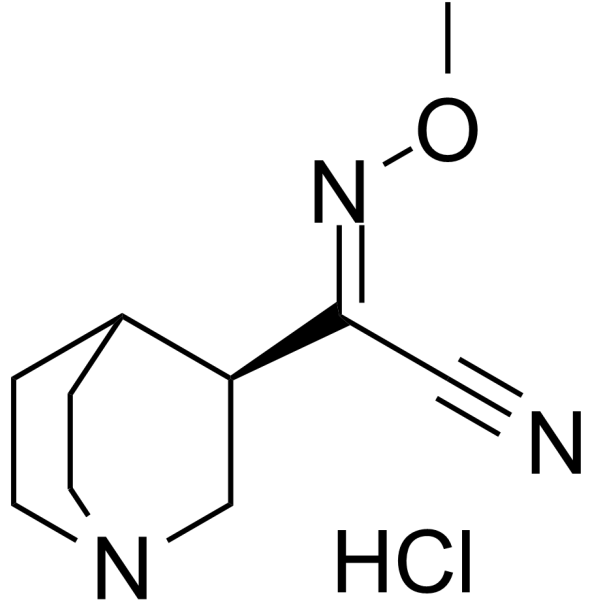
Sabcomeline hydrochloride
 0 ImagesSynonyms: SB-202026 hydrochloride; Memric hydrochloride
Sabcomeline (SB-202026; Memric) hydrochloride is a muscarinic receptor agonist capable of crossing the blood-brain barrier. Sabcomeline hydrochloride exhibits affinity for all hM1 to hM5 subtypes (pKi=6.72-7.23), and shows near-full agonism at the hM3 receptor, inducing extracellular acidification. Sabcomeline hydrochloride alters the binding kinetics of dopamine D2 receptors through neural network regulation. Sabcomeline hydrochloride also causes minimal cardiovascular changes, effectively reverses spatial memory deficits in rodents and induces conditioned taste aversion. Sabcomeline hydrochloride is an important tool compound in studies of Alzheimer's disease and related neurodegenerative diseases.
-
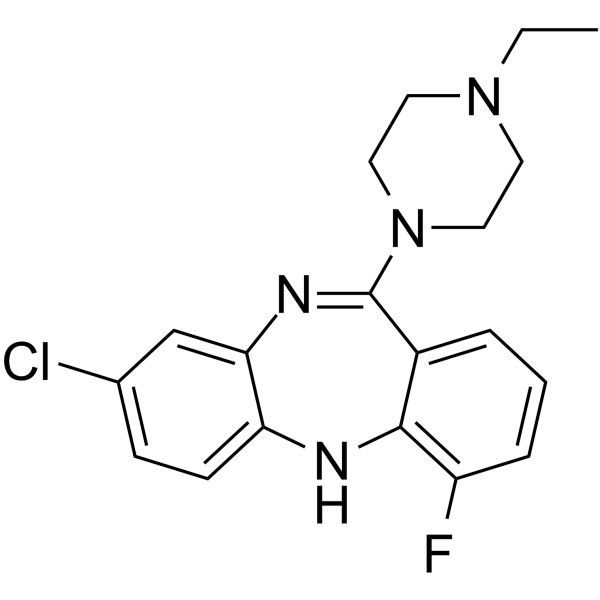
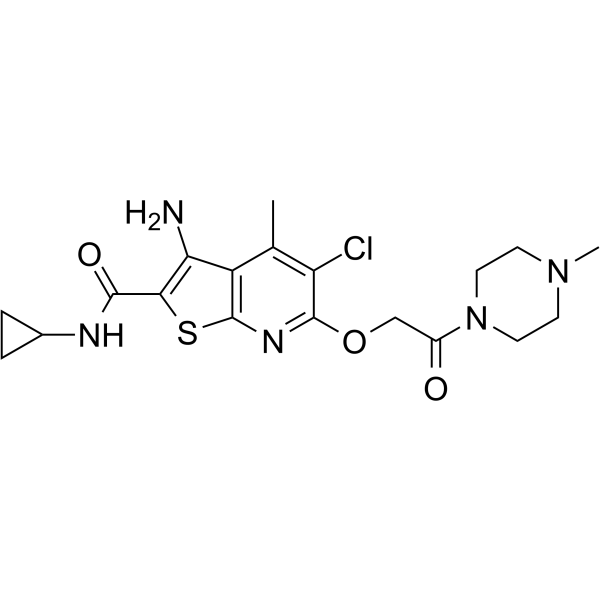
JHU37160
 0 Images
JHU37160 is a potent and brain-penetrant DREADD agonist, with EC50s of 18.5 nM and 0.2 nM for hM3Dq and hM4Di DREADDs in HEK-293 cells, respectively. JHU37160 exhibits selective [3H]Clozapine displacement from DREADDs and not from other Clozapine-binding sites in mice brain tissue.
-
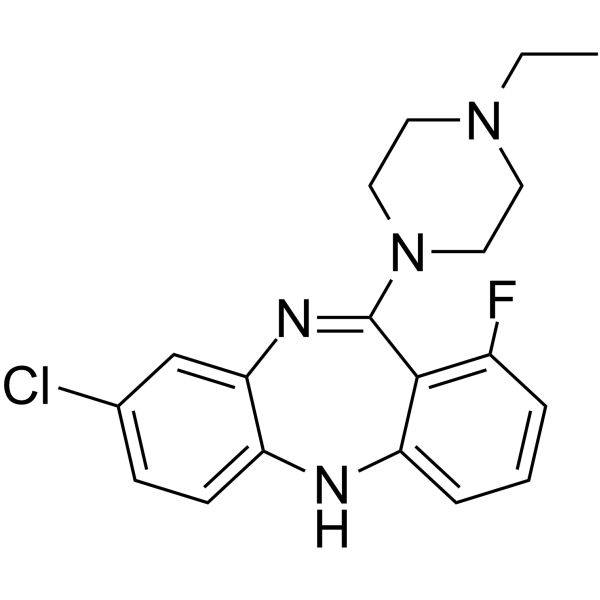
JHU37152
 0 Images
JHU37152 is a potent and brain-penetrant DREADD agonist, with EC50s of 5 nM and 0.5 nM for hM3Dq and hM4Di DREADDs in HEK-293 cells, respectively. JHU37152 exhibits selective [3H]Clozapine displacement from DREADDs and not from other Clozapine-binding sites in mice brain tissue.
-
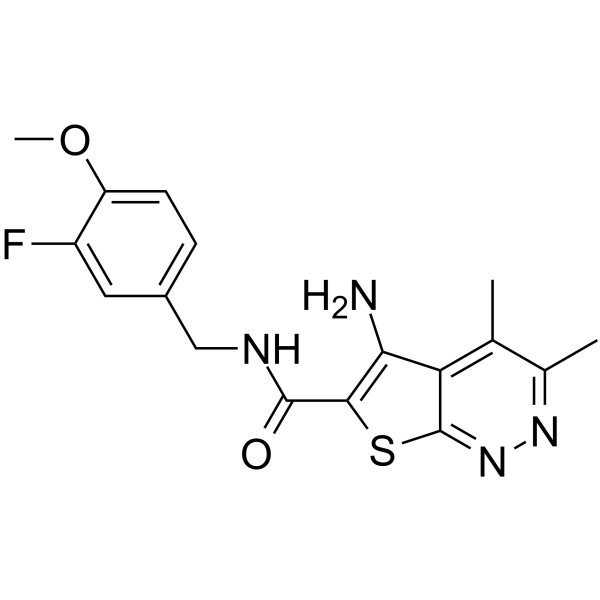
VU0467485
 0 ImagesSynonyms: AZ13713945
VU0467485 (AZ13713945) is a potent, selective, and orally bioavailable muscarinic acetylcholine receptor 4 (M4) positive allosteric modulator (PAM). VU0467485 (AZ13713945) potentiates activity of ACh at M4 with EC50s of 26.6 nM and 78.8 nM at rat and human M4 receptors, respectively. VU0467485 (AZ13713945) shows selectivity for M4 over human and rat M1/2/3/5. VU0467485 (AZ13713945) displays moderate to high CNS penetration. VU0467485 (AZ13713945) has antipsychotic-like activity.
-
Direclidine
 0 ImagesCat. No.: HY-159829CAS No.: 1803346-98-6Synonyms: NBI-1117568; HTL-0016878
Direclidine (NBI-1117568, HTL-0016878) is a selective orthosteric agonist targeting the muscarinic acetylcholine M4 receptor, exhibiting very low affinity for M1, M2, M3, and M5 receptors. It binds to the orthosteric site of the M4 receptor in a non-covalent, competitive manner. Direclidine specifically activates the M4 receptor, inhibiting the release of acetylcholine from striatal cholinergic interneurons, thereby regulating the balance of the dopaminergic system and reducing psychiatric symptoms associated with excessive dopamine release. Direclidine can improve symptoms associated with neuropsychiatric disorders and is used in research on schizophrenia and other neuropsychiatric disorders.
-
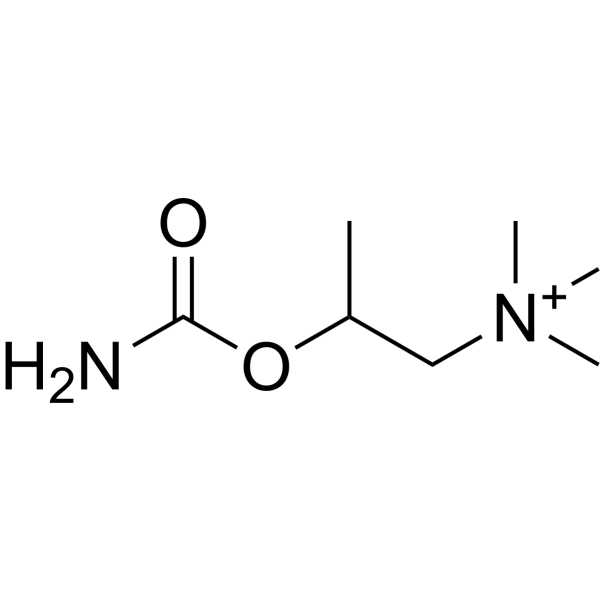
Direclidine citrate
 0 ImagesSynonyms: NBI-1117568 citrate; HTL-0016878 citrate
Direclidine (NBI-1117568, HTL-0016878) citrate is a selective orthosteric agonist targeting the muscarinic acetylcholine M4 receptor, exhibiting very low affinity for M1, M2, M3, and M5 receptors. Direclidine citrate binds to the orthosteric site of the M4 receptor in a non-covalent, competitive manner. Direclidine citrate specifically activates the M4 receptor, inhibiting the release of acetylcholine from striatal cholinergic interneurons, thereby regulating the balance of the dopaminergic system and reducing psychiatric symptoms associated with excessive dopamine release. Direclidine citrate can improve symptoms associated with neuropsychiatric disorders and is used in research on schizophrenia and other neuropsychiatric disorders.
-
Milameline hydrochloride
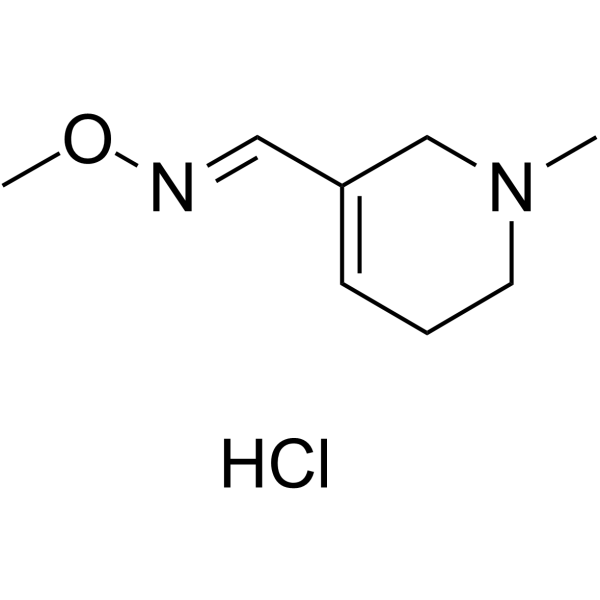 0 ImagesCat. No.: HY-107650CAS No.: 139886-04-7Synonyms: CI 979 hydrochloride; RU 35926 hydrochloride
Milameline (CI 979; RU35926) hydrochloride is a nonselective, partical and orally active muscarinic receptor agonist that improves cognition. Milameline hydrochloride has equal affinity for different subtypes of human muscarinic receptors with IC50 of 1.3 µM for M1-, 1.1 µM for M2-, 1.5 µM for M3-, and 1.9 µM for M4-muscarinic receptors. Milameline hydrochloride has a higher affinity for sites [3H]CMD (IC50 = 20 nM), than [3H]QNB, (IC50 = 3059 nM). Milameline hydrochloride produces both central and peripheral cholinergic effects and reverses the cognitive deficits induced by Scopolamine (HY-N0296). Milameline hydrochloride can be used for the study of Alzheimer’s Disease.
-
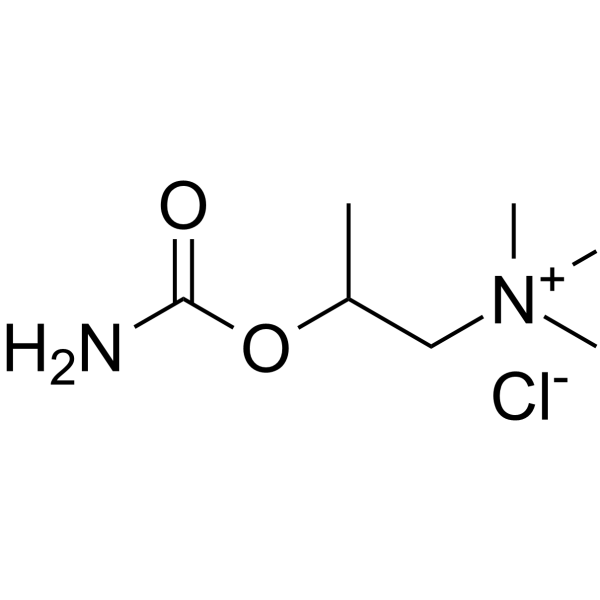
M1/M4 muscarinic agonist 1
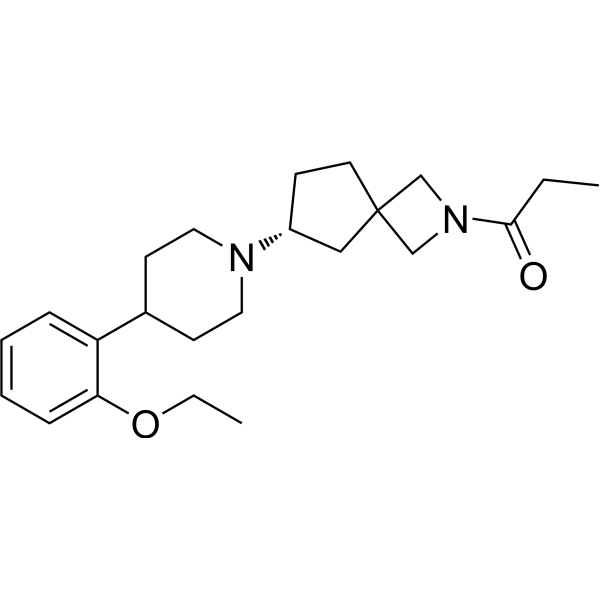 0 ImagesCat. No.: HY-149702
M1/M4 muscarinic agonist 1 (compound 41) is a selective muscarinic M4/M1 agonist with EC50 values of 14 and 55 nM for M4 and M1, respectively. M1/M4 muscarinic agonist 1 can be used for research on mental diseases, such as schizophrenia, delusional disorder, etc.
-
Lu AE51090
 0 Images
Lu AE51090 is selective muscarinic M1 receptor agonist with blood-brain barrier penetration. Lu AE51090 activates human M1 receptor with EC50 of 61 nM, while showing no significant agonism at M2-M5 receptors. Lu AE51090 exerts procognitive effects in mice. Lu AE51090 can be used for the study of Alzheimer’s disease (AD) and cognitive impairment associated with schizophrenia (CIAS).
-
VU6009453
 0 ImagesCat. No.: HY-119363CAS No.: 2148929-11-5
VU6009453 (compound 15q) is a brain-penetrant M4 mAChR positive allosteric modulator (PAM) with an EC50 of 383 nM. VU6009453 can be used for research on neurological diseases.
- 1
- 2



