



Poloxamer 403 (P123)

Based on 1 Customer Validation
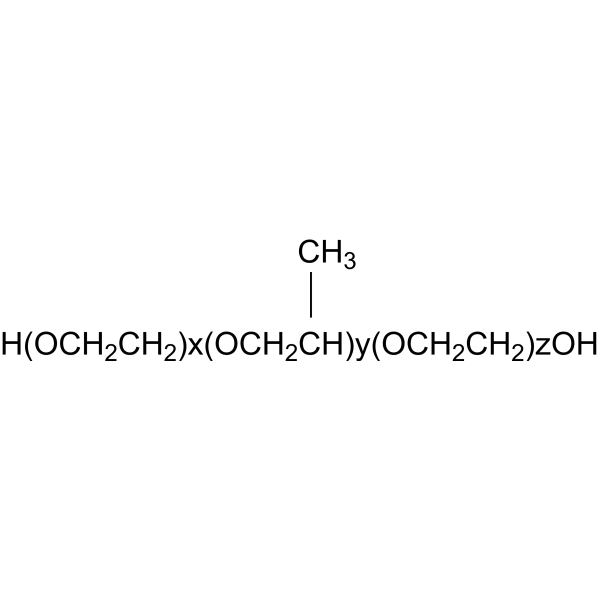
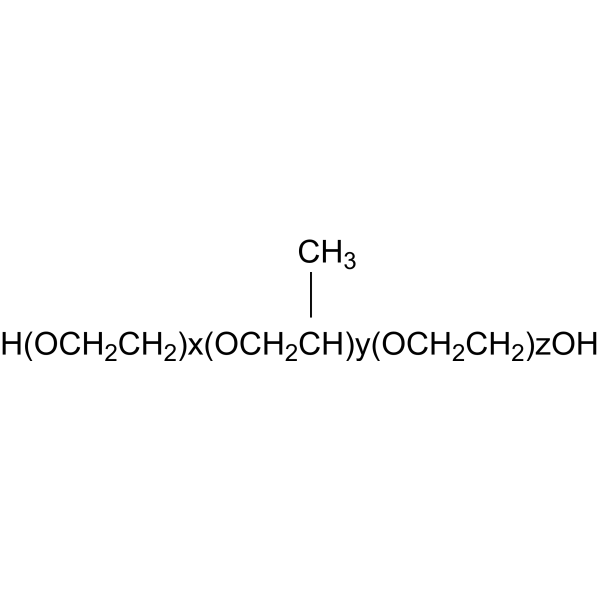
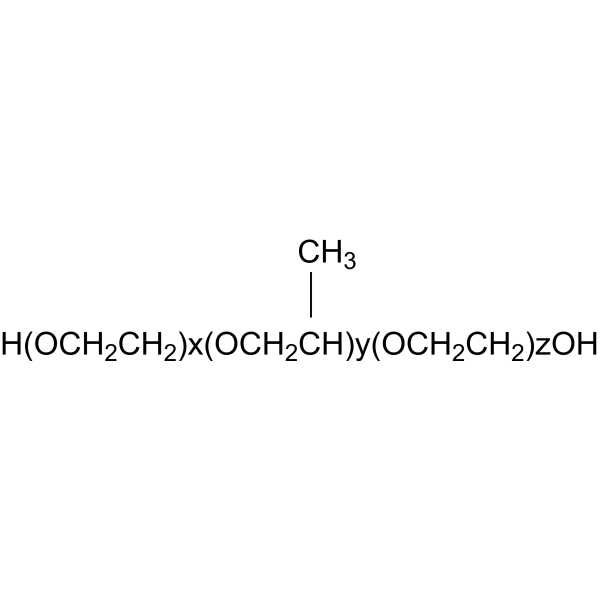
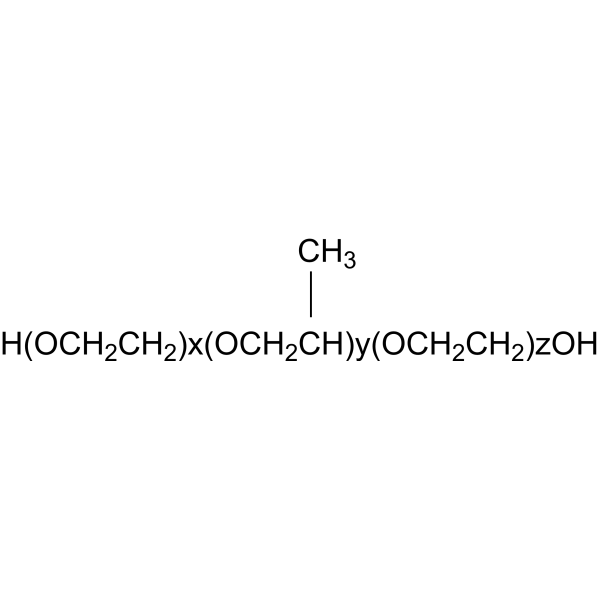
Poloxamer 403 P123 is a block copolymer of polyoxyethylene and polyoxypropylene with an average molecular weight of 5750. Poloxamer has the ability to inhibit P-gp. Poloxamer 403 increases creatine kinase levels. Poloxamer 403 is myotoxic.
For research use only. We do not sell to patients.
- CAS No.: 9003-11-6
- Molecular Weight:5750 (Average)
-
Storage:
Please store the product under the recommended conditions in the Certificate of Analysis.

To place orders, for customer services and technical support, please contact: MedChemExpress USA
Tel: 609-228-6898 E-mail: [email protected] [email protected]


-
 Biological Activity
-
Chemical Information
- Purity & Documentation
- References
-
 Help & FAQs


-
HY-D1005A6
Poloxamer 124 (L44) -
HY-D1005
Poloxamer 407 (F127) -
HY-D1005A
Poloxamer 188 -
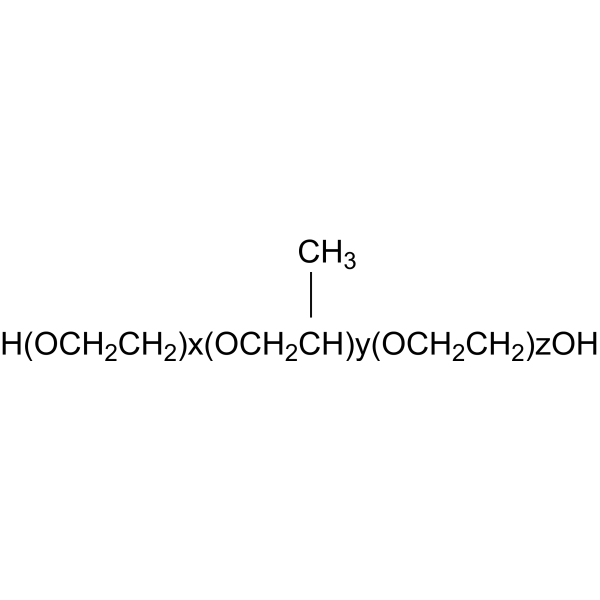
HY-D1005H
Poloxamer 188 (F68) -
HY-D1005A22
Poloxamer 338 (F108) -
HY-D1005A23
Poloxamer 401 (L121) -
HY-D1005A10
Poloxamer 184 (L64) -
HY-D1005B
Poloxamer 237 (F87) -
HY-D1005A2
Poloxamer 105 (L35) -
HY-D1005A8
Poloxamer 181 (L61) -

HY-D1005K
Poloxamer L64 -
HY-D1005F
Poloxamer 182 (L62)


Biological Activity
Description
In Vitro
Poloxamer 403 can be used as a cosmetic ingredient[1].
Poloxamer has the ability to inhibit P-gp[2].
Poloxamer has been proposed as an agent carrier to improve agent efficacy and reduce side effects[2].
MedChemExpress (MCE) has not independently confirmed the accuracy of these methods. They are for reference only.
In Vivo
MedChemExpress (MCE) has not independently confirmed the accuracy of these methods. They are for reference only.


Chemical Information
-
CAS No. 9003-11-6
-
Appearance <50°C Solid,>52°C Liquid
-
Molecular Weight 5750 (Average)
-
Color Colorless to off-white
-
SMILES
[Poloxamer 403 (P123)]
-
Synonyms
PEG-PPG-PEG, 5750 (Average)
-
Shipping
Room temperature in continental US; may vary elsewhere.
-
Storage
Please store the product under the recommended conditions in the Certificate of Analysis.


Purity & Documentation
-
Data Sheet (266 KB)
-
SDS (252 KB)
- English - EN (252 KB)
- Français - FR (252 KB)
- Deutsch - DE (252 KB)
- Norwegian - NO (252 KB)
- Español - ES (252 KB)
- Swedish - SV (252 KB)
- Italian - IT (252 KB)
- Korean - KR (252 KB)
- Portuguese - PT (252 KB)
-
Handling Instructions (2659 KB)
References
[1]. Johnston TP, et al., Toxicological evaluation of poloxamer vehicles for intramuscular use. J Parenter Sci Technol. 1985 Mar-Apr;39(2):83-9. [Content Brief]
[2]. Mello JC, et al. Enhancement of chlorpromazine antitumor activity by Pluronics F127/L81 nanostructured system against human multidrug resistant leukemia. Pharmacol Res. 2016 Sep;111:102-112. [Content Brief]

Calculators
Concentration (start) × Volume (start) = Concentration (final) × Volume (final)


Poloxamer 403 (P123) Related Classifications
HY-D1005A25 Related Classifications
 Powered by Bioz