



Duchenne Muscular Dystrophy
-
Duchenne Muscular Dystrophy (29)

- 1
- 2
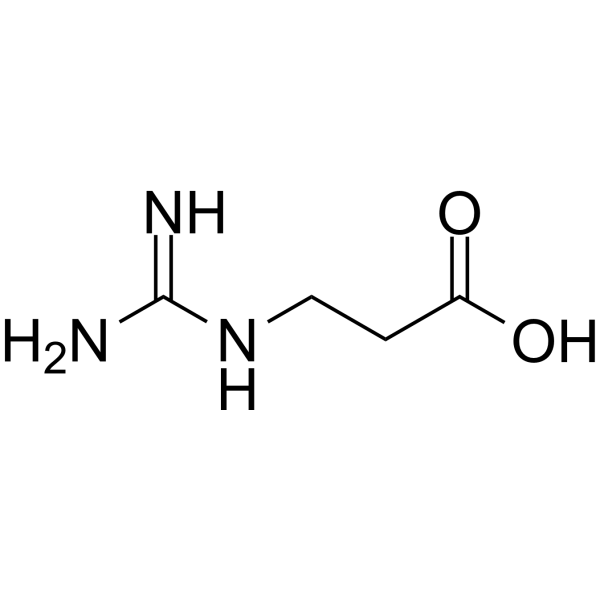
- Formula: C4H9N3O2
- Molecular Weight: 131.14
Ompenaclid (RGX-202) is an oral small-molecule SLC6A8 transporter inhibitor. Ompenaclid robustly inhibits creatine import in vitro and in vivo, reduces intracellular phosphocreatine and ATP levels, and induces tumor apoptosis. Ompenaclid can be used for the research of cancer and duchenne muscular dystrophy.

- Molecular Weight: 144.44 kDa
Delpacibart is a humanized IgG1κ monoclonal antibody targeting the transferrin receptor TFRC. Delpacibart can be conjugated with the phosphorodiamidate morpholino oligonucleotide (PMO) Zotadirsen (HY-177972), which targets exon 44 of the dystrophin gene, to synthesize the antibody-oligonucleotide conjugate (AOC) Delpacibart zotadirsen (HY-177564). Delpacibart is suitable for use in Duchenne muscular dystrophy (DMD44) research.

- Formula: C364H569N177O122P30
- Molecular Weight: 10305.74
Eteplirsen (AVI 4658) is a phosphorylated diamine morpholino oligonucleotide that targets exon 51 of the human Duchenne muscular dystrophy (DMD) gene. Eteplirsen induces exon 51 skipping, causing it to be skipped during splicing, thereby restoring the translation reading frame and producing a shortened functional dystrophin. Eteplirsen can be used in research on Duchenne muscular dystrophy.
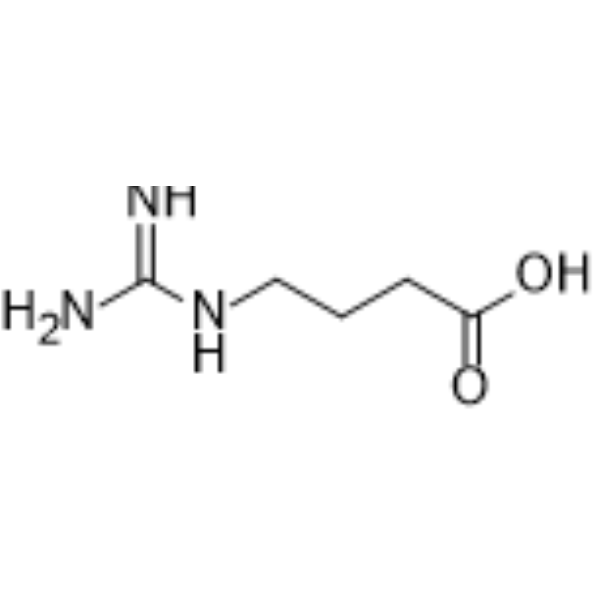
- Formula: C5H11N3O2
- Molecular Weight: 145.16
4-Guanidinobutanoic acid is a metabolite of arginine and an orally active SLC36A1/Hedgehog signaling pathway activator. 4-Guanidinobutanoic acid drives epithelial reprogramming, enhances intestinal stem cell function and goblet cell differentiation. 4-Guanidinobutanoic acid promotes the enrichment of Akkermansia muciniphila via mucus-dependent niche expansion, regulates intestinal homeostasis, and establishes a microbiota-host feedback loop. 4-Guanidinobutanoic acid exhibits anti-aging and healthspan-regulating properties. 4-Guanidinobutanoic acid can be used in research related to ulcerative colitis, amyotrophic lateral sclerosis, and Duchenne muscular dystrophy.

- Formula: C364H539N177Na30O122P30
- Molecular Weight: 10306 (free acid)
Eteplirsen (AVI 4658) sodium is a phosphorylated diamine morpholino oligonucleotide that targets exon 51 of the human Duchenne muscular dystrophy (DMD) gene. Eteplirsen sodium induces exon 51 skipping, causing it to be skipped during splicing, thereby restoring the translation reading frame and producing a shortened functional dystrophin. Eteplirsen sodium can be used in research on Duchenne muscular dystrophy.
- Formula: C268H402N124Na22O95P22
- Molecular Weight: 7584.00
Casimersen (SRP-4045) sodium is an antisense oligonucleotide of the phosphorodiamidate morpholino oligomer subclass. Casimersen sodium binds to exon 45 of dystrophin pre-mRNA, restores the open-reading frame (by skipping exon 45) resulting in the production of an internally truncated but functional dystrophin protein. Casimersen sodium can be used for the research of Duchenne muscular dystrophy (DMD).

- Molecular Weight: 7584.00
Casimersen (SRP-4045) is an antisense oligonucleotide of the phosphorodiamidate morpholino oligomer subclass. Casimersen binds to exon 45 of dystrophin pre-mRNA, restores the open-reading frame (by skipping exon 45) resulting in the production of an internally truncated but functional dystrophin protein. Casimersen can be used for the research of Duchenne muscular dystrophy (DMD).

Delpacibart zotadirsen (Del-zota), an antibody oligonucleotide conjugate (AOC), consists of a monoclonal antibody (Delpacibart) (HY-P990051) that binds to the transferrin receptor 1 (TfR1) conjugated to a phosphorodiamidate morpholino conjugate (PMO), Delpacibart zotadirsen is designed to deliver phosphorodiamidate morpholino oligomers (PMOs) to skeletal muscle and heart tissue to specifically skip exon 44 of the dystrophin gene and enable production of near-full length dystrophin. Delpacibart zotadirsen is used for the study of myotonic dystrophy type 1 (DM1).

- Molecular Weight: 8467.80
Zotadirsen is the core component of the AOC drug Delpacibart zotadirsen (AOC1044) (HY-177564), consisting of a phosphorodiamidate morpholino oligonucleotide (PMO) targeting exon 44 of the dystrophin gene and an SMCC linker (HY-42360). Upon conjugation with the anti-TfR1 antibody Delpacibart (HY-P990051), Zotadirsen exerts splicing regulatory activity and mediates exon skipping. Zotadirsen can be used in studies related to AOC synthesis.

- Formula: C211H275N76O119P19S19
- Molecular Weight: 6977.62
Drisapersen (Kyndrisa) is a 2'-O-methyl phosphorothioate RNA antisense oligonucleotide that induces exon 51 skipping. Drisapersen induces skipping of exon 51 during Dystrophin pre-mRNA splicing, allowing the synthesis of partially functional Dystrophin. Drisapersen can be used in research related to Duchenne muscular dystrophy.
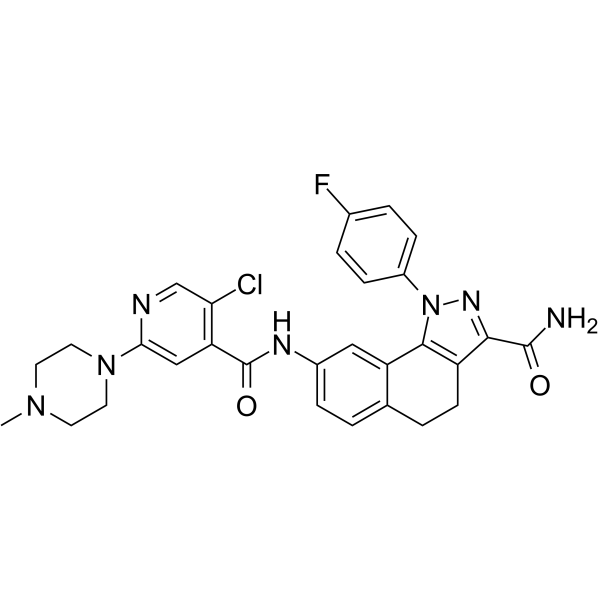
- Formula: C29H27ClFN7O2
- Molecular Weight: 560.02
PHA-408 is a highly selective, orally active and ATP-competitive IKK-2 inhibitor with an IC50 of 40 nM. PHA-408 blocks NF-κB signaling by suppressing IκBα phosphorylation and degradation, p65 phosphorylation, and pro-inflammatory cytokine production, and prevents TNF-α-induced premature senescence in HUVECs. PHA-408 alleviates LPS-and cigarette smoke-triggered pulmonary inflammation, reduces LPS-stimulated serum TNF-α release, and ameliorates joint damage in SCW-induced arthritis in rats. PHA-408 is applicable for the research of rheumatoid arthritis, chronic obstructive pulmonary disease (COPD), and Duchenne muscular dystrophy.
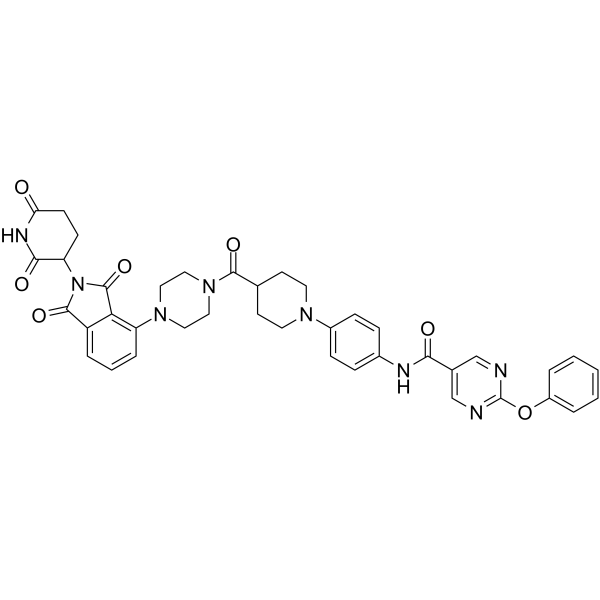
- Formula: C40H38N8O7
- Molecular Weight: 742.78
PROTAC (H-PGDS)-7 is a selective, linker-free H-PGDS PROTAC degrader with a DC50 of 17.3 pM. PROTAC (H-PGDS)-7 binds to CRBN and forms a ternary complex with H-PGDS, inducing the degradation of H-PGDS via the ubiquitin-proteasome system through polyubiquitination and proteasomal degradation processes. PROTAC (H-PGDS)-7 inhibits the upregulated expression of TNFα, IL-1β, TGFβ1 and CD11b in mice with cardiac hypertrophy models. PROTAC (H-PGDS)-7 can be used in studies related to Duchenne muscular dystrophy and allergic diseases.

Zotadirsen scrambled negative control is the sequence scrambled negative control of Zotadirsen.

FAM labled Zotadirsenis a FAM labled Zotadirsen.

Cy3 labled Zotadirsen is a Cy3 labled Zotadirsen.

Brogidirsen sodium scrambled negative control is the sequence scrambled negative control of Brogidirsen sodium.

FAM labled Brogidirsen sodiumis a FAM labled Brogidirsen sodium.

Cy3 labled Brogidirsen sodium is a Cy3 labled Brogidirsen sodium.
- Formula: C280H416N119Na24O105P23
- Molecular Weight: 7865.72 (free acid)
Brogidirsen (NS 089; NCNP 02) sodium is a a dual-targeting antisense oligonucleotide. Brogidirsen sodium can induce dystrophin protein experession. Brogidirsen sodium can be used for the research of Duchenne muscular dystrophy.

- Formula: C5H11N3O2
- Molecular Weight: 145.16
4-Guanidinobutanoic acid (Standard) is the analytical standard of 4-Guanidinobutanoic acid (HY-113286). This product is intended for research and analytical applications. 4-Guanidinobutanoic acid is a metabolite of arginine and an orally active SLC36A1/Hedgehog signaling pathway activator. 4-Guanidinobutanoic acid drives epithelial reprogramming, enhances intestinal stem cell function and goblet cell differentiation. 4-Guanidinobutanoic acid promotes the enrichment of Akkermansia muciniphila via mucus-dependent niche expansion, regulates intestinal homeostasis, and establishes a microbiota-host feedback loop. 4-Guanidinobutanoic acid exhibits anti-aging and healthspan-regulating properties. 4-Guanidinobutanoic acid can be used in research related to ulcerative colitis, amyotrophic lateral sclerosis, and Duchenne muscular dystrophy.
- 1
- 2



