



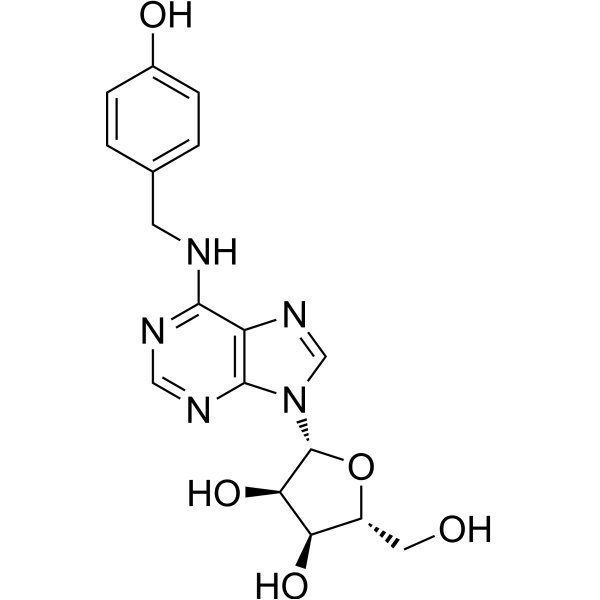
N6-(4-Hydroxybenzyl)adenosine
Based on 1 publication(s) in Google Scholar
N6-(4-Hydroxybenzyl) adenosine (Para-topolin riboside) is an equilibrative nucleoside transporter 1 (ENT1) inhibitor and a selective agonist of adenosine A2a receptor (A2aR), and also exhibits activity against P2Y12 receptor. N6-(4-Hydroxybenzyl) adenosine reduces ethanol intake and preference, attenuates operant conditioning-induced ethanol place preference, decreases the value of ethanol-related rewards, and inhibits collagen-induced platelet aggregation. N6-(4-Hydroxybenzyl) adenosine can be used in studies related to alcohol use disorder.
For research use only. We do not sell to patients.
- Purity : 99.84%
- CAS No.: 110505-75-4
- Formula: C17H19N5O5
- Molecular Weight:373.36
-
Storage:Powder -20°C, 3 years , 4°C, 2 years ; In solvent -80°C, 2 years , -20°C, 1 year

To place orders, for customer services and technical support, please contact: MedChemExpress USA
Tel: 609-228-6898 E-mail: [email protected] [email protected]


-
 Biological Activity
-
Chemical Information
-
Solvent & Solubility
- Purity & Documentation
- References
-
 Help & FAQs



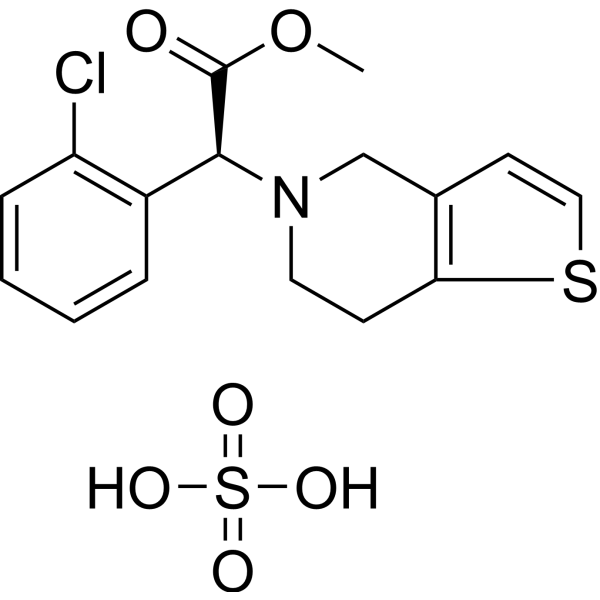
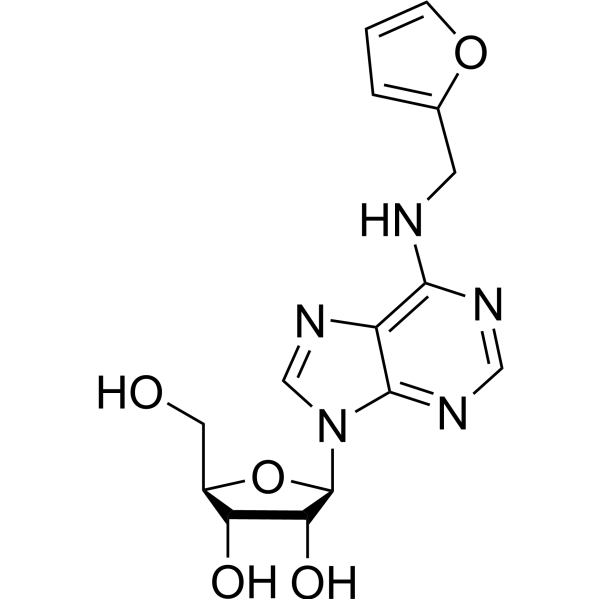
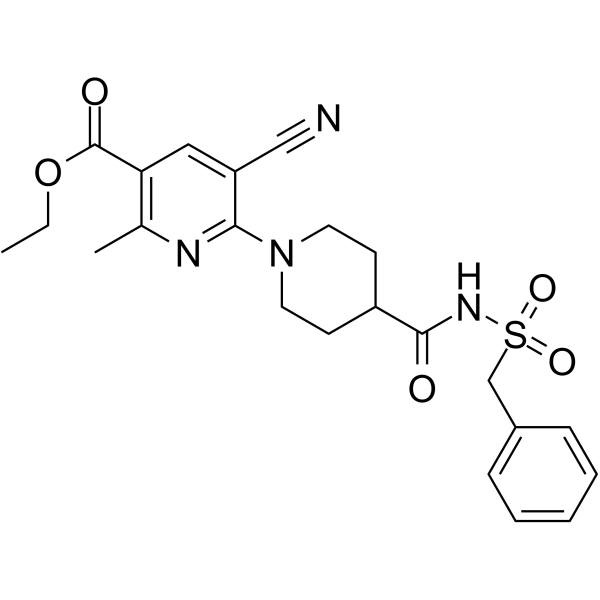
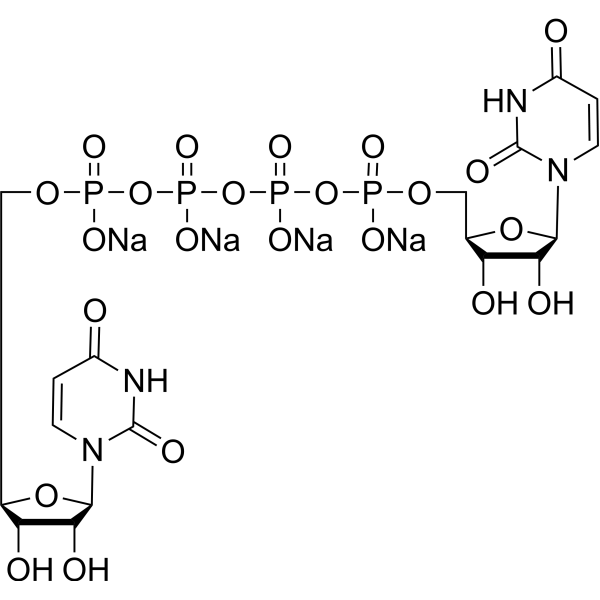
Publications Citing Use of MedChemExpress (MCE) N6-(4-Hydroxybenzyl)adenosine
MoreAll Adenosine Receptor Isoforms
MoreAll P2Y Receptor Isoforms
More

Biological Activity
Description
IC50 & Target
[1]|
A2AR |
Cellular Effect
|
Cell Line

|
Type | Value | Description | References |
|---|---|---|---|---|
| PC-12 | EC50 |
0.037 μM
Compound: 2
|
Prevention of serum deprivation-induced PC12 cell apoptosis by MTT assay
Prevention of serum deprivation-induced PC12 cell apoptosis by MTT assay
|
[PMID: 17381154] |
| Platelet | IC50 |
6.77 μM
Compound: 2e
|
Inhibition of collagen-induced human platelet aggregation after 3 mins by light transmission aggregometry
Inhibition of collagen-induced human platelet aggregation after 3 mins by light transmission aggregometry
|
[PMID: 25467153] |
In Vitro
In Vivo
N6-(4-Hydroxybenzyl)adenosine (0.1 mg/kg; i.p.; single dose) dampens operant conditioning-induced ethanol zone preference in food-restricted male C57BL/6J mice without altering locomotion[1].
N6-(4-Hydroxybenzyl)adenosine (0.1 mg/kg; i.p.; single dose) reduces the value of ethanol-containing reward in food-restricted male C57BL/6J mice, eliminating reward devaluation-induced differences in nose-poking behavior[1].
N6-(4-Hydroxybenzyl)adenosine (0.1 mg/kg; i.p.; single dose) decreases the value of ethanol-only reward in food-restricted male C57BL/6J mice, eliminating reward devaluation-induced differences in nose-poking behavior[1].
N6-(4-Hydroxybenzyl)adenosine (0.03-0.3 mg/kg; i.p.; single dose) at doses up to 0.1 mg/kg does not alter locomotor activity in male C57BL/6J mice, while 0.3 mg/kg reduces locomotion[1].
MedChemExpress (MCE) has not independently confirmed the accuracy of these methods. They are for reference only.
-
Animal Model:C57BL/6J (male, 8-10 weeks old, high ethanol drinking model)[1]
-
Dosage:0.1 mg/kg
-
Administration:i.p.; single dose
-
Result:Significantly reduced ethanol preference and ethanol consumption compared to vehicle.
Did not alter total liquid consumption.
-
Animal Model:C57BL/6J (male, 8-10 weeks old, food restricted to 85% baseline weight, operant conditioning with ethanol-containing reward model)[1]
-
Dosage:0.1 mg/kg
-
Administration:i.p.; single dose
-
Result:Eliminated the operant conditioning-induced increase in ethanol zone preference: showed no significant difference in zone entries or time spent between water and 10% ethanol zones.
Did not change locomotor activity.
-
Animal Model:C57BL/6J (male, 8-10 weeks old, food restricted to 85% baseline weight, reward devaluation model)[1]
-
Dosage:0.1 mg/kg
-
Administration:i.p.; single dose
-
Result:Significantly reduced nose-poking behavior in the neutral water state.
Eliminated the difference in nose-poking between water and 10% ethanol + 10% sucrose states.
Devalued the ethanol-containing reward to a similar degree as 10% ethanol presentation, with no significant difference in nose-poking between water and 10% ethanol states.
-
Animal Model:C57BL/6J (male, 8-10 weeks old, food restricted to 85% baseline weight, ethanol reward-seeking model)[1]
-
Dosage:0.1 mg/kg
-
Administration:i.p.; single dose
-
Result:Significantly reduced nose-poking behavior in the neutral water state.
Eliminated the difference in nose-poking between water and 10% ethanol states, whereas vehicle-treated mice showed a significant difference between states.
-
Animal Model:C57BL/6J (male, 8-10 weeks old)[1]
-
Dosage:0.03 mg/kg; 0.1 mg/kg; 0.3 mg/kg
-
Administration:i.p.; single dose
-
Result:Did not alter locomotor activity at 0.03 mg/kg and 0.1 mg/kg compared to vehicle.
Reduced total distance traveled at 0.3 mg/kg.


Chemical Information
-
CAS No. 110505-75-4
-
Appearance Solid
-
Molecular Weight 373.36
-
Formula C17H19N5O5
-
Color Off-white to yellow
-
SMILES
OC[C@@H]1[C@H]([C@H]([C@H](N2C=NC3=C2N=CN=C3NCC4=CC=C(O)C=C4)O1)O)O
-
Synonyms
Para-topolin riboside
-
Shipping
Room temperature in continental US; may vary elsewhere.
-
Storage
Powder -20°C 3 years 4°C 2 years In solvent -80°C 2 years -20°C 1 year


Publications (1)
-
Journal Impact Factor
-
Most Recent


Solvent & Solubility
In Vitro:
DMSO : ≥ 100 mg/mL (267.84 mM; Hygroscopic DMSO has a significant impact on the solubility of product, please use newly opened DMSO)
H2O : < 0.1 mg/mL (insoluble)
* "≥" means soluble, but saturation unknown.
Please refer to the solubility information to select the appropriate solvent. Once prepared, please aliquot and store the solution to prevent product inactivation from repeated freeze-thaw cycles.
Storage method and period of stock solution: -80°C, 2 years; -20°C, 1 year. When stored at -80°C, please use it within 2 years. When stored at -20°C, please use it within 1 year.
Please refer to the solubility information to select the appropriate solvent. Once prepared, please aliquot and store the solution to prevent product inactivation from repeated freeze-thaw cycles.
Storage method and period of stock solution: -80°C, 2 years; -20°C, 1 year. When stored at -80°C, please use it within 2 years. When stored at -20°C, please use it within 1 year.
Concentration (start) × Volume (start) = Concentration (final) × Volume (final)
In Vivo:
Select the appropriate dissolution method based on your experimental animal and administration route.
- For the following dissolution methods, please ensure to first prepare a clear stock solution using an In Vitro approach and then sequentially add co-solvents:
- To ensure reliable experimental results, the clarified stock solution can be appropriately stored based on storage conditions. As for the working solution for In Vivo experiments, it is recommended to prepare freshly and use it on the same day.
- The percentages shown for the solvents indicate their volumetric ratio in the final prepared solution. If precipitation or phase separation occurs during preparation, heat and/or sonication can be used to aid dissolution.
Add each solvent one by one: 10% DMSO 40% PEG300 5% Tween-80 45% Saline
Solubility: ≥ 2.5 mg/mL (6.70 mM); Clear solution
This protocol yields a clear solution of ≥ 2.5 mg/mL (saturation unknown).
Taking 1 mL working solution as an example, add 100 μL DMSO stock solution (25.0 mg/mL) to 400 μL PEG300, and mix evenly; then add 50 μL Tween-80 and mix evenly; then add 450 μL Saline to adjust the volume to 1 mL.
Preparation of Saline: Dissolve 0.9 g sodium chloride in ddH₂O and dilute to 100 mL to obtain a clear Saline solution.
Add each solvent one by one: 10% DMSO 90% (20% SBE-β-CD in Saline)
Solubility: ≥ 2.5 mg/mL (6.70 mM); Clear solution
This protocol yields a clear solution of ≥ 2.5 mg/mL (saturation unknown).
Taking 1 mL working solution as an example, add 100 μL DMSO stock solution (25.0 mg/mL) to 900 μL 20% SBE-β-CD in Saline, and mix evenly.
Preparation of 20% SBE-β-CD in Saline (4°C, storage for one week): 2 g SBE-β-CD powder is dissolved in 10 mL Saline, completely dissolve until clear.
In Vivo Dissolution Calculator
Please enter the basic information of animal experiments:
-
-
-
-
Recommended: Prepare an additional quantity of animals to account for potential losses during experiments.
Please enter your animal formula composition:
-
%DMSO +
Recommended: Keep the proportion of DMSO in working solution below 2% if your animal is weak.
-
%+
-
+%Tween-80 + +
-
%Saline +
The co-solvents required include: DMSO, . All of co-solvents are available by MedChemExpress (MCE). , Tween 80. All of co-solvents are available by MedChemExpress (MCE).
Working solution concentration: 0.22 mg/mL
Method for preparing stock solution: mg drug dissolved in μL DMSO. Stock solution concentration: mg/mL.
1. Take μL DMSO stock solution;
2. Add μL .
μL , mix evenly;
3. Then add μL Tween 80, mix evenly;
4. Then add μL
Please ensure that the stock solution in the first step is dissolved to a clear state, and add co-solvents in sequence. You can use ultrasonic heating (ultrasonic cleaner, recommended frequency 20-40 kHz), vortexing, etc. to assist dissolution.


Purity & Documentation
-
Data Sheet (281 KB)
-
SDS (254 KB)
- English - EN (254 KB)
- Français - FR (254 KB)
- Deutsch - DE (254 KB)
- Norwegian - NO (254 KB)
- Español - ES (254 KB)
- Swedish - SV (254 KB)
- Italian - IT (254 KB)
- Korean - KR (254 KB)
- Portuguese - PT (254 KB)
-
Handling Instructions (2659 KB)
References
[1]. Hong SI, et al. Novel Adenosine Analog, 6-(4-Hydroxybenzyl)-Adenosine, Dampens Alcohol Drinking and Seeking Behaviors. The Journal of pharmacology and experimental therapeutics. 2019 Nov;371(2):260-267. [Content Brief]
[2]. Vistoli G, et al. Naturally occurring N(6)-substituted adenosines (cytokinin ribosides) are in vitro inhibitors of platelet aggregation: an in silico evaluation of their interaction with the P2Y(12) receptor. Bioorganic & medicinal chemistry letters. 2014 Dec 15;24(24):5652-5655. [Content Brief]


Complete Stock Solution Preparation Table
Please refer to the solubility information to select the appropriate solvent. Once prepared, please aliquot and store the solution to prevent product inactivation from repeated freeze-thaw cycles.
Storage method and period of stock solution: -80°C, 2 years; -20°C, 1 year. When stored at -80°C, please use it within 2 years. When stored at -20°C, please use it within 1 year.
| Optional Solvent | Concentration Solvent Mass | 1 mg | 5 mg | 10 mg | 25 mg |
|---|---|---|---|---|---|
| DMSO | 1 mM | 2.6784 mL | 13.3919 mL | 26.7838 mL | 66.9595 mL |
| 5 mM | 0.5357 mL | 2.6784 mL | 5.3568 mL | 13.3919 mL | |
| 10 mM | 0.2678 mL | 1.3392 mL | 2.6784 mL | 6.6960 mL | |
| 15 mM | 0.1786 mL | 0.8928 mL | 1.7856 mL | 4.4640 mL | |
| 20 mM | 0.1339 mL | 0.6696 mL | 1.3392 mL | 3.3480 mL | |
| 25 mM | 0.1071 mL | 0.5357 mL | 1.0714 mL | 2.6784 mL | |
| 30 mM | 0.0893 mL | 0.4464 mL | 0.8928 mL | 2.2320 mL | |
| 40 mM | 0.0670 mL | 0.3348 mL | 0.6696 mL | 1.6740 mL | |
| 50 mM | 0.0536 mL | 0.2678 mL | 0.5357 mL | 1.3392 mL | |
| 60 mM | 0.0446 mL | 0.2232 mL | 0.4464 mL | 1.1160 mL | |
| 80 mM | 0.0335 mL | 0.1674 mL | 0.3348 mL | 0.8370 mL | |
| 100 mM | 0.0268 mL | 0.1339 mL | 0.2678 mL | 0.6696 mL |


N6-(4-Hydroxybenzyl)adenosine Related Classifications
HY-18775 Related Classifications
 Powered by Bioz
Keywords
- N6-(4-Hydroxybenzyl)adenosine
- 110505-75-4
- Para-topolin riboside
- Nucleoside Transporters
- Adenosine Receptor
- P2Y Receptor
- Gastrodia elata
- equilibrative nucleoside transporter 1
- adenosine A2? receptor
- human platelets
- P2Y12 receptor
- alcohol use disorder
- C57BL/6J mice
- ethanol consumption
- collagen-induced platelet aggregation
- operant conditioning
- Inhibitor
- inhibitor
- inhibit