



Diquafosol tetrasodium
Based on 5 publication(s) in Google Scholar
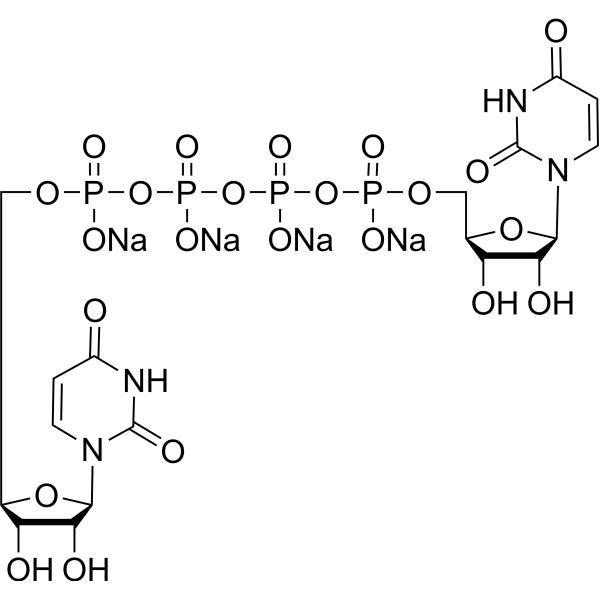
Diquafosol tetrasodium is a P2Y2 receptor agonist that stimulates fluid and mucin secretion on the ocular surface, as a topical treatment of dry eye disease.
For research use only. We do not sell to patients.
- Purity : 99.0%
- CAS No.: 211427-08-6
- Formula: C18H22N4Na4O23P4
- Molecular Weight:878.23
-
Storage:
4°C, sealed storage, away from moisture
* In solvent : -80°C, 6 months; -20°C, 1 month (sealed storage, away from moisture)

To place orders, for customer services and technical support, please contact: MedChemExpress USA
Tel: 609-228-6898 E-mail: [email protected] [email protected]


-
 Biological Activity
-
Chemical Information
-
Solvent & Solubility
- Protocol
- Purity & Documentation
- References
-
 Help & FAQs


-
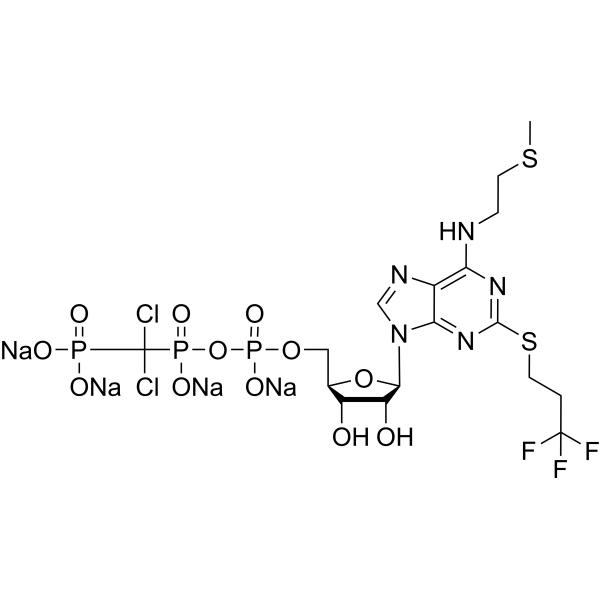
HY-19638A
Cangrelor tetrasodiumP2Y12 Antagonist -
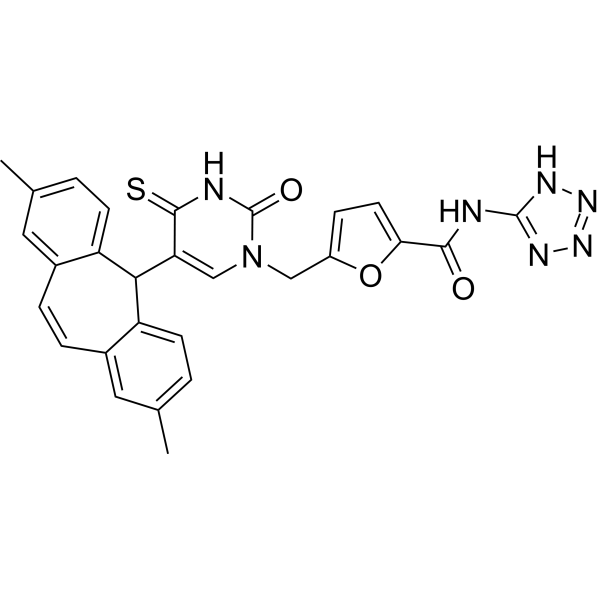
HY-110126
AR-C118925XXP2Y2 Receptor Antagonist -
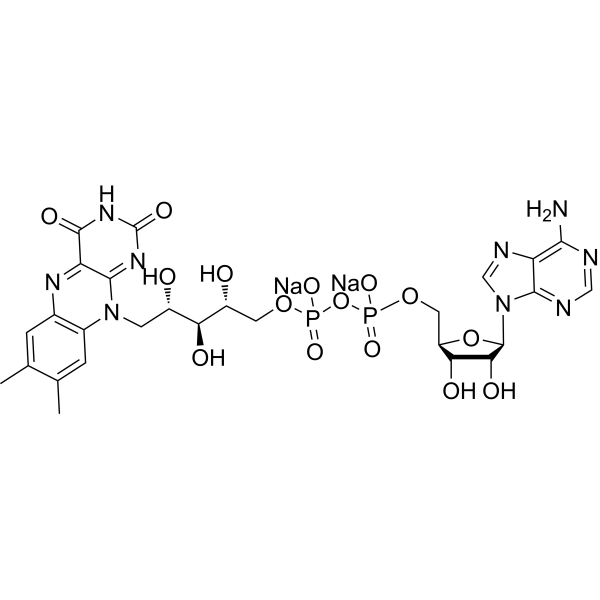
HY-B1654A
Flavin adenine dinucleotide disodium saltEndogenous Metabolite -
HY-108648
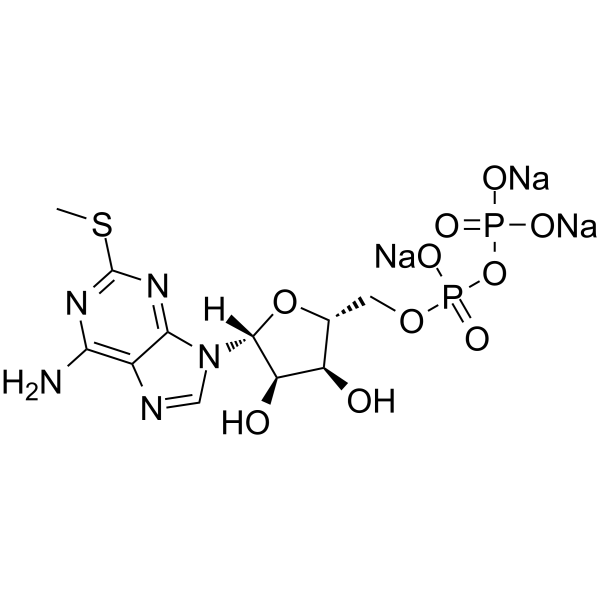
2-MeS-ADP trisodiumP2Y Receptor Agonist -
HY-B0445
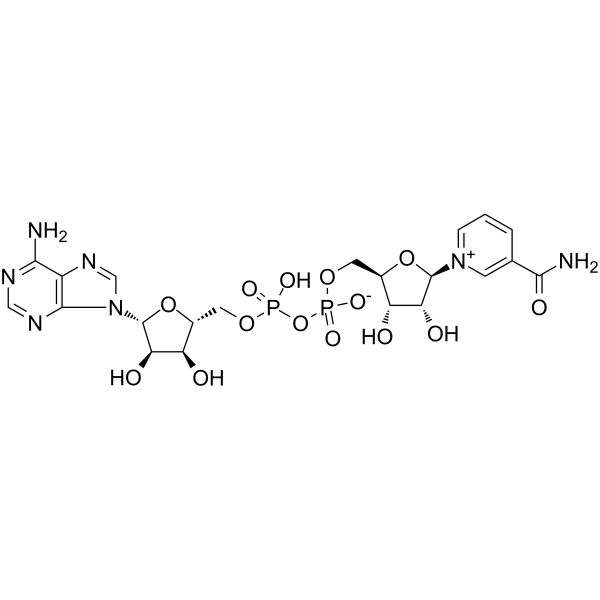
NAD+Endogenous Metabolite -
HY-15531
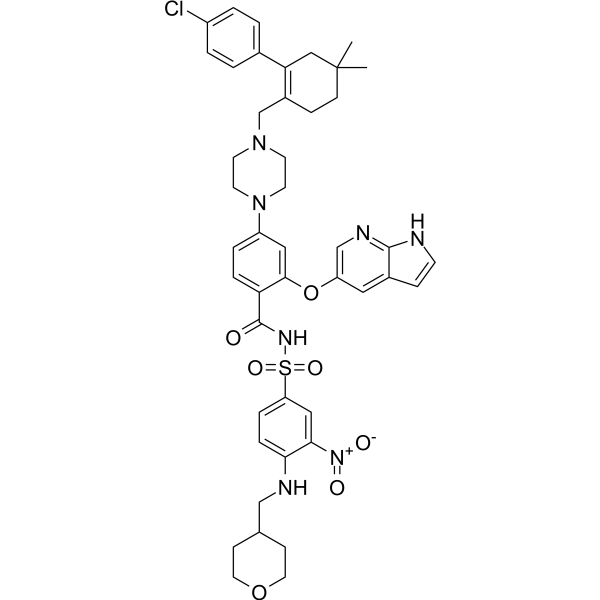
VenetoclaxBCL-2 Inhibitor -
HY-13831
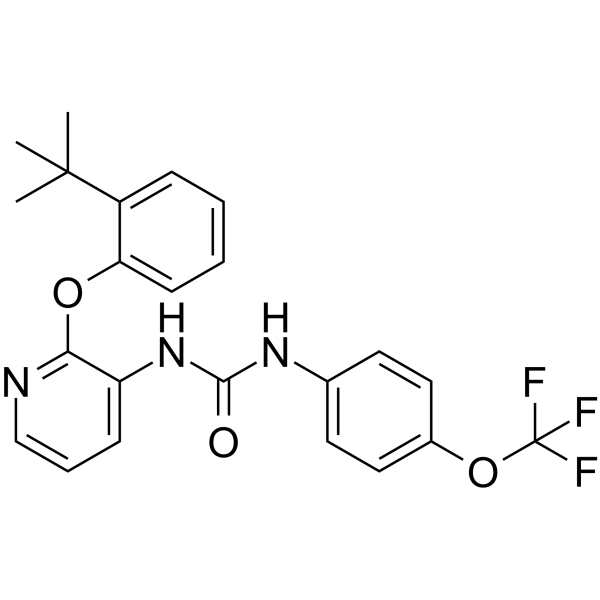
BPTUP2Y1 Antagonist -
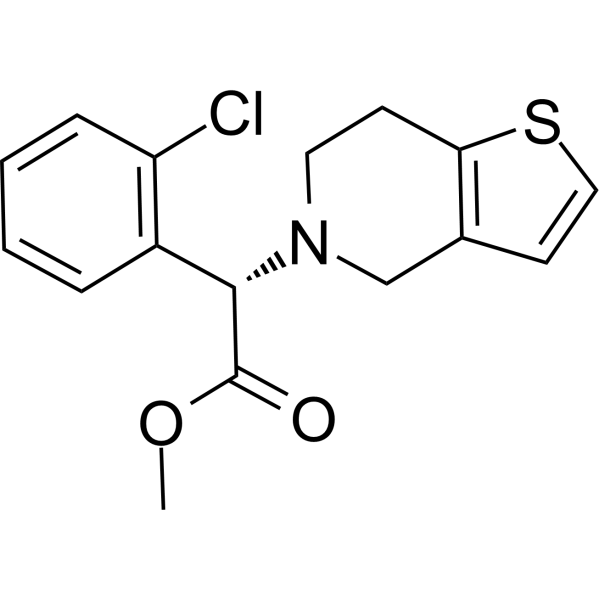
HY-15283
ClopidogrelAntiplatelet Agent -
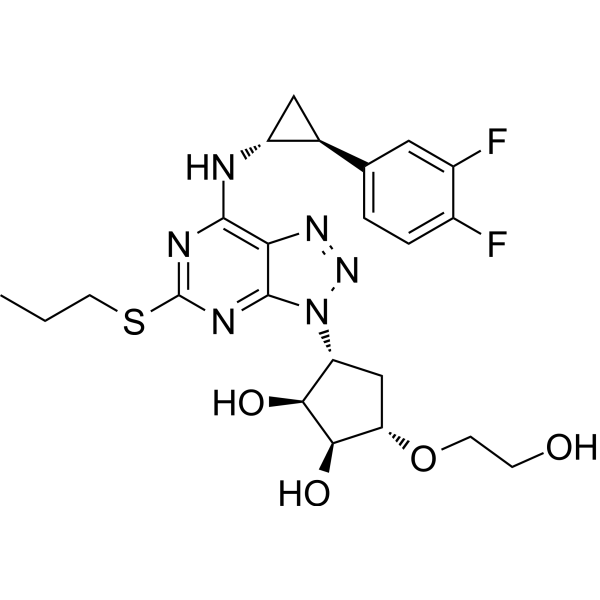
HY-10064
TicagrelorP2Y12 Antagonist -
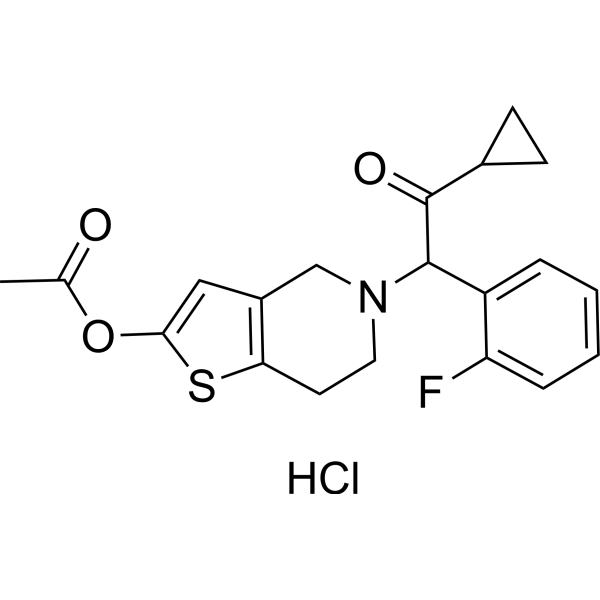
HY-15284A
Prasugrel hydrochlorideP2Y12 Receptor Antagonist -
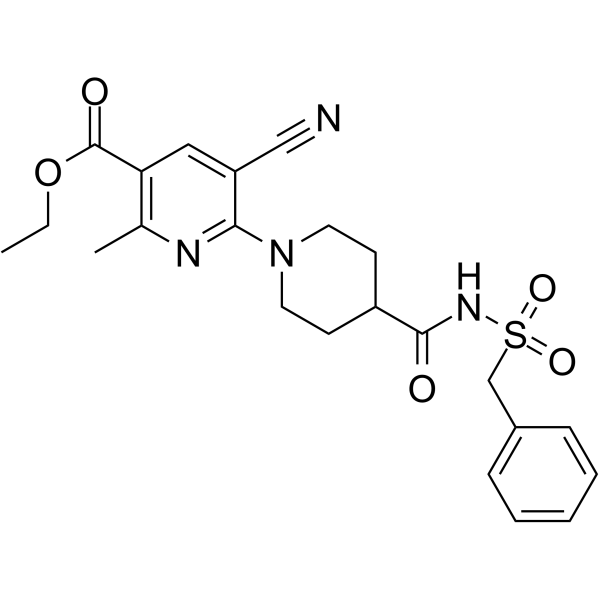
HY-15799
AZD1283P2Y12 Receptor Antagonist -
HY-N7032
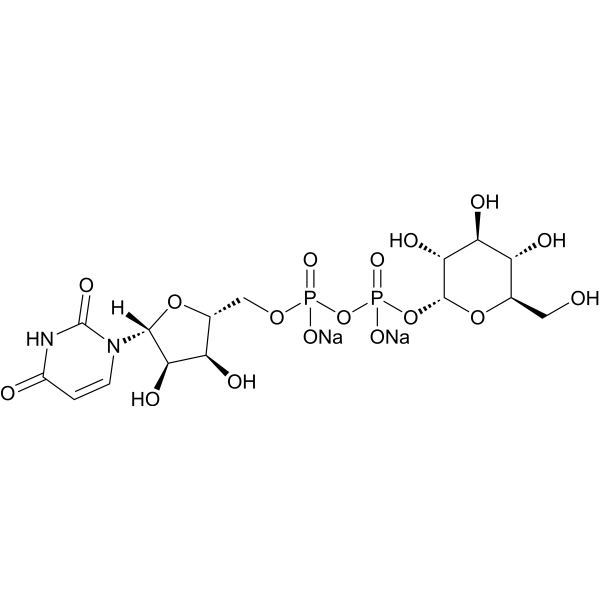
Uridine 5′-diphosphoglucose disodiumP2Y14 Agonist
Publications Citing Use of MedChemExpress (MCE) Diquafosol tetrasodium
MoreAll P2Y Receptor Isoforms
More

Biological Activity
Description
IC50 & Target
|
P2Y2 Receptor |
In Vitro
Cell viability significantly decreased after treatment with 30% diluted diquafosol for 1 hour and 6 hours after treatment with 10% and 20% diluted diquafosol. Twenty-four hours after wounding monolayers, 3% diquafosol, and 0.3% HCECs exhibits significantly more wound healing than the control[1].
MedChemExpress (MCE) has not independently confirmed the accuracy of these methods. They are for reference only.
In Vivo
MedChemExpress (MCE) has not independently confirmed the accuracy of these methods. They are for reference only.
Clinical Trial
| NCT Number | Sponsor | Condition | Start Date |
Phase

|
|---|---|---|---|---|
| NCT01329991 | Plexxikon| | 2011-05 | PHASE1 |


Chemical Information
-
CAS No. 211427-08-6
-
Appearance Solid
-
Molecular Weight 878.23
-
Formula C18H22N4Na4O23P4
-
Color White to off-white
-
SMILES
O[C@H]1[C@@H](O)[C@H](N(C(N2)=O)C=CC2=O)O[C@@H]1COP(OP(OP(OP(OC[C@@H]3[C@@H](O)[C@@H](O)[C@H](N4C(NC(C=C4)=O)=O)O3)(O[Na])=O)(O[Na])=O)(O[Na])=O)(O[Na])=O
-
Synonyms
INS365
-
Shipping
Room temperature in continental US; may vary elsewhere.
-
Storage
4°C, sealed storage, away from moisture
* In solvent : -80°C, 6 months; -20°C, 1 month (sealed storage, away from moisture)


Publications (5)
-
Journal Impact Factor
-
Most Recent
-
Cell Prolif
Establishment of human corneal epithelial organoids for ex vivo modelling dry eye disease. [Abstract]2024 Nov;57(11):e13704. PMID: 38961590 -
Commun Biol
2023 Aug 29;6(1):889. PMID: 37644178 -
Int J Mol Sci
2022 Jul 17;23(14):7870. PMID: 35887219 -
-


Solvent & Solubility
In Vitro:
H2O : 100 mg/mL (113.87 mM; Need ultrasonic)
DMSO : 1 mg/mL (1.14 mM; Need ultrasonic; Hygroscopic DMSO has a significant impact on the solubility of product, please use newly opened DMSO)
Please refer to the solubility information to select the appropriate solvent. Once prepared, please aliquot and store the solution to prevent product inactivation from repeated freeze-thaw cycles.
Storage method and period of stock solution: -80°C, 6 months; -20°C, 1 month (sealed storage, away from moisture). When stored at -80°C, please use it within 6 months. When stored at -20°C, please use it within 1 month.
* Note: If you choose water as the stock solution, please dilute it to the working solution, then filter and sterilize it with a 0.22 μm filter before use.
Please refer to the solubility information to select the appropriate solvent. Once prepared, please aliquot and store the solution to prevent product inactivation from repeated freeze-thaw cycles.
Storage method and period of stock solution: -80°C, 6 months; -20°C, 1 month (sealed storage, away from moisture). When stored at -80°C, please use it within 6 months. When stored at -20°C, please use it within 1 month.
* Note: If you choose water as the stock solution, please dilute it to the working solution, then filter and sterilize it with a 0.22 μm filter before use.
Concentration (start) × Volume (start) = Concentration (final) × Volume (final)
In Vivo:
For the following dissolution methods, please prepare the working solution directly:
It is recommended to prepare fresh solutions and use them promptly within a short period of time.
The percentages shown for the solvents indicate their volumetric ratio in the final prepared solution. If precipitation or phase separation occurs during preparation, heat and/or sonication can be used to aid dissolution.
Add each solvent one by one: PBS
Solubility: 100 mg/mL (113.87 mM); Clear solution; Need ultrasonic

Protocol
Cell Assay[1]
The viabilities of human corneal epithelial cells (HCECs) are determined using a MTT assay. Cells are subconfluent Diquafosol (100 mL diluted 10%, 20%, or 30%) or DMEM (100 mL) is added to controls. After 1, 6, and 24 h, plates are washed three times with PBS to remove the drugs. Cell viabilities are evaluated after incubating for 24 h. MTT is then added to each well. Samples are incubated in the dark for 4 h at 37oC, and media are then removed. Precipitates are resuspended in DMSO. Absorbances are measured on a plate reader at 570 nm[1].
MedChemExpress (MCE) has not independently confirmed the accuracy of these methods. They are for reference only.
Animal Administration[2]
Rats: An SD rat dry eye model is used in which exorbital lacrimal gland extirpation decreased the Schirmer test score by at least 50%. After 8 weeks, when significant increases occurred in corneal epithelial permeability, INS365-containing eye drops are applied six times daily for the next 4 weeks at concentrations from 0.03% to 3.0%. Corneal barrier function is evaluated based on measurements with a modified anterior fluorometer of fluorescein penetrance at 1, 2, and 4 weeks after initial application. After INS365 application, the periodic acid–Schiff reagent (PAS)–stained area is evaluated in histologic sections of the tarsal and bulbar conjunctiva[2].
MedChemExpress (MCE) has not independently confirmed the accuracy of these methods. They are for reference only.


Purity & Documentation
-
Data Sheet (285 KB)
-
SDS (393 KB)
- English - EN (393 KB)
- Français - FR (393 KB)
- Deutsch - DE (393 KB)
- Norwegian - NO (393 KB)
- Español - ES (393 KB)
- Swedish - SV (393 KB)
- Italian - IT (393 KB)
- Korean - KR (393 KB)
- Portuguese - PT (393 KB)
-
Handling Instructions (2659 KB)
References
[1]. Lee JH, et al. Comparison of cytotoxicities and wound healing effects of diquafosol tetrasodium and hyaluronic acid on human corneal epithelial cells. Korean J Physiol Pharmacol. 2017 Mar;21(2):189-195. [Content Brief]
[2]. Fujihara T, et al. Improvement of corneal barrier function by the P2Y(2) agonist INS365 in a rat dry eye model. Invest Ophthalmol Vis Sci. 2001 Jan;42(1):96-100. [Content Brief]
[3]. Fujihara T, et al. INS365 suppresses loss of corneal epithelial integrity by secretion of mucin-like glycoprotein in a rabbit short-term dry eye model. J Ocul Pharmacol Ther. 2002 Aug;18(4):363-70. [Content Brief]


Complete Stock Solution Preparation Table
Please refer to the solubility information to select the appropriate solvent. Once prepared, please aliquot and store the solution to prevent product inactivation from repeated freeze-thaw cycles.
Storage method and period of stock solution: -80°C, 6 months; -20°C, 1 month (sealed storage, away from moisture). When stored at -80°C, please use it within 6 months. When stored at -20°C, please use it within 1 month.
| Optional Solvent | Concentration Solvent Mass | 1 mg | 5 mg | 10 mg | 25 mg |
|---|---|---|---|---|---|
| DMSO / H2O | 1 mM | 1.1387 mL | 5.6933 mL | 11.3865 mL | 28.4663 mL |
| H2O | 5 mM | 0.2277 mL | 1.1387 mL | 2.2773 mL | 5.6933 mL |
| 10 mM | 0.1139 mL | 0.5693 mL | 1.1387 mL | 2.8466 mL | |
| 15 mM | 0.0759 mL | 0.3796 mL | 0.7591 mL | 1.8978 mL | |
| 20 mM | 0.0569 mL | 0.2847 mL | 0.5693 mL | 1.4233 mL | |
| 25 mM | 0.0455 mL | 0.2277 mL | 0.4555 mL | 1.1387 mL | |
| 30 mM | 0.0380 mL | 0.1898 mL | 0.3796 mL | 0.9489 mL | |
| 40 mM | 0.0285 mL | 0.1423 mL | 0.2847 mL | 0.7117 mL | |
| 50 mM | 0.0228 mL | 0.1139 mL | 0.2277 mL | 0.5693 mL | |
| 60 mM | 0.0190 mL | 0.0949 mL | 0.1898 mL | 0.4744 mL | |
| 80 mM | 0.0142 mL | 0.0712 mL | 0.1423 mL | 0.3558 mL | |
| 100 mM | 0.0114 mL | 0.0569 mL | 0.1139 mL | 0.2847 mL |
* Note: If you choose water as the stock solution, please dilute it to the working solution, then filter and sterilize it with a 0.22 μm filter before use.


Diquafosol tetrasodium Related Classifications
HY-B0606 Related Classifications
 Powered by Bioz