



Uridine 5′-diphosphoglucose disodium
Based on 9 publication(s) in Google Scholar
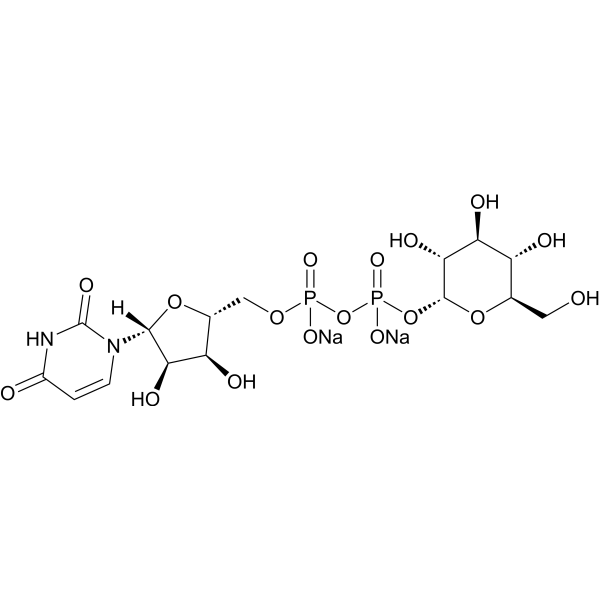
Uridine 5’-diphosphoglucose (UDP-glucose) disodium, secreted by cardiomyocytes during ischemia and reperfu, is a potent agonist of the proinflammatory P2Y14 receptor. It acts an important role in the regulation of inflammation and neutrophil polarization in neutrophils. Uridine 5’-diphosphoglucose disodium is also the precursor of glucose-containing oligosaccharides, polysaccharides, glycoproteins, and glycolipids in animal tissues and in some microorganisms. Uridine 5’-diphosphoglucose disodium is promising for research in counteracting myocardial infarction/reperfusion (MIR)-induced inflammation in the heart tissue.
For research use only. We do not sell to patients.
- Purity : 99.98%
- CAS No.: 28053-08-9
- Formula: C15H22N2Na2O17P2
- Molecular Weight:610.27
-
Storage:
-80°C, protect from light, stored under nitrogen

To place orders, for customer services and technical support, please contact: MedChemExpress USA
Tel: 609-228-6898 E-mail: [email protected] [email protected]


-
 Biological Activity
-
Chemical Information
-
Solvent & Solubility
- Protocols
- Purity & Documentation
- References
-
 Help & FAQs


-
HY-114364
UDP-Galactose disodiumP2Y14 Receptor Agonist -
HY-112174
UDP-GlcNAc disodiumOGT Donor Substrate -
HY-W010832
Uridine-5'-diphosphate disodium saltNucleotide -
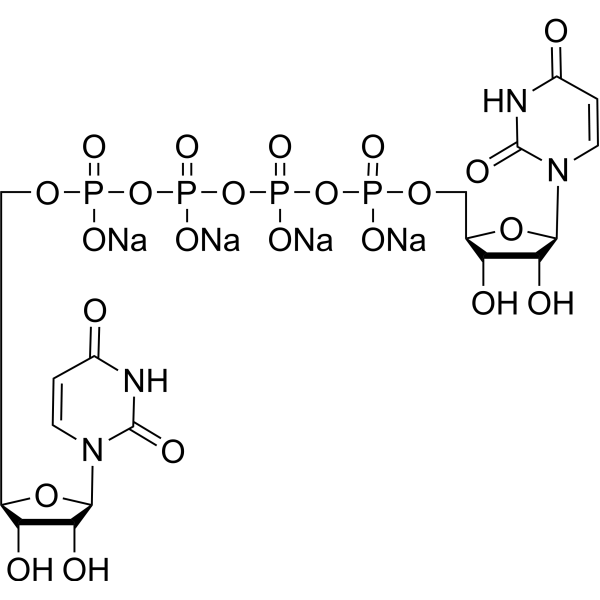
HY-B0606
Diquafosol tetrasodiumP2Y2 Receptor Agonist -
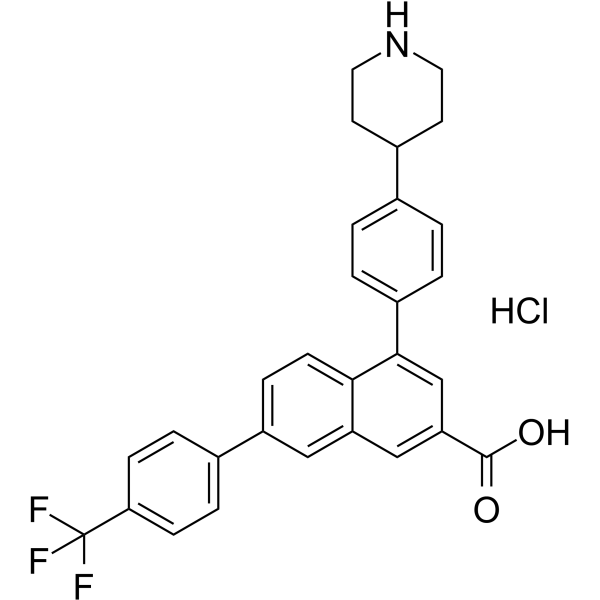
HY-110322
PPTN hydrochlorideP2Y14-R Antagonist -
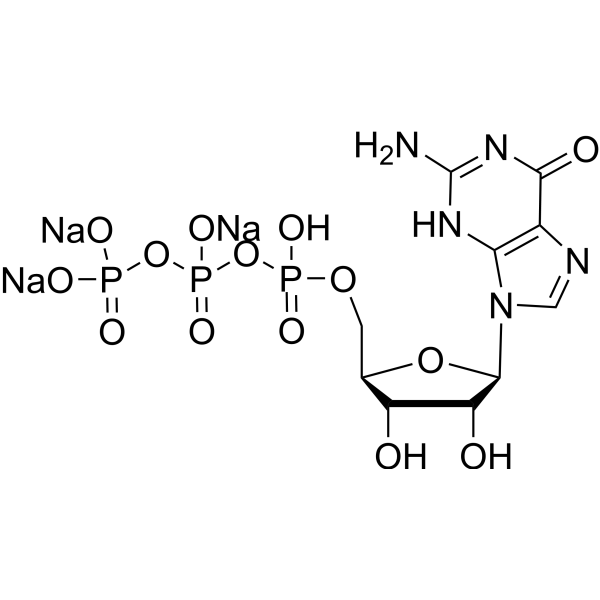
HY-12695
Guanosine triphosphate trisodiumCellular Metabolism Regulator -
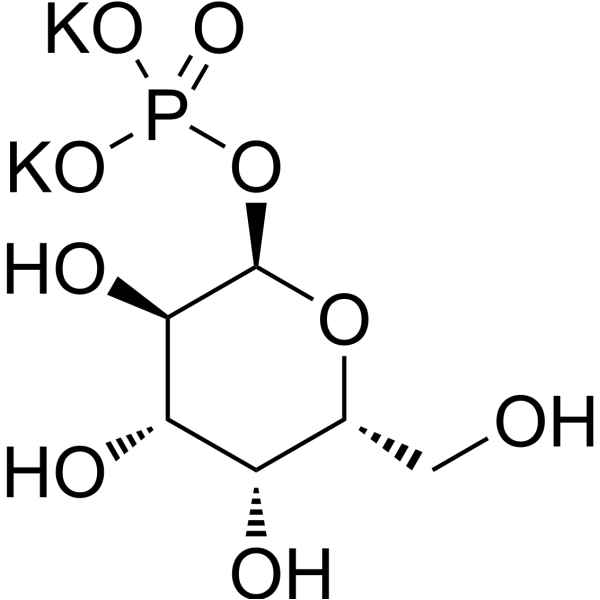
HY-113143A
Galactose 1-phosphate Potassium saltGALT/Phosphoglucomutase Inhibitor -
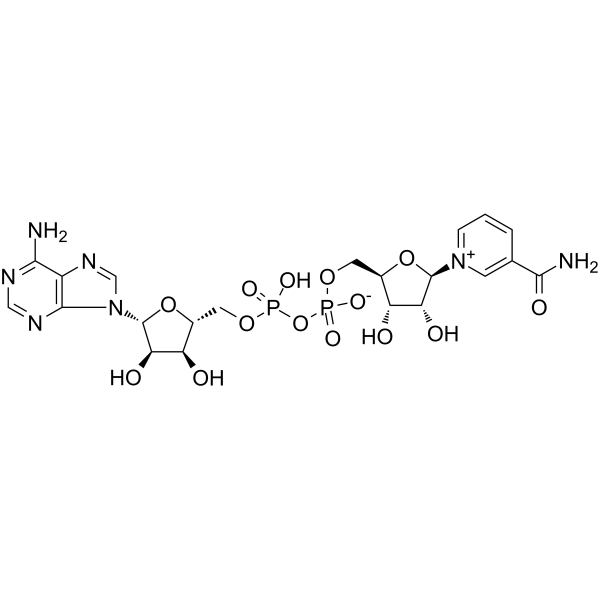
HY-B0445
NAD+Endogenous Metabolite -
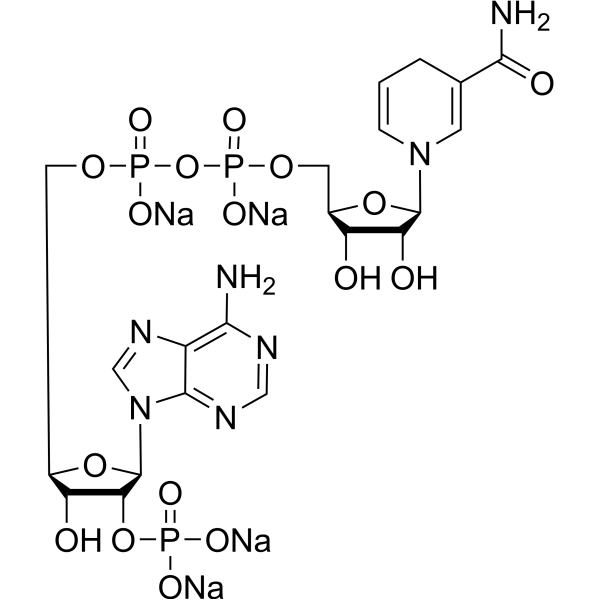
HY-F0003
NADPH tetrasodium saltCofactor -
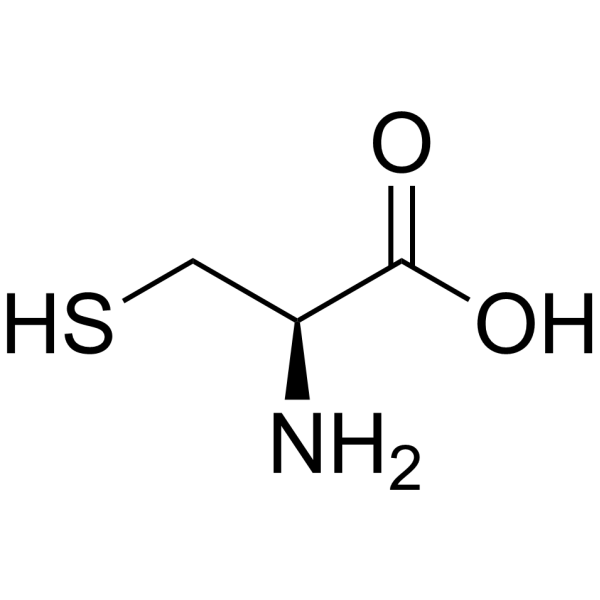
HY-Y0337
L-CysteineAnorectic Agent -
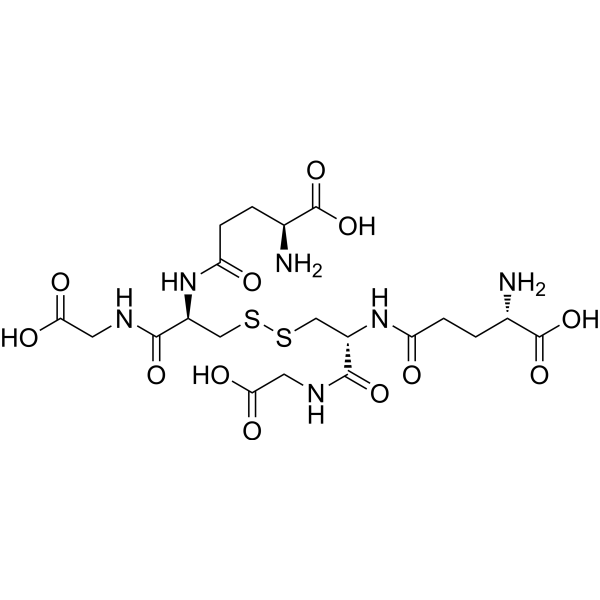
HY-D0844
Glutathione oxidizedAntioxidant -
HY-W010918
Adenosine 5'-diphosphate
Publications Citing Use of MedChemExpress (MCE) Uridine 5′-diphosphoglucose disodium
More- Mol Plant. 2025 Dec 13:S1674-2052(25)00435-6. [Abstract]
- J Am Chem Soc. 2020 Sep 16;142(37):16039-16050. [Abstract]
- Cell Rep. 2025 Nov 18;44(12):116577. [Abstract]
- BMC Biotechnol. 2026 Apr 15;26(1):69. [Abstract]
- BMC Cancer. 2025 Jun 1;25(1):982. [Abstract]
- Clin Immunol. 2024 Aug:265:110300. [Abstract]
- SSRN. 2024 Jul 16.
- Evid Based Complement Alternat Med. 2022 Nov 23:2022:5227335. [Abstract]
- Research Square Preprint. 2021 Nov.
 Customer Validation & Images

-
WB
-
RT-PCR
All Endogenous Metabolite Isoforms
MoreAll P2Y Receptor Isoforms
More

Biological Activity
Description
IC50 & Target
|
Human Endogenous Metabolite |
P2Y14 Receptor |
Microbial Metabolite |
In Vitro
Uridine 5’-diphosphoglucose (0-100 μM, 24 h) disodium upregulates the expression of P2Y14 receptor, which induces neutrophil apoptos[2]. Uridine 5’-diphosphoglucose (1 μM, 24 h) disodium and PPTN (HY-110322A) result in suppressed mRNA level of inflammatory factors including CCL3, IL1β,IL12a, TNF-α in neutrophils compared to cells treated with Uridine 5’-diphosphoglucose disodium alone, on the contrary, anti-inflammatory factors including IL10, TGF-β1, YM1 are upregulated upon Uridine 5’-diphosphoglucose disodium and PPTN (HY-110322A) in neutrophils[2]. Depletion of the pools of uridine 5’-diphosphoglucose (5 or 20 mM, incubation for 3 h) disodium in the liver of the rat was associated with decreased glycosylation of secreted and tissue glycoproteins, influencing the rate of glomerular basement membrane (GBM) synthesis in rats[3].
MedChemExpress (MCE) has not independently confirmed the accuracy of these methods. They are for reference only. Further protocols information, click here.
-
Cell Line:Neutrophils
-
Concentration:0-100 μM
-
Incubation Time:24 h
-
Result:Decreased cell viability and elevated apoptosis of neutrophils, which was blunted by PPTN (HY-110322A).
-
Cell Line:Neutrophils
-
Concentration:1 μM
-
Incubation Time:24 h
-
Result:Resulted in impaired neutrophil migration, which was inverted by PPTN (HY-110322A).


Chemical Information
-
CAS No. 28053-08-9
-
Appearance Solid
-
Molecular Weight 610.27
-
Formula C15H22N2Na2O17P2
-
Color White to off-white
-
SMILES
O[C@@H]1[C@H](O)[C@@H](COP(OP(O[C@@H]2[C@@H]([C@H]([C@@H]([C@H](O2)CO)O)O)O)(O[Na])=O)(O[Na])=O)O[C@H]1N3C=CC(NC3=O)=O
-
Synonyms
UDP-D-Glucose disodium
-
Structure Classification
-
Initial Source
-
Shipping
Shipping with dry ice.
-
Storage
-80°C, protect from light, stored under nitrogen


Publications (9)
-
Journal Impact Factor
-
Most Recent
-
Mol Plant
2025 Dec 13:S1674-2052(25)00435-6. PMID: 41392480 -
J Am Chem Soc
2020 Sep 16;142(37):16039-16050. PMID: 32885969 -
Cell Rep
Blocking glycogen synthase 1 in white adipose tissue alleviates hypermetabolism following severe burn injury through inhibition of JAK2 by UDPG. [Abstract]2025 Nov 18;44(12):116577. PMID: 41259203 -
BMC Biotechnol
Mechanistic insights into how cichoriin inhibits P2Y14R to suppress MSU-induced gouty inflammation. [Abstract]2026 Apr 15;26(1):69. PMID: 41987170 -
BMC Cancer
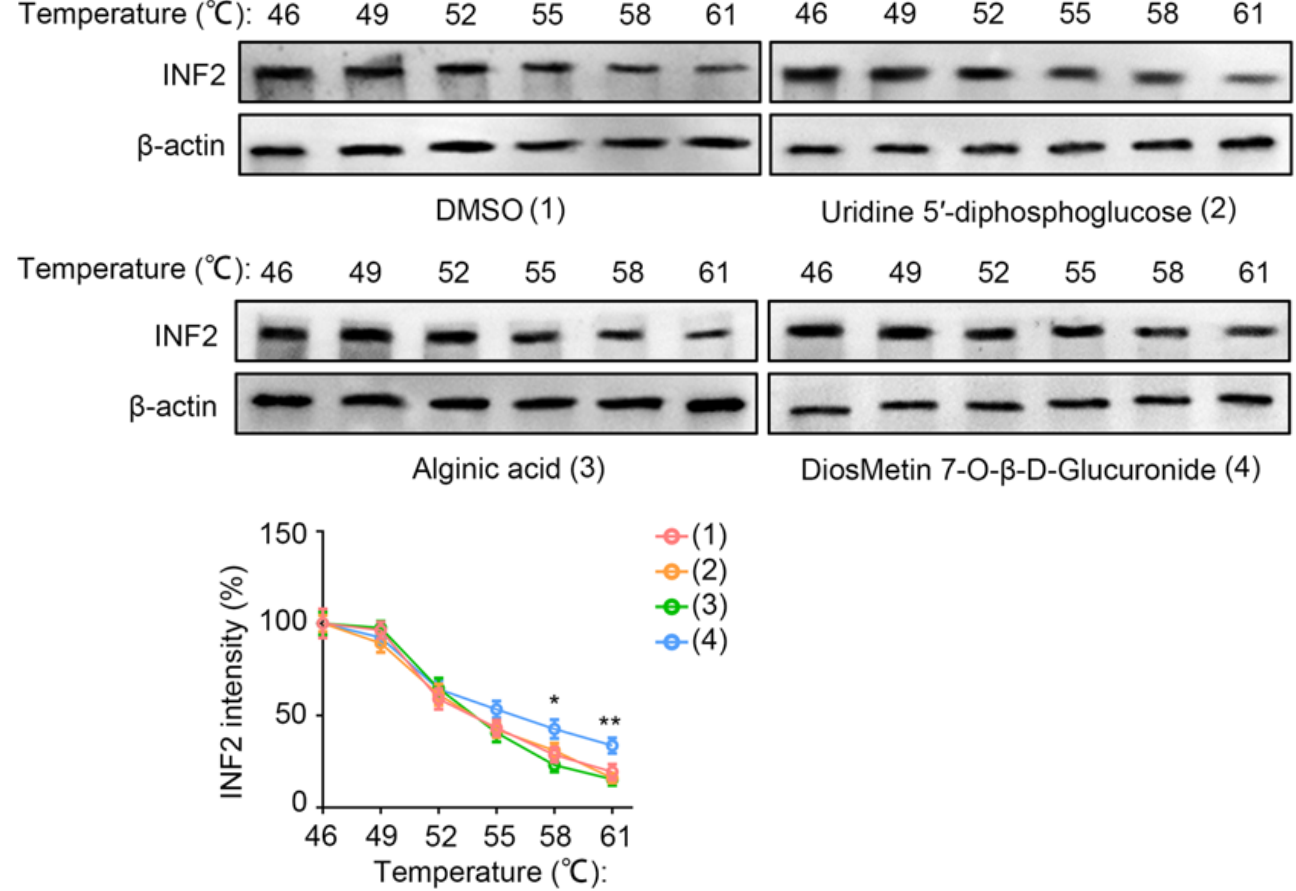
Targeting INF2 with DiosMetin 7-O-β-D-Glucuronide: a new stratagem for colorectal cancer therapy. [Abstract]2025 Jun 1;25(1):982. PMID: 40452021
Uridine 5′-diphosphoglucose disodium purchased from MedChemExpress. Usage Cited in: BMC Cancer. 2025 Jun 1;25(1):982. [Abstract]
Cellular Thermal Shift Assay was performed to detect the interactions between molecules and INF2 protein.The results demonstrated that the thermal stability of INF2 proteins was no significantly changed after treatment with Uridine 5′-diphosphoglucose disodium (10 μM; 24 h) and Alginic acid.
-
Clin Immunol
Abnormal metabolism in melanocytes participates in the activation of dendritic cell in halo nevus. [Abstract]2024 Aug:265:110300. PMID: 38950722
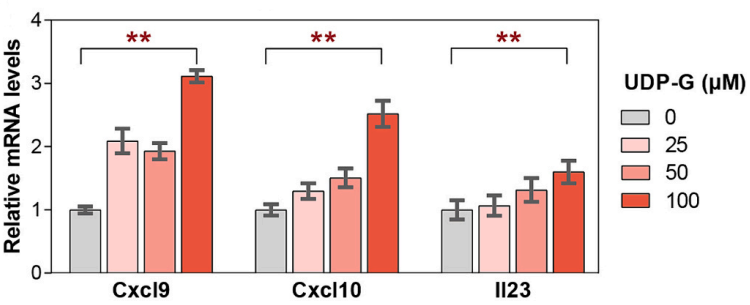
Uridine 5′-diphosphoglucose disodium purchased from MedChemExpress. Usage Cited in: Clin Immunol. 2024 Aug:265:110300. [Abstract]
RNA levels of inflammatory genes in Uridine 5′-diphosphoglucose disodium (UDP-G, 25–100 μM; 24) treated DC2.4 (murine DC cell line) cells. The results showed that UDP-G (25-100 μM) significantly upregulated the expression levels of Cxcl9, Cxcl10, and Il23 in treated mouse DC cells (DC2.4 cell line).
-
-
Evid Based Complement Alternat Med
Isoschaftoside Inhibits Lipopolysaccharide-Induced Inflammation in Microglia through Regulation of HIF-1 α-Mediated Metabolic Reprogramming. [Abstract]2022 Nov 23:2022:5227335. PMID: 36467557 -


Solvent & Solubility
In Vitro:
H2O : ≥ 250 mg/mL (409.65 mM)
DMSO : 115 mg/mL (188.44 mM; ultrasonic and warming and heat to 60°C; Hygroscopic DMSO has a significant impact on the solubility of product, please use newly opened DMSO)
* "≥" means soluble, but saturation unknown.
Please refer to the solubility information to select the appropriate solvent. Once prepared, please aliquot and store the solution to prevent product inactivation from repeated freeze-thaw cycles.
Storage method and period of stock solution: -80°C, 6 months (protect from light, stored under nitrogen). When stored at -80°C, please use it within 6 months.
* Note: If you choose water as the stock solution, please dilute it to the working solution, then filter and sterilize it with a 0.22 μm filter before use.
Please refer to the solubility information to select the appropriate solvent. Once prepared, please aliquot and store the solution to prevent product inactivation from repeated freeze-thaw cycles.
Storage method and period of stock solution: -80°C, 6 months (protect from light, stored under nitrogen). When stored at -80°C, please use it within 6 months.
* Note: If you choose water as the stock solution, please dilute it to the working solution, then filter and sterilize it with a 0.22 μm filter before use.
Concentration (start) × Volume (start) = Concentration (final) × Volume (final)
In Vivo:
Select the appropriate dissolution method based on your experimental animal and administration route.
- For the following dissolution methods, please ensure to first prepare a clear stock solution using an In Vitro approach and then sequentially add co-solvents:
- To ensure reliable experimental results, the clarified stock solution can be appropriately stored based on storage conditions. As for the working solution for In Vivo experiments, it is recommended to prepare freshly and use it on the same day.
- The percentages shown for the solvents indicate their volumetric ratio in the final prepared solution. If precipitation or phase separation occurs during preparation, heat and/or sonication can be used to aid dissolution.
Add each solvent one by one: 10% DMSO 40% PEG300 5% Tween-80 45% Saline
Solubility: ≥ 5 mg/mL (8.19 mM); Clear solution
This protocol yields a clear solution of ≥ 5 mg/mL (saturation unknown).
Taking 1 mL working solution as an example, add 100 μL DMSO stock solution (50.0 mg/mL) to 400 μL PEG300, and mix evenly; then add 50 μL Tween-80 and mix evenly; then add 450 μL Saline to adjust the volume to 1 mL.
Preparation of Saline: Dissolve 0.9 g sodium chloride in ddH₂O and dilute to 100 mL to obtain a clear Saline solution.
Add each solvent one by one: 10% DMSO 90% (20% SBE-β-CD in Saline)
Solubility: ≥ 0.55 mg/mL (0.90 mM); Clear solution
This protocol yields a clear solution of ≥ 0.55 mg/mL (saturation unknown).
Taking 1 mL working solution as an example, add 100 μL DMSO stock solution (5.5 mg/mL) to 900 μL 20% SBE-β-CD in Saline, and mix evenly.
Preparation of 20% SBE-β-CD in Saline (4°C, storage for one week): 2 g SBE-β-CD powder is dissolved in 10 mL Saline, completely dissolve until clear.
For the following dissolution methods, please prepare the working solution directly:
It is recommended to prepare fresh solutions and use them promptly within a short period of time.
The percentages shown for the solvents indicate their volumetric ratio in the final prepared solution. If precipitation or phase separation occurs during preparation, heat and/or sonication can be used to aid dissolution.
Add each solvent one by one: PBS
Solubility: 100 mg/mL (163.86 mM); Clear solution; Need ultrasonic
In Vivo Dissolution Calculator
Please enter the basic information of animal experiments:
-
-
-
-
Recommended: Prepare an additional quantity of animals to account for potential losses during experiments.
Working solution concentration: 0.22 mg/mL
This product has good water solubility, please refer to the measured solubility data in water/PBS/Saline for details.

Protocols
-
Research Protocol for Cardiovascular Diseases
Cardiovascular disease can be modeled as maladaptive cardiac remodeling, where ischemic injury or pressure overload activates inflammatory signaling, fibroblast activation, extracellular-matrix deposition, cardiomyocyte hypertrophy, vascular remodeling, and progressive ventricular dysfunction. The TGF-β/SMAD axis is a central profibrotic pathway after myocardial injury and pressure overload, while innate immune and cytokine pathways regulate leukocyte recruitment, scar formation, and adverse remodeling. Key unresolved questions include which inflammatory signals are reparative versus harmful, when fibrosis is protective versus maladaptive, and whether pathway inhibition improves function without weakening necessary infarct healing or compensatory remodeling.
-
Research Protocol for Inflammation-related Diseases
The NLRP3 inflammasome is a cytosolic innate immune signaling platform that integrates priming signals and danger-signal activation to promote caspase-1 activation, maturation of IL-1β and IL-18, and gasdermin D-mediated pyroptotic cell death. The core experimental logic is to determine whether inflammatory disease phenotypes are driven by increased NLRP3 expression, ASC-containing inflammasome assembly, caspase-1 cleavage, GSDMD cleavage, and extracellular release of IL-1β/IL-18 rather than by nonspecific cell injury alone. The pathway is strongly linked to inflammation-related disease phenotypes because monosodium urate crystals activate NALP3/NLRP3 inflammasome signaling in gout-like crystal inflammation, cholesterol crystals activate NLRP3 inflammasomes in atherogenesis models, and DSS-induced intestinal inflammation has been reported to involve NLRP3 inflammasome activity. However, experimental colitis studies also show context-dependent protective effects of NLRP3 inflammasome co


Purity & Documentation
-
Data Sheet (282 KB)
-
SDS (392 KB)
- English - EN (392 KB)
- Français - FR (392 KB)
- Deutsch - DE (392 KB)
- Norwegian - NO (392 KB)
- Español - ES (392 KB)
- Swedish - SV (392 KB)
- Italian - IT (392 KB)
- Korean - KR (392 KB)
- Portuguese - PT (392 KB)
-
Handling Instructions (2659 KB)
References
[2]. Li K, et al. Upregulation of P2Y14 receptor in neutrophils promotes inflammation after myocardial ischemia/reperfusion injury[J]. Life Sci. 2023 Aug 1;326:121805. [Content Brief]
[3]. Cortes P, Dumler F, Levin NW. De novo pyrimidine nucleotide biosynthesis in isolated rat glomerul[J]i. Kidney Int. 1986 Jul;30(1):27-34. [Content Brief]
[4]. Das A, et al. Human P2Y(14) receptor agonists: truncation of the hexose moiety of uridine-5'-diphosphoglucose and its replacement with alkyl and aryl groups. J Med Chem. 2010 Jan 14;53(1):471-80. [Content Brief]


Complete Stock Solution Preparation Table
Please refer to the solubility information to select the appropriate solvent. Once prepared, please aliquot and store the solution to prevent product inactivation from repeated freeze-thaw cycles.
Storage method and period of stock solution: -80°C, 6 months (protect from light, stored under nitrogen). When stored at -80°C, please use it within 6 months.
| Optional Solvent | Concentration Solvent Mass | 1 mg | 5 mg | 10 mg | 25 mg |
|---|---|---|---|---|---|
| DMSO / H2O | 1 mM | 1.6386 mL | 8.1931 mL | 16.3862 mL | 40.9655 mL |
| 5 mM | 0.3277 mL | 1.6386 mL | 3.2772 mL | 8.1931 mL | |
| 10 mM | 0.1639 mL | 0.8193 mL | 1.6386 mL | 4.0965 mL | |
| 15 mM | 0.1092 mL | 0.5462 mL | 1.0924 mL | 2.7310 mL | |
| 20 mM | 0.0819 mL | 0.4097 mL | 0.8193 mL | 2.0483 mL | |
| 25 mM | 0.0655 mL | 0.3277 mL | 0.6554 mL | 1.6386 mL | |
| 30 mM | 0.0546 mL | 0.2731 mL | 0.5462 mL | 1.3655 mL | |
| 40 mM | 0.0410 mL | 0.2048 mL | 0.4097 mL | 1.0241 mL | |
| 50 mM | 0.0328 mL | 0.1639 mL | 0.3277 mL | 0.8193 mL | |
| 60 mM | 0.0273 mL | 0.1366 mL | 0.2731 mL | 0.6828 mL | |
| 80 mM | 0.0205 mL | 0.1024 mL | 0.2048 mL | 0.5121 mL | |
| 100 mM | 0.0164 mL | 0.0819 mL | 0.1639 mL | 0.4097 mL |
* Note: If you choose water as the stock solution, please dilute it to the working solution, then filter and sterilize it with a 0.22 μm filter before use.


Uridine 5′-diphosphoglucose disodium Related Classifications
HY-N7032 Related Classifications
 Powered by Bioz