



Ticagrelor
Based on 13 publication(s) in Google Scholar
Ticagrelor (AZD6140) is a reversible oral P2Y12 receptor antagonist for the treatment of platelet aggregation.
Nur für Forschungszwecke. Wir verkaufen nicht an Patienten.
- Reinheit : 99.95%
- CAS. Nr.: 274693-27-5
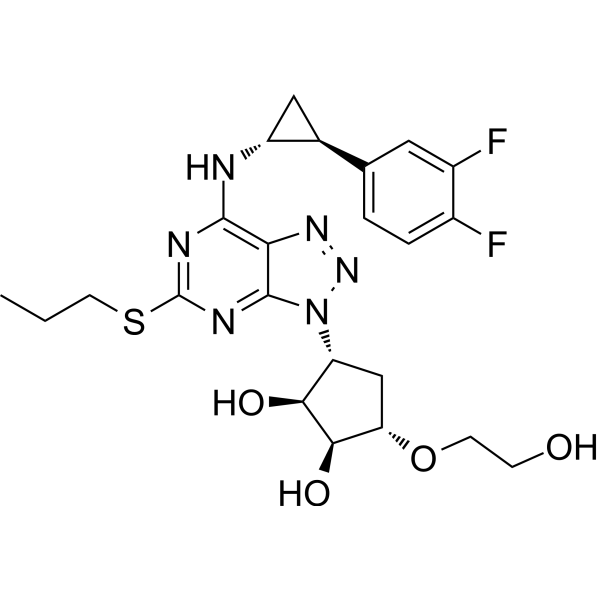
- Formel: C23H28F2N6O4S
- Molecular Weight:522.57
-
Speicherung:
-20°C, protect from light, stored under nitrogen
* In solvent : -80°C, 1 year; -20°C, 6 months (protect from light, stored under nitrogen)

To place orders, for customer services and technical support, please contact: MedChemExpress USA
Tel: 609-228-6898 E-mail: [email protected] [email protected]


-
 Biologische Aktivität
-
Chemical Information
-
Lösungsmittel & Löslichkeit
- Reinheit & Dokumentation
- Verweise
-
 Help & FAQs


-
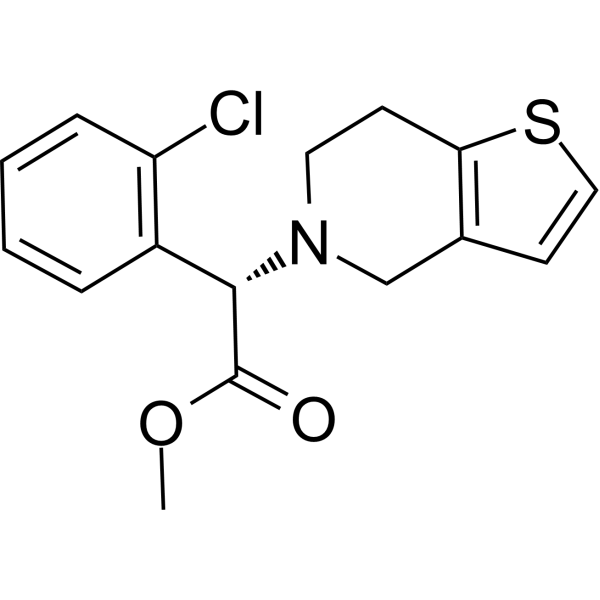
HY-15283
ClopidogrelAntiplatelet Agent -
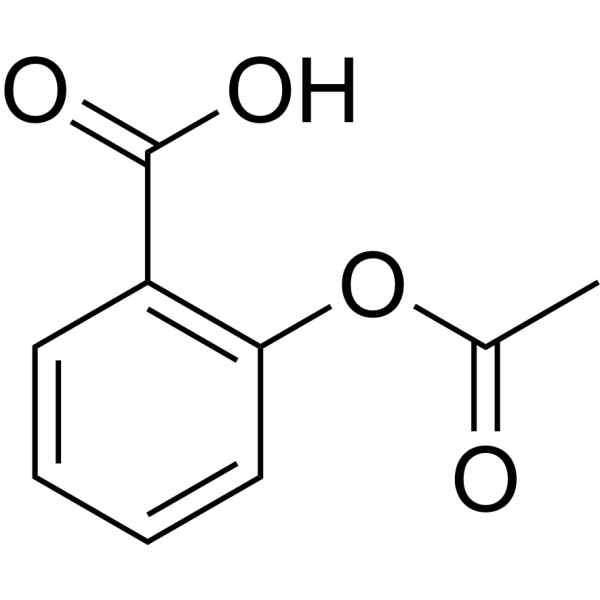
HY-14654
AspirinCOX Inhibitor -
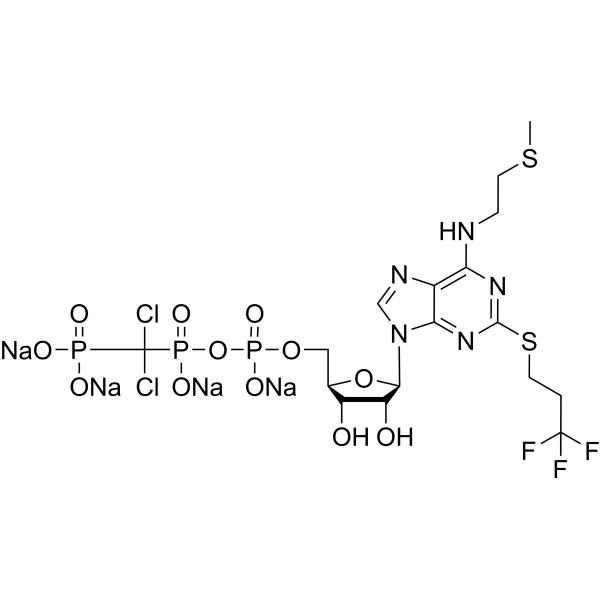
HY-19638A
Cangrelor tetrasodiumP2Y12 Antagonist -
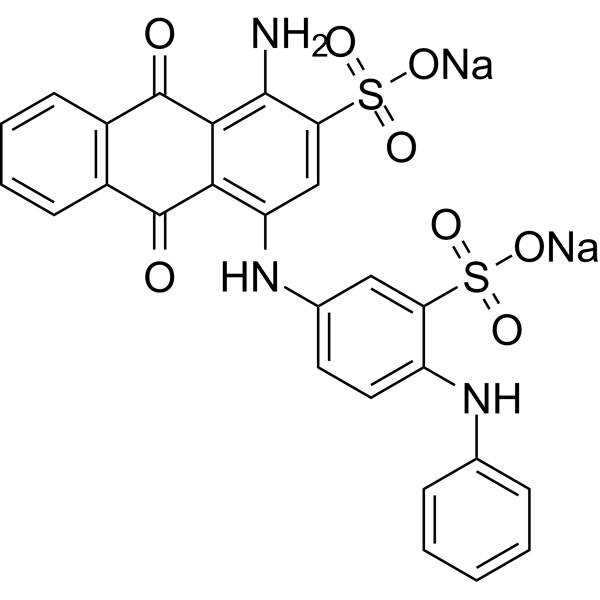
HY-108660
PSB-0739P2Y12 Receptor Antagonist -
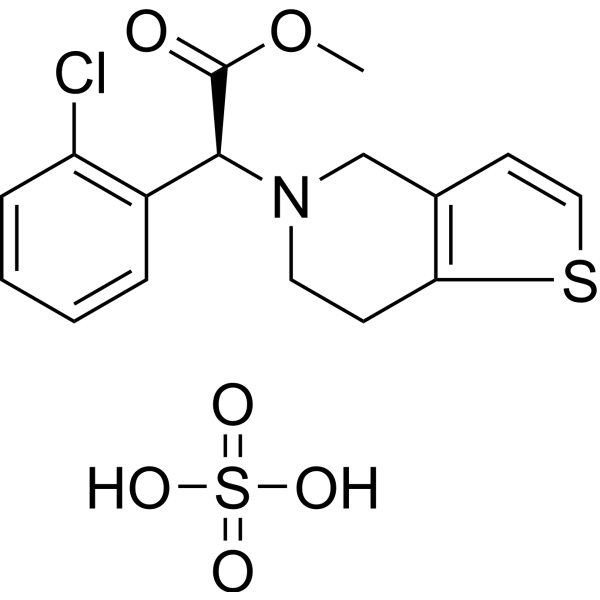
HY-17459
Clopidogrel hydrogen sulfateAntiplatelet Agent -
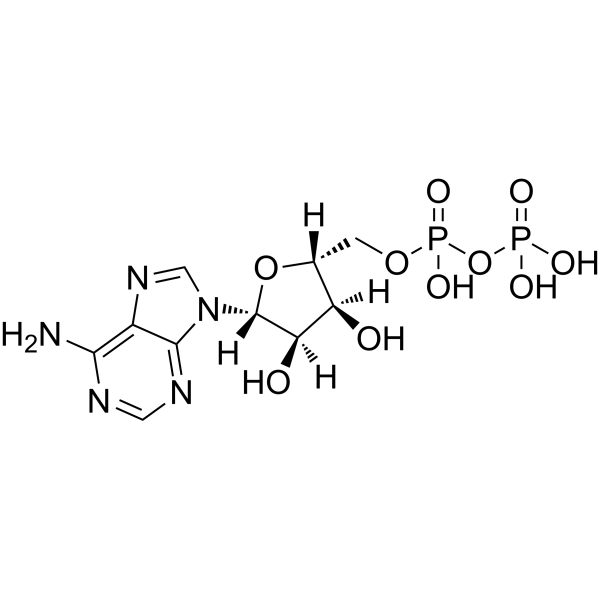
HY-W010918
Adenosine 5'-diphosphate -
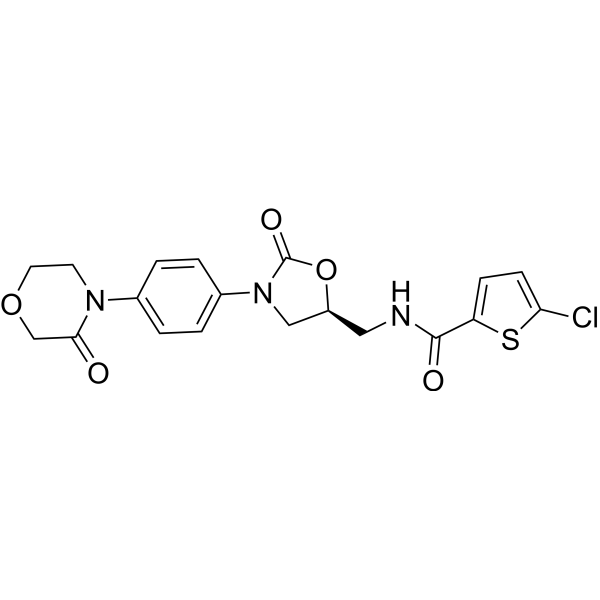
HY-50903
RivaroxabanFactor Xa Inhibitor -
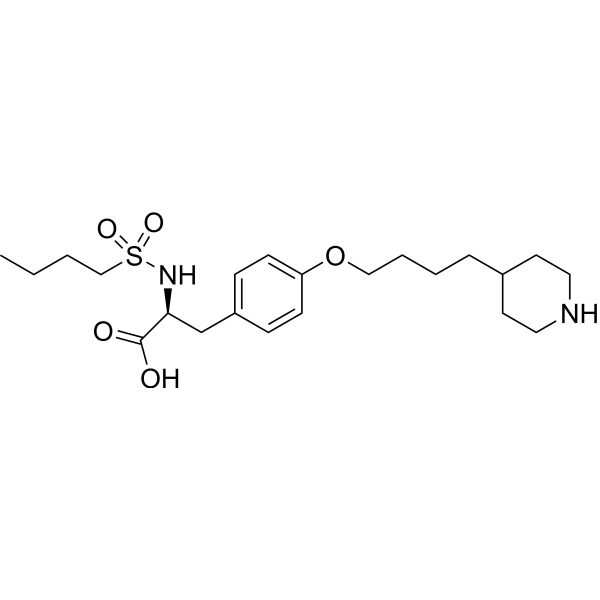
HY-17369B
TirofibanGp IIb/IIIa Receptor Antagonist -
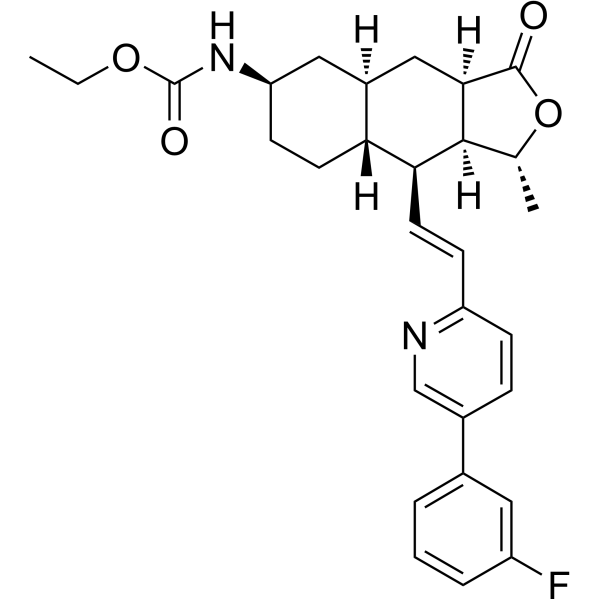
HY-10119
VorapaxarPAR-1 Antagonist -
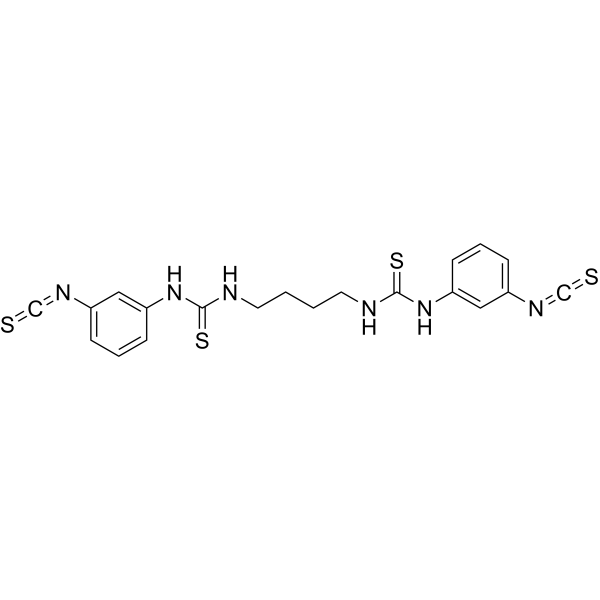
HY-13104
MRS 2578Apoptosis Inducer -
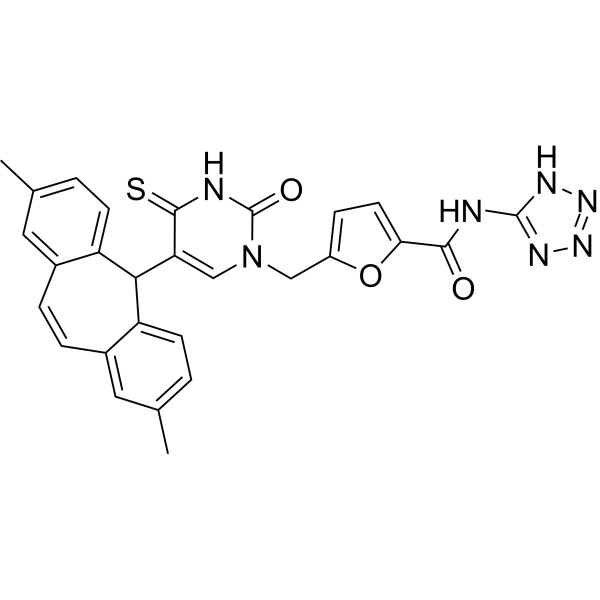
HY-110126
AR-C118925XXP2Y2 Receptor Antagonist -
HY-15799
AZD1283P2Y12 Receptor Antagonist
Publications Citing Use of MedChemExpress (MCE) Ticagrelor
More- Cell Res. 2026 Jan 28. [Abstract]
- J Adv Res. 2026 Jul 15:S2090-1232(26)00545-X.
- Microsyst Nanoeng. 2026 Jan 1;12(1):7. [Abstract]
- Curr Biol. 2023 Jun 5;33(11):2187-2200.e6. [Abstract]
- J Ethnopharmacol. 2026 Jun 25:371:122113. [Abstract]
- Biochem Pharmacol. 2026 Mar 15:249:117903. [Abstract]
- Mol Neurobiol. 2022 Mar;59(3):1604-1618. [Abstract]
- Clin Chim Acta. 2025 Dec 31:120816. [Abstract]
- Chem Biodivers. 2025 Sep;22(9):e202500770. [Abstract]
- Biomed Res Int. 2022 Sep 20;2022:8265898. [Abstract]
- Orebro University. 2024.
- Heliyon. 2024 May 7;10(9):e30833. [Abstract]
- Research Square Preprint. 2021 Mar.
 Customer Validation & Images

-
Bio/Physico-chemical Assay
-
In Vivo Efficacy Study
-
Bio/Physico-chemical Assay
-
In Vivo Efficacy Study
-
RT-PCR
Alle P2Y Receptor Isoform-spezifische Produkte anzeigen
More

Biologische Aktivität
Beschreibung
IC50 & Target
|
P2Y12 Receptor |
Cellular Effect
|
Cell Line

|
Type | Value | Description | References |
|---|---|---|---|---|
| Platelet | IC50 |
0.74 μM
Compound: Ticagrelor
|
Antiplatelet activity against ADP-induced human platelet in platelet rich plasma assessed as inhibition of platelet aggregation preincubated for 2 mins followed by ADP stimulation and measured for 5 mins by aggregometry
Antiplatelet activity against ADP-induced human platelet in platelet rich plasma assessed as inhibition of platelet aggregation preincubated for 2 mins followed by ADP stimulation and measured for 5 mins by aggregometry
|
[PMID: 34458743] |
| Platelet | IC50 |
1.83 μM
Compound: 1, AZD-6140
|
Inhibition of ADP-stimulated platelet aggregation in human platelet rich plasma by 96-well format based turbidimetric method
Inhibition of ADP-stimulated platelet aggregation in human platelet rich plasma by 96-well format based turbidimetric method
|
[PMID: 22984835] |
| Platelet | IC50 |
2 μM
Compound: Ticagrelor
|
Inhibition of collagen-induced platelet aggregation in human platelet preincubated for 5 mins followed by collagen-stimulation and measured after 6 mins by lumi-aggregometric method
Inhibition of collagen-induced platelet aggregation in human platelet preincubated for 5 mins followed by collagen-stimulation and measured after 6 mins by lumi-aggregometric method
|
[PMID: 32155530] |
| Platelet | IC50 |
4 μM
Compound: Ticagrelor
|
Inhibition of TRAP6-induced platelet aggregation in human platelet preincubated for 5 mins followed by TRAP6-stimulation and measured after 6 mins by lumi-aggregometric method
Inhibition of TRAP6-induced platelet aggregation in human platelet preincubated for 5 mins followed by TRAP6-stimulation and measured after 6 mins by lumi-aggregometric method
|
[PMID: 32155530] |
In Vitro
Ticagrelor promotes a greater inhibition of adenosine 5′-diphosphate (ADP)-induced Ca2+ release in ished platelets vs other P2Y12R antagonists. This additional effect of ticagrelor beyond P2Y12R antagonism is in part as a consequence of ticagrelor inhibiting the equilibrative nucleoside transporter 1 (ENT1) on platelets, leading to accumulation of extracellular adenosine and activation of Gs-coupled adenosine A2A receptors[1]. B16-F10 cells exhibit decreased interaction with platelets from ticagrelor-treated mice compared to saline-treated mice[2].
MedChemExpress (MCE) has not independently confirmed the accuracy of these methods. They are for reference only. .
In Vivo
MedChemExpress (MCE) has not independently confirmed the accuracy of these methods. They are for reference only.
Clinical Trial
| NCT Number | Sponsor | Condition | Start Date |
Phase
|
|---|---|---|---|---|
| NCT01329991 | Plexxikon| | 2011-05 | PHASE1 |


Chemical Information
-
CAS. Nr. 274693-27-5
-
Appearance Solid
-
Molecular Weight 522.57
-
Formel C23H28F2N6O4S
-
Color White to yellow
-
SMILES
O[C@H]1[C@@H](O)[C@H](N2N=NC3=C(N[C@H]4[C@H](C5=CC=C(F)C(F)=C5)C4)N=C(SCCC)N=C32)C[C@@H]1OCCO
-
Synonyms
AZD6140; AR-C 126532XX
-
Versand
Room temperature in continental US; may vary elsewhere.
-
Speicherung
-20°C, protect from light, stored under nitrogen
* In solvent : -80°C, 1 year; -20°C, 6 months (protect from light, stored under nitrogen)


Publications (13)
-
Journal Impact Factor
-
Most Recent
-
Cell Res
The axon initial segment-associated microglia regulate neuronal activity and visual perception. [Abstract]2026 Jan 28. PMID: 41593328 -
-
Microsyst Nanoeng
2026 Jan 1;12(1):7. PMID: 41476049
Ticagrelor purchased from MedChemExpress. Usage Cited in: Microsyst Nanoeng. 2026 Jan 1;12(1):7. [Abstract]
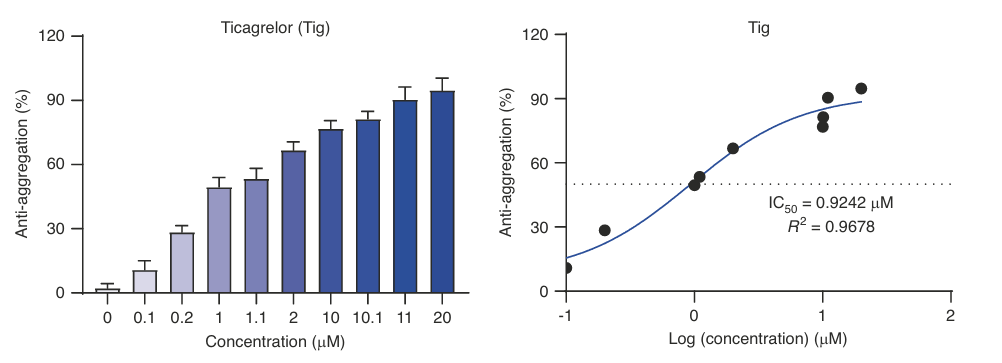
Ticagrelor (0–20 µM) showed anti-aggregation effects, with an IC₅₀ value of 0.9242 µM in healthy human platelets.
-
Curr Biol
2023 Jun 5;33(11):2187-2200.e6. PMID: 37167975 -
J Ethnopharmacol
A multidimensional strategy for exploring active peptides combining chemical analysis and bioassays for medicinal leeches. [Abstract]2026 Jun 25:371:122113. PMID: 42349769 -
Biochem Pharmacol
Ticagrelor reverses multidrug resistance in breast cancer by inhibiting PI3K/AKT/mTOR pathway and suppressing ABCB1 expression and function. [Abstract]2026 Mar 15:249:117903. PMID: 41846011 -
Mol Neurobiol
Study of the Involvement of the P2Y12 Receptor in Chronic Itching in Type 2 Diabetes Mellitus. [Abstract]2022 Mar;59(3):1604-1618. PMID: 35000152
Ticagrelor purchased from MedChemExpress. Usage Cited in: Mol Neurobiol. 2022 Mar;59(3):1604-1618. [Abstract]
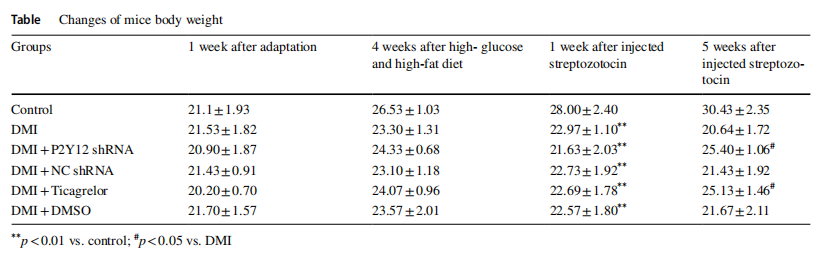
After intraperitoneal injection of STZ, body weight was significantly decreased, whereas it was increased following intraperitoneal injection of P2Y12 shRNA or intragastric administration of ticagrelor (intragastric administration,100 mg/kg, 1 week).
Ticagrelor purchased from MedChemExpress. Usage Cited in: Mol Neurobiol. 2022 Mar;59(3):1604-1618. [Abstract]
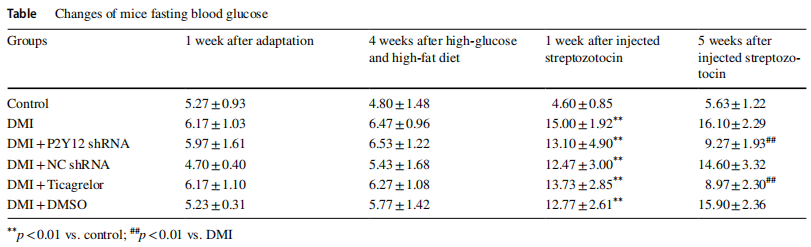
Fasting blood glucose (FBG) was decreased after intrathecal injection of P2Y12 shRNA or intragastric administration of ticagrelor (100 mg/kg, 1 week) in type 2 diabetic mice.
Ticagrelor purchased from MedChemExpress. Usage Cited in: Mol Neurobiol. 2022 Mar;59(3):1604-1618. [Abstract]
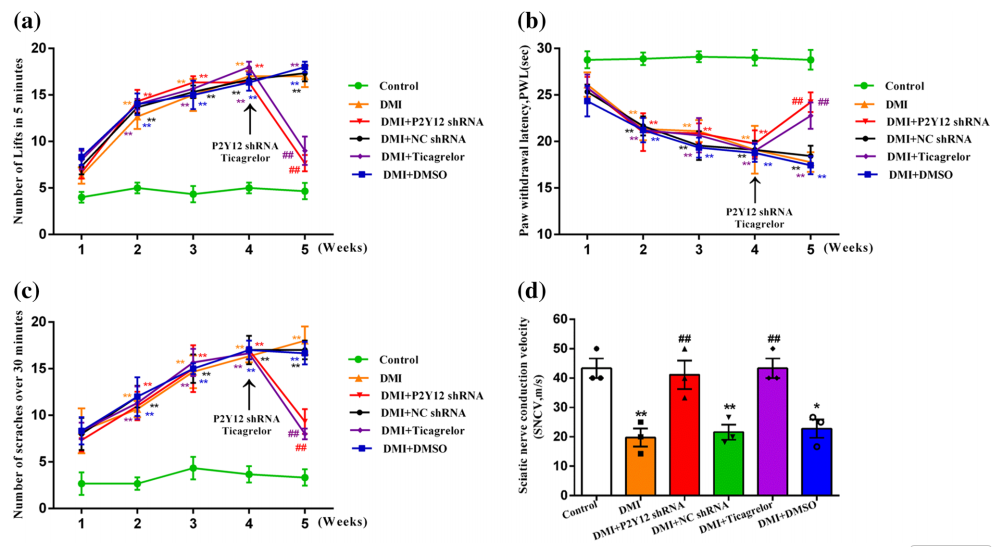
P2Y12 shRNA or ticagrelor (intragastric administration, 100 mg/kg, 1 week) alleviated cold hyperalgesia, thermal hyperalgesia, spontaneous itching behaviour, and sciatic nerve conduction velocity (SNCV) deficits in mice. (a) The number of paw lifts on a cold plate within 5 min. (b) Paw withdrawal latency in the hot plate test. (c) Number of spontaneous scratches within 30 min. (d) Sciatic nerve conduction velocity. Data are presented as mean ± SD (n = 8 per group). *p < 0.05, **p < 0.01 vs. control; ##p < 0.01 vs. DMI (type 2 diabetes mellitus + itch model).
Ticagrelor purchased from MedChemExpress. Usage Cited in: Mol Neurobiol. 2022 Mar;59(3):1604-1618. [Abstract]
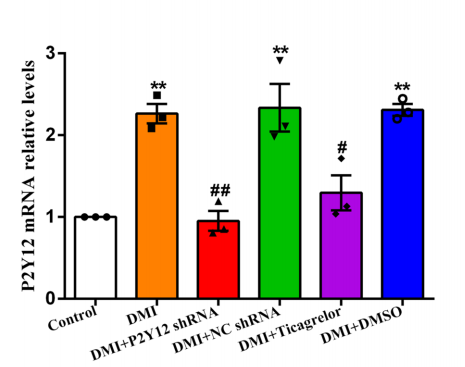
Ticagrelor (intragastric administration, 100 mg/kg, 1 week) inhibited the expression of P2Y12 mRNA in the dorsal root ganglia (DRG) of mice in the type 2 diabetes mellitus + itch model group.
Ticagrelor purchased from MedChemExpress. Usage Cited in: Mol Neurobiol. 2022 Mar;59(3):1604-1618. [Abstract]
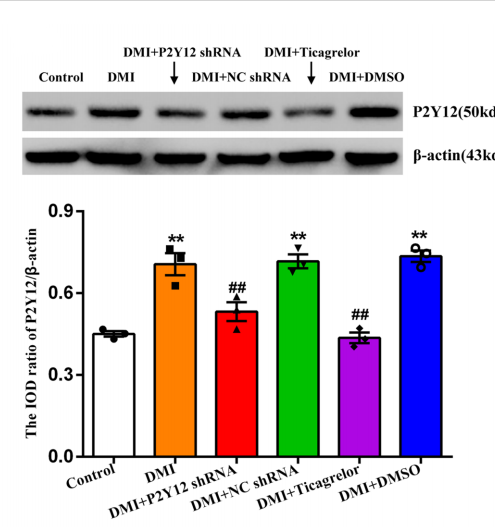
Ticagrelor (intragastric administration, 100 mg/kg, 1 week) inhibited the expression of P2Y12 protein in the DRG of mice in the type 2 diabetes mellitus + itch model group.
Ticagrelor purchased from MedChemExpress. Usage Cited in: Mol Neurobiol. 2022 Mar;59(3):1604-1618. [Abstract]
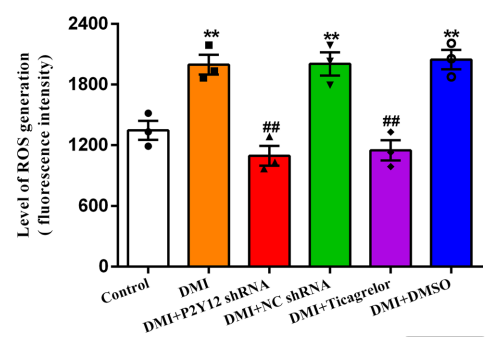
Ticagrelor (intragastric administration, 100 mg/kg, 1 week) reduced reactive oxygen species (ROS) levels in the DRG of mice in the type 2 diabetes mellitus + itch model group.
-
Clin Chim Acta
Simultaneous quantification of acetylsalicylic acid, clopidogrel, ticagrelor and their major metabolites in human plasma by liquid chromatography-tandem mass spectrometry. [Abstract]2025 Dec 31:120816. PMID: 41482259 -
Chem Biodivers
UPLC-QTOF-MS-Based Quantification and Antiplatelet Activity Evaluation of Herb Pair Interactions Between Red Ginseng and Trogopterus Feces. [Abstract]2025 Sep;22(9):e202500770. PMID: 40265573 -
Biomed Res Int
Hemostatic Effect of 20(S)-Panaxadiol by Induced Platelet Aggregation Depending on Calcium Signaling Pathway. [Abstract]2022 Sep 20;2022:8265898. PMID: 36177062 -
-
Heliyon
Novel cancer-fighting role of ticagrelor inhibits GTSE1-induced EMT by regulating PI3K/Akt/NF-κB signaling pathway in malignant glioma. [Abstract]2024 May 7;10(9):e30833. PMID: 38774096 -


Lösungsmittel & Löslichkeit
In Vitro:
DMSO : ≥ 50 mg/mL (95.68 mM; Hygroscopic DMSO has a significant impact on the solubility of product, please use newly opened DMSO)
* "≥" means soluble, but saturation unknown.
Please refer to the solubility information to select the appropriate solvent. Once prepared, please aliquot and store the solution to prevent product inactivation from repeated freeze-thaw cycles.
Storage method and period of stock solution: -80°C, 1 year; -20°C, 6 months (protect from light, stored under nitrogen). When stored at -80°C, please use it within 1 year. When stored at -20°C, please use it within 6 months.
Please refer to the solubility information to select the appropriate solvent. Once prepared, please aliquot and store the solution to prevent product inactivation from repeated freeze-thaw cycles.
Storage method and period of stock solution: -80°C, 1 year; -20°C, 6 months (protect from light, stored under nitrogen). When stored at -80°C, please use it within 1 year. When stored at -20°C, please use it within 6 months.
Konzentration (Stammlösung) × Volumen (Stammlösung) = Konzentration (Ziellösung) × Volumen (Ziellösung)
In Vivo:
Select the appropriate dissolution method based on your experimental animal and administration route.
- For the following dissolution methods, please ensure to first prepare a clear stock solution using an In Vitro approach and then sequentially add co-solvents:
- To ensure reliable experimental results, the clarified stock solution can be appropriately stored based on storage conditions. As for the working solution for In Vivo experiments, it is recommended to prepare freshly and use it on the same day.
- The percentages shown for the solvents indicate their volumetric ratio in the final prepared solution. If precipitation or phase separation occurs during preparation, heat and/or sonication can be used to aid dissolution.
Add each solvent one by one: 10% DMSO 40% PEG300 5% Tween-80 45% Saline
Solubility: ≥ 2 mg/mL (3.83 mM); Clear solution
This protocol yields a clear solution of ≥ 2 mg/mL (saturation unknown).
Taking 1 mL working solution as an example, add 100 μL DMSO stock solution (20.0 mg/mL) to 400 μL PEG300, and mix evenly; then add 50 μL Tween-80 and mix evenly; then add 450 μL Saline to adjust the volume to 1 mL.
Preparation of Saline: Dissolve 0.9 g sodium chloride in ddH₂O and dilute to 100 mL to obtain a clear Saline solution.
Add each solvent one by one: 10% DMSO 90% (20% SBE-β-CD in Saline)
Solubility: ≥ 2 mg/mL (3.83 mM); Clear solution
This protocol yields a clear solution of ≥ 2 mg/mL (saturation unknown).
Taking 1 mL working solution as an example, add 100 μL DMSO stock solution (20.0 mg/mL) to 900 μL 20% SBE-β-CD in Saline, and mix evenly.
Preparation of 20% SBE-β-CD in Saline (4°C, storage for one week): 2 g SBE-β-CD powder is dissolved in 10 mL Saline, completely dissolve until clear.
In Vivo Dissolution Calculator
Please enter the basic information of animal experiments:
-
-
-
-
Recommended: Prepare an additional quantity of animals to account for potential losses during experiments.
Please enter your animal formula composition:
-
%DMSO +
Recommended: Keep the proportion of DMSO in working solution below 2% if your animal is weak.
-
%+
-
+%Tween-80 + +
-
%Saline +
The co-solvents required include: DMSO, . All of co-solvents are available by MedChemExpress (MCE). , Tween 80. All of co-solvents are available by MedChemExpress (MCE).
Working solution concentration: 0.22 mg/mL
Method for preparing stock solution: mg drug dissolved in μL DMSO. Stock solution concentration: mg/mL. * In solvent : -80°C, 1 year; -20°C, 6 months (protect from light, stored under nitrogen)
1. Take μL DMSO stock solution;
2. Add μL .
μL , mix evenly;
3. Then add μL Tween 80, mix evenly;
4. Then add μL
Please ensure that the stock solution in the first step is dissolved to a clear state, and add co-solvents in sequence. You can use ultrasonic heating (ultrasonic cleaner, recommended frequency 20-40 kHz), vortexing, etc. to assist dissolution.


Reinheit & Dokumentation
-
Data Sheet (281 KB)
-
SDS (396 KB)
- English - EN (396 KB)
- Français - FR (396 KB)
- Deutsch - DE (396 KB)
- Norwegian - NO (396 KB)
- Español - ES (396 KB)
- Swedish - SV (396 KB)
- Italian - IT (396 KB)
- Korean - KR (396 KB)
- Portuguese - PT (396 KB)
-
Handling Instructions (2659 KB)
Verweise
[1]. Aungraheeta R, et al. Inverse agonism at the P2Y12 receptor and ENT1 transporter blockade contribute to platelet inhibition by ticagrelor. Blood. 2016 Dec 8;128(23):2717-2728. [Content Brief]
[2]. Gebremeskel S, et al. The reversible P2Y12 inhibitor ticagrelor inhibits metastasis and improves survival in mouse models of cancer. Int J Cancer. 2015 Jan 1;136(1):234-40. [Content Brief]
[3]. Sugidachi A, et al. A comparison of the pharmacological profiles of prasugrel and ticagrelor assessed by platelet aggregation, thrombus formation and haemostasis in rats. Br J Pharmacol. 2013 May;169(1):82-9. [Content Brief]


Complete Stock Solution Preparation Table
Please refer to the solubility information to select the appropriate solvent. Once prepared, please aliquot and store the solution to prevent product inactivation from repeated freeze-thaw cycles.
Storage method and period of stock solution: -80°C, 1 year; -20°C, 6 months (protect from light, stored under nitrogen). When stored at -80°C, please use it within 1 year. When stored at -20°C, please use it within 6 months.
| Optional Solvent | Concentration Solvent Mass | 1 mg | 5 mg | 10 mg | 25 mg |
|---|---|---|---|---|---|
| DMSO | 1 mM | 1.9136 mL | 9.5681 mL | 19.1362 mL | 47.8405 mL |
| 5 mM | 0.3827 mL | 1.9136 mL | 3.8272 mL | 9.5681 mL | |
| 10 mM | 0.1914 mL | 0.9568 mL | 1.9136 mL | 4.7840 mL | |
| 15 mM | 0.1276 mL | 0.6379 mL | 1.2757 mL | 3.1894 mL | |
| 20 mM | 0.0957 mL | 0.4784 mL | 0.9568 mL | 2.3920 mL | |
| 25 mM | 0.0765 mL | 0.3827 mL | 0.7654 mL | 1.9136 mL | |
| 30 mM | 0.0638 mL | 0.3189 mL | 0.6379 mL | 1.5947 mL | |
| 40 mM | 0.0478 mL | 0.2392 mL | 0.4784 mL | 1.1960 mL | |
| 50 mM | 0.0383 mL | 0.1914 mL | 0.3827 mL | 0.9568 mL | |
| 60 mM | 0.0319 mL | 0.1595 mL | 0.3189 mL | 0.7973 mL | |
| 80 mM | 0.0239 mL | 0.1196 mL | 0.2392 mL | 0.5980 mL |


Ticagrelor Related Classifications
HY-10064 Related Classifications
 Powered by Bioz