



Pulmonary Hypertension
-
Pulmonary Hypertension (39)

- 1
- 2
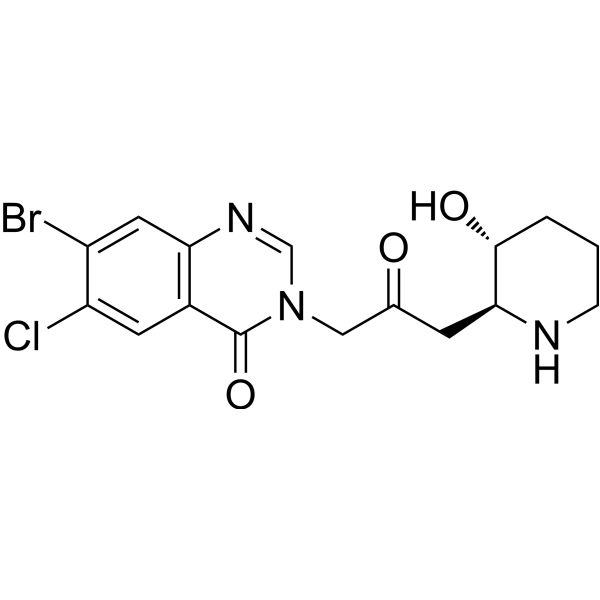
- Formula: C16H17BrClN3O3
- Molecular Weight: 414.68
Halofuginone (RU-19110), a Febrifugine derivative, is a competitive prolyl-tRNA synthetase inhibitor with a Ki of 18.3 nM. Halofuginone is a specific inhibitor of type-I collagen synthesis and attenuates osteoarthritis (OA) by inhibition of TGF-β activity. Halofuginone is also a potent pulmonary vasodilator by activating Kv channels and blocking voltage-gated, receptor-operated and store-operated Ca2+ channels. Halofuginone has anti-malaria, anti-inflammatory, anti-cancer, anti-fibrosis effects.
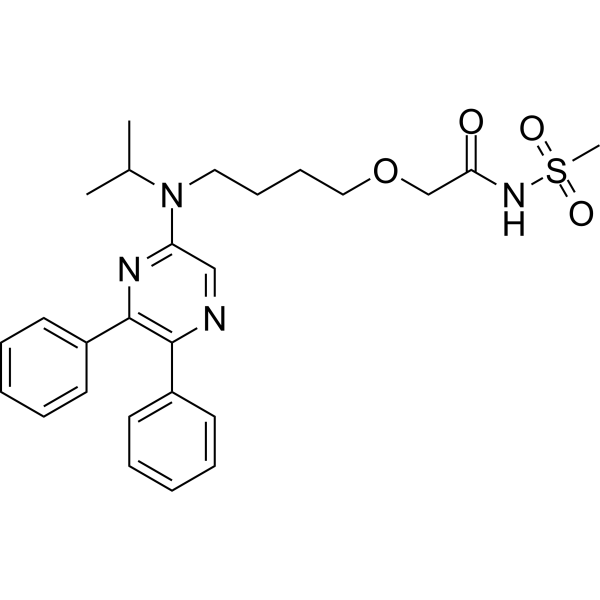
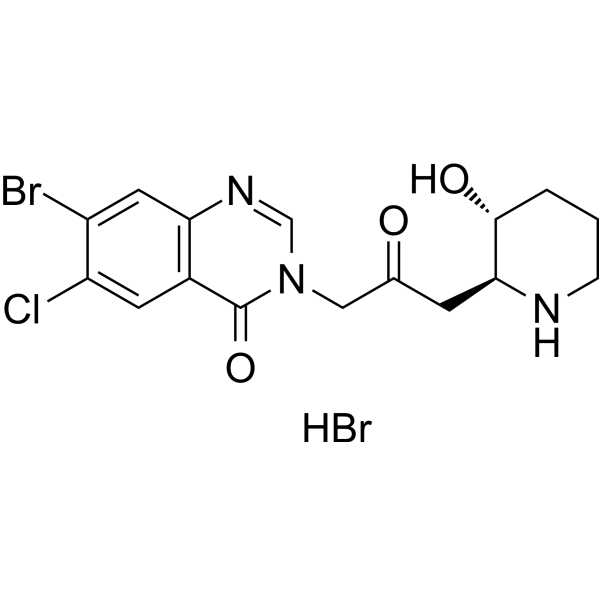
- Formula: C16H18Br2ClN3O3
- Molecular Weight: 495.59
Halofuginone hydrobromide (RU-19110 hydrobromide), a Febrifugine derivative, is a competitive prolyl-tRNA synthetase inhibitor with a Ki of 18.3 nM. Halofuginone hydrobromide is a specific inhibitor of type-I collagen synthesis and attenuates osteoarthritis (OA) by inhibition of TGF-β activity. Halofuginone hydrobromide is also a potent pulmonary vasodilator by activating Kv channels and blocking voltage-gated, receptor-operated and store-operated Ca2+ channels. Halofuginone hydrobromide has anti-malaria, anti-inflammatory, anti-cancer, anti-fibrosis effects.
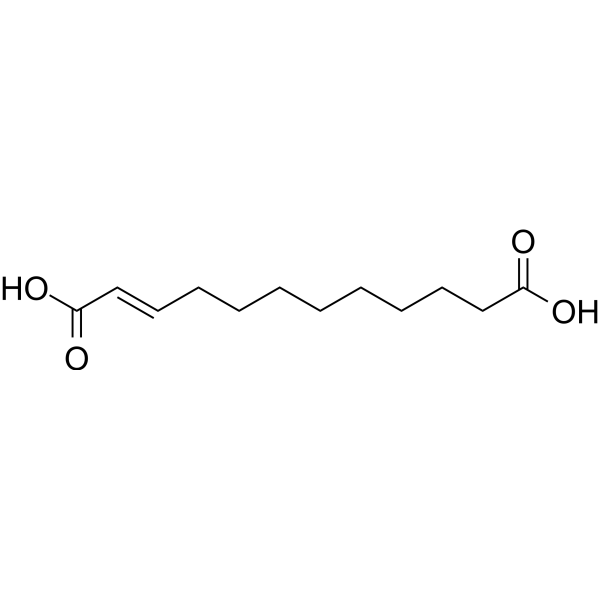
- Formula: C12H20O4
- Molecular Weight: 228.28
Traumatic Acid is a wound healing agent and a cytokinin (phytohormone). Traumatic Acid enhances the biosynthesis of collagen in cultured human skin fibroblasts. Traumatic Acid inhibits MCF-7 breast cancer cells viability and enhances apoptosis and oxidative stress. Traumatic Acid can be used in studies of cancer, circulatory disorders (including arterial hypertension), and skin diseases associated with oxidative stress and impaired collagen biosynthesis.
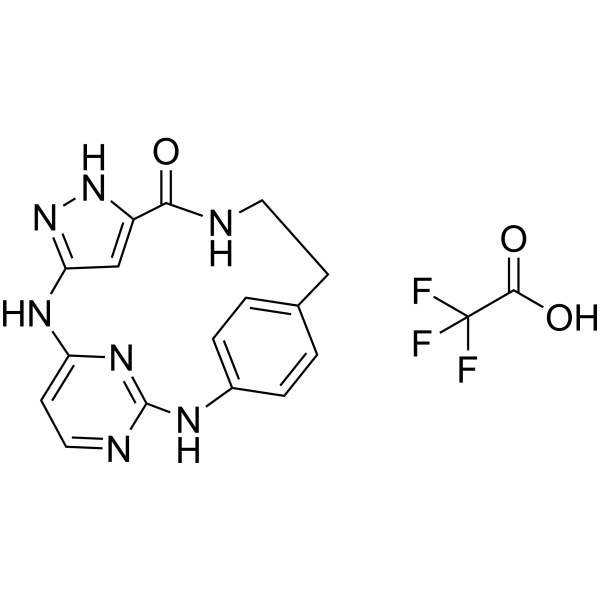
- Formula: C18H16F3N7O3
- Molecular Weight: 435.36
BMPR2-IN-1 TFA is a selective BMPR2 inhibitor with a human BMPR2 IC50 of 506 nM and a Kd of 83.5 nM. BMPR2-IN-1 TFA functions as an ATP mimetic, forming hydrogen bonds with the BMPR2 kinase domain backbone and hydrophobic interactions with specific residues, and demonstrates high selectivity for BMPR2 over other kinases.BMPR2-IN-1 TFA can be used for the researches of cancer, pulmonary arterial hypertension and Alzheimer’s disease.

- Formula: C19H23BrClN3O6
- Molecular Weight: 504.76
Halofuginone lactate (RU-19110 lactate), a Febrifugine derivative, is a competitive prolyl-tRNA synthetase inhibitor with a Ki of 18.3 nM. Halofuginone lactate is a specific inhibitor of type-I collagen synthesis and attenuates osteoarthritis (OA) by inhibition of TGF-β activity. Halofuginone lactate is also a potent pulmonary vasodilator by activating Kv channels and blocking voltage-gated, receptor-operated and store-operated Ca2+ channels. Halofuginone lactate has anti-malaria, anti-inflammatory, anti-cancer, anti-fibrosis effects.

- Formula: C27H25F2N9
- Molecular Weight: 513.54
NSD2-IN-5 (Compound 198) is a SET domain-containing nuclear protein 2 (NSD2) inhibitor with an IC50 value ranging from 0.001 μM to 0.01 μM. NSD2-IN-5 blocks the activity of NSD2, thereby regulating NSD2-mediated biological processes. NSD2-IN-5 can be used in the research of various cancers including breast cancer, cervical cancer, skin cancer, ovarian cancer, as well as pulmonary hypertension.
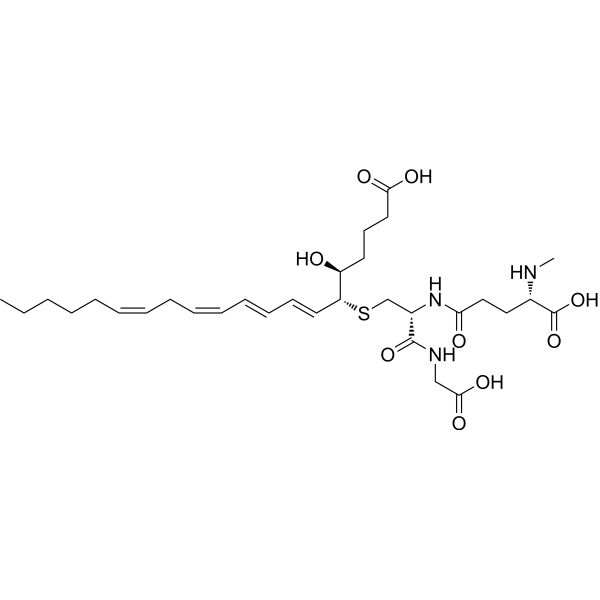
- Formula: C31H49N3O9S
- Molecular Weight: 639.80
N-Methyl Leukotriene C4 (N-Methyl-LTC4) is a non-metabolizable LTC4 analog and a selective cysteinyl leukotriene receptor 2 (CysLT2) agonist, with an EC50 of 46.1 nM for mouse CysLT2 and an EC50 value of 122.3 nM for human CysLT2. N-Methyl Leukotriene C4 shows low potency against CysLT1. N-Methyl Leukotriene C4 activates human and mouse CysLT2 receptors, triggering calcium signaling, β-arrestin-2 binding to phosphorylated receptors, vascular leakage, hypotension, tachycardia, contraction of guinea pig ileum and trachea, mild bronchoconstriction, as well as hypertension associated with peripheral vasoconstriction. N-Methyl Leukotriene C4 can be used in research on asthma, rhinitis, sinusitis, cerebral inflammation and edema, pulmonary arterial hypertension, and cardiovascular diseases.
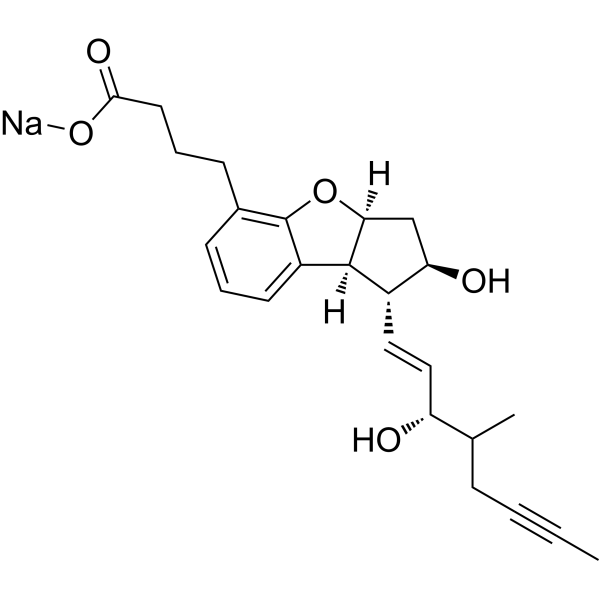
- Formula: C24H29NaO5
- Molecular Weight: 420.47
Beraprost sodium (TRK-100), a prostacyclin analog, is a stable and orally active proagent of PGI2. Beraprost sodium (TRK-100) is a potent vasodilator, has the potential for pulmonary arterial hypertension treatment through expanding renal vessels, improving microcirculation. Beraprost sodium (TRK-100) is a click chemistry reagent, it contains an Alkyne group and can undergo copper-catalyzed azide-alkyne cycloaddition (CuAAc) with molecules containing Azide groups.
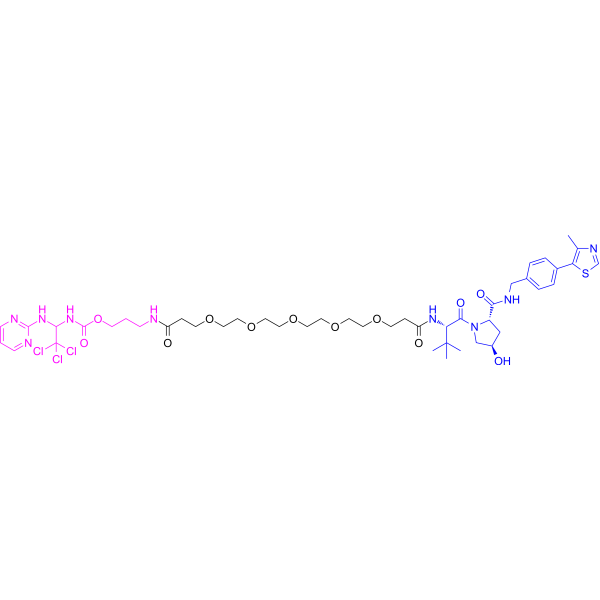
- Formula: C46H66Cl3N9O12S
- Molecular Weight: 1075.49
CP5V is a Cdc20 PROTAC degrader with a DC50 of 1.6 μM and a Kd value of 12.4 μM. CP5V couples Cdc20 with the VHL/VBC complex, triggering its ubiquitination and proteasomal degradation, thereby reducing the protein levels of Cdc20 and securin. CP5V induces mitotic arrest, inhibits cell proliferation, resensitizes Paclitaxel-resistant breast cancer cells, and suppresses breast tumor progression in xenograft models. CP5V inhibits excessive proliferation and induces apoptosis in pulmonary arterial hypertension smooth muscle cells and fibroblasts. CP5V can be used in studies related to breast cancer and pulmonary arterial hypertension.
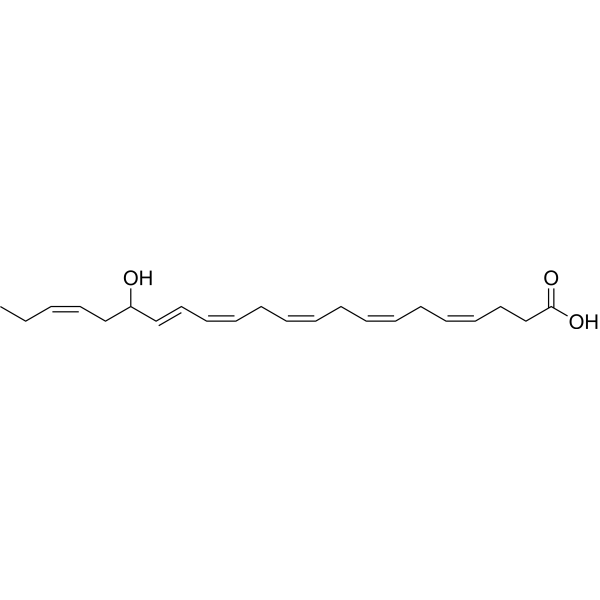
- Formula: C22H32O3
- Molecular Weight: 344.49
17-HDHA is a DHA-derived specialized pro-resolving mediator (SPM). 17-HDHA inhibits NF-κB activation by activating PPARγ and upregulating IκBα, targets FPR2 and Bcl-6, and also acts as a precursor of RvD1 and PD1. 17-HDHA inhibits pulmonary artery smooth muscle cell proliferation, regulates the expression of adiponectin, GLUT-4 and inflammatory cytokines, suppresses IgE production by B cells and promotes antibody secretion. 17-HDHA reduces adipose tissue inflammation, improves insulin sensitivity and glucose tolerance, alleviates pathological processes associated with pulmonary hypertension, and enhances antibody responses and virus neutralizing activity against influenza HA. 17-HDHA can be used in research related to obesity-associated inflammation, insulin resistance, glucose intolerance, pulmonary hypertension and influenza virus infection.

- Formula: C6H5K3O8
- Molecular Weight: 322.39
Tripotassium hydroxycitrate is an orally active, multi-target, multi-bioactive organic acid. Tripotassium hydroxycitrate activates Nrf2 and its downstream molecule GPX4, increases glutathione levels, and thereby inhibits ferroptosis. Tripotassium hydroxycitrate activates the Nrf2/Keap1 and ACLY/NF-κB signaling pathways, upregulates the activities of antioxidant enzymes such as superoxide dismutase, reduces MDA content, thereby alleviating oxidative stress and renal tubular epithelial cell apoptosis, and improves pulmonary vascular and right ventricular remodeling. Tripotassium hydroxycitrate activates both the AMPK and mTORC1/S6K pathways, triggers the unfolded protein response, arrests the cancer cell cycle, and induces DNA fragmentation.

- Formula: C16H21NO6
- Molecular Weight: 323.34
Dehydromonocrotaline is a mitochondrial respiratory chain complex I NADH oxidase inhibitor, with a IC50 of 62.06 μM and a Ki of 8.1 μM in rats. Dehydromonocrotaline exerts non-competitive inhibitory effects by modifying cysteine thiol groups on complex I, and does not bind to the NADH-binding site. Dehydromonocrotaline dissipates mitochondrial membrane potential and reduces ATP levels. Dehydromonocrotaline can be used in studies related to hepatotoxicity, pulmonary hypertension and liver tumors.

- Formula: C25H22N4O4S
- Molecular Weight: 474.53
GRK2 degrader-1 (compound 1) is a potent and orally active GRK2 degrader. GRK2 degrader-1 degrades GRK2 via the ubiquitin-proteasome pathway. GRK2 degrader-1 inhibits right ventricular remodeling and elevation of pulmonary artery pressure in a pulmonary artery hypertension (PAH) mouse model. GRK2 degrader-1 can be used for PAH research.

- Formula: C16H18Br2ClN3O3
- Molecular Weight: 495.59
Halofuginone hydrobromide (Standard) (RU-19110 hydrobromide (Standard)) is the analytical standard of Halofuginone hydrobromide (HY-N1584A). This product is intended for research and analytical applications. Halofuginone hydrobromide (RU-19110 hydrobromide), a Febrifugine derivative, is a competitive prolyl-tRNA synthetase inhibitor with a Ki of 18.3 nM. Halofuginone hydrobromide is a specific inhibitor of type-I collagen synthesis and attenuates osteoarthritis (OA) by inhibition of TGF-β activity. Halofuginone hydrobromide is also a potent pulmonary vasodilator by activating Kv channels and blocking voltage-gated, receptor-operated and store-operated Ca2+ channels. Halofuginone hydrobromide has anti-malaria, anti-inflammatory, anti-cancer, anti-fibrosis effects.

- Formula: C16H17BrClN3O3
- Molecular Weight: 414.68
Halofuginone (Standard) (RU-19110 (Standard)) is the analytical standard of Halofuginone (HY-N1584). This product is intended for research and analytical applications. Halofuginone (RU-19110), a Febrifugine derivative, is a competitive prolyl-tRNA synthetase inhibitor with a Ki of 18.3 nM. Halofuginone is a specific inhibitor of type-I collagen synthesis and attenuates osteoarthritis (OA) by inhibition of TGF-β activity. Halofuginone is also a potent pulmonary vasodilator by activating Kv channels and blocking voltage-gated, receptor-operated and store-operated Ca2+ channels. Halofuginone has anti-malaria, anti-inflammatory, anti-cancer, anti-fibrosis effects.

PF-07868489 is a recombinant monoclonal antibody targeting GDF2/BMP-9. PF-07868489 can be used for the research of pulmonary arterial hypertension (PAH). Recommend Isotype Controls: Human IgG1 kappa, Isotype Control (HY-P99001).

- Formula: C22H34ClN5O
- Molecular Weight: 419.99
SLP7111228 hydrochloride is a selective sphingosine kinase 1 (SphK1) inhibitor and anti-inflammatory agent. SLP7111228 hydrochloride selectively inhibits SphK1 and reduces the production of sphingosine-1-phosphate. SLP7111228 hydrochloride decreases lipopolysaccharide-induced TNFα and IL-1β levels. SLP7111228 hydrochloride alleviates obliterative pulmonary arteriopathy, increases cardiac index and decreases total pulmonary vascular resistance index. SLP7111228 hydrochloride can be used in research related to neuroinflammatory diseases and pulmonary hypertension.
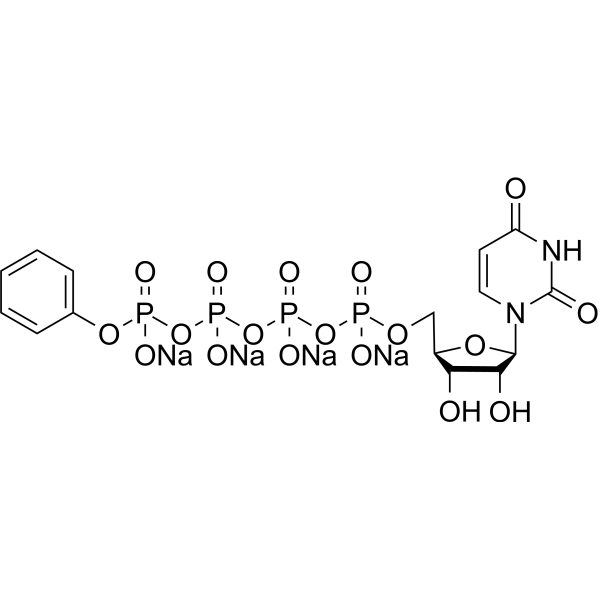
- Formula: C15H16N2Na4O18P4
- Molecular Weight: 728.14
MRS2768 tetrasodium salt is a potent, selective, and metabolically stable P2Y2 receptor agonist with an EC50 of 1.89 μM for the human P2Y2 receptor. MRS2768 tetrasodium salt activates Gq/PLC/PKC signaling, leading to downstream phosphorylation of Akt, eNOS, and ERK, with effects varying by cell type. MRS2768 tetrasodium salt inhibits ENaC via Gq/PKC/Src/Akt to promote natriuresis and lower blood pressure in the kidney. MRS2768 tetrasodium salt activates eNOS to increase NO secretion in endothelial cells. MRS2768 tetrasodium salt drives proliferation via PI3K/Akt in fibroblasts and cancer cells. MRS2768 tetrasodium salt exerts anti-apoptotic effects through PKC/Src/Akt in cardiomyocytes. MRS2768 tetrasodium salt can be applied to investigate P2Y2-dependent pathological processes, including acute kidney injury, chronic kidney disease and renal fibrosis, DOCA-salt induced hypertension, myocardial infarction, pulmonary arterial hypertension, pancreatic cancer, cardiac fibrosis, dry eye disease, as well as shear stress-mediated vascular remodeling and atherosclerosis.
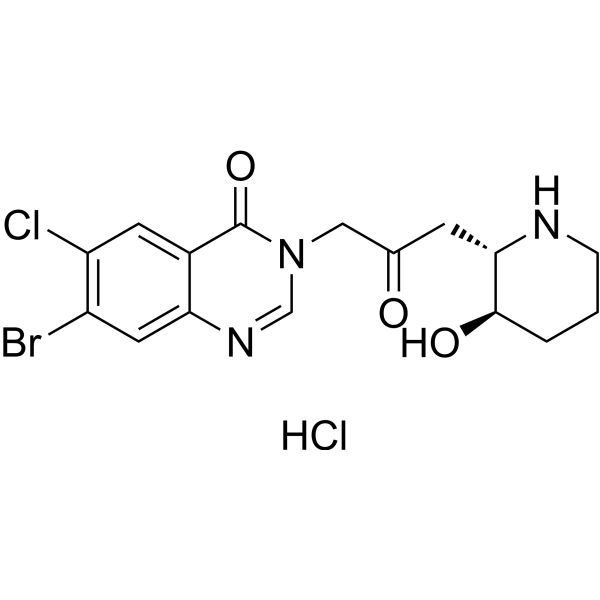
- Formula: C16H18BrCl2N3O3
- Molecular Weight: 451.14
Halofuginone hydrochloride (RU-19110 hydrochloride), a Febrifugine derivative, is a competitive prolyl-tRNA synthetase inhibitor with a Ki of 18.3 nM. Halofuginone hydrochloride is a specific inhibitor of type-I collagen synthesis and attenuates osteoarthritis (OA) by inhibition of TGF-β activity. Halofuginone hydrochloride is also a potent pulmonary vasodilator by activating Kv channels and blocking voltage-gated, receptor-operated and store-operated Ca2+ channels. Halofuginone hydrochloride has anti-malaria, anti-inflammatory, anti-cancer, anti-fibrosis effects.
- 1
- 2



