



NOX1
NOX1 encodes a member of the NADPH oxidase family that catalyzes oxygen reduction and generates reactive oxygen species, including superoxide or hydrogen peroxide[1]. Mechanistically, NOX1 drives redox-dependent signaling in vascular smooth muscle cells, where NOX1 supports nonstimulated and angiotensin II-stimulated superoxide production, while NOX4 mainly supports basal H2O2 production[2]. In colonic biology, NOX1 links microbiota-responsive TLR input to EGFR redox activation and potentiates colonic stem cell proliferation[3]. In colon cancer models, NOX1 supports the proliferative phenotype of colon cancer cells through reactive oxygen species-dependent signal transduction[4]. In cancer stem-like models, NOX1-derived ROS activates mTORC1 through S100A9 oxidation in VPS41-/VPS39-positive lysosomes, promoting colon cancer progression[5]. Compared with related isoforms, NOX1 is experimentally distinguished from NOX4 by stronger association with superoxide production and mitogenic signaling, whereas NOX4 can act through H2O2-linked basal signaling[2][6]. For experimental applications, GKT137831/setanaxib functions as a dual NOX1/NOX4 inhibitor in disease models, including diabetic microvascular and macrovascular injury[7]. NOX1-selective inhibitor development also supports colon and stomach cancer cell proliferation studies[8].
References:
- [1]. NOX1 gene information from NCBI.
- [2]. Dikalov SI, et al. Distinct roles of Nox1 and Nox4 in basal and angiotensin II-stimulated superoxide and hydrogen peroxide production. Free Radic Biol Med. 2008 Nov 1;45(9):1340-51. [Content Brief]
- [3]. van der Post S, et al. NOX1-dependent redox signaling potentiates colonic stem cell proliferation to adapt to the intestinal microbiota by linking EGFR and TLR activation. Cell Rep. 2021 Apr 6;35(1):108949. [Content Brief]
- [4]. Juhasz A, et al. NADPH oxidase 1 supports proliferation of colon cancer cells by modulating reactive oxygen species-dependent signal transduction. J Biol Chem. 2017 May 12;292(19):7866-7887. [Content Brief]
- [5]. Ohata H, et al. NOX1-Dependent mTORC1 Activation via S100A9 Oxidation in Cancer Stem-like Cells Leads to Colon Cancer Progression. Cell Rep. 2019 Jul 30;28(5):1282-1295.e8. [Content Brief]
- [6]. Hilenski LL, et al. Distinct subcellular localizations of Nox1 and Nox4 in vascular smooth muscle cells. Arterioscler Thromb Vasc Biol. 2004 Apr;24(4):677-83. [Content Brief]
- [7]. Gray SP, et al. Combined NOX1/4 inhibition with GKT137831 in mice provides dose-dependent reno- and atheroprotection even in established micro- and macrovascular disease. Diabetologia. 2017 May;60(5):927-937. [Content Brief]
- [8]. Yamamoto T, et al. Identification and Characterization of a Novel NADPH Oxidase 1 (Nox1) Inhibitor That Suppresses Proliferation of Colon and Stomach Cancer Cells. Biol Pharm Bull. 2018 Mar 1;41(3):419-426. [Content Brief]
All Product Categories
-
NOX1 Related Products (16)
Related Products (16)

- 1
-
Setanaxib
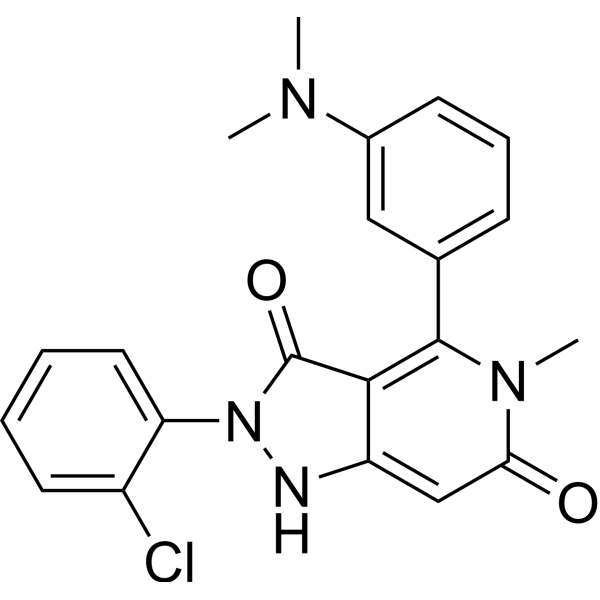 0 ImagesSynonyms: GKT137831; GKT831Setanaxib (GKT137831) is a selective NADPH oxidase (NOX1/4) inhibitor with Kis of 140 and 110 nM, respectively.
-
ML171
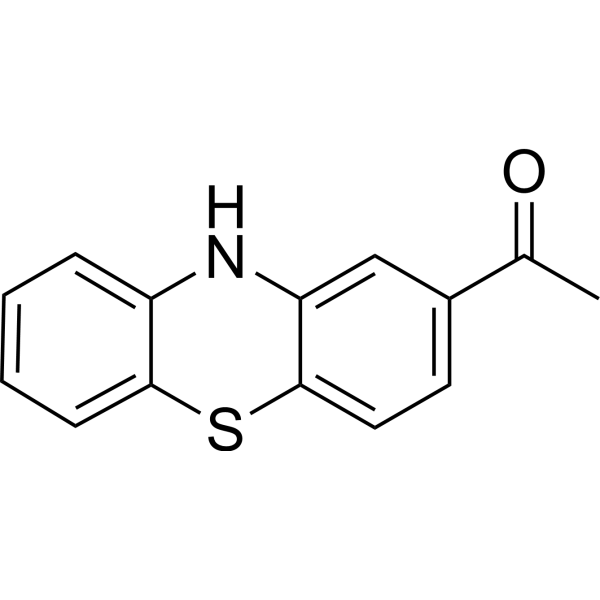 0 ImagesML171 (2-Acetylphenothiazine;2-APT) is a potent and selective NADPH oxidase 1 (Nox1) inhibitor that blocks Nox1-dependent ROS generation, with an IC50 of 0.25 μM in HEK293-Nox1 confirmatory assay.
-
APX-115
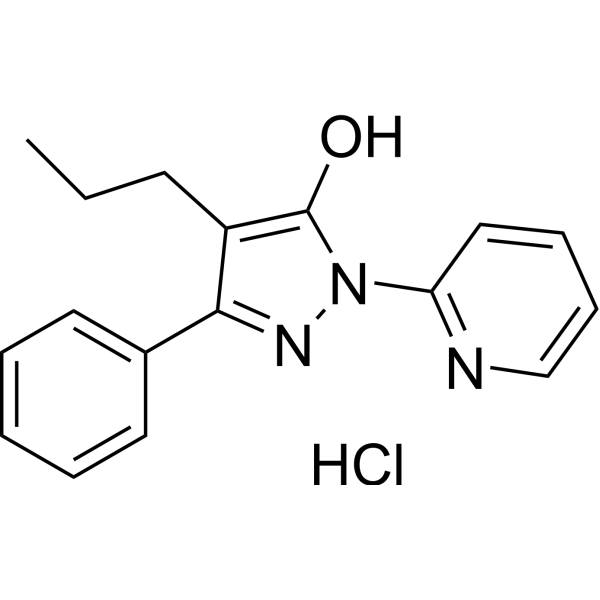 0 ImagesSynonyms: Ewha-18278APX-115 (Ewha-18278) is a potent, orally active pan NADPH oxidase (Nox) inhibitor with Ki values of 1.08 μM, 0.57 μM, and 0.63 μM for Nox1, Nox2 and Nox4, respectively. APX-115 effectively prevents kidney injury.
-
Prochlorperazine dimaleate
 0 ImagesProchlorperazine dimaleate is an orally active phenothiazine-type dopamine D2 receptor (D2R) antagonist. Prochlorperazine exhibits anti-cancer activity in vitro against various cancer cell lines. Prochlorperazine dimaleate exhibits IC50 values of 6.4 μM, 4.5 μM and 2.3 μM for NOX1, NOX2 and NOX5, respectively. Prochlorperazine dimaleate has antedesmosidic activity against dengue virus (DENV). Prochlorperazine dimaleate can be used for research on nausea, vomiting, migraine, and schizophrenia.
-
GKT136901
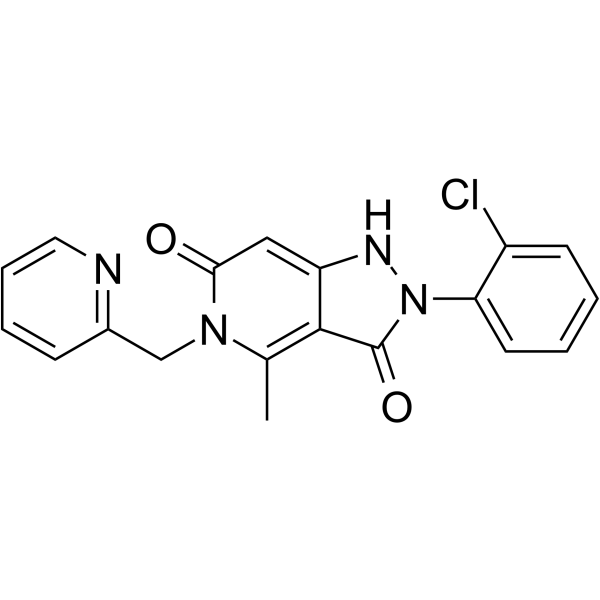 0 ImagesGKT136901 is a potent, selective and orally active inhibitor of NADPH oxidase (NOX1/4), with Kis of 160 and 165 nM, respectively. GKT136901 is also a selective and direct scavenger of peroxynitrite. GKT136901 can be used for the research of diabetic nephropathy, stroke, and neurodegeneration. GKT136901 also has anti-inflammatory activity.
-
GK-136901
 0 ImagesCat. No.: HY-124487CAS No.: 1062624-71-8GK-136901 is an orally active, dual Nox1/Nox4 NADPH oxidase inhibitor with a Ki of 160 nM for Nox1 and 165 nM for Nox4. GK-136901 potently blocks high glucose-induced intracellular reactive oxygen species production, p38-MAPK phosphorylation, and upregulation of TGF-β1/2 and fibronectin (fibronectin) in renal cells. GK-136901 also inhibits the proliferation of mouse pulmonary vascular cells under hypoxic conditions. GK-136901 is applicable to the research on the pathogenesis of type 2 diabetic nephropathy, high glucose-related renal lesions and pulmonary hypertension.
-
AMPAR modulator-12
 0 ImagesCat. No.: HY-183101CAS No.: 2163787-60-6AMPAR modulator-12 is a blood-brain barrier-permeable AMPAR positive allosteric modulator. AMPAR modulator-12 reduces NOX-1 expression, enhances AMPAR-mediated currents, promotes excitatory postsynaptic transmission and restores AMPAR function. AMPAR modulator-12 enhances excitatory and inhibitory synaptic transmission, reduces burst firing in the lateral habenula after withdrawal, and produces rapid and sustained antidepressant-like effects. AMPAR modulator-12 is applicable for the research of depression.
-
NoxA1ds
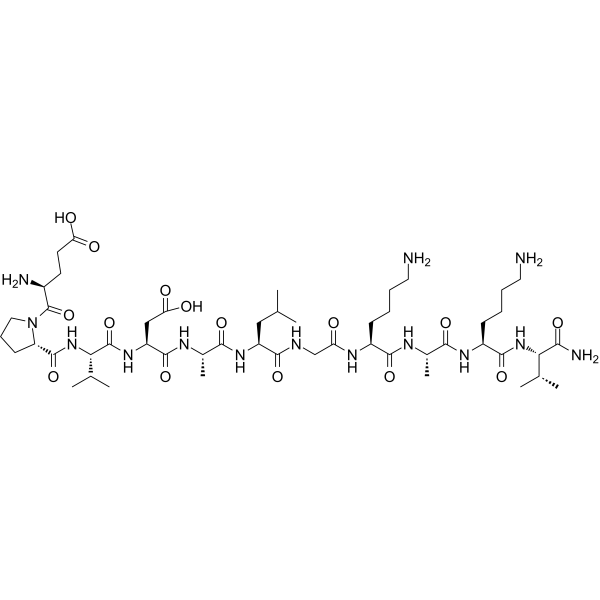 0 ImagesCat. No.: HY-P1435CAS No.: 1435893-78-9NoxA1ds is a potent and highly selective NADPH oxidase 1 (NOX1) inhibitor (IC50=20 nM). NoxA1ds inhibits NOX1-derived O2- production in HT-29 human colon cancer cells. NoxA1ds attenuates VEGF-induced human pulmonary artery endothelial cell migration under hypoxic conditions in vitro. NoxA1ds can be used in the study of hypertension, atherosclerosis and tumors.
-
APX-115 free base
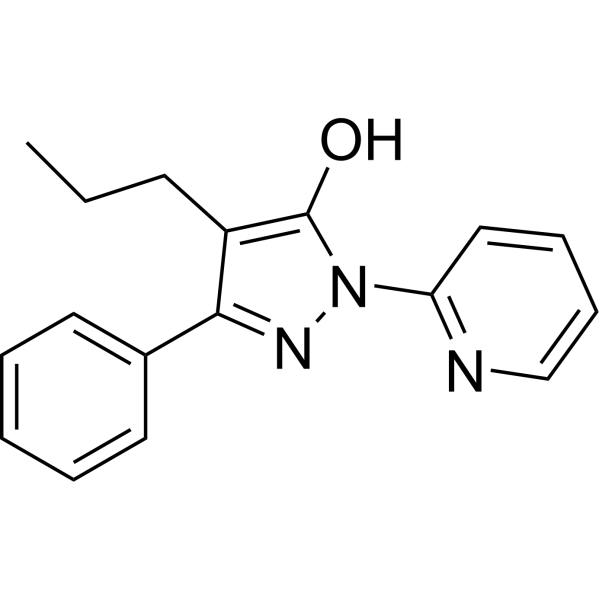 0 ImagesSynonyms: Ewha-18278 free base; Isuzinaxib free baseAPX-115 free base (Ewha-18278 free base) is a potent, orally active pan NADPH oxidase (Nox) inhibitor with Ki values of 1.08 μM, 0.57 μM, and 0.63 μM for Nox1, Nox2 and Nox4, respectively. APX-115 free base effectively prevents kidney injury.
-
Fluoflavine
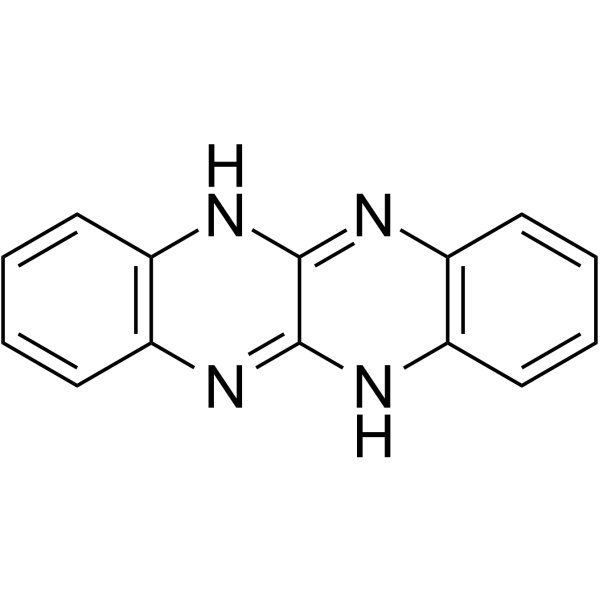 0 ImagesFluoflavine (ML-090) is a selective NOX1 inhibitor and reactive oxygen species inhibitor. Fluoflavine reduces reactive oxygen species production, NOX1-mediated downstream signaling events, and oxygen-glucose deprivation-induced retinal ganglion cell death. Fluoflavine inhibits NADPH oxidase activity and pathological retinal neovascularization induced by oxygen-induced retinopathy in the retinas of ischemic mice. Fluoflavine can be used in studies related to retinal ischemia-reperfusion injury and proliferative retinopathy.
-
Hidrosmin
 0 ImagesCat. No.: HY-105946CAS No.: 115960-14-0
-
NoxA1ds TFA
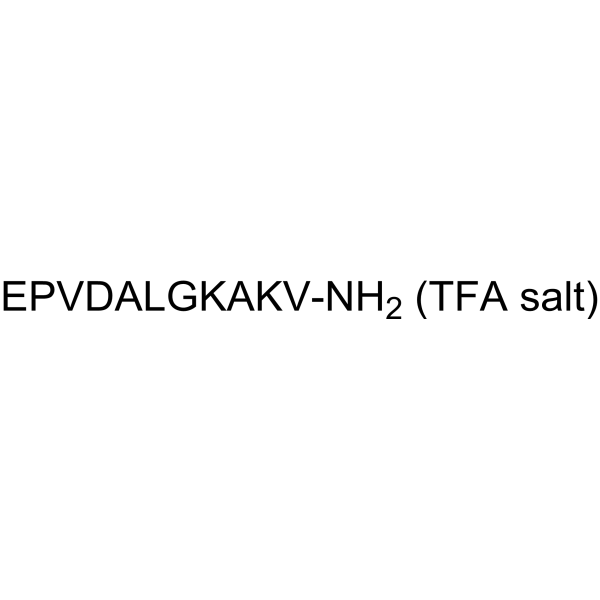 0 ImagesCat. No.: HY-P1435ANoxA1ds TFA is a potent and highly selective NADPH oxidase 1 (NOX1) inhibitor (IC50=20 nM). NoxA1ds TFA inhibits NOX1-derived O2- production in HT-29 human colon cancer cells. NoxA1ds TFA attenuates VEGF-induced human pulmonary artery endothelial cell migration under hypoxic conditions in vitro. NoxA1ds TFA can be used in the study of hypertension, atherosclerosis and tumors.
-
NOX5-IN-1
 0 ImagesCat. No.: HY-174817NOX5-IN-1 (Compound 13) is a selective NADPH oxidase 5 (NOX5) inhibitor with an IC50s of 0.30 μM. NOX5-IN-1 significantly inhibits NOX5-dependent production of ROS in freestyle293 cells (EC50: 0.86 μM). NOX5-IN-1 can be used for NOXs related diseases research, such as cardiovascular, cancer and neuroinflammation.
-
NOX5-IN-2
 0 ImagesCat. No.: HY-174818NOX5-IN-2 (Compound 17) is a selective NADPH oxidase 5 (NOX5) inhibitor with an IC50s of 0.70 μM. NOX5-IN-2 significantly inhibits NOX5-dependent production of ROS in freestyle293 cells (EC50: 1.8 μM). NOX5-IN-2 can be used for NOXs related diseases research, such as cardiovascular, cancer and neuroinflammation.
-
GLX481372
 0 ImagesGLX481372 is a NADPH Oxidase (NOX) inhibitor. GLX481372 potently inhibits NOX4/5 activities with IC50 values of 0.68 and 0.57 μM. GLX481372 also has weak inhibitory activity against NOX1, NOX2, and NOX3, with IC50 values of 7, 16 and 3.2 μM respectively. GLX481372 can inhibit ROS production. GLX481372 can be used for the researches of inflammation, cardiovascular and metabolic disease, such as diabetes.

- 1



