



ML171
Based on 19 publication(s) in Google Scholar
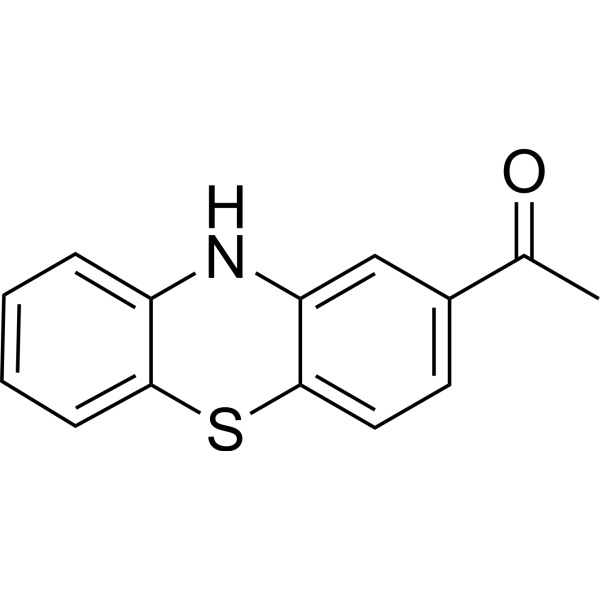
ML171 (2-Acetylphenothiazine;2-APT) is a potent and selective NADPH oxidase 1 (Nox1) inhibitor that blocks Nox1-dependent ROS generation, with an IC50 of 0.25 μM in HEK293-Nox1 confirmatory assay.
Nos produits utilisent uniquement pour la recherche. Nous ne vendons pas aux patients.
- Pureté : 99.53%
- CAS No.: 6631-94-3
- Formule: C14H11NOS
- Masse moléculaire:241.31
-
Stockage:Powder -20°C, 3 years , 4°C, 2 years ; In solvent -80°C, 2 years , -20°C, 1 year

To place orders, for customer services and technical support, please contact: MedChemExpress USA
Tel: 609-228-6898 E-mail: [email protected] [email protected]


-
 Activité biologique
-
Chemical Information
-
Solvant et solubilité
- Protocole
- Pureté et documentation
- Références
-
 Help & FAQs


-
HY-12298
SetanaxibNOX1/4 Inhibitor -
HY-12804
VAS2870Nox Inhibitor -
HY-18950
GSK2795039NOX2 Inhibitor -
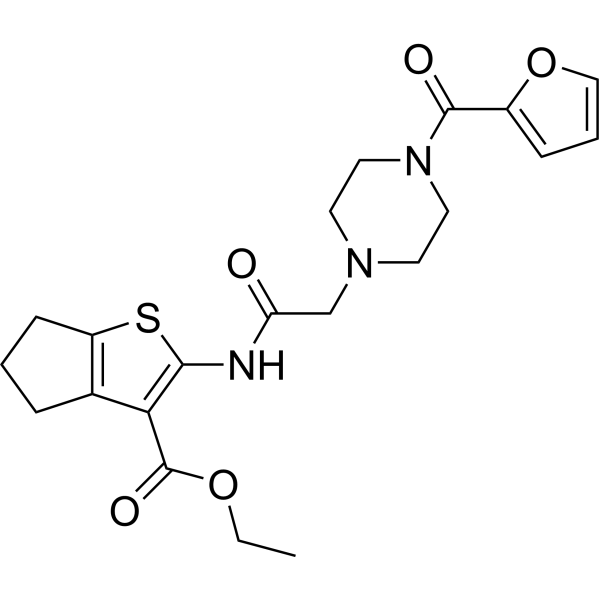
HY-100111
GLX351322NADPH Oxidase 4 Inhibitor -
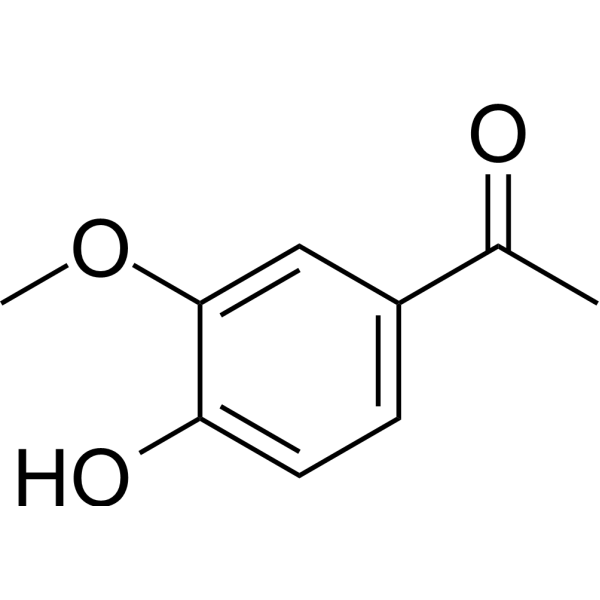
HY-N0088
ApocyninNADPH-Oxidase Inhibitor -
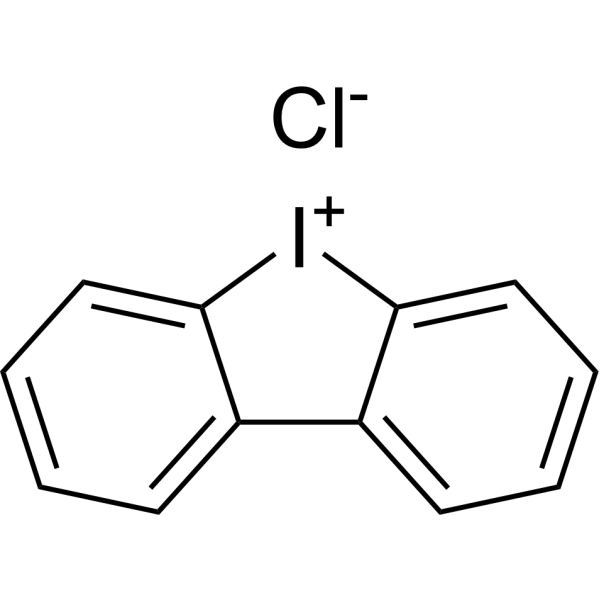
HY-100965
Diphenyleneiodonium chlorideNOX Inhibitor -
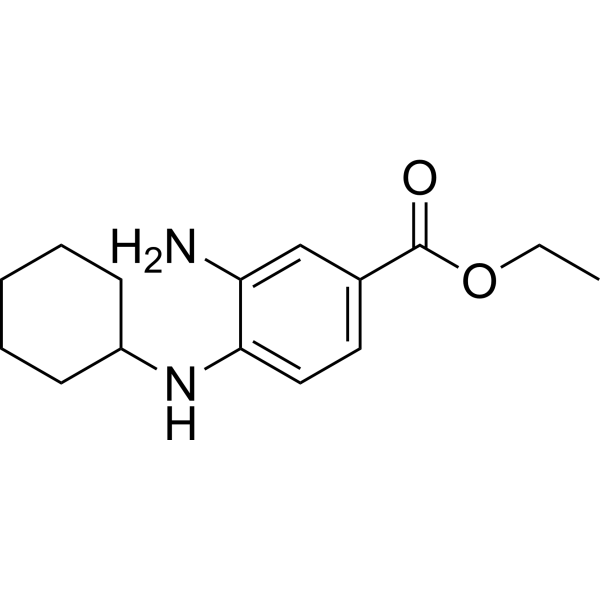
HY-100579
Ferrostatin-1Ferroptosis Inhibitor -
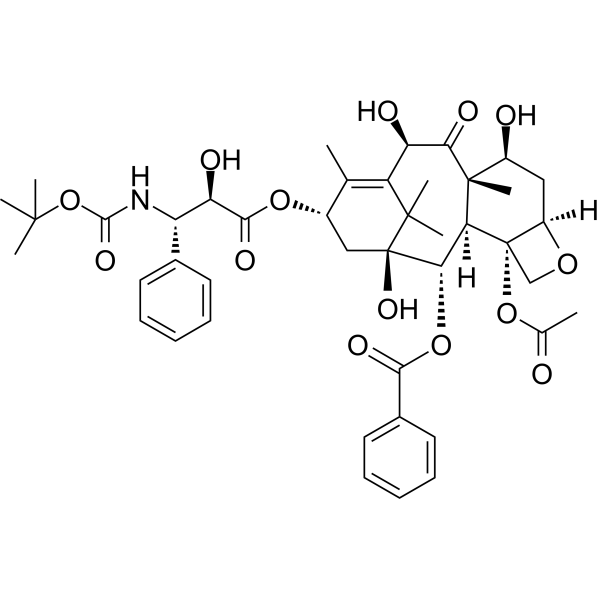
HY-B0011
DocetaxelTubulin Stabilizer -
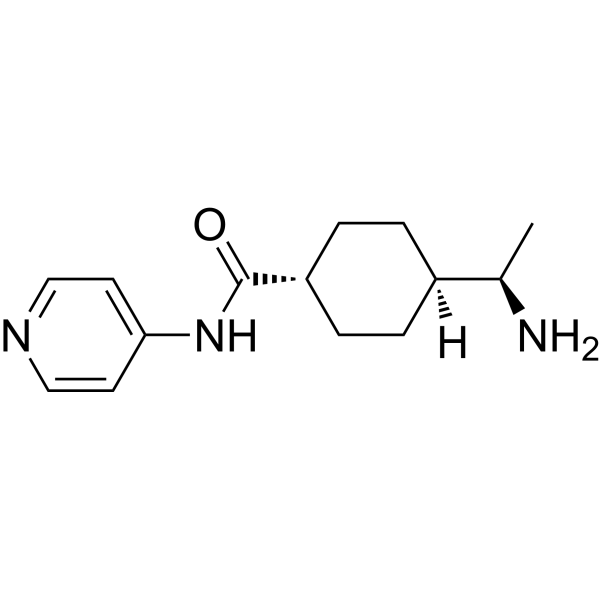
HY-10071
Y-27632ROCK Inhibitor -
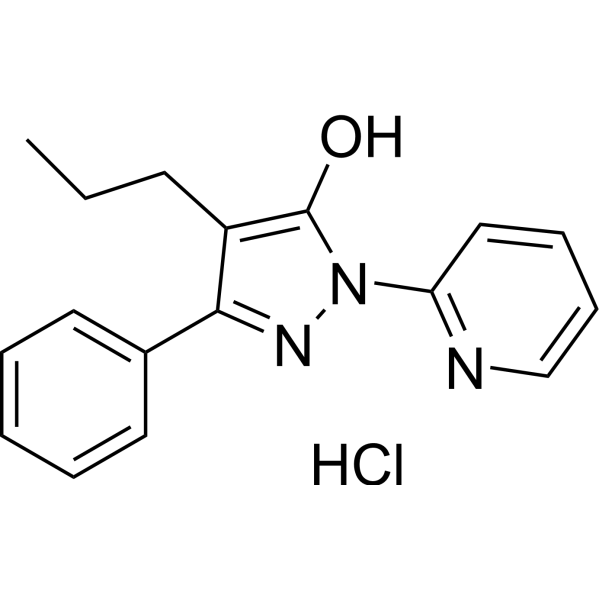
HY-120801
APX-115Pan-Nox Inhibitor -
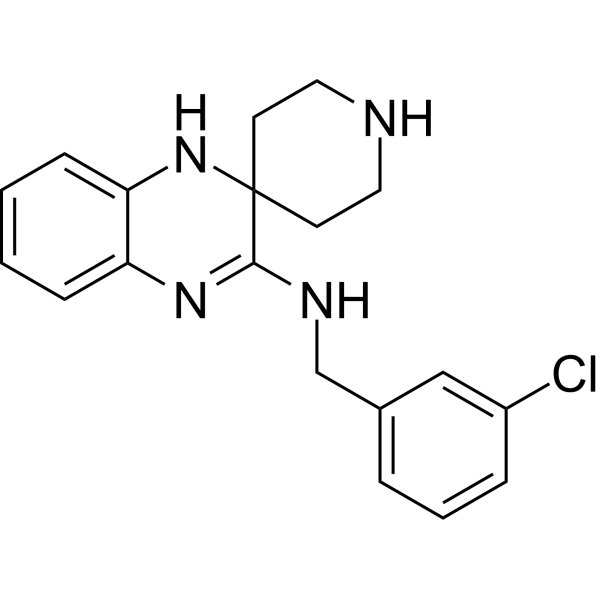
HY-12726
Liproxstatin-1Ferroptosis Inhibitor -
HY-101499
GKT136901NOX1/4 Inhibitor
Publications Citing Use of MedChemExpress (MCE) ML171
More- Redox Biol. 2020 Jul:34:101569. [Abstract]
- Int J Biol Macromol. 2021 Sep 30:187:513-527. [Abstract]
- J Ginseng Res. 2025 Jul;49(4):426-437. [Abstract]
- Redox Rep. 2025 Dec;30(1):2494314. [Abstract]
- Antioxid Redox Signal. 2024 Sep;41(7-9):488-504. [Abstract]
- Biochem Pharmacol. 2024 Jun:224:116242. [Abstract]
- Biochem Pharmacol. 2023 Dec:218:115934. [Abstract]
- Biochem Pharmacol. 2023 Sep:215:115738. [Abstract]
- Biochem Pharmacol. 2023 May:211:115494. [Abstract]
- Biochem Pharmacol. 2023 Mar:209:115442. [Abstract]
- Cells. 2021 Aug 12;10(8):2073. [Abstract]
- Cell Biol Toxicol. 2023 Oct;39(5):2207-2225. [Abstract]
- Pharmaceuticals (Basel). 2022 Aug 27;15(9):1066. [Abstract]
- Int J Mol Sci. 2026 Jul 14;27(14):6269.
- J Hypertens. 2024 Aug 1;42(8):1427-1439. [Abstract]
- Inflammation. 2023 Jun;46(3):1002-1021. [Abstract]
- J Cell Physiol. 2021 Nov;236(11):7356-7375. [Abstract]
- Toxicol Appl Pharmacol. 2023 Sep 1:474:116625. [Abstract]
- Toxicol Appl Pharmacol. 2022 Jan 15:435:115847. [Abstract]
 Customer Validation & Images

-
WB

-
ELISA

-
Cell Imaging/Staining

-
Cell Imaging/Staining

-
Flow Cytometry


Activité biologique
Description
IC50 & Target
|
NOX1 |
Cellular Effect
|
Cell Line

|
Type | Value | Description | References |
|---|---|---|---|---|
| HT-1080 | EC50 |
0.038 μM
Compound: P22
|
Inhibition of erastin-induced ferroptosis in human HT-1080 cells assessed as cell viability incubated for 48 hrs by MTT assay
Inhibition of erastin-induced ferroptosis in human HT-1080 cells assessed as cell viability incubated for 48 hrs by MTT assay
|
[PMID: 33065375] |
In Vitro
Nox1-dependent ROS generation has been shown to play a pivotal role in cell signaling, cell growth, angiogenesis, motility and blood pressure regulation. ML171 strongly blocks ROS generation in HT29 cells (IC50=0.129 μM) and only increasing over-expression of Nox1 can overcome the blockage of ROS generation caused by ML171 treatment in HEK293 cell system reconstituted with all the components required Nox1-dependent ROS generation. ML171 efficiently blocks ROS production measured by carboxy-H2-DCFDA staining as well as DPI used as a positive control. When ML171 is tested in HEK293-Nox1 reconstituted cell system, higher potency in blocking Nox1-dependent ROS generation is observed compared with the parental compound[1].
MedChemExpress (MCE) has not independently confirmed the accuracy of these methods. They are for reference only.


Chemical Information
-
CAS No. 6631-94-3
-
Appearance Solid
-
Masse moléculaire 241.31
-
Formule C14H11NOS
-
Color Yellow to orange
-
SMILES
CC(C1=CC=C2SC3=CC=CC=C3NC2=C1)=O
-
Synonyms
2-Acetylphenothiazine; 2-APT
-
Livraison
Room temperature in continental US; may vary elsewhere.
-
Stockage
Powder -20°C 3 years 4°C 2 years In solvent -80°C 2 years -20°C 1 year


Publications (19)
-
Journal Impact Factor
-
Most Recent
-
Redox Biol
p47phox deficiency impairs platelet function and protects mice against arterial and venous thrombosis. [Abstract]2020 Jul:34:101569. PMID: 32422541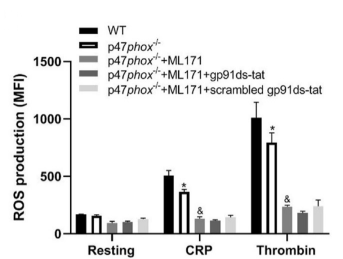
ML171 purchased from MedChemExpress. Usage Cited in: Redox Biol. 2020 Jul:34:101569. [Abstract]
ML171 (5 μM; 10 min) treated p47phox-/- platelets presented significantly decreased ROS production after CRP (2 μg/ml) or thrombin (0.5 U/ml) stimulation.
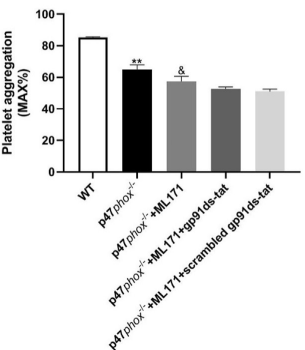
ML171 purchased from MedChemExpress. Usage Cited in: Redox Biol. 2020 Jul:34:101569. [Abstract]
ML171 (5 μM; 10 min) reduced the aggregation of p47phox-/- deficient platelet after CRP (0.25 μg/ml) stimulation.
-
Int J Biol Macromol
Carboxyl group-modified α-lactalbumin induces TNF-α-mediated apoptosis in leukemia and breast cancer cells through the NOX4/p38 MAPK/PP2A axis. [Abstract]2021 Sep 30:187:513-527. PMID: 34310992 -
J Ginseng Res
Ginsenoside Rg5 modulates the TLR4 and BCL-2 pathways by inhibiting NOX1, thereby alleviating inflammation, apoptosis and pyroptosis in hyperuricemia nephropathy. [Abstract]2025 Jul;49(4):426-437. PMID: 40621077
ML171 purchased from MedChemExpress. Usage Cited in: J Ginseng Res. 2025 Jul;49(4):426-437. [Abstract]
ML171 (2 μM; 1 h followed by Rg5 and MSU for 24 h) inhibited MSU crystal-induced TLR4/NLRP3 activation by decreasing the expression of MOX1 and TLR4, which Rg5 and MSU stimulated in HK-2 cells.
ML171 purchased from MedChemExpress. Usage Cited in: J Ginseng Res. 2025 Jul;49(4):426-437. [Abstract]
ML171 (2 μM; 1 h followed by Rg5 and MSU for 24 h) decreased the mature IL-1β and TNF-α levels, which Rg5 and MSU stimulated in HK-2 cells.
ML171 purchased from MedChemExpress. Usage Cited in: J Ginseng Res. 2025 Jul;49(4):426-437. [Abstract]
ML171 (2 μM; 1 h followed by Rg5 and MSU for 24 h) decreased the ROS production that MSU stimulated in HK-2 cells.
ML171 purchased from MedChemExpress. Usage Cited in: J Ginseng Res. 2025 Jul;49(4):426-437. [Abstract]
ML171 (2 μM; 1 h followed by Rg5 and MSU for 24 h) increased Rg5-inhibited MSU crystal-induced mitochondrial oxidative stress in HK-2 cells.
ML171 purchased from MedChemExpress. Usage Cited in: J Ginseng Res. 2025 Jul;49(4):426-437. [Abstract]
ML171 (2 μM; 1 h followed by Rg5 and MSU for 24 h) increased Rg5-inhibited MSU crystal-induced apoptosis in HK-2 cells.
-
Redox Rep
Norepinephrine promotes oxidative stress in vascular adventitial fibroblasts via PKC/NFκB-mediated NOX2 upregulation. [Abstract]2025 Dec;30(1):2494314. PMID: 40269356 -
Antioxid Redox Signal
Intervention of asprosin attenuates oxidative stress and neointima formation in vascular injury. [Abstract]2024 Sep;41(7-9):488-504. PMID: 38814824 -
Biochem Pharmacol
ONC212 enhances YM155 cytotoxicity by triggering SLC35F2 expression and NOXA-dependent MCL1 degradation in acute myeloid leukemia cells. [Abstract]2024 Jun:224:116242. PMID: 38679209 -
Biochem Pharmacol
Hydroquinone-selected chronic myelogenous leukemia cells are sensitive to chloroquine-induced cytotoxicity via MCL1 suppression and glycolysis inhibition. [Abstract]2023 Dec:218:115934. PMID: 37989415 -
Biochem Pharmacol
BCL2L1 inhibitor A-1331852 inhibits MCL1 transcription and triggers apoptosis in acute myeloid leukemia cells. [Abstract]2023 Sep:215:115738. PMID: 37562509 -
Biochem Pharmacol
Cytarabine-induced destabilization of MCL1 mRNA and protein triggers apoptosis in leukemia cells. [Abstract]2023 May:211:115494. PMID: 36924905 -
Biochem Pharmacol
AMPK inhibition induces MCL1 mRNA destabilization via the p38 MAPK/miR-22/HuR axis in chronic myeloid leukemia cells. [Abstract]2023 Mar:209:115442. PMID: 36720359 -
Cells
2021 Aug 12;10(8):2073. PMID: 34440842 -
Cell Biol Toxicol
Effects of SIDT2 on the miR-25/NOX4/HuR axis and SIRT3 mRNA stability lead to ROS-mediated TNF-α expression in hydroquinone-treated leukemia cells. [Abstract]2023 Oct;39(5):2207-2225. PMID: 35302183 -
Pharmaceuticals (Basel)
2022 Aug 27;15(9):1066. PMID: 36145287 -
-
J Hypertens
Asprosin contributes to vascular remodeling in hypertensive rats via superoxide signaling. [Abstract]2024 Aug 1;42(8):1427-1439. PMID: 38690935 -
Inflammation
BRD9 Inhibition Attenuates Matrix Degradation and Pyroptosis in Nucleus Pulposus by Modulating the NOX1/ROS/NF-κB axis. [Abstract]2023 Jun;46(3):1002-1021. PMID: 36801999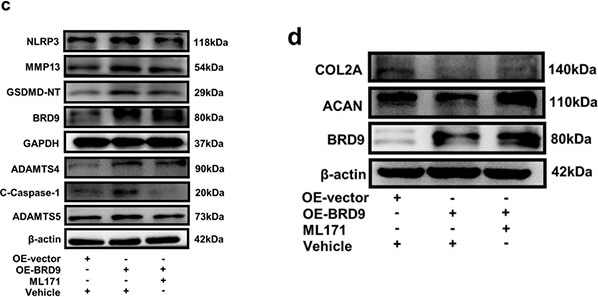
ML171 purchased from MedChemExpress. Usage Cited in: Inflammation. 2023 Jun;46(3):1002-1021. [Abstract]
In rat NP cells, ML171 inhibits the expression of catabolic markers MMP13, ADAMTS4, ADAMTS5, and pyroptotic markers NLRP3, GSDMD-NT, and cleaved-caspase-1, as well as incresaes the expression of ECM anabolic markers COL2A and ACAN, by inhibiting overexpression of BRD9 (Fig. c and d).
-
J Cell Physiol
NOXA-mediated degradation of MCL1 and BCL2L1 causes apoptosis of daunorubicin-treated human acute myeloid leukemia cells. [Abstract]2021 Nov;236(11):7356-7375. PMID: 33982799 -
Toxicol Appl Pharmacol
Amsacrine downregulates BCL2L1 expression and triggers apoptosis in human chronic myeloid leukemia cells through the SIDT2/NOX4/ERK/HuR pathway. [Abstract]2023 Sep 1:474:116625. PMID: 37451322 -
Toxicol Appl Pharmacol
CREB/Sp1-mediated MCL1 expression and NFκB-mediated ABCB1 expression modulate the cytotoxicity of daunorubicin in chronic myeloid leukemia cells. [Abstract]2022 Jan 15:435:115847. PMID: 34963561


Solvant et solubilité
In Vitro:
DMSO : ≥ 64 mg/mL (265.22 mM; Hygroscopic DMSO has a significant impact on the solubility of product, please use newly opened DMSO)
* "≥" means soluble, but saturation unknown.
Please refer to the solubility information to select the appropriate solvent. Once prepared, please aliquot and store the solution to prevent product inactivation from repeated freeze-thaw cycles.
Storage method and period of stock solution: -80°C, 2 years; -20°C, 1 year. When stored at -80°C, please use it within 2 years. When stored at -20°C, please use it within 1 year.
Please refer to the solubility information to select the appropriate solvent. Once prepared, please aliquot and store the solution to prevent product inactivation from repeated freeze-thaw cycles.
Storage method and period of stock solution: -80°C, 2 years; -20°C, 1 year. When stored at -80°C, please use it within 2 years. When stored at -20°C, please use it within 1 year.
Concentration (start) × Volume (start) = Concentration (final) × Volume (final)
In Vivo:
Select the appropriate dissolution method based on your experimental animal and administration route.
- For the following dissolution methods, please ensure to first prepare a clear stock solution using an In Vitro approach and then sequentially add co-solvents:
- To ensure reliable experimental results, the clarified stock solution can be appropriately stored based on storage conditions. As for the working solution for In Vivo experiments, it is recommended to prepare freshly and use it on the same day.
- The percentages shown for the solvents indicate their volumetric ratio in the final prepared solution. If precipitation or phase separation occurs during preparation, heat and/or sonication can be used to aid dissolution.
Add each solvent one by one: 10% DMSO 40% PEG300 5% Tween-80 45% Saline
Solubility: ≥ 2.5 mg/mL (10.36 mM); Clear solution
This protocol yields a clear solution of ≥ 2.5 mg/mL (saturation unknown).
Taking 1 mL working solution as an example, add 100 μL DMSO stock solution (25.0 mg/mL) to 400 μL PEG300, and mix evenly; then add 50 μL Tween-80 and mix evenly; then add 450 μL Saline to adjust the volume to 1 mL.
Preparation of Saline: Dissolve 0.9 g sodium chloride in ddH₂O and dilute to 100 mL to obtain a clear Saline solution.
In Vivo Dissolution Calculator
Please enter the basic information of animal experiments:
-
-
-
-
Recommended: Prepare an additional quantity of animals to account for potential losses during experiments.
Please enter your animal formula composition:
-
%DMSO +
Recommended: Keep the proportion of DMSO in working solution below 2% if your animal is weak.
-
%+
-
+%Tween-80 + +
-
%Saline +
The co-solvents required include: DMSO, . All of co-solvents are available by MedChemExpress (MCE). , Tween 80. All of co-solvents are available by MedChemExpress (MCE).
Working solution concentration: 0.22 mg/mL
Method for preparing stock solution: mg drug dissolved in μL DMSO. Stock solution concentration: mg/mL.
1. Take μL DMSO stock solution;
2. Add μL .
μL , mix evenly;
3. Then add μL Tween 80, mix evenly;
4. Then add μL
Please ensure that the stock solution in the first step is dissolved to a clear state, and add co-solvents in sequence. You can use ultrasonic heating (ultrasonic cleaner, recommended frequency 20-40 kHz), vortexing, etc. to assist dissolution.


Pureté et documentation
-
Fiche technique (288 KB)
-
SDS (393 KB)
- English - EN (393 KB)
- Français - FR (393 KB)
- Deutsch - DE (393 KB)
- Norwegian - NO (393 KB)
- Español - ES (393 KB)
- Swedish - SV (393 KB)
- Italian - IT (393 KB)
- Korean - KR (393 KB)
- Portuguese - PT (393 KB)
-
Instruction de manipulation (2659 KB)
Références


Complete Stock Solution Preparation Table
Please refer to the solubility information to select the appropriate solvent. Once prepared, please aliquot and store the solution to prevent product inactivation from repeated freeze-thaw cycles.
Storage method and period of stock solution: -80°C, 2 years; -20°C, 1 year. When stored at -80°C, please use it within 2 years. When stored at -20°C, please use it within 1 year.
| Optional Solvent | Concentration Solvent Mass | 1 mg | 5 mg | 10 mg | 25 mg |
|---|---|---|---|---|---|
| DMSO | 1 mM | 4.1440 mL | 20.7202 mL | 41.4405 mL | 103.6012 mL |
| 5 mM | 0.8288 mL | 4.1440 mL | 8.2881 mL | 20.7202 mL | |
| 10 mM | 0.4144 mL | 2.0720 mL | 4.1440 mL | 10.3601 mL | |
| 15 mM | 0.2763 mL | 1.3813 mL | 2.7627 mL | 6.9067 mL | |
| 20 mM | 0.2072 mL | 1.0360 mL | 2.0720 mL | 5.1801 mL | |
| 25 mM | 0.1658 mL | 0.8288 mL | 1.6576 mL | 4.1440 mL | |
| 30 mM | 0.1381 mL | 0.6907 mL | 1.3813 mL | 3.4534 mL | |
| 40 mM | 0.1036 mL | 0.5180 mL | 1.0360 mL | 2.5900 mL | |
| 50 mM | 0.0829 mL | 0.4144 mL | 0.8288 mL | 2.0720 mL | |
| 60 mM | 0.0691 mL | 0.3453 mL | 0.6907 mL | 1.7267 mL | |
| 80 mM | 0.0518 mL | 0.2590 mL | 0.5180 mL | 1.2950 mL | |
| 100 mM | 0.0414 mL | 0.2072 mL | 0.4144 mL | 1.0360 mL |


ML171 Related Classifications
HY-12805 Related Classifications
 Powered by Bioz