



NOX2
NOX2 (NADPH oxidase 2) is a catalytic member of the NADPH oxidase family that is specialized for reactive oxygen species (ROS) generation and serves as a central component of phagocyte antimicrobial defense and redox signaling pathways[1][2]. NOX2 activation requires assembly of membrane and cytosolic regulatory subunits, enabling superoxide production at the plasma membrane or phagosomal membrane during immune responses[2]. Mechanistically, NOX2-derived ROS contribute not only to pathogen killing but also to immune regulation, antigen presentation, and maintenance of self-tolerance, linking oxidative signaling to both innate and adaptive immunity[3][4]. Dysregulated NOX2 activity has been implicated in multiple inflammatory and oxidative stress-associated disease models, while genetic deficiency of NOX2 causes chronic granulomatous disease characterized by impaired microbial killing and recurrent infections[3][5]. In disease models, NOX2-derived ROS have been associated with inflammation, fibrosis, and cardiovascular pathology, highlighting the broad biological relevance of this isoform[5][6]. Compared with related NOX isoforms, NOX2 is predominantly expressed in phagocytic cells, whereas NOX1, NOX3, NOX4, and NOX5 are primarily expressed in non-phagocytic tissues, indicating distinct physiological functions and cellular contexts[7]. For experimental applications, NOX inhibitors and NOX2-targeted inhibitory peptides such as NOX2ds-tat have been used to investigate NOX2-dependent signaling; however, limited isoform selectivity remains an important consideration when interpreting pharmacological studies[8].
References:
- [1]. Cipriano A, et al. NADPH Oxidases: From Molecular Mechanisms to Current Inhibitors. J Med Chem. 2023 Sep 14;66(17):11632-11655. [Content Brief]
- [2]. Paclet MH, et al. Regulation of Neutrophil NADPH Oxidase, NOX2: A Crucial Effector in Neutrophil Phenotype and Function. Front Cell Dev Biol. 2022 Jul 14;10:945749. [Content Brief]
- [3]. Altenhöfer S, et al. Evolution of NADPH Oxidase Inhibitors: Selectivity and Mechanisms for Target Engagement. Antioxid Redox Signal. 2015 Aug 10;23(5):406-27. [Content Brief]
All Product Categories
-
NOX2 Related Products (14)
Related Products (14)

- 1
-
GSK2795039
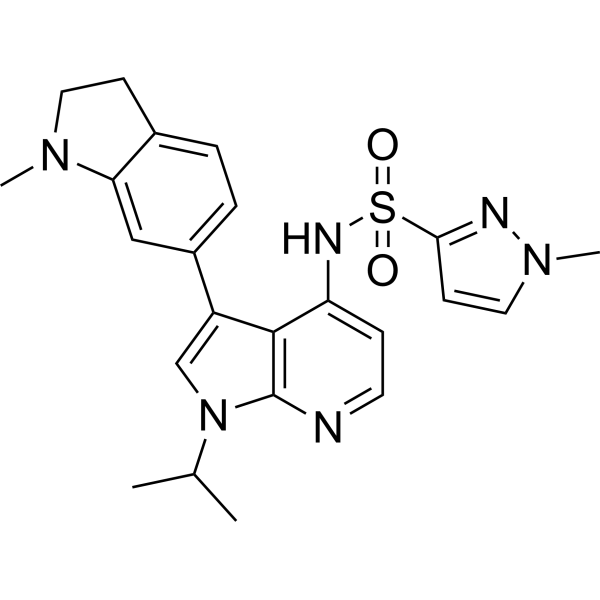 0 ImagesGSK2795039 is a NADPH oxidase 2 (NOX2) inhibitor with a mean pIC50 of 6 in different cell-free assays. GSK2795039 inhibits reactive oxygen species (ROS) production and NADPH consumption. GSK2795039 reduces apoptosis.
-
APX-115
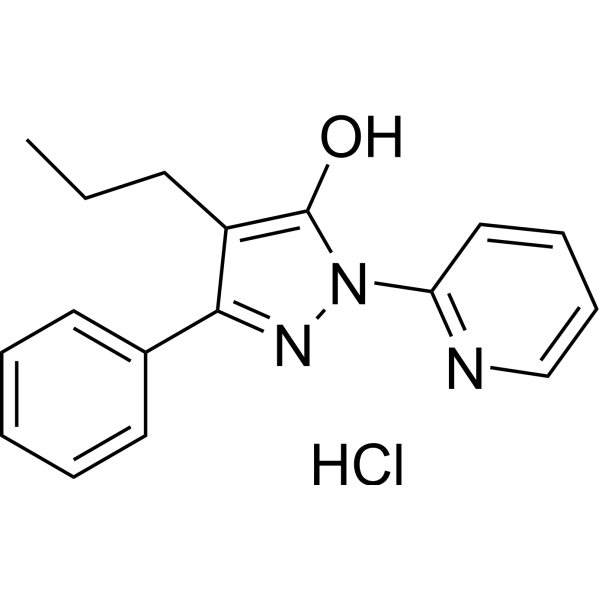 0 ImagesSynonyms: Ewha-18278APX-115 (Ewha-18278) is a potent, orally active pan NADPH oxidase (Nox) inhibitor with Ki values of 1.08 μM, 0.57 μM, and 0.63 μM for Nox1, Nox2 and Nox4, respectively. APX-115 effectively prevents kidney injury.
-
Prochlorperazine dimaleate
 0 ImagesProchlorperazine dimaleate is an orally active phenothiazine-type dopamine D2 receptor (D2R) antagonist. Prochlorperazine exhibits anti-cancer activity in vitro against various cancer cell lines. Prochlorperazine dimaleate exhibits IC50 values of 6.4 μM, 4.5 μM and 2.3 μM for NOX1, NOX2 and NOX5, respectively. Prochlorperazine dimaleate has antedesmosidic activity against dengue virus (DENV). Prochlorperazine dimaleate can be used for research on nausea, vomiting, migraine, and schizophrenia.
-
APX-115 free base
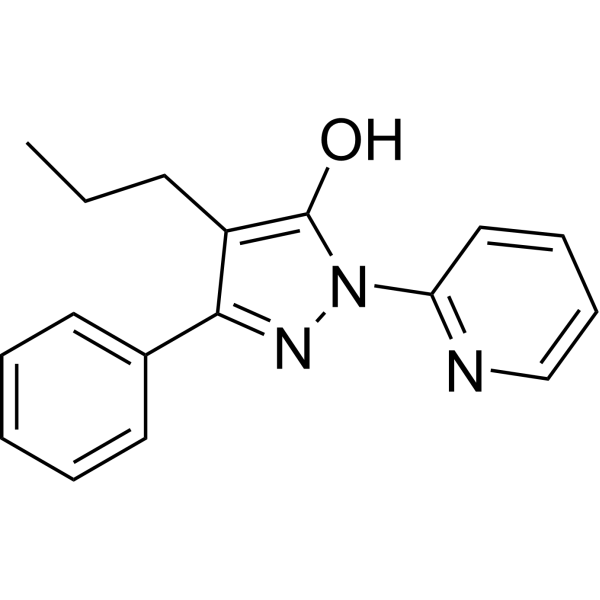 0 ImagesSynonyms: Ewha-18278 free base; Isuzinaxib free baseAPX-115 free base (Ewha-18278 free base) is a potent, orally active pan NADPH oxidase (Nox) inhibitor with Ki values of 1.08 μM, 0.57 μM, and 0.63 μM for Nox1, Nox2 and Nox4, respectively. APX-115 free base effectively prevents kidney injury.
-
NADPH oxidase-IN-1
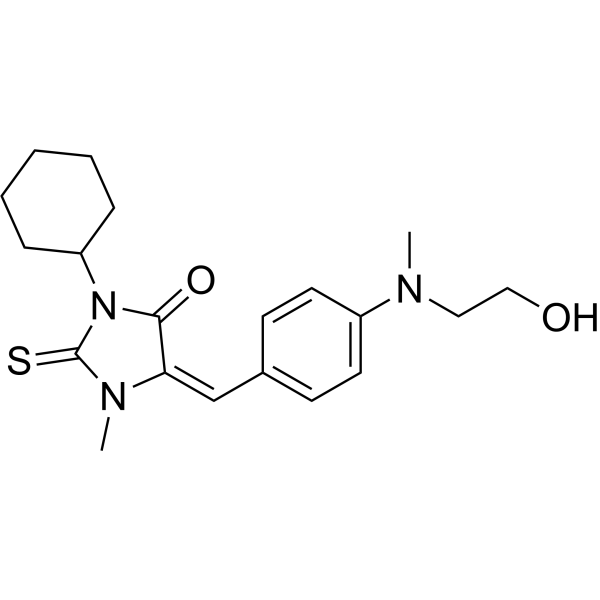 0 ImagesNADPH oxidase-IN-1 is an orally active NADPH oxidase (Nox) inhibitor, related with neuronal inflammation. NADPH oxidase-IN-1 can cross the blood-brain barrier (BBB), inhibits Nox2 and Nox4 with IC50s of 1.9 μM and 2.47 μM, respectively. NADPH oxidase-IN-1 suppresses pro-inflammatory cytokines production and LPS-mediated microglial migration, also has in vivo efficacy.
-
STAT3/NF-κB-IN-3
 0 ImagesCat. No.: HY-184736STAT3/NF-κB-IN-3 is an orally active STAT3/NF-κB inhibitor with anti-inflammatory and antioxidant activities, which specifically blocks the phosphorylation of NF-κB and STAT3 proteins. STAT3/NF-κB-IN-3 downregulates the expression of iNOS and NOX-2 in macrophages, reduces intracellular levels of ROS and MDA, and upregulates the expression of antioxidant genes at the same time. In a mouse model of acute liver failure induced by LPS/D-GalN, STAT3/NF-κB-IN-3 alleviates liver necrosis and inflammatory cell infiltration, and reduces the release of pro-inflammatory cytokines such as IL-6 and IL-12 via the TLR4 pathway. STAT3/NF-κB-IN-3 can be used in studies related to acute liver failure.
-
NCATS-SM7270
 0 ImagesCat. No.: HY-173096Purity: 99.20%NCATS-SM7270 is a highly specific NOX2 inhibitor, with an IC50 of 4.09 μM. NCATS-SM7270 protects mice from mild traumatic brain injury.
-
5-(3',4'-Dihydroxyphenyl)-γ-valerolactone
 0 Images5-(3',4'-Dihydroxyphenyl)-γ-valerolactone is an intestinal microbiota metabolite of (-)-Epicatechin (HY-N0001). 5-(3',4'-Dihydroxyphenyl)-γ-valerolactone downregulates TNF-α-stimulated phosphorylation of IKK and IκBα, inhibits the transcriptional activation of NF-κB, and suppresses the expression of adhesion molecules and chemokines. 5-(3',4'-Dihydroxyphenyl)-γ-valerolactone promotes autophagy, alleviates oxidative stress, maintains osteoblast differentiation, induces G1 phase arrest, inhibits adipogenesis, and scavenges ABTS free radicals. 5-(3',4'-Dihydroxyphenyl)-γ-valerolactone inhibits the adhesion of uropathogenic Escherichia coli to bladder epithelial cells; when used in combination with Curcumin (HY-N0005), it downregulates the NLRP3 and NOX2/Nrf2 signaling pathways, thereby reducing microglial activation. 5-(3',4'-Dihydroxyphenyl)-γ-valerolactone can be used in research related to diabetes, atherosclerosis, osteoporosis, obesity, neurodegenerative diseases involving microglial activation, and urinary tract infections.
-
(Rac)-Nebivolol
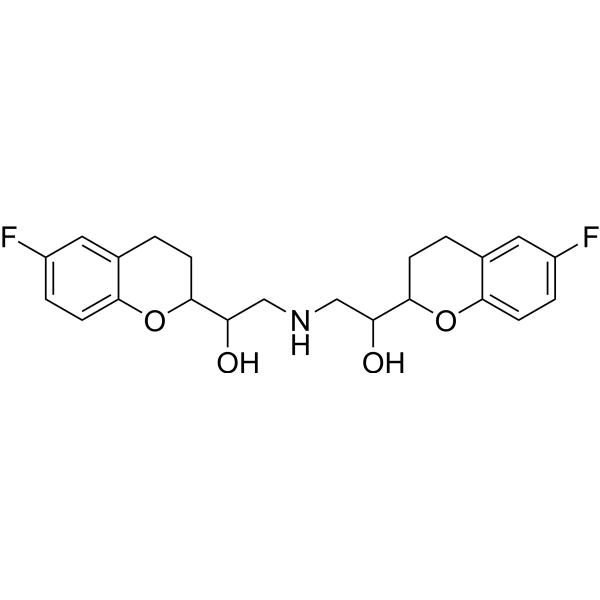 0 ImagesCat. No.: HY-B0203BCAS No.: 99200-09-6Synonyms: (Rac)-R 065824(Rac)-Nebivolol ((Rac)-R 065824) is a racemic isomer of Nebivolol. Nebivolol is a selective β1-adrenergic receptor antagonist with an IC50 value of 0.8 nM. Nebivolol can prevent up-regulation of Nox2/NADPH oxidase and lipoperoxidation in the early stages of ethanol-induced cardiac toxicity. Vasodilatory activity.

-
CPP11G
 0 ImagesCat. No.: HY-185008CAS No.: 1580464-93-2CPP11G (Compound 11g) is a highly selective NADPH oxidase 2 (Nox2) inhibitor (IC50=20 μM). CPP11G is promising for research of inflammatory diseases (e.g., vasculitis, atherosclerosis) and Nox2-overactivated pathologies (e.g., ischemia-reperfusion injury).
-
NOX5-IN-1
 0 ImagesCat. No.: HY-174817NOX5-IN-1 (Compound 13) is a selective NADPH oxidase 5 (NOX5) inhibitor with an IC50s of 0.30 μM. NOX5-IN-1 significantly inhibits NOX5-dependent production of ROS in freestyle293 cells (EC50: 0.86 μM). NOX5-IN-1 can be used for NOXs related diseases research, such as cardiovascular, cancer and neuroinflammation.
-
NOX5-IN-2
 0 ImagesCat. No.: HY-174818NOX5-IN-2 (Compound 17) is a selective NADPH oxidase 5 (NOX5) inhibitor with an IC50s of 0.70 μM. NOX5-IN-2 significantly inhibits NOX5-dependent production of ROS in freestyle293 cells (EC50: 1.8 μM). NOX5-IN-2 can be used for NOXs related diseases research, such as cardiovascular, cancer and neuroinflammation.
-
GLX481372
 0 ImagesGLX481372 is a NADPH Oxidase (NOX) inhibitor. GLX481372 potently inhibits NOX4/5 activities with IC50 values of 0.68 and 0.57 μM. GLX481372 also has weak inhibitory activity against NOX1, NOX2, and NOX3, with IC50 values of 7, 16 and 3.2 μM respectively. GLX481372 can inhibit ROS production. GLX481372 can be used for the researches of inflammation, cardiovascular and metabolic disease, such as diabetes.
- 1



