



Liver Failure
-
Liver Failure (12)

- 1
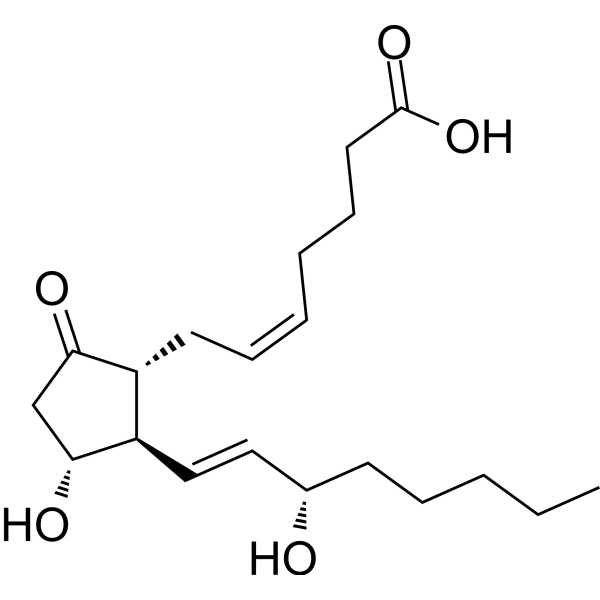
- Formula: C20H32O5
- Molecular Weight: 352.47
Prostaglandin E2 (PGE2) is a hormone-like substance that participate in a wide range of body functions such as the contraction and relaxation of smooth muscle, the dilation and constriction of blood vessels, control of blood pressure, and modulation of inflammation.
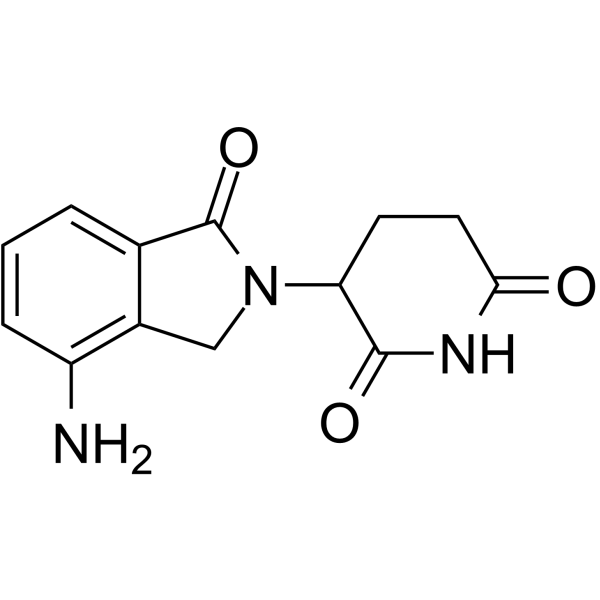
- Formula: C13H13N3O3
- Molecular Weight: 259.26
Lenalidomide (CC-5013) is an orally active immunomodulatory agent that binds CRBN as a molecular glue to alter substrate specificity, inducing ubiquitination and proteasome-dependent degradation of IKZF1, IKZF3 and CK1α. Lenalidomide induces apoptosis by degrading IKZF1/3, and activates p53 by degrading CK1α. Lenalidomide promotes IL-2 release and effector functions of CD8+ T/NK cells, while inhibiting TNF-α secretion and M1-type pyroptosis. Lenalidomide can be used in research related to hematological malignancies, acute liver failure and acute kidney injury.
Recombinant Human Serum Albumin (rHSA) is a non-glycosylated monomeric plasma protein that acts as a core factor for maintaining plasma colloid osmotic pressure. Recombinant Human Serum Albumin (rHSA) possesses multiple physiological functions including carrier, metabolic regulation, detoxification, antioxidation and enzyme mimicking. Recombinant Human Serum Albumin (rHSA) not only scavenges reactive oxygen and nitrogen species via specific residues and binds a variety of endogenous and exogenous compounds to maintain redox homeostasis, but also serves as a biomarker for multiple diseases such as cancer and inflammation. Recombinant Human Serum Albumin (rHSA) broadly supports the development of implantable materials, surgical adhesives and ligand capture, and can be used for research on critical illnesses including hypovolemia, liver failure, severe sepsis and various types of trauma resuscitation.
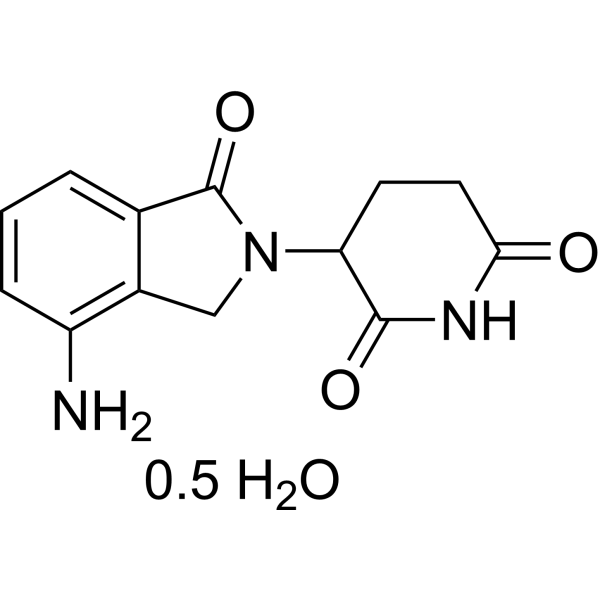
- Formula: C13H14N3O3.5
- Molecular Weight: 268.27
Lenalidomide hemihydrate (CC-5013 hemihydrate) is an orally active immunomodulatory agent that binds CRBN as a molecular glue to alter substrate specificity, inducing ubiquitination and proteasome-dependent degradation of IKZF1, IKZF3 and CK1α. Lenalidomide hemihydrate induces apoptosis by degrading IKZF1/3, and activates p53 by degrading CK1α. Lenalidomide hemihydrate promotes IL-2 release and effector functions of CD8+ T/NK cells, while inhibiting TNF-α secretion and M1-type pyroptosis. Lenalidomide hemihydrate can be used in research related to hematological malignancies, acute liver failure and acute kidney injury.

- Formula: C13H13N3O3
- Molecular Weight: 259.26
Lenalidomide (Standard) (CC-5013 (Standard)) is the analytical standard of Lenalidomide (HY-A0003). This product is intended for research and analytical applications. Lenalidomide (CC-5013) is an orally active immunomodulatory agent that binds CRBN as a molecular glue to alter substrate specificity, inducing ubiquitination and proteasome-dependent degradation of IKZF1, IKZF3 and CK1α. Lenalidomide induces apoptosis by degrading IKZF1/3, and activates p53 by degrading CK1α. Lenalidomide promotes IL-2 release and effector functions of CD8+ T/NK cells, while inhibiting TNF-α secretion and M1-type pyroptosis. Lenalidomide can be used in research related to hematological malignancies, acute liver failure and acute kidney injury.
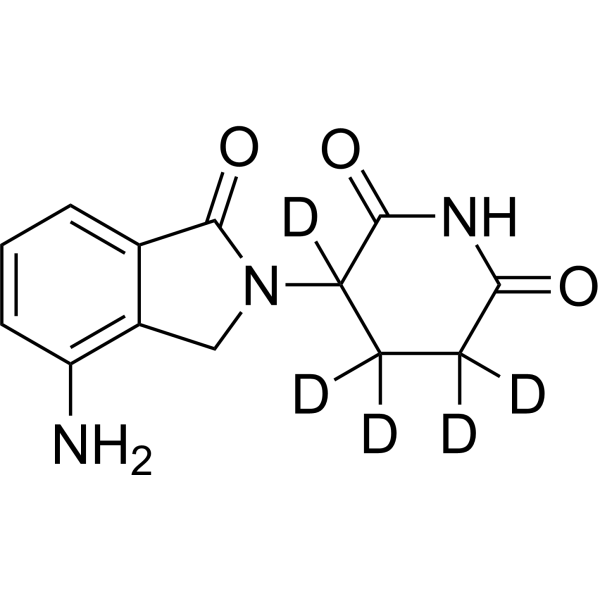
- Formula: C13H8D5N3O3
- Molecular Weight: 264.29
Lenalidomide-d5 (CC-5013-d5) is the d5-labeled Lenalidomide (HY-A0003). Lenalidomide (CC-5013) is an orally active immunomodulatory agent that binds CRBN as a molecular glue to alter substrate specificity, inducing ubiquitination and proteasome-dependent degradation of IKZF1, IKZF3 and CK1α. Lenalidomide induces apoptosis by degrading IKZF1/3, and activates p53 by degrading CK1α. Lenalidomide promotes IL-2 release and effector functions of CD8+ T/NK cells, while inhibiting TNF-α secretion and M1-type pyroptosis. Lenalidomide can be used in research related to hematological malignancies, acute liver failure and acute kidney injury.
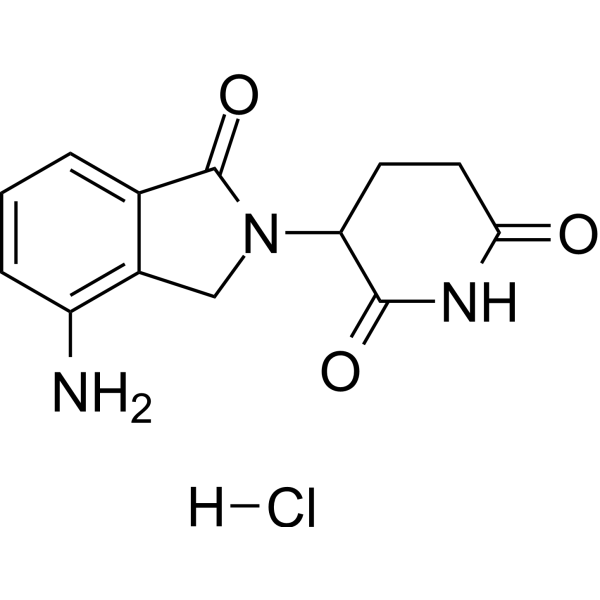
- Formula: C13H14ClN3O3
- Molecular Weight: 295.72
Lenalidomide hydrochloride (CC-5013 hydrochloride) is an orally active immunomodulatory agent that binds CRBN as a molecular glue to alter substrate specificity, inducing ubiquitination and proteasome-dependent degradation of IKZF1, IKZF3 and CK1α. Lenalidomide hydrochloride induces apoptosis by degrading IKZF1/3, and activates p53 by degrading CK1α. Lenalidomide hydrochloride promotes IL-2 release and effector functions of CD8+ T/NK cells, while inhibiting TNF-α secretion and M1-type pyroptosis. Lenalidomide hydrochloride can be used in research related to hematological malignancies, acute liver failure and acute kidney injury.

- Formula: C813C5H13N3O3
- Molecular Weight: 264.22
rac-Lenalidomide-13C5 (CC-5013-13C5) is the 13C5-labeled Lenalidomide (HY-A0003). Lenalidomide (CC-5013) is an orally active immunomodulatory agent that binds CRBN as a molecular glue to alter substrate specificity, inducing ubiquitination and proteasome-dependent degradation of IKZF1, IKZF3 and CK1α. Lenalidomide induces apoptosis by degrading IKZF1/3, and activates p53 by degrading CK1α. Lenalidomide promotes IL-2 release and effector functions of CD8+ T/NK cells, while inhibiting TNF-α secretion and M1-type pyroptosis. Lenalidomide can be used in research related to hematological malignancies, acute liver failure and acute kidney injury.
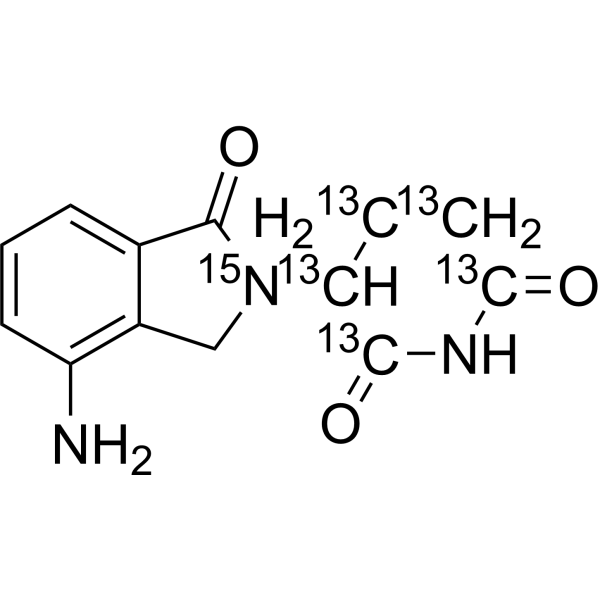
- Formula: C813C5H13N215NO3
- Molecular Weight: 265.22
Lenalidomide-13C5,15N (CC-5013-13C5,15N) is the 13C, 15N-labeled Lenalidomide (HY-A0003). Lenalidomide (CC-5013) is an orally active immunomodulatory agent that binds CRBN as a molecular glue to alter substrate specificity, inducing ubiquitination and proteasome-dependent degradation of IKZF1, IKZF3 and CK1α. Lenalidomide induces apoptosis by degrading IKZF1/3, and activates p53 by degrading CK1α. Lenalidomide promotes IL-2 release and effector functions of CD8+ T/NK cells, while inhibiting TNF-α secretion and M1-type pyroptosis. Lenalidomide can be used in research related to hematological malignancies, acute liver failure and acute kidney injury.

- Formula: C17H22O5
- Molecular Weight: 306.35
STAT3/NF-κB-IN-3 is an orally active STAT3/NF-κB inhibitor with anti-inflammatory and antioxidant activities, which specifically blocks the phosphorylation of NF-κB and STAT3 proteins. STAT3/NF-κB-IN-3 downregulates the expression of iNOS and NOX-2 in macrophages, reduces intracellular levels of ROS and MDA, and upregulates the expression of antioxidant genes at the same time. In a mouse model of acute liver failure induced by LPS/D-GalN, STAT3/NF-κB-IN-3 alleviates liver necrosis and inflammatory cell infiltration, and reduces the release of pro-inflammatory cytokines such as IL-6 and IL-12 via the TLR4 pathway. STAT3/NF-κB-IN-3 can be used in studies related to acute liver failure.

- Formula: C22H17F6N3O7
- Molecular Weight: 549.38
IDN-7314 is a pan-Caspase inhibitor with an IC50 of 0.2-7 nM against all tested Caspases. IDN-7314 abrogates Jo2-induced caspase-3/7 activity. IDN-7314 reduces the procoagulant activity of tissue factor in hepatocytes. IDN-7314 is applicable to research related to chemically induced hepatitis, fulminant liver failure and apoptotic liver injury.

- Formula: C13H9D4N3O3
- Molecular Weight: 263.29
Lenalidomide-d4 (CC-5013-d4) is the d4-labeled Lenalidomide (HY-A0003). Lenalidomide (CC-5013) is an orally active immunomodulatory agent that binds CRBN as a molecular glue to alter substrate specificity, inducing ubiquitination and proteasome-dependent degradation of IKZF1, IKZF3 and CK1α. Lenalidomide induces apoptosis by degrading IKZF1/3, and activates p53 by degrading CK1α. Lenalidomide promotes IL-2 release and effector functions of CD8+ T/NK cells, while inhibiting TNF-α secretion and M1-type pyroptosis. Lenalidomide can be used in research related to hematological malignancies, acute liver failure and acute kidney injury.
- 1



